A Floral Relay Like No Other
While Tokyo’s iconic cherry blossom spots like Ueno Park and Meguro River overflow with visitors seeking selfies every spring, a vast botanical paradise just 40 minutes west of Shinjuku offers a radically different experience. Showa Kinen Park, sprawling across 165 hectares in Tachikawa, hosts its annual Flower Festival 2026 from March 26 through May 24, featuring a carefully choreographed succession of blooms that ensures vibrant color throughout the entire two-month period.
This innovative floral relay approach solves the single biggest frustration of spring flower viewing in Japan: the notoriously brief and unpredictable blooming windows. Unlike cherry blossoms, which can vanish within days of reaching peak beauty, Showa Kinen Park guarantees visitors will encounter spectacular displays regardless of when they arrive during the festival period. The strategy transforms the former military airfield into a living canvas that evolves continuously, presenting entirely different landscapes from late March through late May.
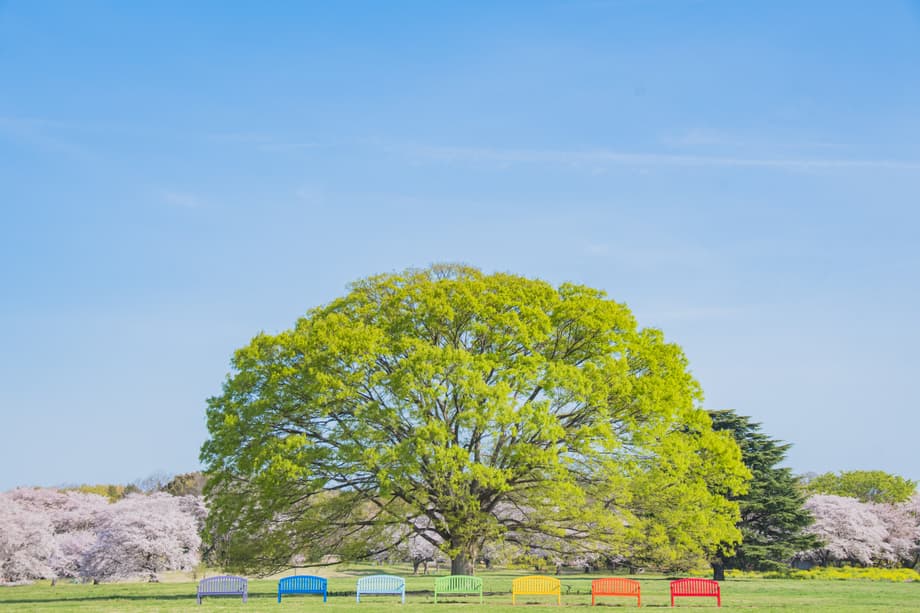
Approximately 1,500 cherry trees occupy center stage from late March through mid-April, concentrated in the Sakura Garden and Former Sakura Garden areas. The park boasts 31 distinct varieties including somei-yoshino and yamazakura, offering botanical diversity rarely found in Tokyo’s more famous cherry blossom locations. The sakura trees here create a particularly stunning effect when viewed against the remaining yellow rapeseed fields, producing a two-color tapestry that photographers prize.
As April progresses, the Stream Plaza and Tulip Garden erupt with 250,000 bulbs across 260 varieties, blooming from early to mid-April. This represents one of Tokyo’s most extensive tulip collections, transforming the landscape into a geometric explosion of reds, yellows, purples, and whites arranged in precise horticultural patterns.
The Complete Blooming Calendar
The festival unfolds through six distinct floral acts, each dominating specific zones within the massive park. The performance begins with approximately 250,000 rapeseed (nanohana) blossoms painting the East and South Meadow Flower Fields in brilliant yellow from late February through mid-April. These early bloomers create a striking visual foundation that continues even as subsequent flowers emerge.
The mid-April transition brings one of the festival’s most photographed phenomena: the nemophila fields. Often called “baby blue eyes,” these delicate flowers turn Herb Hill into an ocean of blue, with up to 2 million plants creating an almost surreal landscape. Simultaneously, the Bouquet Garden (located on Herb Hill) presents 100,000 mixed blooms including 200,000 stock (Matthiola) flowers, maintaining the color palette through late May.
The grand finale arrives in early May with approximately 1.8 million Shirley Poppies (Iceland poppies) covering Flower Hill in vibrant red and orange carpets that persist until the festival’s conclusion on May 24. This succession ensures that even visitors arriving in late May, long after cherry blossoms have disappeared from other Tokyo locations, will encounter what feels like the main event.
Magical Moments and Special Events
Beyond the static gardens, the Flower Festival incorporates theatrical elements designed specifically for visual impact. The signature Bubble Photo Time events transform already stunning landscapes into dreamlike scenes as thousands of iridescent soap bubbles float above the flower fields twice daily on select dates. These 30-minute sessions occur on April 2 above the cherry blossoms at the Former Sakura Garden, on April 25 drifting over the Bouquet Garden’s 100,000 blooms, and on May 16 surrounded by poppies and baby’s breath at Flower Hill.
Photography enthusiasts receive particular attention throughout the festival. The park creates dedicated photogenic installations within each flower field, including train tracks, decorative doors, swings, benches, and miniature houses positioned specifically for ideal social media compositions. On April 4, the Tulip Garden closes to general admission for 30 minutes after opening (9:30 a.m. to 10:00 a.m.), allowing photographers to capture the empty garden from the perimeter without crowds obstructing the view.
For serious photographers seeking pristine conditions, the park offers limited early entry sessions on April 3, 5, and 22, permitting just 100 visitors to enter at 7:30 a.m., three hours before standard opening. These exclusive slots require advance reservations and a fee of 3,000 yen (approximately $18.80), but provide unparalleled access to capture morning light across the landscapes without competing for position among the general public.
Practical Information for Visitors
Accessibility and affordability distinguish Showa Kinen Park from many Tokyo attractions. Located in Tachikawa, the park sits just two minutes on foot from Nishi-Tachikawa Station on the JR Ome Line, or accessible via the JR Chuo and Nambu Lines. Adult admission costs only 450 yen, with seniors (65+) paying 210 yen and children 15 and under entering free. The park observes several free admission days in 2026, including May 9 and 10 for the City Greenery Promotion Campaign, September 21 (Respect-for-the-Aged Day, seniors only), and October 24-25 for the fall campaign.
Operating hours vary by season and day. From March 1 through October 31, standard hours run 9:30 a.m. to 5:00 p.m., extending until 6:00 p.m. on weekends and holidays between April and September. During Golden Week (May 3-6), the park opens early at 9:00 a.m. The free-access portion of the park opens at 8:30 a.m., closing at 6:00 p.m. during the spring and summer months. Visitors should note the park closes entirely from December 31 through January 1, plus the fourth Monday of January and the following day.
Culinary options extend beyond quick snacks. The park’s restaurants emphasize seasonal ingredients, with Oka Cafe, Stream Plaza Restaurant, and Exchange Plaza Restaurant collaborating to offer distinct spring menus. Visitors can purchase the Spring Picnic Box for 1,900 yen, designed specifically for outdoor dining among the flowers, or opt for the Menchi-katsu Spring Holiday Bento at 1,100 yen featuring breaded ground pork cutlets. Lighter fare includes the Shrimp and Avocado Salad Spring Vegetable Bagel Sandwich with Italian vegetable fritters for 900 yen, available at various kiosks throughout the grounds.
The park provides extensive facilities including wheelchair and stroller loans, baby changing stations, breastfeeding rooms, and disabled parking. For active visitors, the park offers 11 kilometers of dedicated cycling paths with bicycle rentals available at three gates, boating on the park’s lake, and even guided Segway tours for an additional charge. Multiple coin lockers, rest areas, and smoking areas ensure comfortable visits for all demographics.
From Military Airfield to Urban Sanctuary
Showa Kinen Park represents one of Tokyo’s most dramatic urban transformations. Opened in 1983 to commemorate the 50th anniversary of Emperor Showa’s reign, the park occupies land that previously served as Tachikawa Airfield and later hosted United States military forces following World War II. This history explains the park’s unusual flatness and expansive open spaces, characteristics rare in Tokyo’s typically hilly terrain.
At 165 hectares, Showa Kinen Park encompasses more than three times the area of Yoyogi Park, making it Tokyo’s largest municipal park. This sheer size creates what regular visitors describe as an uncrowded experience even during peak Golden Week holidays, when other Tokyo green spaces become impossibly congested. The vastness allows families to spread picnic blankets without crowding, cyclists to traverse paths shaded by trees without congestion, and photographers to frame shots without battling through dense tourist groups.
The park’s design reflects its dual identity as both a memorial to the Showa era and a forward-looking recreational space. The Komorebi Village area recreates a traditional rural Japanese village, complete with Hina Matsuri (Doll Festival) displays in March, while the Children’s Forest area features innovative playgrounds including the famous Bouncing Dome, massive white trampoline structures resembling clouds. A Japanese garden with a traditional teahouse, bonsai displays, and the Emperor Showa Memorial Museum provide cultural depth beyond the floral attractions.
Quick Facts
- Festival Dates: March 26 to May 24, 2026
- Location: Showa Kinen Park, Tachikawa (2 minutes from Nishi-Tachikawa Station on JR Ome Line)
- Admission: 450 yen adults, 210 yen seniors (65+), free for visitors 15 and under
- Featured Flowers: 250,000 rapeseed, 1,500 cherry trees (31 varieties), 250,000 tulips (260 varieties), 2 million nemophila, 1.8 million poppies
- Special Events: Bubble Photo Time on April 2, April 25, and May 16 (10:30-11:00 a.m. and 12:00-12:30 p.m.)
- Early Entry Photography: April 3, 5, and 22 at 7:30 a.m. (reservation required, 3,000 yen fee)
- Free Admission Days 2026: May 9-10 (City Greenery Promotion), September 21 (seniors only), October 24-25
- Park Size: 165 hectares (Tokyo’s largest municipal park)
- Operating Hours: 9:30 a.m.-5:00 p.m. weekdays, 9:30 a.m.-6:00 p.m. weekends/holidays (April-September)