The Pink Conundrum: Safety Screens Block Iconic Tokyo Sakura View
The cherry blossom season in Tokyo has always drawn crowds eager to witness the ephemeral beauty of sakura, but this year visitors to one of the city most celebrated spots are encountering an unexpected sight. Large opaque banners now stretch across the sides of the bridge closest to Nakameguro Station, their pink hue offering a touch of seasonal cheer while delivering an unambiguous message. The words “No stopping” and “One-way” command a ceaseless flow of pedestrians, preventing them from pausing to capture the iconic view of cherry trees lining both banks of the Meguro River.
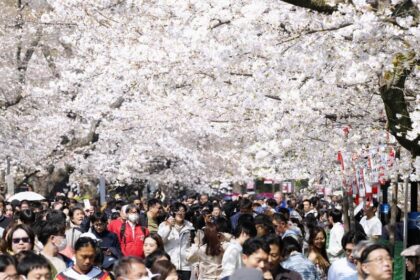
This measure represents a dramatic response to a transformation that has reshaped the neighborhood over the past two decades. Around twenty years ago, Nakameguro remained one of Tokyo lesser-known cherry blossom viewing destinations, a quiet residential area where locals could enjoy the spring blooms without fighting through massive crowds. That reality has dissolved completely. Last year alone, approximately 2.3 million people descended upon the district during the brief cherry blossom season, creating congestion that tested the limits of the neighborhood infrastructure.
The local shopkeeper association made the difficult decision to install these view-blocking screens for the first time in 2026, prioritizing safety over aesthetics. Unlike major cherry blossom venues such as Ueno Park, which was designed specifically to accommodate large numbers of visitors, Nakameguro remains fundamentally a residential neighborhood. The streets offering views of the river are narrow alleyways winding between businesses and apartment buildings, while the bridge sidewalks were never intended to host hundreds of thousands of people jostling for the perfect photograph.
From Quiet Canal to Fashion Destination
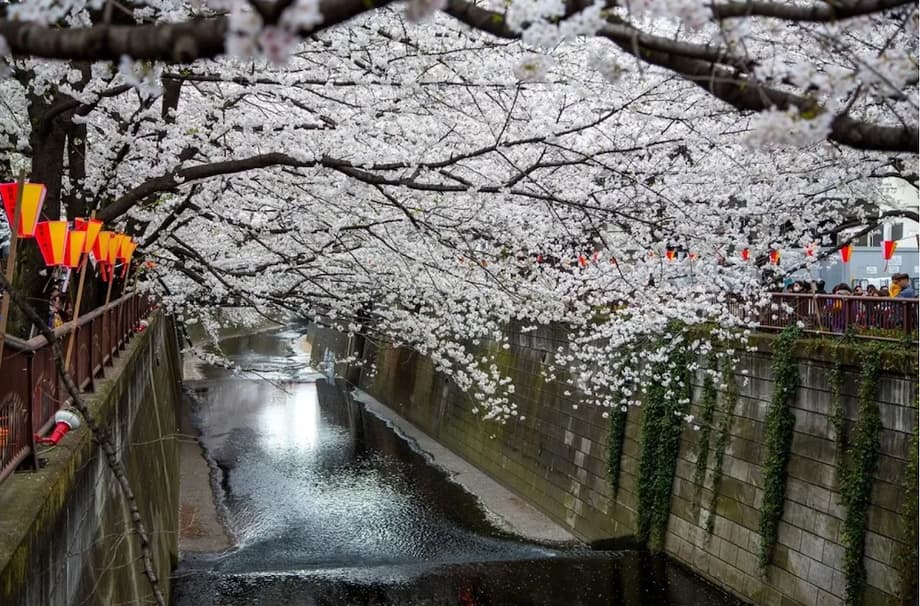
The metamorphosis of Nakameguro from a local secret to a must-see destination reflects broader shifts in Tokyo tourism and urban development. The Meguro River stretches approximately five kilometers through the city, from Gotanda in the north to the Meguro Sky Garden near Ikejiri-Ohashi Station, with roughly 800 cherry trees creating a tunnel of pink and white blossoms along its banks. While the entire sakura-lined stretch offers scenic views, the section near Nakameguro Station has become particularly magnetic for a specific demographic.
Young adults and fashion-conscious visitors flock to the area, drawn by what tourism officials describe as “Tokyo center of cool.” The neighborhood has cultivated a sophisticated atmosphere centered around the Nakameguro Koukashita, a vibrant commercial development of cafes, restaurants, and boutiques occupying the space beneath the elevated train tracks. The area flagship bookstore, Tsutaya Books, anchors this zone with its curated selection of international texts and reading spaces.
The proximity to Shibuya, just two stops away on the train, makes Nakameguro an easy extension of any Tokyo itinerary. Visitors often combine cherry blossom viewing with explorations of the nearby Daikanyama district, known for its vintage shops and art galleries. The Starbucks Reserve Roastery Tokyo, one of only six such locations worldwide and designed by architect Kengo Kuma, offers an outdoor terrace specifically positioned for cherry blossom viewing, further cementing the area reputation as a place where traditional hanami meets contemporary urban culture.
Food and drink vendors along the river have evolved to match this upscale clientele, offering options fancier than typical festival fare. The combination of photogenic scenery, fashionable surroundings, and convenient transportation has created a perfect storm of popularity that the neighborhood original infrastructure was never designed to withstand.
When Infrastructure Meets Overtourism
The fundamental challenge facing Nakameguro lies in its urban DNA. While destinations like Ueno Park were planned as public spaces with wide pathways and designated viewing areas, Nakameguro developed organically as a residential community. The bridges crossing the Meguro River serve a practical function for locals, connecting neighborhoods where people live and work. Their sidewalks remain narrow, designed for everyday pedestrian traffic rather than the crush of tourists that arrive each spring.
During peak cherry blossom season, visitors spill off these sidewalks into the streets, creating dangerous conditions for both pedestrians and drivers. People stand in roadways waiting for photo opportunities or shuffling between prime viewing positions, obstructing the flow of vehicles that residents and workers still need to navigate. This safety hazard prompted the shopkeeper association to take action, installing the opaque screens specifically on the bridge closest to Nakameguro Station, which serves as the primary entry point for the majority of visitors.
The screens effectively eliminate what had become the most popular photographic vantage point in the district. Ordinarily, this bridge offers a unique sight line where branches from cherry trees on both sides of the river stretch toward each other over the water, creating a natural archway of blossoms. The visual symmetry made it an ideal backdrop for group photos and selfies, but also created a bottleneck that paralyzed pedestrian flow.
Japan National Tourism Organization explicitly acknowledges these limitations in its official guidance, noting that “Nakameguro is a residential area, and becomes crowded during cherry blossom season.” The organization advises visitors to avoid leaving trash, refrain from walking on busy roads, and minimize noise, particularly during evening hours when the trees are illuminated and the atmosphere shifts toward nightlife.
A Pattern of View Protection
The Nakameguro screens echo a similar measure implemented in 2024 in Fujikawaguchiko, a town in Yamanashi Prefecture. There, an unanticipated surge of tourists created chaos at a particular street corner where Mount Fuji rises perfectly behind a convenience store, creating a postcard-perfect composition that spread rapidly across social media. The resulting crowds overwhelmed the narrow sidewalk, creating safety hazards and disrupting local business operations. Town officials responded by installing large black screens to block the view of the mountain from that specific angle.
These interventions represent a growing trend in Japanese tourism management, where the desire to preserve safety and quality of life for residents increasingly outweighs the economic benefits of unfettered visitor access. The Fujikawaguchiko example demonstrated that blocking a view, while seemingly counterintuitive for a tourism-dependent area, could effectively disperse crowds and restore normalcy to overwhelmed neighborhoods.
The Nakameguro approach appears more targeted than the total view obstruction at Fujikawaguchiko. Current plans restrict the screens to just one bridge, leaving views from the streets along the river and from other bridges unobstructed. This surgical approach attempts to maintain the area appeal while addressing the most dangerous congestion point. However, the measure has already sparked discussion about whether similar interventions might become necessary at other popular Tokyo viewing spots if overtourism continues to accelerate.
How to Experience Nakameguro in 2026
Visitors determined to see Nakameguro cherry blossoms still have numerous options despite the main bridge restrictions. The screens currently cover only the bridge immediately adjacent to Nakameguro Station, leaving approximately four kilometers of sakura-lined riverbank accessible from other angles. Travelers can enter from Meguro Station to the south and walk north along the river, or explore the sections near Ikejiri-Ohashi and Gotanda, which typically see lighter crowds than the heart of Nakameguro.
Timing remains the most effective strategy for avoiding congestion. Early morning visits, particularly before 8:00 a.m., offer a dramatically different experience than the afternoon crush. One recent visitor noted that cycling through the area revealed levels of crowding that made the experience “disgustingly busy” during peak hours, suggesting that those seeking tranquility should plan accordingly.
For those unwilling to navigate the Nakameguro crowds, Tokyo offers numerous alternatives that provide equally stunning cherry blossom experiences without the infrastructure constraints. Shinjuku Gyoen National Garden, with its 500 yen entrance fee and timed entry system implemented in 2025, manages visitor flow through a vast landscape containing over sixty varieties of cherry trees. Chidori-Ga-Fuchi offers the popular option of renting rowboats to view blossoms from the water, though visitors should arrive by 8:00 a.m. to secure boat rental tickets, which often sell out hours in advance.
Ueno Park combines traditional hanami with food festival atmosphere, while the Sumida River area near Asakusa allows for more relaxed picnicking under the trees. The Shibuya Sakura Street provides an urban nighttime viewing experience with illuminated trees creating a vibrant atmosphere distinct from the riverside settings.
Understanding the Crowd Dynamics
Some local commentary has attributed the congestion to recent increases in foreign tourism, with one resident noting the presence of “a lot of foreigners” in interview footage. However, longtime observers of the area note that the riverside streets were already extremely congested with majority-Japanese crowds long before Japan current inbound tourism boom accelerated. The neighborhood has traditionally maintained popularity within the expatriate community, creating a diverse visitor base that predates recent tourism statistics.
Litter has emerged as a parallel concern during cherry blossom season, though the shopkeeper association did not cite this as a rationale for the view-blocking screens. The combination of food vendors, evening drinking, and massive crowds creates sanitation challenges in a residential area not equipped with festival-grade waste management infrastructure.
The situation has reached such intensity that at least one Japanese city has canceled its cherry blossom festivities entirely due to overcrowding-related behavioral issues. This precedent looms over Nakameguro, where officials hope that targeted crowd management can prevent the need for more draconian measures. The screens represent an attempt to preserve the festival atmosphere while ensuring that residents can still navigate their own neighborhood during peak season.
Key Points
- Tokyo Nakameguro district installed opaque view-blocking screens on the main bridge near Nakameguro Station to manage cherry blossom season crowds
- The screens display “No stopping” and “One-way” instructions to prevent pedestrian bottlenecks and improve safety
- Approximately 2.3 million visitors came to Nakameguro during last year sakura season, overwhelming the residential neighborhood narrow infrastructure
- The measure follows a similar 2024 intervention in Fujikawaguchiko, where screens were installed to block a popular Mount Fuji view that had become hazardous due to overtourism
- Alternative viewing options remain available along the 5-kilometer sakura-lined Meguro River, including other bridges and entry points from Meguro or Ikejiri-Ohashi stations
- Early morning visits (before 8:00 a.m.) offer the best opportunity to experience the blossoms with minimal crowds
- The screens specifically target the bridge that offered the most iconic photographic backdrop, where cherry trees from both riverbanks create a natural archway