A Nationalist Surge Propels Conservative Triumph
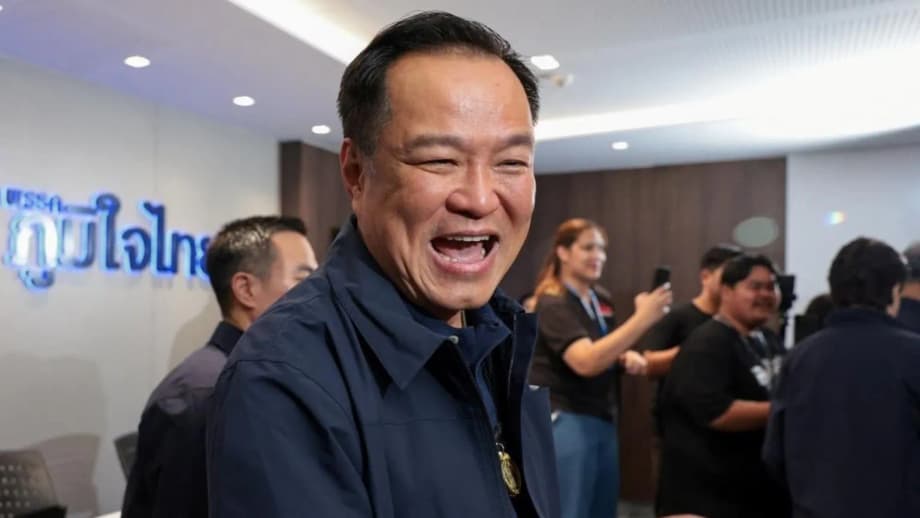
Prime Minister Anutin Charnvirakul claimed a decisive victory in Thailand’s general election on Sunday, with his conservative Bhumjaithai Party securing nearly double the seats of its nearest rival in a result that defied months of opinion polling and reshaped the nation’s political landscape. With approximately 94 percent of votes counted, preliminary results showed Bhumjaithai winning between 192 and 194 of the 500 seats in the House of Representatives, positioning Anutin to become the first Thai leader in two decades to be returned to office through the ballot box.
- A Nationalist Surge Propels Conservative Triumph
- Defying the Polls and Predictions
- Border Conflict and the Nationalism Wave
- Progressive Movement Faces Setbacks
- Pheu Thai’s Dramatic Collapse
- Voters Prioritize Stability Over Reform
- Referendum Results Create New Battleground
- Foreign Policy and Regional Relations
- Forming the Next Government
- At a Glance
Addressing supporters at his party headquarters in Bangkok late Sunday, Anutin struck a magnanimous tone while claiming victory.
Bhumjaithai’s victory today is a victory for all Thais, no matter whether you voted for Bhumjaithai Party or not. We have to do the utmost to serve the Thai people to our full ability.
The progressive People’s Party, which had led most pre-election surveys and hoped to build on its predecessor’s 2023 victory, trailed with roughly 116 to 118 seats. The once-dominant Pheu Thai Party, political vehicle of the billionaire Shinawatra family, suffered its worst electoral performance in two decades, capturing only about 74 to 86 seats and sliding to third place.
Defying the Polls and Predictions
Throughout the campaign season, surveys consistently placed the People’s Party ahead, with its message of structural reform and economic modernization resonating particularly among young voters in urban centers. The party, formed as the successor to the Move Forward Party after that organization was dissolved by the Constitutional Court for its stance on reforming Thailand’s strict royal defamation laws, expected to ride an orange wave of progressive support to victory.
Instead, the electorate delivered what analysts are calling the first conservative victory at the polls since 1996, signaling a dramatic shift in voter priorities. Political scientists attribute this reversal to a combination of surging nationalism following border clashes with Cambodia, widespread economic anxiety, and Anutin’s strategic consolidation of provincial power networks. The contrast between expectations and results was stark. In Bangkok, the People’s Party maintained its dominance, sweeping all 33 constituencies in the capital. However, it failed to translate this urban support into rural victories, where Bhumjaithai’s alliances with local political clans, known as baan yaai or big houses, delivered crucial constituency seats under Thailand’s first-past-the-post system for 400 of the 500 parliamentary seats.
Border Conflict and the Nationalism Wave
Anutin’s decision to dissolve parliament in mid-December, less than 100 days after taking office, initially appeared risky. He had become prime minister in September following the Constitutional Court’s removal of Paetongtarn Shinawatra, daughter of former premier Thaksin Shinawatra, over her handling of a border dispute with Cambodia. Rather than facing a potential no-confidence vote in a minority government, Anutin bet that simmering nationalist fervor from two rounds of deadly fighting with Cambodia would propel his party to victory.
The gamble paid off. Border skirmishes in July and December 2025 killed scores on both sides and displaced approximately one million people, creating an atmosphere of insecurity that Bhumjaithai expertly exploited. Anutin campaigned heavily on national security, promising to build a wall along the Cambodian frontier and authorizing the military to take autonomous action in border regions without civilian oversight. Speaking at a rally in the border province of Sisaket last week, Anutin declared his commitment to territorial integrity. The prime minister emphasized his achievements in recovering disputed lands.
Once I became prime minister, everything we once lost, it has come back to be ours again.
The party’s blue branding, matching the Thai national flag, reinforced its patriotic messaging. Anutin successfully portrayed himself as the candidate who could protect Thai sovereignty while painting progressive rivals as insufficiently patriotic for their calls to reform the military.
Progressive Movement Faces Setbacks
The People’s Party’s defeat represents a significant blow to Thailand’s reformist movement, which had captured the imagination of younger voters with promises to curb military influence, break up business monopolies, and modernize the education system. The party’s leader, 38-year-old Natthaphong Ruengpanyawut, conceded defeat late Sunday, acknowledging that his party would serve in opposition rather than join any coalition led by Anutin. Addressing tearful supporters on Sunday night, the party leader urged his followers to maintain their commitment to democratic reform despite the setback.
Don’t lose hope. We’ve come so far.
Political analysts identify several factors behind the progressive decline. The party’s decision to support Anutin’s bid for the premiership last September, in exchange for promises of constitutional reform and early elections, granted the conservative leader the benefits of incumbency while undermining the People’s Party’s ideological distinctiveness. Mathis Lohatepanont, an independent political analyst, described this as a major miscalculation that allowed Anutin to consolidate the conservative vote while damaging the progressives’ reformist credentials.
Additionally, the party was forced to soften its stance on military reform and completely abandon its predecessor’s position on reforming Article 112, the draconian lese-majeste law that criminalizes criticism of the monarchy. The Constitutional Court had dissolved the Move Forward Party specifically for advocating such changes, forcing its successor to sidestep the issue entirely. This dilution of its radical agenda left the party without sharp, emotionally resonant issues that had energized its base in 2023, while failing to convince moderate voters that it could manage national security.
Pheu Thai’s Dramatic Collapse
The election marked a potential endpoint for the political dynasty that has dominated Thai elections for two decades. The Pheu Thai Party, founded by former Prime Minister Thaksin Shinawatra and subsequently led by his sister Yingluck and daughter Paetongtarn, saw its seat count plummet from 141 in 2023 to approximately 74 to 86. For the first time in memory, the party failed to win any constituency seats in Chiang Mai, the Shinawatra family stronghold.
This collapse follows a tumultuous year for the clan. Thaksin returned to Thailand in 2023 after 15 years in self-imposed exile to serve a prison sentence for corruption, though many observers expect early release as part of political negotiations. His daughter Paetongtarn became prime minister following the 2023 election but lasted only months before the Constitutional Court dismissed her over a leaked phone call with former Cambodian leader Hun Sen, in which she referred to him as uncle and appeared to criticize Thai military commanders.
The grand bargain between Pheu Thai and the conservative establishment, which allowed Thaksin’s return and his daughter’s premiership, alienated the party’s traditional red shirt supporters while failing to win lasting protection from judicial intervention. The party’s handling of the Cambodia conflict drew widespread criticism, and its standing was further damaged by accusations of economic mismanagement as household debt reached record levels and growth stagnated at just 1.5 percent last year.
Voters Prioritize Stability Over Reform
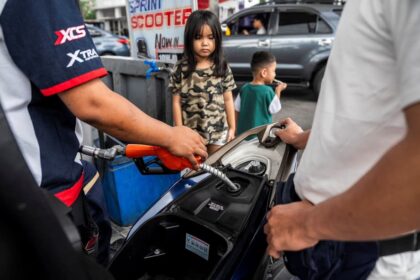
Thailand’s sluggish economy provided the backdrop against which voters evaluated their choices. Once dubbed the sick man of Asia, the country has struggled with torpid growth, with the vital tourism sector yet to recover to pre-pandemic levels and manufacturing facing competition from Vietnam and other neighbors. Household debt has climbed to historic highs, while the baht currency appreciates against trading partners, hurting exports.
Anutin positioned himself as a pragmatic steward capable of delivering immediate economic relief through populist measures, including consumer subsidy programs and cash handouts. He surrounded himself with well-known technocrats, creating an image of competent management that contrasted with the People’s Party’s untested idealism and Pheu Thai’s recent failures. Finance Minister Ekniti Nitithanprapas has already committed to continuing stimulus plans, including the second phase of subsidy schemes to cut living costs.
For many voters, the promise of stability outweighed calls for radical change. Civil servant Phananya Bunthong told the BBC that economic concerns drove his voting decision, capturing the anxiety prevalent among the middle class regarding factory relocations to neighboring countries. The People’s Party’s ambitious agenda of breaking up conglomerates and restructuring the bureaucracy appeared to many as risky experiments during uncertain times, whereas Anutin’s simpler message of financial assistance and national security offered immediate reassurance.
Referendum Results Create New Battleground
Alongside the parliamentary vote, Thais participated in a referendum on whether to replace the 2017 constitution, drafted under military rule following the 2014 coup. Preliminary tallies showed approximately 65 percent of voters supporting the drafting of a new charter, a clear mandate for change despite the conservative victory in the legislative contest.
This result creates a complex dynamic for the incoming government. Thailand has had 20 constitutions since the end of absolute monarchy in 1932, with most changes following military interventions. The current charter grants significant power to unelected institutions, including a Senate selected through an indirect process that previously blocked the Move Forward Party from forming government despite its 2023 plurality.
However, with Bhumjaithai controlling the largest bloc in parliament and conservative allies dominating the Senate, Anutin will guide the constitutional reform process. Two additional referendums are required to complete the amendment process, meaning any changes will take at least two years and remain subject to conservative veto. Progressives hope to curb the Senate’s power and reduce judicial intervention in politics, but Anutin has indicated resistance to radical changes that would undermine traditional institutions. Anutin vowed not to delay work on a new constitution, stating that the government would act according to the people’s will.
Foreign Policy and Regional Relations
Anutin’s victory carries significant implications for Thailand’s international posture. The prime minister has emphasized a balanced approach between the United States, Thailand’s oldest ally in Asia, and China, where Anutin’s ancestors originated and with whom he maintains close ties. Having spent eight years studying and working in New York, Anutin expresses personal affinity for America while refusing to take sides in great power competition.
Speaking with TIME magazine during the campaign, Anutin outlined his vision for Thailand’s foreign policy.
We consistently stand by the rules-based international order and the norms agreed upon by the global community. In a polarized world, countries that remain pragmatic and reliable become more valuable, not less.
He has also committed to working with Cambodia’s Prime Minister Hun Manet, whom he described as very intelligent and capable, to resolve border disputes through map harmonization while maintaining Thailand’s military position in disputed areas. Regarding Myanmar, where a military junta recently held elections condemned as fraudulent, Anutin advocates engagement without endorsement, supporting ASEAN-led solutions while prioritizing humanitarian access. Domestically, he has promised to tackle multibillion-dollar cyberscam networks operating from neighboring countries, a growing concern for regional security.
Forming the Next Government
Despite its strong showing, Bhumjaithai fell short of the 251 seats required for an outright majority, necessitating coalition negotiations. Anutin has declined to specify potential partners, waiting for final certified results from the Election Commission, which has 60 days to complete the process. Parliament must convene within 15 days of certification to elect a speaker and prime minister.
Several smaller parties won a combined 117 seats, with the Kla Tham Party projected to capture approximately 57 seats, potentially providing Anutin with sufficient support to form a government without Pheu Thai. However, Pheu Thai remains a likely coalition partner given its previous alliance with Bhumjaithai and the arithmetic of parliamentary politics. The People’s Party has explicitly ruled out participation in any Anutin-led administration, committing instead to robust opposition.
Analysts expect Anutin to move quickly to consolidate power, potentially retaining incumbent ministers of finance, foreign affairs, and commerce to maintain continuity. The scale of the victory should provide the stability investors have craved, with Thai stocks surging more than 3 percent following the results to their highest levels in over a year. Napon Jatusripitak, a political scientist at the Bangkok-based Thailand Future think tank, noted that the scale of the victory should resolve the chronic instability that has plagued Thai governments.
For the first time in a long time, we will likely have a government that has sufficient effective power to govern.
At a Glance
- Anutin Charnvirakul’s Bhumjaithai Party won approximately 192-194 seats in Thailand’s 500-member House of Representatives, nearly triple its 2023 tally
- The progressive People’s Party finished second with roughly 116-118 seats, accepting defeat and committing to opposition status rather than joining a coalition
- Pheu Thai, the Shinawatra family party, collapsed to third place with approximately 74-86 seats, its worst result in two decades
- Voters simultaneously approved a constitutional referendum with roughly 65 percent support for replacing the 2017 military-drafted charter
- Anutin called the snap election after less than 100 days in office to capitalize on nationalist sentiment following border conflicts with Cambodia
- The conservative victory marks the first time since 1996 that a royalist-aligned party has won a plurality in national elections
- Economic stagnation and household debt were primary voter concerns, with stability outweighing demands for radical reform
- Anutin requires coalition partners to reach the 251-seat majority threshold, with negotiations expected to conclude within weeks