The Nuclear Energy Office Takes Shape
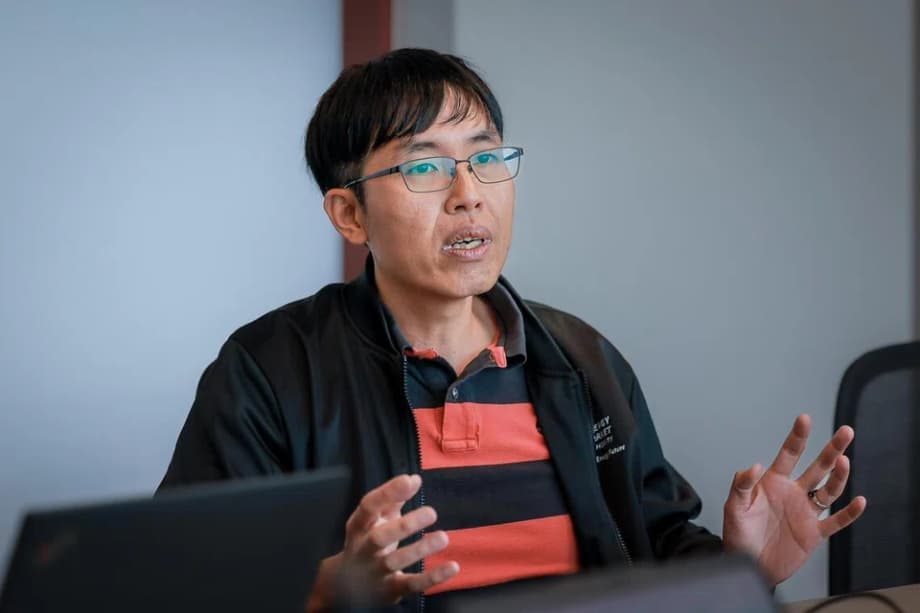
Singapore has established a specialized Nuclear Energy Office within the Energy Market Authority, marking the city-state’s most significant institutional step toward evaluating atomic energy since concluding that conventional reactors were unsuitable over a decade ago. Formed in October 2025, this dedicated unit operates under the leadership of Darryl Chan, who transitioned from his previous role as EMA’s director of energy technologies to become the office’s inaugural director.
- The Nuclear Energy Office Takes Shape
- The Energy Security Imperative Driving Renewal
- Small Modular Reactors: Technology and Safety
- Developing Domestic Nuclear Capabilities
- International Partnerships and Knowledge Exchange
- Safety, Regulation, and Regional Cooperation
- Public Engagement and Education Challenges
- At a Glance
The new office comprises four specialized branches: Nuclear Energy Technologies and Safety, Nuclear Policy and Planning, Nuclear Ecosystem Development, and Nuclear Project Implementation. Together, these teams form a 26-person workforce expected to expand substantially as Singapore deepens its understanding of nuclear infrastructure requirements. In his first interview on February 6, Chan articulated the office’s core philosophy: domestic capability building must precede any deployment decision.
We can’t rely on foreign partners forever. We have to build domestic capabilities to do these important analyses ourselves.
This emphasis on self-reliance reflects lessons from the International Atomic Energy Agency’s milestone approach, which identifies 19 distinct infrastructure issues that nations must address when considering their first nuclear power plant. These range from establishing legal and regulatory frameworks to developing radioactive waste management pathways and emergency response capabilities. Chan noted that his team must examine each area through different lenses to ensure Singapore can independently verify safety claims and operational requirements without depending entirely on external consultants or technology vendors.
The office’s formation follows Prime Minister Lawrence Wong’s announcement during the Budget 2025 speech that the government would reorganize to place greater emphasis on nuclear capability building. This restructuring also included establishing a dedicated nuclear safety team within the National Environment Agency, Singapore’s radiation and nuclear safety regulator, creating a clear separation between the promotional functions of EMA and the oversight responsibilities of NEA.
The Energy Security Imperative Driving Renewal
Singapore’s renewed interest in nuclear technology stems from a precarious energy security position that has grown increasingly acute amid global geopolitical uncertainties. The city-state currently derives approximately 95 percent of its electricity from natural gas, a fossil fuel subject to volatile international price fluctuations and supply chain vulnerabilities. As Singapore targets net-zero carbon emissions by 2050, with the energy sector contributing roughly 40 percent of national emissions, the pressure to diversify has intensified.
Yet Singapore faces severe constraints in accessing renewable alternatives. Limited land area, urban density, and inconsistent cloud cover severely restrict solar photovoltaic deployment. The absence of rivers precludes hydroelectric power, while geothermal resources remain inaccessible. This alternative energy disadvantaged status, as officials describe it, forces the nation to consider previously impractical options.
The turning point came with technological advances in small modular reactors. A 2012 pre-feasibility study concluded that traditional large-scale nuclear plants were incompatible with Singapore’s dense population and limited land. However, a 2022 EMA report indicated that emerging nuclear technologies could potentially supply around 10 percent of Singapore’s energy needs by 2050, helping the power sector achieve net-zero emissions. Minister-in-charge of Energy Tan See Leng confirmed at the Singapore International Energy Week in October 2025 that the country is seriously studying the potential deployment of nuclear energy, especially newer technologies such as small modular reactors.
Small Modular Reactors: Technology and Safety
Small Modular Reactors represent a fundamental departure from the massive 1,000-plus megawatt facilities that defined the nuclear industry for decades. SMRs typically generate approximately 300 megawatts per unit, roughly one-third the capacity of conventional plants, but offer characteristics particularly suited to Singapore’s constraints. Their modular construction allows for factory fabrication of components followed by on-site assembly, potentially reducing build times from nearly a decade to just a few years while minimizing construction risks.
Most significantly for urban deployment, SMRs incorporate passive safety systems capable of automatically shutting down and cooling the reactor core without requiring electrical pumps or human intervention. These designs eliminate many of the failure modes that contributed to historical accidents. Additionally, SMRs require substantially smaller emergency planning zones, or buffer areas, compared to the extensive exclusion zones mandated for traditional plants, making them viable for compact city-states.
In September 2025, EMA appointed the Singapore office of UK-based consultancy Mott MacDonald to conduct a comprehensive two-year study evaluating the safety performance and technical feasibility of various advanced designs. The firm, which brings over six decades of nuclear industry experience, will assess water-cooled SMRs, high-temperature gas-cooled reactors, and molten salt reactors. Hyundai Engineering & Construction is participating as a subconsultant, contributing five decades of global nuclear construction expertise. Mott MacDonald previously assisted Holtec Britain in completing the first step of the generic design assessment for its SMR, and provided technical advice on Britain’s Hinkley Point C project.
Dr Ming Tan, global nuclear practice lead at Mott MacDonald, emphasized the rigorous safety focus.
For us, safety is absolutely non-negotiable. Therefore, we’ll be focusing on the key safety and design advancements in SMRs, such as the inherent safety features and their simpler, more compact plant design. We’re also looking at the progress these technologies have made through its licensing and regulatory processes.
Developing Domestic Nuclear Capabilities
Building indigenous expertise forms the cornerstone of Singapore’s nuclear strategy. The Singapore Nuclear Research and Safety Institute, launched at the National University of Singapore in July 2025, aims to train 100 nuclear experts by 2030, effectively doubling the current specialist pool of approximately 50 professionals. This academic center combines research functions with workforce development, creating a sustainable pipeline of talent for government agencies and potential future industry needs.
Chan emphasized that Singapore requires domestic capability to independently evaluate reactor safety systems and verify vendor claims about performance under local conditions. He identified safety system evaluations as a critical area where the nation needs its own expertise to be fully assured that selected technologies are safe for local deployment.
The capability building extends beyond engineering to encompass policy analysis, environmental science, and economic modeling. EMA has issued tenders for consultant panels to provide advisory services across the IAEA’s 19 infrastructure areas, which include human resource development, radiation protection, radioactive waste management, and emergency planning. The IAEA estimates that nations typically require 10 to 15 years to progress from initial consideration to operational status for their first nuclear plant, underscoring the long-term nature of Singapore’s preparatory work.
Dr Victor Nian, founding co-chairman of the Centre for Strategic Energy and Resources, noted that establishing both a promoter within EMA and a regulator within NEA follows best practices from established nuclear nations. This dual structure ensures that potential development conforms to international codes and standards while maintaining rigorous safety oversight.
International Partnerships and Knowledge Exchange
Singapore is pursuing a diversified international learning strategy, recognizing that no single nation offers a complete template for nuclear deployment. The city-state has established formal cooperation agreements with the United States, France, and the United Arab Emirates, alongside partnerships with specialized research institutions.
The United States relationship includes a civil nuclear cooperation agreement signed in August 2024, commonly known as a 123 Agreement after the relevant section of the US Atomic Energy Act. This 30-year pact enables technology transfers and information sharing. In September 2025, the US Department of Energy approved Singapore’s inclusion in the Part 810 list of Generally Authorized Destinations, granting access to controlled technical data on American nuclear technologies. This builds on existing arrangements between the US Nuclear Regulatory Commission and Singapore’s NEA, which have collaborated on safety matters since 2017.
At the World Nuclear Exhibition in Paris in November 2025, EMA signed a Memorandum of Understanding with French utility EDF, expanding on a bilateral Singapore-France cooperation agreement established in May 2025. Singapore has also partnered with the UAE’s Emirates Nuclear Energy Company and signed agreements with US research institutions including Battelle Memorial Institute and Idaho National Laboratory, specialists in advanced reactor technologies and fuel testing.
Chan explained the rationale for this multifaceted approach.
Different countries have different experiences in the context of technology and developing their own nuclear power programme… we want to learn from everybody.
He emphasized that Singapore must adapt rather than adopt foreign regulatory frameworks wholesale, selecting best practices from various systems to suit local needs. EMA teams have conducted site visits to nuclear facilities in the United States, Switzerland, France, and South Korea to observe operational technologies and regulatory approaches firsthand.
Safety, Regulation, and Regional Cooperation
While EMA assesses feasibility, the National Environment Agency has established a dedicated nuclear safety team to develop regulatory capabilities. This separation of promotional and regulatory functions aligns with international nuclear governance standards. The NEA already maintains an ambient radiation monitoring network comprising 40 air and water monitoring stations deployed across Singapore, equipped to measure radionuclide concentrations and detect anomalies.
Waste management presents a significant long-term challenge. Any nuclear program must address permanent disposal of high-level radioactive waste, requiring geological stability and decades of planning. The IAEA infrastructure framework includes waste management as one of the 19 critical capability areas Singapore must develop. While operational solutions remain under study, the regulatory framework must account for spent fuel storage and eventual disposal.
The regional context adds complexity to Singapore’s deliberations. Five ASEAN countries, Vietnam, Indonesia, the Philippines, Malaysia, and Thailand, are actively studying or planning nuclear deployment. This neighboring interest creates both potential for cooperation and necessity for enhanced regional safety coordination. Ang Kok Kiat, group director for radiation protection and nuclear science at NEA, stated that Singapore is catalysing nuclear safety cooperation among counterpart regulators in the region. This collaboration includes regional early warning systems and shared detection capabilities.
Rafael Mariano Grossi, director general of the IAEA, suggested in July 2025 that Singapore could represent the most perfect example of a country needing nuclear energy given its territorial limitations, energy requirements, technological base, and institutional maturity. He anticipated potential deployment within a few years, possibly involving ASEAN cooperation.
Public Engagement and Education Challenges
Beyond technical and regulatory considerations, the Nuclear Energy Office confronts significant public communication challenges. Nuclear energy carries emotional resonance from high-profile accidents, particularly the 2011 Fukushima Daiichi meltdown following a tsunami in Japan. Chia Meng Hwee, deputy director of the Nuclear Energy Office, noted that public confidence remains crucial.
Nuclear energy is an emotive subject, so we have to take into consideration the public’s understanding and the confidence in the technologies that will be deployed. Successful deployment of nuclear energy in the region could also boost public confidence in these technologies. Conversely, if there’s any setback in terms of deployment, this could also negatively impact the local and regional perception of these technologies.
Authorities have discovered broader public knowledge gaps regarding energy constraints. Some residents believe Singapore already runs primarily on solar power, unaware that natural gas dominates the current mix. Chan emphasized that education must begin with explaining the city-state’s energy vulnerabilities before addressing nuclear specifics. He noted that when people lack appreciation of energy constraints, they may not understand why the country is examining sources like nuclear or ammonia.
The government released a 16-page background paper in October 2025 titled Building Singapore’s Capabilities to Assess Nuclear Energy, designed to contextualize the discussion within national energy constraints and climate goals. The NUS institute will dedicate its ground floor to public exhibitions addressing radiation myths and nuclear science basics. Chan acknowledged that public acceptance remains essential, stating that if 90 percent of the people do not want a plant near their homes, it becomes a very hard conversation.
EMA is actively gauging public interest and knowledge levels regarding nuclear options. The agency recognizes that successful deployment requires not just technical feasibility but social license, necessitating transparent communication about both benefits and risks. As Tan See Leng assured at SIEW 2025, the government will engage the public regularly as the journey progresses.
At a Glance
- Singapore established the Nuclear Energy Office at EMA in October 2025, led by director Darryl Chan, to assess advanced nuclear technologies and build domestic expertise
- The city-state currently generates 95 percent of its electricity from natural gas and aims to achieve net-zero emissions by 2050, driving interest in low-carbon alternatives
- Small Modular Reactors are the primary focus, offering smaller footprints, passive safety systems, and reduced construction timelines compared to conventional nuclear plants
- The Singapore Nuclear Research and Safety Institute at NUS launched in July 2025 with a goal of training 100 nuclear experts by 2030
- International partnerships include civil nuclear agreements with the United States, France, and the UAE, plus research collaborations with Battelle Memorial Institute and Idaho National Laboratory
- The National Environment Agency has formed a separate nuclear safety team to regulate radiation protection and safeguards, maintaining 40 monitoring stations across the island
- A two-year technical study by consultancy Mott MacDonald began in September 2025 to evaluate SMR safety and feasibility for Singapore’s dense urban environment
- Singapore has not made any decision to deploy nuclear energy and emphasizes that safety assessments and public engagement must precede any commitment