The Rise of Yellow Beauty: Malaysia’s New Lunar New Year Sensation
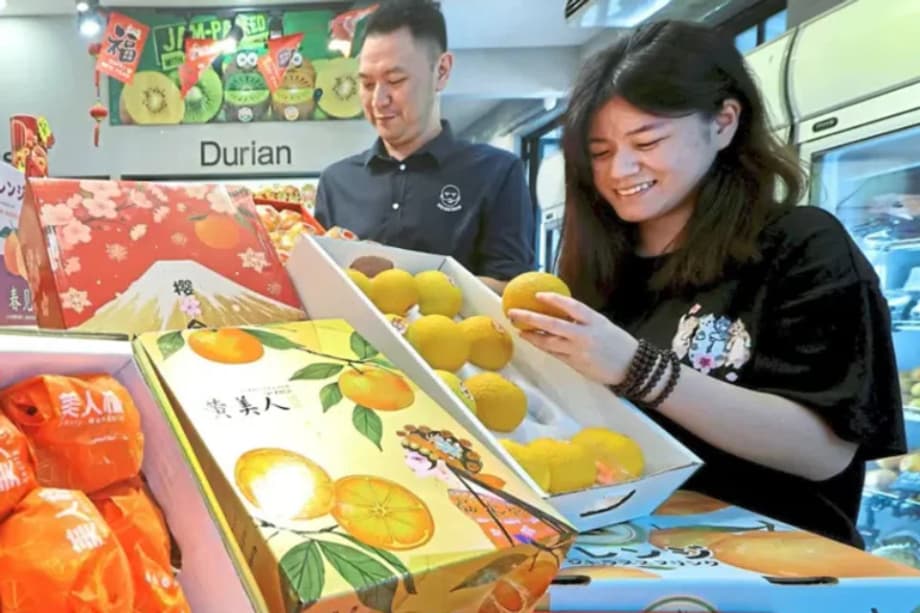
As Chinese New Year celebrations approach, Malaysian shoppers are discovering a new mandarin variety that promises to redefine festive snacking. Following the 2024 frenzy for Red Beauty oranges, the Yellow Beauty mandarin has emerged as the seasonal standout, captivating consumers with its distinctive firm texture and enhanced sweetness. Cultivated in China and recently introduced to Malaysian markets, this variety represents a notable shift in consumer preferences toward premium citrus fruits during the Year of the Horse.
- The Rise of Yellow Beauty: Malaysia’s New Lunar New Year Sensation
- A Study in Contrasts: Decoding the Mandarin Lineup
- Corporate Spending Signals Economic Confidence
- Navigating Supply Chain Challenges
- Cultural Context: The Year of the Fire Horse
- Nutritional Considerations and Storage
- Market Outlook and Consumer Strategy
- Key Points
Fruit seller Yong Boon Sing, speaking from his operations in Johor Bahru, observed that the transition from last year’s favorite has been remarkable. The jelly-like consistency that defined Red Beauty has given way to a crisper, more substantial bite that appeals to modern tastes.
“Unlike Red Beauty, which has a jelly-like texture, Yellow Beauty oranges are firmer and juicier,” he said in an interview with The Star.
This textural distinction has proven decisive for consumers seeking a more satisfying bite, while the brighter skin color enhances the visual appeal essential for gift presentation. The variety has quickly established itself as the middle-tier premium option, retailing at RM48 per box (approximately S$15.39 or US$10.10).
A Study in Contrasts: Decoding the Mandarin Lineup
The current season presents Malaysian consumers with an unprecedented array of mandarin varieties, each catering to specific preferences and price points. While Yellow Beauty commands attention among mid-range options, it sits below the ultra-premium Sakura orange, priced at RM68 per box (around S$21.80 or US$14.40).
The Sakura represents the luxury segment of the market, offering a hybrid of tangerine and pomelo that delivers a golden yellow hue and an unusual pineapple-like fragrance. Yong noted that this aromatic profile distinguishes it from conventional offerings: “This gives the fruit a golden yellow colour and a unique pineapple-like fragrance, which customers find interesting.”
For those seeking value without compromising quality, the Papagan variety offers easy peeling characteristics and juicy segments. Meanwhile, the traditional lokam remains the undisputed volume leader. April Tan, assistant general manager at a fruit and flower distributor, confirmed that lokam maintains its position as the most widely available and affordable option.
“In terms of volume, lokam is still in the top variety,” she stated, while acknowledging Yellow Beauty’s rapid ascent as a hot seasonal item.
This stratification allows consumers to select varieties based on specific needs, from bulk entertainment supplies to refined corporate presentations.
Corporate Spending Signals Economic Confidence
Beyond individual consumers, the corporate gift market has embraced these premium varieties with unexpected enthusiasm. Companies that once defaulted to standard lokam varieties for employee and client gifts are now allocating significantly larger budgets for festive presentations. Yong reported a noticeable shift in corporate purchasing patterns, with businesses now willing to spend RM40 and above per person on premium oranges and curated gift sets.
“In the past, the common lokam variety was usually the top choice for corporate gifts but this year, companies are more willing to spend on premium oranges and gift sets,” he observed. This trend suggests broader economic confidence among Malaysian businesses, with festive spending serving as a barometer for commercial optimism during the Year of the Fire Horse.
The heightened interest aligns with broader Lunar New Year gift trends for 2026, which emphasize unique, high-quality items over traditional mass-market selections. From artisanal pineapple cakes to designer tea collections, the movement toward premiumization reflects changing demographics and rising disposable incomes among corporate decision-makers. The mandarin orange, carrying the auspicious Cantonese homophone “kam” (sounding like “gold”), serves as both a traditional prosperity symbol and a contemporary luxury item.
Navigating Supply Chain Challenges
Despite robust demand, the mandarin supply chain has faced significant obstacles this season. Stricter enforcement inspections at Malaysian ports have introduced delays in container processing, potentially threatening the timely distribution of perishable goods. However, industry professionals report that these logistical complications have not yet translated into price volatility.
April Tan indicated that current market conditions remain manageable, attributing price stability to the early phase of the season. “There are stricter inspections by enforcement agencies on shipping containers arriving at our ports. The situation is manageable at the moment as sales are still slow since the school year has just started,” she explained.
Complicating matters further, a devastating warehouse fire in Kota Baru recently destroyed 76.8 tons of mandarin oranges intended for the Chinese New Year market. The blaze, which broke out along Jalan Kebun Sultan at approximately 9:00 pm, completely gutted a facility that had supplied retailers across Kelantan for four decades. Warehouse manager Hong Leng Feng confirmed that the loss would affect regional availability, describing the facility’s central role in local distribution.
“All these mandarin oranges were supplied for the whole of Kelantan, with most supermarkets in Kota Baru sourcing their stock from this warehouse,” he told reporters at the site.
The incident destroyed not only the stored produce but also two lorries and two motorcycles, removing a central distribution point during the critical pre-festive period. Fire crews from multiple stations responded to the emergency, facing additional complications from collapsed storage racks inside the warehouse.
Cultural Context: The Year of the Fire Horse
The 2026 Lunar New Year, celebrating the Year of the Fire Horse, has inspired particularly ambitious festive preparations across Malaysian retail spaces. Shopping malls in Penang and Kedah have transformed into immersive cultural experiences, featuring elaborate equine-themed displays that blend traditional symbolism with contemporary aesthetics.
Sunway Carnival Mall’s “Galloping Into Prosperity” installation showcases life-sized golden steeds surrounded by geometric art forms, while Queensbay Mall presents a two-storey vertical scroll reinterpreted as a three-dimensional spectacle. These visual metaphors for momentum and progress mirror the characteristics associated with the horse in Chinese zodiac tradition: energy, forward movement, and decisive action.
Within this cultural framework, mandarin oranges carry amplified significance. The enhanced appeal of Yellow Beauty and Sakura varieties aligns with the zodiac year’s themes of boldness and distinction, offering gift-givers a way to honor tradition while demonstrating refined taste. Tourism Malaysia officials have noted that such cultural festivals serve as pillars of experiential tourism, allowing visitors to engage in unique performances and activities that showcase the region’s heritage.
Nutritional Considerations and Storage
While taste and presentation drive purchasing decisions, mandarin oranges offer genuine health benefits that justify their prominence in seasonal celebrations. Each 100 grams of mandarin contains approximately 53 calories, 13 grams of carbohydrates, and 1.8 grams of fiber, according to clinical dietitian Jaclyn Reutens. However, those seeking Vitamin C supplementation should note that mandarins contain roughly 27 milligrams per 100 grams, compared to 59 milligrams in navel oranges.
The white pith that clings to mandarin segments, often discarded by fastidious peelers, actually contains valuable nutrients. “They may taste slightly bitter but they pack a good amount of fibre, potassium and flavonoids,” Reutens advised. Consumers should chew thoroughly and limit intake to two or three oranges daily to avoid digestive issues.
Proper storage extends the viability of these premium purchases. Whole mandarins remain fresh in refrigerators for up to two weeks, while airtight containers can preserve unpeeled fruit for nearly a month. This longevity proves particularly valuable for varieties like Yellow Beauty, which consumers may wish to display decoratively before consumption.
Market Outlook and Consumer Strategy
As the festive period progresses, industry observers anticipate sustained demand for premium varieties despite the higher price points. The contrast with 2024’s market conditions, when favorable weather in China’s Fujian province produced a bumper crop that lowered prices by 15-37% across size categories, highlights the volatility of agricultural imports. This year, stricter port controls and supply disruptions have created a different economic environment, yet consumer enthusiasm remains undiminished.
For shoppers navigating the diverse options, fruit sellers recommend considering the specific use case. Yellow Beauty suits those prioritizing texture and visual brightness, while Sakura appeals to adventurous palates seeking unique aromatic profiles. Traditional lokam varieties continue to serve bulk needs and budget-conscious buyers, and Papagan remains ideal for convenient snacking.
The emergence of these differentiated varieties reflects broader trends in Malaysia’s food retail sector, where consumers increasingly prioritize quality and distinctiveness over generic commodity purchases. As the Year of the Horse gallops forward, the mandarin orange market demonstrates how traditional festive staples can evolve to meet contemporary expectations while maintaining their cultural essence.
Key Points
- Yellow Beauty mandarins from China have replaced 2024’s Red Beauty as the premium variety of choice in Malaysia
- The variety features firmer, juicier flesh compared to the jelly-like texture of Red Beauty, retailing at RM48 per box
- Sakura oranges, a tangerine-pomelo hybrid with pineapple fragrance, command RM68 per box in the luxury segment
- Corporate buyers have increased festive gift budgets to RM40 or more per person, favoring premium varieties over traditional lokam
- Stricter port inspections and a warehouse fire in Kota Baru destroying 76.8 tons of stock have tested supply chain resilience
- Prices remain stable despite logistical challenges, with lokam continuing to dominate by volume as the affordable staple
- The 2026 Year of the Fire Horse has inspired premium gift trends aligned with themes of energy and prosperity