Navigating a Trade Tightrope
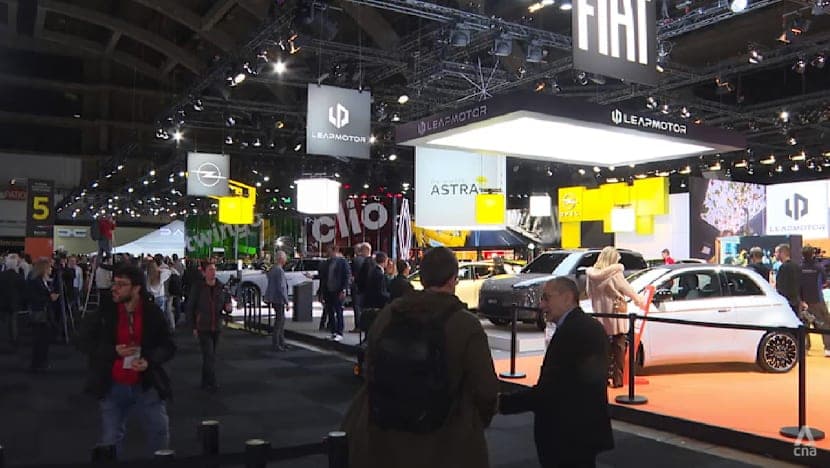
Europe is attempting to balance competing economic imperatives in its relationship with China, seeking closer commercial ties while addressing a trade imbalance that has reached unsustainable levels. The European Union recorded a goods trade deficit exceeding $350 billion with China in 2024, a gap that accounts for more than 30 per cent of global gross domestic product between the two partners. This asymmetry has become particularly acute in the electric vehicle sector, where Chinese manufacturers have rapidly expanded their European market share from roughly 2 per cent in 2022 to approximately 7 per cent in the first half of last year. Zeekr Europe acting CEO Lothar Schupet confirmed the expansion pace, noting his company has added roughly one new market every two months.
European Commission deputy chief spokesperson Olof Gill stated that longstanding concerns remain unresolved, including industrial overcapacity and the unfair use of trade instruments. Rather than severing economic links entirely, Brussels is pursuing a strategy of “de-risking,” which aims to safeguard critical supply chains while maintaining engagement with the world’s second largest economy. This approach unfolds against a backdrop of increasing global uncertainty, particularly as transatlantic relations with the United States become less predictable under shifting trade policies. French President Emmanuel Macron has echoed calls for rebalancing, urging fewer imports and greater Chinese investment in European production facilities.
The complexity of this diplomatic positioning reflects broader questions about European strategic autonomy in an era of great power competition. Beijing has signaled its desire for deeper cooperation with the bloc, yet new EU proposals on cybersecurity threaten to restrict Chinese technology giant Huawei from critical telecommunications networks. Linlin Liang, director at the China Chamber of Commerce to the EU, warned that such steps could undermine business confidence if particular companies face exclusion without clear evidence.
The Tariff Dispute Unfolds
The current tensions crystallized in October 2024, when European Union member states voted to impose additional tariffs on Chinese-made electric vehicles following an extensive anti-subsidy investigation. The European Commission found evidence of widespread state support within China’s EV ecosystem, including direct grants, preferential financing from state-owned institutions, subsidized inputs, and tax benefits across the supply chain. The final vote revealed significant divisions within the bloc, with ten member states supporting the tariffs, five opposing them, and eleven abstaining. Germany voted against the measures, reflecting concerns from its automakers who manufacture one-third of their vehicles for the Chinese market and maintain substantial investments in production facilities and joint ventures there. France supported the duties, with President Emmanuel Macron arguing that state-sponsored competition from Beijing risked eliminating European industrial capacity in the green technology sector.
The tariff structure imposed differentiated rates based on the level of cooperation with the investigation. BYD faced additional duties of 17 per cent, Geely 18.8 per cent, and SAIC 35.3 per cent, all applied atop the standard 10 per cent import duty. Tesla and other Western manufacturers producing in China received individually calculated rates. SAIC, which faced the highest penalties, argued it had adequately responded to the Commission’s inquiries and suggested the information requests created an unjustified coordination burden. The measures represented a historic shift in EU trade policy, targeting a sector where the bloc had previously maintained a trade surplus with China but now faced rapidly eroding market share.
Minimum Prices as an Alternative
Following the tariff imposition, Brussels and Beijing began exploring an alternative mechanism known as price undertakings, which would establish minimum import prices for Chinese electric vehicles in lieu of punitive duties. This approach would allow manufacturers to commit to price floors that theoretically eliminate the injurious effects of subsidies while preserving market access. In recent months, the European Commission published detailed guidelines permitting Chinese producers to submit price undertaking offers, including commitments regarding future investments within the bloc. Each submission undergoes rigorous assessment to ensure it provides equivalent effect to the tariffs and complies with World Trade Organization rules.
However, analysts at the Brussels-based think tank Bruegel have identified substantial risks with this approach. Price undertakings could result in higher costs for European consumers while simultaneously boosting profit margins for Chinese exporters, who would retain revenue otherwise collected as tariff duties. The administrative complexity presents another hurdle, as setting minimum prices for complex manufactured goods with rapidly evolving specifications requires specialized expertise that the Commission may lack. Furthermore, shifting from tariffs to price commitments could cost the EU budget approximately €2 billion annually in lost revenue, funds that could otherwise support research and innovation programs. The arrangement might also reduce incentives for Chinese manufacturers to establish production facilities within Europe, as higher export margins decrease the economic rationale for local investment.
Beijing’s Strategic Countermeasures
China has responded to European trade measures with calculated retaliatory actions and strategic leverage, demonstrating the interconnected nature of bilateral commercial relations. Beijing launched anti-subsidy investigations into European dairy, pork, and brandy products, imposing temporary tariffs of up to 42.7 per cent on some dairy items and up to 39 per cent on French cognac. These moves specifically targeted agricultural sectors in member states that supported the EV tariffs, with French cognac makers complaining they have become collateral damage in the broader dispute.
More significantly, China has linked resolution of these secondary disputes to progress in the EV negotiations. Five industry sources confirmed that a tentative deal on minimum import prices for cognac, reached after months of technical negotiations, will only be finalized if the EU makes comparable progress on electric vehicle tariffs. The proposed cognac agreement would establish minimum prices ranging from 46 yuan per litre for standard varieties to 613 yuan for premium categories, significantly below current duty-inflated levels but contingent upon Brussels matching Beijing’s flexibility on automotive trade.
Perhaps most critically, China has wielded its dominance in rare earth elements as leverage in the broader negotiations. Chinese officials indicated willingness to establish a “green channel” for faster export approvals of rare earths to European manufacturers, addressing a supply crisis that has sent the automotive industry into what insiders describe as “full panic.” Rare earths are essential components in dozens of vehicle parts, including motors, sensors, and speakers. Several European auto supplier plants have already shut down due to material shortages, with industry associations warning of broader production outages. By linking rare earth export licenses to progress in the EV tariff dispute, Beijing demonstrates the extent to which global supply chains depend on Chinese mineral processing capacity.
Market Impact and Industrial Response
The trade dispute has already altered market dynamics for electric vehicle sales and manufacturing strategies across both regions. Despite the tariffs, Chinese electric vehicle exports to the EU reached approximately 580,000 units in 2024, representing 28 per cent of China’s total battery electric vehicle exports. Industry forecasts suggest these volumes could grow by 20 per cent annually over the next three years as manufacturers adapt to the new regulatory environment. BYD recently overtook Tesla as the leading electric vehicle brand globally, while expanding its European presence to twelve countries and adding roughly one new market every two months.
European manufacturers and suppliers face immediate operational challenges from the supply chain disruptions. The Japanese Chamber of Commerce and Industry in China reported that Beijing has begun approving some rare earth export applications, but European businesses continue facing delays and lack of transparency in the licensing process. A German Chamber of Commerce executive described the approval system as a “huge bureaucratic monster,” noting that mere announcements have proven insufficient to calm industry nerves. German auto association VDA criticized the EU tariffs as a mistake and advocated for negotiated solutions.
“Regardless of current global developments, it must also be discussed here how to reduce obstacles and distortions in international trade, rather than building new hurdles,” the association stated.
Some Chinese manufacturers are adapting by accelerating plans for European production. BYD intends to begin construction of a manufacturing plant in Hungary later this year, a move that would circumvent import duties while creating local employment. Volkswagen has sought individual price undertakings for its China-built Cupra Tavascan model, submitting proposals that include annual import quotas and minimum pricing commitments separate from the broader EU-China negotiations.
Geopolitical Calculations in a Shifting World
The EU-China trade negotiations occur within a broader context of realigning global economic relationships, where Brussels attempts to maintain strategic autonomy between an assertive Beijing and an unpredictable Washington. French President Emmanuel Macron has explicitly called for rebalancing the EU-China relationship, advocating for reduced imports and increased Chinese investment in European production facilities. This vision aligns with the Commission’s broader industrial strategy, which former ECB President Mario Draghi outlined in a competitiveness report emphasizing that the green economy must become a source of European growth rather than merely a route to decarbonization through Chinese imports.
The alternative to managed trade, a complete decoupling, appears economically unfeasible for most European industries. Trade between the EU and China represents a substantial portion of global GDP, and recent deals with alternative partners such as India and the Mercosur bloc remain years away from full implementation and lack the scale to replace Chinese market access. Meanwhile, new EU proposals regarding cybersecurity and restrictions on high risk suppliers like Huawei in telecommunications infrastructure threaten to complicate the economic partnership further. Linlin Liang of the China Chamber of Commerce to the EU warned that excluding particular companies without clear evidence undermines business confidence and fair competition within the bloc.
As the July summit marking fifty years of EU-China relations approaches, officials from both sides have indicated that trade will dominate the agenda. EU Trade Commissioner Maros Sefcovic and Chinese Commerce Minister Wang Wentao have engaged in focused discussions regarding the price undertaking mechanisms, with Chinese state media describing the talks as entering their final stage. Whether this results in a durable settlement or merely pauses an ongoing trade conflict depends on Brussels’ willingness to accept Chinese investment commitments as sufficient compensation for subsidy distortions, and Beijing’s readiness to permanently resolve retaliatory measures affecting European agricultural and mineral-dependent industries.
The Essentials
- The European Union recorded a goods trade deficit exceeding $350 billion with China in 2024, with electric vehicles becoming a focal point of economic tensions.
- EU tariffs on Chinese-made EVs range up to 45.3 per cent total, including additional duties of 35.3 per cent for SAIC, 18.8 per cent for Geely, and 17 per cent for BYD atop the standard 10 per cent base rate.
- Brussels and Beijing are negotiating price undertakings, which would replace tariffs with minimum import prices and investment commitments from Chinese manufacturers.
- China has linked resolution of retaliatory tariffs on French cognac and European dairy products to progress in the EV negotiations, creating a complex web of conditional trade agreements.
- Beijing is using its dominance in rare earth elements as leverage, offering accelerated export approvals to EU businesses while maintaining strict licensing controls that have caused production outages among European auto suppliers.
- Despite trade barriers, Chinese EV exports to Europe are forecast to grow 20 per cent annually, with BYD expanding to twelve European countries and planning local production in Hungary.
- The outcome of current negotiations will determine whether the EU can maintain its “de-risking” strategy, balancing supply chain security with continued economic engagement with China.