A pre-summit show of force in North Korea
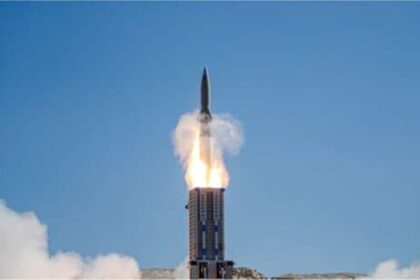
North Korea launched multiple short range ballistic missiles on Wednesday morning, South Korea’s military said. The salvo was fired from an area south of Pyongyang. The projectiles flew about 350 kilometers (around 220 miles) to the northeast and appeared to fall on land inside North Korea, not at sea. It was the country’s first ballistic test in five months, and the first under South Korea’s new president, Lee Jae Myung.
- A pre-summit show of force in North Korea
- What exactly was launched and why it matters
- A claim of hypersonic capability
- Allies coordinate and call for restraint
- Why the timing matters for diplomacy
- Kim’s expanding arsenal and the Hwasong 20 on parade
- Testing inside North Korea’s borders
- New leadership in Seoul faces an early test
- Possible next steps to watch
- What to Know
The timing is hard to miss. South Korea will host the Asia Pacific Economic Cooperation summit in the city of Gyeongju next week. United States President Donald Trump is set to visit Asia, with stops in Malaysia, Japan, and South Korea. South Korean officials say he is unlikely to attend the main APEC conference scheduled for October 30 to November 1, yet he plans bilateral meetings in Gyeongju with President Lee and possibly with China’s President Xi Jinping.
Japan’s Prime Minister Sanae Takaichi said there was no impact on Japan and that Tokyo is sharing real time missile warning data with Washington and Seoul. South Korea convened its National Security Council and said it has increased surveillance and readiness amid the possibility of additional launches.
What exactly was launched and why it matters
Seoul’s Joint Chiefs of Staff reported that several projectiles, believed to be short range ballistic missiles, were fired in quick succession. The reported range of about 350 kilometers fits with North Korea’s family of solid fuel short range systems, which are designed to fly on low, maneuvering paths and to stress missile defenses. These weapons can carry conventional or nuclear payloads. They are quick to set up, hard to detect before launch, and can be dispersed across the country.
Ballistic missiles follow a powered ascent, then glide or fall on a high speed trajectory toward impact. North Korea has refined a set of short range designs that are often called KN-23, KN-24, or KN-25 in nonofficial naming. The KN-23 resembles Russia’s Iskander in flight behavior, with a flattened arc and terminal maneuvering. Such traits shorten warning time for defenders in South Korea and Japan and can complicate interception.
The missiles appeared to land inside North Korea. Pyongyang often uses instrumented inland ranges for accuracy trials. Landing on domestic ranges avoids overflying neighbors, reduces diplomatic fallout, and still allows the regime to collect data on guidance and accuracy.
A claim of hypersonic capability
North Korea’s state media said the launches demonstrated a new hypersonic missile system and that two projectiles struck a preset land target in the country’s northern region. The report described the system as strategic, a term North Korean media use for nuclear capable weapons. The statement did not disclose a missile name.
Hypersonic weapons travel faster than five times the speed of sound. Many ballistic missiles already reach hypersonic speeds, so the novelty here is about flight profile and maneuvering. A hypersonic glide vehicle rides a booster into the upper atmosphere, then separates and glides long distances at high speed, making wide turns and altitude changes. That behavior can complicate tracking and interception. A maneuverable reentry vehicle, by contrast, stays on a shorter ballistic arc and performs smaller terminal maneuvers to shake defenders. From the outside, brief flights at 350 kilometers can look similar in basic tracking data, which is why independent analysts often wait for more technical details before judging new hypersonic claims.
What matters most for South Korea and Japan is not the label. It is whether the weapon can maneuver late in flight, whether its guidance is accurate, and whether it can be mass produced. Even a short range nuclear capable missile with a maneuverable warhead would strain regional missile defense networks that are optimized for predictable ballistic paths.
Allies coordinate and call for restraint
South Korea’s military said it remains ready, working with the United States, to respond to further provocations. The United States Forces Korea and the Pentagon assessed that the launches pose no immediate danger to U.S. personnel. Washington, Seoul, and Tokyo shared tracking data in real time and kept air and missile defense forces alert. Japan reported no impact on its territory or waters.
In a public statement, United States Forces Korea underscored alliance commitments and called out North Korea’s actions under United Nations resolutions.
USFK said the U.S. commitment to the alliance with Seoul remains ironclad, and urged North Korea to refrain from unlawful and destabilizing actions in violation of U.N. Security Council sanctions.
South Korea’s presidential office convened an emergency National Security Council session. Officials said the government would strengthen readiness while seeking to prevent escalation during the summit period. Civilian tours to the Joint Security Area at Panmunjom are suspended into early November, a routine step when tensions rise near the border.
Why the timing matters for diplomacy
Major diplomatic events often draw shows of strength from Pyongyang. The APEC meetings bring a parade of world leaders to South Korea and give North Korea a stage, even from a distance, to press its core demand. Since talks with Washington collapsed in 2019, Kim Jong Un has insisted that the United States must drop its demand for North Korea’s denuclearization if dialogue is to restart. Trump has said he remains open to talking with Kim, including the possibility of another meeting during his Asia swing, but Pyongyang has not publicly confirmed any plans.
South Korean and U.S. officials weighed, then downplayed, a possible presidential stop at the Demilitarized Zone. Any unscripted encounter with Kim would be a dramatic turn. Korean Peninsula veterans note that the North uses well timed tests to strengthen its hand before any talks. A launch just before APEC sends two messages at once, both to the South Korean host and to foreign leaders. The regime can create friction at a moment of Seoul’s diplomatic pride, and it can remind Washington that pressure alone has not paused its weapons programs.
China and Russia are part of the picture too. Senior officials from both were present in Pyongyang at a parade earlier this month, part of a public show of closer ties among the three capitals. That alignment makes it harder for the U.N. Security Council to agree on new penalties for missile launches, even as existing resolutions prohibit them.
Kim’s expanding arsenal and the Hwasong 20 on parade
On October 10, North Korea displayed a new intercontinental ballistic missile, referred to domestically as Hwasong 20, during a large military parade attended by foreign dignitaries from China and Russia. State media described it as the country’s most powerful nuclear strategic weapon. Outside observers believe the design aims to carry multiple warheads or decoys to complicate U.S. missile defenses. The parade did not feature a flight test, but signals from Pyongyang point to more long range demonstrations in the months ahead.
In September, North Korea announced the ninth and final ground test of a large solid fuel engine used for long range missiles. Solid fuel accelerates launch timelines because a missile can be rolled out and fired with little preparation. If paired with a new ICBM, that progress would reduce warning time for defenders. Short range tests like the current salvo serve another purpose for the regime. They validate production lines, operators, and logistics, all while keeping international attention fixed on Pyongyang’s capabilities.
Kim has intensified missile activity since the 2019 breakdown of talks in Hanoi. The strategy is simple. Expand the arsenal, unveil new systems, claim new performance, and choose the political moment to press for sanctions relief or security concessions. The latest short range launches and the hypersonic claim fit this pattern.
Testing inside North Korea’s borders
Several recent North Korean launches have ended on land inside the country. That may look odd from the outside. For the regime, it carries practical advantages. Inland impact areas can be densely instrumented to measure accuracy, warhead fuzing, and debris. They avoid overflight of Japan, which tends to trigger alerts and diplomatic protest. They also reduce the risk of recovery by foreign navies.
South Korea’s tracking and later updates from North Korea both pointed to an inland impact on Wednesday. That detail aligns with earlier tests of short range systems that aim for precise strikes on military airfields, ports, and command centers in the South. Accuracy has become a central selling point for Pyongyang. A credible ability to hold specific nodes at risk changes how Seoul must plan base hardening and dispersal.
New leadership in Seoul faces an early test
President Lee Jae Myung campaigned on engagement and cross border cooperation, even while maintaining deterrence and readiness. He used his first address to the United Nations General Assembly to call for renewed efforts toward denuclearization and practical steps to reduce military risk on the peninsula. Wednesday’s launch forced a rapid meeting of his National Security Council and a public signal that South Korea’s forces are on alert.
Lee’s room to maneuver depends on several moving parts. The direction of U.S. policy under President Trump, the willingness of Pyongyang to accept talks without preconditions, and the stance of Beijing all shape the space for diplomacy. At the same time, Seoul must manage close coordination with Washington and Tokyo. Japan’s new government has stressed deeper trilateral security cooperation while stating that the latest launch did not harm Japan’s security.
Domestic politics matter too. Engagement requires political capital in Seoul. Repeated missile shots can harden public opinion. Lee must show deterrence works, communicate clearly with allies, and keep the door to dialogue open, even when Pyongyang raises the stakes.
Possible next steps to watch
North Korea could follow this short range test with more launches in the run up to APEC, then pause when leaders gather. It could roll out a longer range test to remind Washington of the Hwasong 20. It could also shift to cruise missile or air defense trials, which Pyongyang sometimes uses to vary the cadence of activity. The regime tries to control escalation, demonstrating power without inviting an immediate clash.
On the diplomatic front, the question is whether the missile activity is a prelude to another bid for talks on Pyongyang’s terms. Kim has said he would consider dialogue if Washington abandons its push for denuclearization. Trump has expressed interest in another meeting. Whether the two leaders meet in the coming weeks is uncertain. There are logistical and political hurdles, and Pyongyang has stayed quiet in public.
U.S. and South Korean officials will watch for signs of an imminent ICBM flight, such as unusual activity at test sites, movement of large transporter erector launchers, or satellite images of launch preparations. Any long range flight, even on a lofted path to high altitude, would break with the recent pattern of short range and inland tests and would prompt stronger allied responses.
What to Know
- North Korea launched multiple short range ballistic missiles from south of Pyongyang, which flew about 350 kilometers northeast and appeared to land on North Korean territory.
- The salvo was the first ballistic test since May and the first under South Korea’s President Lee Jae Myung.
- The timing comes a week before South Korea hosts the APEC summit in Gyeongju (October 30 to November 1). Trump will travel to Asia and plans meetings in South Korea, though South Korean officials say he is unlikely to attend the main APEC conference.
- North Korea’s state media claimed the launches demonstrated a new hypersonic system described as strategic, implying potential nuclear roles. The claim has not been independently verified.
- United States Forces Korea and the Pentagon said the launches posed no immediate threat and urged North Korea to refrain from unlawful and destabilizing actions. USFK reiterated the alliance with Seoul is ironclad.
- Japan reported no impact on its territory and shared real time warning data with South Korea and the United States.
- Pyongyang showcased a new Hwasong 20 intercontinental ballistic missile at an October 10 parade, a design believed to target U.S. missile defenses with multiple warheads or decoys.
- South Korea convened an emergency National Security Council meeting and raised readiness. Tours of the Joint Security Area at Panmunjom are suspended into early November.
- Analysts expect further missile activity around the summit period and are watching for signs of a possible long range test.