A military comeback along the road to China
Myanmar's military has retaken Kyaukme and pushed into Hsipaw along the trade corridor connecting northern Shan State to China, using sustained air strikes, artillery and drones to reverse some of the losses that shook its authority. As of October 23, 2025, the gains show how the junta has rebuilt its ability to attack, even while resistance forces hold or contest large parts of the country.
Contents
- A military comeback along the road to China
- How Kyaukme and Hsipaw changed hands
- Why Beijing is pressing for stability
- Lashio shows the reach of Chinese influence
- Chinese aircraft fill gaps in the air force
- Bomb production depends on outside assistance
- Drones and conscripts turn attacks into territorial gains
- Civilians face bombing, displacement and ruined homes
- An election tied to military control
- China's support has limits
- The Bottom Line
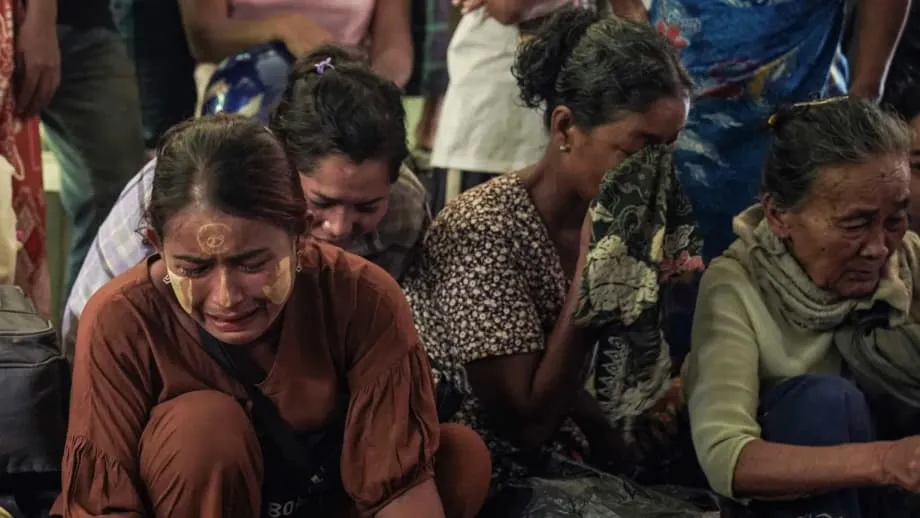
Kyaukme, a strategic town on Asian Highway 14, returned to military control within three weeks of its capture by insurgents. The army subsequently restored control in Hsipaw and over the road toward the Chinese border. Daily bombing, artillery barrages and attacks guided by drones flattened neighborhoods and drove residents from their homes.
The military's recovery combines equipment, manpower and outside pressure. Newly mobilized conscripts provide troops to occupy towns after bombardments. Chinese aircraft and drones strengthen attacks from the air. Beijing has also pressed ethnic armies to stop offensives, restricted supplies crossing its border and backed preparations for an election the generals plan to hold in 2025.
China's priorities run through the same territory: border stability, trade, valuable infrastructure projects and oil and gas pipelines connecting the Bay of Bengal to Yunnan. Its influence reaches both the junta and armed groups that depend on access to the Chinese frontier.
The result is a change in who controls important roads and towns, with immediate consequences for civilians. The army has regained movement and revenue along strategic corridors, while families face bombardment, displacement and shortages. Resistance positions elsewhere, including in Rakhine and Chin States, continue to hold.
How Kyaukme and Hsipaw changed hands
Taang fighters' capture of Kyaukme initially appeared to extend the psychological gains of Operation 1027, the coordinated offensive launched in late 2023 by three ethnic armies known as the Brotherhood Alliance. That campaign overran around 180 military outposts and exposed how vulnerable the army's northern positions had become.
The military's counterattack showed how its methods had changed. Drone spotters and commercial quadcopters, now available to its forces by the thousands, passed target coordinates to pilots. Jets and attack aircraft bombed central streets and suspected hiding places. Motorized paragliders also appeared over areas with limited defenses, dropping improvised bombs.
Ground forces then moved into areas battered from above. Kyaukme fell back under junta control within weeks, and the pattern was repeated in Hsipaw. The army's recovery followed shock losses late in 2024, although the broader resistance advance began with Operation 1027 in 2023.
The main developments span several years:
- 2021: After the coup, both military and resistance forces increasingly turned to drones.
- Late 2023: Operation 1027 overran around 180 outposts. The junta's expanding conscription drive began forcing tens of thousands of young men into service.
- Early 2024: Resistance forces claimed to have shot down an FTC 2000G aircraft during an attack in northern Shan State.
- 2024: A second batch of Chinese FTC 2000G fighter jets arrived in Myanmar.
- Early 2025: Chinese border restrictions and pressure narrowed the options available to ethnic armed groups.
- By October 23, 2025: The military had retaken Kyaukme and Hsipaw while preparing for an election planned for the year.
These towns carry practical value beyond their symbolic importance. Control of the border road restores customs revenue and allows military supplies to move along a major commercial route. It also reassures Chinese officials concerned about disruption near their frontier.
Why Beijing is pressing for stability
China's oil and gas pipelines stretch nearly 800 kilometers from the Bay of Bengal toward Yunnan, reducing reliance on seaborne routes. Border trade supports provincial economies, while fighting threatens infrastructure and risks spreading disorder across the frontier.
Beijing has responded with assistance to the state and pressure on its opponents. Policy analysts describe Chinese funding for a national census and an election, technology and training, tighter export controls on goods with civilian and military uses, and efforts to persuade or compel ethnic armed groups to accept ceasefires.
Goods with both civilian and military uses include commercial electronics that can serve ordinary businesses or be fitted to drones. Restricting their movement can affect armed groups' access to components as well as everyday economic activity.
Ethnic armies that had fought the military to a standstill in late 2023 faced growing constraints in early 2025. Border gates closed. Electricity and internet connections were interrupted in neighboring towns. Commanders, local leaders and people familiar with frontier affairs described warnings and detentions when rebel leaders entered China.
Chinese officials have also used the prospect of reopening trade as an incentive. For towns dependent on cross border connections, the combination of commercial restrictions and interrupted services puts pressure on civilian life as well as military operations.
Beijing's objective is to keep fighting away from trade and infrastructure and prevent the Myanmar state from collapsing. That approach has helped the junta regain room to operate, while leaving resistance groups facing constraints imposed from outside the country.
Lashio shows the reach of Chinese influence
Resistance forces withdrew from hard won positions in northern Shan State, including Lashio, without a fight after weeks of Chinese pressure. The pullback followed heavy losses suffered by forces that had fought to capture the city.
Ni Ni Kyaw, a spokeswoman for a prodemocracy force involved in that battle, accused Beijing of directly managing the outcome:
China claims not to interfere in Myanmar's internal affairs, but in Lashio, they clearly stepped in and managed the situation directly," she said. "China's approach to Myanmar's affairs is driven purely by self interest.
The withdrawal reduced immediate risks around nearby trade routes and pipelines. For fighters who had helped take the city, it reinforced the sense that their campaign faced two pressures: military attacks from the junta and restrictions from China.
Ni Ni Kyaw also expressed that frustration in these terms:
China's approach to Myanmar's affairs is driven purely by self interest," said Ni Ni Kyaw. "They clearly stepped in and managed the situation directly.
The United Wa State Army, a powerful supplier of weapons to other insurgent groups, has faced pressure to curb those transfers. Some factions have paused offensives or withdrawn from towns they previously controlled. Across northern Shan State's patchwork of armed territories, these changes affect who can keep fighting and where.
Chinese aircraft fill gaps in the air force
Myanmar's air force has struggled to keep Russian aircraft available for combat. Spare parts are costly, fuel consumption is high, many Yak 130 trainers have become unserviceable, and heavier Sukhoi fighters have taken time and resources to bring into operation.
Chinese aircraft fit more easily into Myanmar's existing maintenance arrangements. A second batch of FTC 2000G fighter jets arrived in 2024, and former officers and images from military ceremonies indicate that pilots began using them in combat. The aircraft carry bombs, rockets and missiles and have become important to strike missions when weather and logistics permit.
Zay Ya, a former Myanmar Air Force sergeant who defected after the 2021 coup, said Chinese jets had already flown combat missions from key air bases:
Many Russian made Yak 130s are out of service, so the Chinese jets are critical," said Zay Ya. "The Chinese planes can be used immediately, while the heavier Sukhoi needs time and resources the air force does not have.
The FTC 2000G has also featured in resistance claims and accounts of civilian destruction. Resistance forces claimed to have downed one in northern Shan State in early 2024. In separate attacks, the aircraft was identified in bombings of residential buildings near the Chinese border. Those incidents strengthened rights groups' calls to stop arms transfers to Myanmar.
Chinese supplies extend from finished aircraft to drones, spare parts and training. Commercial quadcopters can scout or drop munitions, while larger systems can attack at greater distances. Together, these tools help an army stretched on the ground strike far beyond its garrisons.
Bomb production depends on outside assistance
An independent advisory group composed of former United Nations officials has described Chinese state industry's involvement in establishing bomb production lines at Myanmar's defense factories. Its investigation cited Chinese engineers, training for factory workers in China and continuing assistance delivered remotely.
The group also described dependence on foreign microelectronics and other inputs used in aerial munitions. Its assessment was that the bombing campaign would slow without external supplies. This places factory equipment, components and technical support alongside aircraft and ammunition in the supply chain sustaining air operations.
Yanghee Lee, a former UN special rapporteur on human rights in Myanmar and a cofounder of the advisory council, called for China to stop supporting the military:
China must end military support to the Myanmar junta," she said. "The memory of bombings will linger for Myanmar's people.
Beijing rejects accusations that it fuels abuses and says it exercises caution in defense exports. Chinese officials say their goal is to reduce tensions and encourage dialogue.
Independent researchers have also traced the jet fuel, munitions and aircraft that sustain the campaign. Human rights advocates seek restrictions on all enabling transfers, including parts and technical assistance, alongside targeted sanctions on entities involved in producing munitions.
Those advocates also argue that China has used its UN Security Council veto power to block a binding international arms embargo. Chinese officials reject those claims. Meanwhile, Beijing's support for a managed election and its restrictions on supplies reaching insurgents have helped the military change the pace of the conflict.
Drones and conscripts turn attacks into territorial gains
Resistance groups initially used modified commercial quadcopters as inexpensive precision weapons. Teams dropped small bombs on outposts and ammunition stores, filmed convoys and disrupted supply lines. For fighters with limited artillery, drones provided a way to reach positions that would otherwise be difficult to attack.
The military has copied those methods, formed drone units and acquired advanced jammers. Jammers disrupt the signals used to control drones. Resistance groups say the equipment has reduced the range and reliability of their aircraft, while military drones help correct artillery fire and direct pilots toward targets.
The resulting competition favors forces with reliable access to electronics and replacement equipment. Chinese border controls have made that supply question more difficult for insurgents, while the junta benefits from broader procurement networks.
Conscription supplies another part of the military's recovery. Tens of thousands of young men have been forced into service since late 2023. Their training is uneven, but new units give commanders troops to reenter bombarded towns and staff checkpoints along highways and river crossings.
Aircraft can strike an area; soldiers are needed to occupy it afterward. The junta has concentrated that combination on trade corridors leading to China and Thailand and on district centers where it hopes to conduct voting.
That focus helps explain the recovery of Kyaukme and Hsipaw while resistance lines continue to hold elsewhere in Rakhine and Chin States. The army has restored some mobility and influence along routes central to its survival, while remaining far from full control of Myanmar.
Civilians face bombing, displacement and ruined homes
Air attacks have hit schools, clinics, hospitals, marketplaces, residential areas and places of worship. Monitoring groups counted hundreds of raids in late 2023 alone. Local tallies suggest that air attacks had killed at least 1,000 civilians during 2025 by the time of this account.
The United Nations estimates that displacement since the coup exceeds three million people. Conflict trackers count many tens of thousands of deaths across the war.
One of the deadliest attacks of 2023 struck a village gathering and killed scores of people. Local rights groups have also documented repeated attacks on churches in Karenni State. Communities describe raids where they saw no nearby military targets.
Independent researchers argue that the pattern amounts to a strategy of terror intended to break civilian morale and empty areas supporting the resistance. Their assessment connects the destruction of homes and public services to the military's wider campaign for control.
Morgan Michaels, a research fellow who studies the conflict, described the lasting damage:
"The military has destroyed more than one hundred thousand homes in the dry zone alone, leaving deep grievances that will last generations," he said.
Education has moved into hiding in many resistance controlled areas. Children attend classes in riverbeds beneath tarps or in improvised shelters. Aid groups say landmines and booby traps left by retreating units have made many homes unlivable, adding another obstacle for families hoping to return.
Food, medicine and shelter are increasingly scarce in conflict areas. Communities are building bomb shelters near schools and clinics, families move at night to avoid aircraft, and local groups record blast fragments and craters as evidence for future accountability.
An election tied to military control
The junta plans an election in 2025 with Chinese support for census work and technical preparations. No specific polling date is given. The leading party from the last national election is banned, and the military retains sweeping powers under the constitution it wrote more than a decade ago.
Large parts of the country are unsafe for voting. Analysts expect polling to take place in areas where military control has been restored, particularly provincial capitals and trade corridors. Capturing district centers therefore serves both military operations and the generals' political plans.
The junta wants the vote to provide a claimed mandate and a route out of the crisis that it can present to foreign partners. Opposition forces, including the People's Defense Force and allied ethnic armies, continue to hold or contest wide areas, however, while state services struggle and public trust has eroded.
Continued military dominance remains at the center of the dispute. An election conducted amid fighting, displacement and damaged infrastructure is unlikely to settle it.
China's support has limits
China is Myanmar's main trading partner and investor, a supplier of aircraft and electronics, and a gatekeeper for cross border commerce. It has also allowed private security providers to operate near strategic projects, freeing Myanmar military units for combat elsewhere.
Beijing's influence has helped protect selected routes, but continued attacks on civilians generate anger and resistance. Armed groups adapt their tactics and seek alternative supply paths, sustaining the instability China wants to contain.
Changes in supply, technology and foreign pressure have shaped each major turn in the war. The resistance advance in late 2023 combined local momentum with drone attacks on exposed outposts. The junta's recovery in 2024 and 2025 combines air power, expanding drone use and newly mobilized troops.
Rights groups and aid organizations call for stopping arms transfers, restricting jet fuel and sanctioning businesses that support munitions production. Some voices favor supplying the resistance with weapons, including systems capable of attacking aircraft, to deter strikes on civilians. Others warn that more weapons could widen the conflict and increase harm. Across these positions, air strikes are identified as the greatest driver of displacement and death.
A negotiated halt that holds across several fronts, or disruption of the weapons and fuel sustaining air operations, would change the conditions driving the fighting. Chinese assistance alone leaves the army facing maintenance needs, a limited pool of pilots and persistent weaknesses in manpower and logistics. Ground troops still need morale and cohesion to retain captured territory.
Dr. Abdul Rahman Yaacob, a Southeast Asia defense expert, described the limits of the aircraft deliveries:
The delivery may give the junta a tactical advantage," he said, "but it will not shift the balance, as the junta faces a shortage of manpower.
For civilians, the immediate calculation concerns whether schools can operate, homes can be reached safely and essential supplies can arrive. The military has regained important routes, but the communities along them continue to bear the cost of a war fought increasingly from the air.
The Bottom Line
- By October 23, 2025, the junta had retaken Kyaukme and Hsipaw, restoring control along an important trade route toward China.
- Air strikes, artillery, drones and conscripted troops have supported the military's recovery.
- China has supplied equipment and political support while pressuring ethnic armies and restricting border supplies.
- Chinese FTC 2000G aircraft have filled gaps left by maintenance problems affecting Russian aircraft.
- Independent investigators describe foreign assistance to bomb production and dependence on imported components and jet fuel.
- Local tallies suggest air attacks killed at least 1,000 civilians in 2025; UN estimates put displacement since the coup above three million.
- The junta plans an election in 2025, while opposition forces still hold or contest large areas.
- Chinese support has strengthened the military's tactical position without resolving its manpower, logistics or territorial control problems.