A courtroom question with national stakes
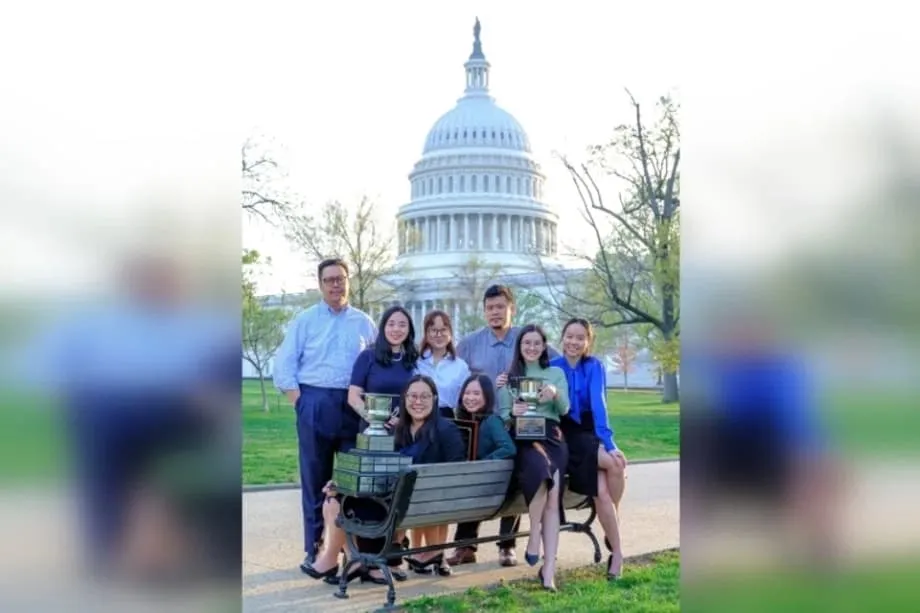
At the 2024 Lachs Space Law Moot world championship, Singapore Management University representative Raelee Toh faced pointed questioning from a former president of the International Court of Justice. One prompt demanded that the young Singaporean advocate connect her argument to the court's own decisions.
Contents
- A courtroom question with national stakes
- Why the law of the sea comes first
- How Singapore builds its training pipeline
- What the specialist courses teach
- Arbitration turns training into casework
- AI and copyright create new legal work
- Regional cooperation extends the work
- Keeping young lawyers in the profession
- The skills needed across courts and borders
- How progress reaches policy and practice
- Key Points
Where has this court discussed the doctrine you refer to?
The exchange captured the precision, preparation and confidence required in international legal work. For Singapore, developing those qualities is a national priority that reaches beyond university competitions. Lawyers must be able to argue cases, advise government and businesses, and help shape policy across borders.
Singapore sits where the Strait of Malacca meets the South China Sea. Nearly a third of global shipping passes along nearby routes, its port handles tens of millions of containers each year, and trade in goods and services amounts to several times its domestic output. Predictable rules support the movement of ships, aircraft, money, energy and data.
International law gives a small state with an open economy a framework for protecting its interests. Safe navigation and fair access to markets affect the businesses that provide jobs and the economic activity that finances public services. Knowledge of treaties and dispute settlement becomes a practical national asset.
Singapore's response connects university degrees, specialist courses, public service training and international partnerships. The subjects range from maritime boundaries and arbitration to climate change, artificial intelligence and digital trade. The aim is to prepare people who can work in courtrooms, policy offices and negotiations as the questions facing the country become more technically demanding.
Why the law of the sea comes first
The United Nations Convention on the Law of the Sea, known as UNCLOS, provides much of the framework relevant to Singapore's maritime interests. It defines maritime zones, protects navigation rights and sets duties to protect the marine environment.
Transit passage allows navigation through straits used for international shipping. Exclusive economic zones give coastal states rights over resources in designated waters. These rules help explain why a ship's right to pass through an area and a state's rights to resources there are different legal questions.
Singapore can refer to widely accepted treaty rules when protecting navigation in the Strait of Singapore and cooperating with neighbours on fisheries, pollution response and maritime research. Widespread participation in UNCLOS gives those discussions a common legal starting point.
The South China Sea presents a more difficult setting. Overlapping claims, construction on maritime features and incidents at sea create risks for the region. Researchers have recorded frequent cases in recent years involving fishing or coast guard vessels engaging in harassment or dangerous manoeuvres. Nonstate actors add complications, while land reclamation, oil spills and marine debris place further pressure on the environment.
Lawyers dealing with these problems need to understand treaty wording, state practice and the evidence required in arbitration. They also need to work with partners on practical measures that reduce risks and keep commerce moving. Legal argument and cooperation serve connected purposes in waters used by many countries.
How Singapore builds its training pipeline
The National University of Singapore Faculty of Law offers Master of Laws specialisations in International and Comparative Law, International Arbitration and Dispute Resolution, Intellectual Property and Technology Law, and Maritime Law. Students can also choose a flexible combination of courses without a formal specialisation.
Double degree pathways involving public policy connect legal study with the work of government. Together, these options allow students to develop technical depth while learning how legal advice fits into decisions involving public agencies and international partners.
The Centre for International Law, or CIL, extends training to law students, junior practitioners, diplomats and public officers. Its 2025 Academy programme was scheduled for 3 to 7 March, with registration closing on 14 February and a fee of SGD 800. The programme was designed for attendance in person, with two modules lasting three hours each day, preparatory materials and a special lecture. Graduates were to receive a CIL training certificate.
Those dates belong to the training calendar earlier in 2025. The sequence of initiatives described in Singapore's training effort also includes:
- 2022: CIL ran online courses on a part time basis, using weekly thematic modules and guest lectures by judges and ambassadors.
- 2024: Raelee Toh represented Singapore Management University at the Lachs Space Law Moot world championship.
- 14 February 2025: Registration deadline for the CIL Singapore Academy of International Law.
- 3 to 7 March 2025: Scheduled dates for the academy's programme in person.
- May 21: The Singapore Academy of Law launched its Junior Lawyers Professional Certification Programme. The announcement described here did not specify the year.
What the specialist courses teach
CIL's academy curriculum covers international law making, peace and security, dispute settlement in courts and tribunals, and diplomatic and consular law. It also includes human rights, international humanitarian and criminal law, sustainable development, climate change, international responsibility, cyber issues and artificial intelligence.
International responsibility concerns the legal consequences when a state breaches an international obligation. Studying it alongside subjects such as climate change and cyber activity helps connect established legal principles with problems that cross borders.
The teaching faculty combines experts based in Singapore with international practitioners, including members of the United Nations International Law Commission and counsel experienced in major cases. The programme's interactive design links legal principles to the decisions participants may face in practice.
A dispute settlement module examines evidence, fact finding and written arguments for arbitration or litigation. Climate teaching addresses how rising seas interact with baselines and maritime zones. Baselines are the reference lines from which maritime areas are measured, making them important to questions about a state's rights at sea.
Cyber and AI teaching explores responsibility for automated systems, transfers of data across borders and the application of existing treaty obligations to new technologies. Lawyers increasingly need to carry that knowledge between hearings, consultations and discussions involving several government agencies.
CIL's 2022 online format widened access for students and professionals unable to travel, while bringing participants together from across the region and beyond. The centre also supports research careers through advertised positions for researchers who have completed doctorates in international law and related public law fields.
The Singapore Cooperation Programme provides another route through an introductory law of the sea course for public officers and industry professionals. It covers maritime zones, the rights of coastal and landlocked states, freedom of navigation, management of marine resources and dispute resolution. A shared vocabulary helps lawyers, diplomats and mariners coordinate when an incident requires several agencies to respond.
Arbitration turns training into casework
The Singapore International Arbitration Centre, or SIAC, is a leading venue for resolving international commercial disputes. Modern legislation and a substantial pool of counsel and arbitrators support Singapore's position in this field.
Arbitration allows parties to put a dispute before an appointed decision maker rather than pursue it through an ordinary court case. For lawyers, it requires knowledge of procedure, evidence and strategy, alongside the ability to explain a client's position persuasively.
The role of arbitrator is open in principle, but institutions apply standards addressing independence, impartiality and experience. In disputes between investors and states at the International Centre for Settlement of Investment Disputes, or ICSID, arbitrators must possess high moral character and recognised competence in law, commerce or finance.
Other institutions, including the International Chamber of Commerce and the International Centre for Dispute Resolution, look for senior experience, training and references. SIAC expects candidates to have tertiary education, substantial experience after qualification, fellowship with a recognised arbitration institute, and a record of cases and awards.
NUS Law's dedicated specialisation in International Arbitration and Dispute Resolution supports that progression. Students work with leading practitioners, study procedural strategy and develop advocacy skills. Moots, clinics and placements connect classroom learning with casework.
Negotiation, communication across cultures and project management matter alongside legal knowledge. Counsel may need to coordinate evidence, witnesses and other lawyers in several jurisdictions while maintaining clear written and spoken submissions. The question put to Toh illustrates the standard of preparation: an advocate must be ready to identify the legal authority supporting an argument.
AI and copyright create new legal work
Singapore's Copyright Act, amended in 2021, introduced an exception for computational data analysis. This permits the mining of copyrighted material for purposes such as training AI systems, including commercial purposes, where users have lawful access.
Computational data analysis involves using computers to examine content and identify patterns. The exception supports activity in the digital economy while creators' interests remain part of the legal framework through other safeguards.
Litigation in other jurisdictions is testing the limits of fair use and text and data mining. In Singapore, guidance calls for balance and good faith practice. Lawyers working with AI need to turn those principles into contracts, licences and practical controls on legal risk.
Technology also changes maritime work. Remote vessel identification, encrypted exchanges of information and port cybersecurity have become regular legal and policy topics. Singapore has studied how established rules, including UNCLOS provisions on safety and environmental protection, can accommodate modern systems.
Advice may involve how long data should be retained, privacy, liability for automated decisions and the handling of evidence after a cyber incident affecting a ship or port facility. When information crosses borders, several states may become involved in questions of jurisdiction and enforcement.
The Singapore Academy of Law's Junior Lawyers Professional Certification Programme, launched on May 21, seeks to strengthen core skills while helping young lawyers keep pace with AI. Its combination of professional fundamentals and emerging tools also provides a more structured route through the early years of practice.
Regional cooperation extends the work
Singapore has hosted dialogues bringing scholars, naval officers and diplomats together to discuss maritime conduct and dispute management. Providing a neutral setting for these conversations supports its role as a convenor.
Within ASEAN processes, Singapore supports the Declaration on the Conduct of Parties in the South China Sea and efforts to keep channels open for preventing incidents. It has also joined neighbours in public statements calling for restraint at sea and compliance with agreed codes of conduct.
Legal training reaches beyond Southeast Asia. Addressing a programme organised with NUS, Pacific Islands Forum Secretary General Henry Puna described the pressures facing communities exposed to climate threats and geopolitical strain. He urged participants to prepare themselves to defend the rule of law and protect their nations' interests.
We must continuously promote the path of dialogue, of peaceful negotiation, cooperation, diplomacy, of respect for and implementation of international law, of treaties, and of international customs.
Pacific leaders have endorsed a declaration seeking to preserve maritime zones as sea levels rise. For low lying states, the issue connects legal rights at sea with the survival of communities facing climate threats.
Training more practitioners across the region can give governments a stronger shared understanding of their rights and duties. Singapore's capacity building work serves that practical purpose: helping countries discuss disputes through common legal principles while maintaining channels for cooperation.
Keeping young lawyers in the profession
Singapore's legal sector has faced concerns about attrition among younger lawyers. Building specialist expertise takes time, so retaining people is part of the same challenge as recruiting and training them.
Structured professional development and more manageable working rhythms can help sustain a demanding career. Mentorship, useful feedback and recognition of the purpose behind the work also matter in a profession associated with long hours and exacting standards.
The Junior Lawyers Professional Certification Programme seeks to reinforce basic skills and introduce technology in ways that support more sustainable practice. A clearer sense of progression can help young lawyers build confidence as they move into unfamiliar areas.
International exposure provides another part of their preparation. Singaporean law students regularly enter international competitions, with some winning awards. Public speaking and moot advocacy offer practice in presenting difficult arguments calmly and responding under pressure.
Some students study overseas before returning to Singapore. A Singaporean graduate who studied law in Sydney later topped the Singapore Bar Examinations Part A for foreign graduates. Such experiences broaden professional networks and perspectives useful in work involving other jurisdictions.
Courts, the public service and private practice benefit from lawyers who combine knowledge of Singapore with experience abroad. Many disputes involve assets, witnesses and evidence spread across countries. Coordinating with foreign counsel and understanding different procedures are therefore practical skills for an arbitration hub and commercial gateway.
The skills needed across courts and borders
Law of the sea, treaty formation, state responsibility, diplomatic and consular law, and human rights remain core subjects. International legal work also reaches into insolvency, sanctions, environmental protection and climate policy.
Insolvency involving more than one country requires coordination between courts. Sanctions affect trade, finance and shipping. Environmental and climate rules shape investment and insurance decisions. Each area calls for lawyers who can connect legal obligations with the activity of businesses and public agencies.
Evidence is changing as well. Satellite information, ship tracking records and digital logs are now common in maritime cases. Lawyers must understand how technical information is collected and presented, alongside the legal arguments it supports.
A senior judge speaking at a recent conference described international legal cooperation as integral to daily judicial work. The judge highlighted comity of courts, a principle of mutual respect and coordination that allows courts to work together while preserving sovereignty.
Justice should not be limited by national borders and the comity of courts and international legal cooperation are key instruments in achieving universal justice.
Cooperation between courts can make proceedings more predictable for litigants and reduce the risk of conflicting outcomes. Training can prepare lawyers through negotiation simulations involving joint statements or memoranda of understanding, and workshops on collecting evidence and recording who handled it.
Language skills and cultural fluency support hearings and settlement discussions. Familiarity with climate modelling, cybersecurity and other technical subjects helps lawyers work with specialists when a dispute crosses professional boundaries.
How progress reaches policy and practice
Singapore's institutions report steady annual training cohorts, including a growing group of counsel focused on maritime work. The practical value of that training lies in whether people can handle maritime, trade and technology cases and help sustain constructive regional discussions.
Policy work provides another measure. Green shipping corridors, action against illegal fishing and efforts to modernise port cybersecurity all require legal analysis and coordination with partners. These initiatives connect specialist knowledge with the operation and protection of maritime activity.
Singapore officials routinely invoke UNCLOS principles in discussions about navigation and environmental protection. Joint communiques with neighbours reinforce restraint and commitments against militarisation. Track Two meetings, informal dialogues outside formal government negotiations, provide further channels for reducing tensions and shaping shared expectations.
Singapore based counsel also appear in complex court and arbitration proceedings that can produce useful precedents. Certificates and competitions are stages in that longer process. The ultimate purpose is to develop people who can move from understanding a rule to applying it accurately, whether advising a ministry, negotiating with another country or answering a judge.
Key Points
- Singapore's trade, shipping and digital economy depend on predictable international rules and capable legal practitioners.
- UNCLOS supports navigation rights, maritime zones and environmental duties relevant to Singapore and its neighbours.
- NUS degrees, CIL courses and public service training connect specialist study with practical legal and policy work.
- The CIL academy's 2025 schedule listed 3 to 7 March, a 14 February registration deadline and a fee of SGD 800.
- Arbitration training prepares lawyers for demanding standards of independence, experience, evidence and advocacy.
- AI, copyright, maritime cybersecurity and data crossing borders are expanding areas of legal work.
- Regional partnerships address maritime restraint, peaceful dispute settlement and the effects of rising seas.
- Retention, international experience and cooperation between courts support the development of Singapore's legal talent.