Satellite shutdown targets a sprawling fraud network
SpaceX has disabled more than 2,500 Starlink satellite internet terminals near suspected scam compounds in Myanmar, targeting connections used by a criminal industry that traffics people and forces them to defraud victims worldwide. The action, announced by October 23, 2025, followed a Myanmar military raid on KK Park, a major compound near the border with Thailand.
Contents
- Satellite shutdown targets a sprawling fraud network
- What SpaceX says it has done
- The raid at KK Park
- Why the compounds depend on satellite internet
- How terminals reach an unlicensed market
- How targeted restrictions can work
- The people forced to run the scams
- Why raids have not ended the network
- A fraud economy reaching across continents
- Regional pressure and protection for survivors
- What will show whether the shutdown lasts
- Key Points
Myanmar's army said it detained 2,198 people at KK Park and seized 30 Starlink terminals. Authorities and rescue groups say many of those detained were trafficking victims forced to carry out romance and investment scams. The compound is near Myawaddy, a trading town opposite the Thai city of Mae Sot.
Starlink's portable dishes have helped criminal groups stay connected in remote areas where conventional internet is unreliable or deliberately cut. Thai authorities had tried to disrupt border compounds by shutting off electricity and conventional internet connections. Operators responded by bringing in generators and smuggling in satellite equipment, allowing fraud teams to resume contacting targets.
The shutdown reaches beyond one compound. At least 30 similar sites still operate along the border, many protected by militias and local power brokers. Thousands of people remain trapped, according to local communities and aid groups, while organizers move workers and equipment to avoid raids.
For people targeted in the United States, Europe, Africa and across Asia, those connections carry messages that can begin as friendship or romance and end with the loss of their savings. For workers inside the compounds, the same networks support a system of confinement, threats and violence.
What SpaceX says it has done
Lauren Dreyer, vice president of Starlink business operations, said SpaceX acted after identifying violations of its rules around suspected scam hubs. She described the company's commitment to legitimate access and preventing abuse:
We are committed to ensuring the service remains a force for good and sustains trust worldwide: both connecting the unconnected and detecting and preventing misuse by bad actors.
Dreyer also said SpaceX works with law enforcement in many markets and will act when misuse becomes clear. The company described the affected equipment as Starlink Kits in the vicinity of suspected scam centers. That wording suggests enforcement based on terminal locations, rather than a shutdown across an entire region.
Starlink's acceptable use policy bans fraudulent and deceptive activity. Enforcement had appeared uneven before this action: investigations documented terminals at multiple compounds, including photographs showing large clusters of dishes. Lawmakers and regional officials increased pressure during 2025, urging SpaceX to cut connections supporting the centers.
The raid at KK Park
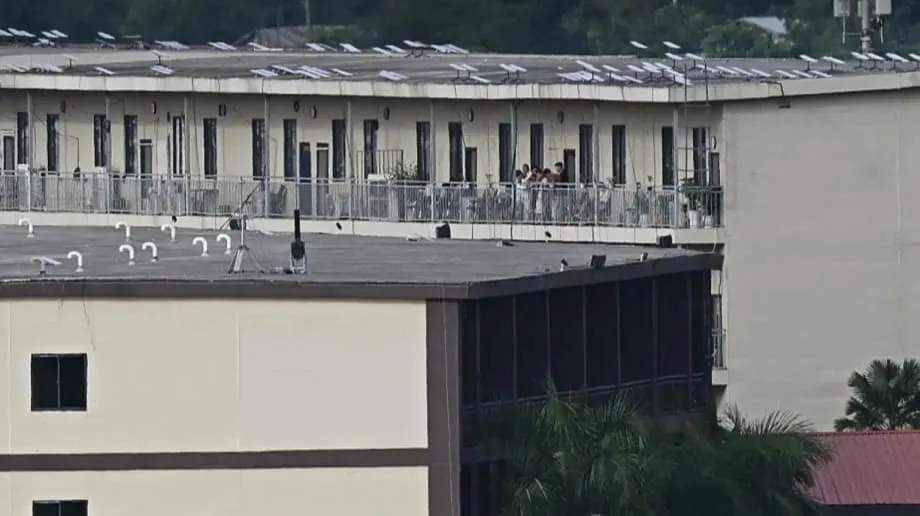
Myanmar's military took control of KK Park days before the Starlink shutdown. Images circulated afterward showed satellite dishes on low rooftops and long lines of workers leaving on foot. The complex reportedly contained hundreds of buildings used for online fraud, illegal gambling and money laundering.
The army's seizure of 30 terminals at KK Park sits alongside evidence from recent months of much larger numbers operating across the borderlands. Analysts tracking construction have seen new buildings and fresh dish installations even as authorities announce raids. Those observations suggest operators can replace equipment quickly and move workers to nearby compounds.
Kayin State and other parts of Myanmar have been contested or loosely governed during years of civil war following the 2021 coup. Transnational crime groups have exploited that limited oversight. The main developments leading to the shutdown were:
- 2021: Myanmar's coup was followed by years of civil war and fragmented control in parts of the country.
- Earlier in 2025: Thailand tried to disrupt border compounds by cutting electricity and conventional internet, while operations helped release about 7,000 people.
- Days before the shutdown: Myanmar's military took control of KK Park, reporting 2,198 people detained and 30 Starlink terminals seized.
- By October 23, 2025: SpaceX said it had disabled more than 2,500 terminals near suspected scam centers.
Why the compounds depend on satellite internet
Scam compounds need steady internet access to operate rows of messaging stations, fake trading dashboards, social media identities and encrypted chats. Their teams contact people across time zones, building relationships before steering them toward fraudulent investments.
Starlink supplies internet through a network of satellites. Its compact dishes are portable and relatively simple to point toward the sky, making them useful where fiber cables and mobile networks are weak. The service offers the speed and short response times needed for video, automated scripts and remote desktop tools that can be used to control victims' devices and accounts.
Criminal groups needed connections that could survive local blackouts and deliberate service cuts. Generators supplied electricity, while satellite dishes provided a route to the internet that did not depend on the conventional connections Thailand had shut down. That combination allowed teams to keep working despite disruption around them.
Photographs and videos have shown banks of white dishes on rooftops and balconies across sprawling complexes near the Moei River, which separates Thailand and Myanmar. Equipment that can connect isolated communities also gave compound managers a practical way to restore their operations.
How terminals reach an unlicensed market
Starlink is not licensed to operate in Myanmar. Accounts from the region indicate that terminals have been smuggled in from neighboring countries, often after registration in places where the service is authorized.
Some terminals appear to use accounts registered across the border, with metadata, the information associated with a connection, sometimes pointing to foreign registrations. Brokers have advertised packages to compound managers covering importation, installation and monthly service fees. This trade supplies satellite access to sites without lawful access to the service.
The supply chain matters because disabling equipment already in use is only part of the task. Managers who buy terminals in batches through brokers may have replacements in transit. Customs enforcement and police work against those suppliers would address the route by which new devices reach the compounds.
How targeted restrictions can work
SpaceX can disable individual terminals using their device identifiers. It can also apply geofencing, which blocks service inside a defined geographical area. The company's reference to equipment near suspected scam centers suggests it may be combining these approaches.
Providers can also examine traffic patterns for clusters consistent with a compound and place identified devices on a list that blocks access. Targeted enforcement requires careful checks of location and behavior, alongside coordination with law enforcement.
Humanitarian teams, local clinics and displaced families also depend on satellite connections in conflict zones. A broad geographical restriction could interrupt their access. Coordination is also needed to avoid disrupting rescue operations or monitoring approved by courts.
Starlink has faced scrutiny elsewhere over service in countries where it lacks licenses and reported use in conflict zones where connectivity is highly sensitive. The Myanmar action shows SpaceX's willingness to block abuse it can verify, while the movement of thousands of terminals makes continuing enforcement difficult.
The people forced to run the scams
Workers are often recruited through advertisements promising customer service, sales or technical support jobs. Some travel from distant countries, only to have their passports confiscated and find themselves locked inside guarded compounds.
Survivors describe long shifts, demanding quotas and punishment for failing to bring in enough money. Rescue accounts include beatings, electric shocks and forced confinement. People who resist may be sold to another compound. Threats against relatives and debts can make escape or reporting abuse even harder.
Traffickers recruit people from Africa, South Asia, China and other regions. Some victims are drawn into relationships on social media that eventually lead to travel and kidnapping. Once trapped, they may be forced to use similar online relationship tactics against others.
The fraud is often called pig butchering. Scammers spend time building a target's trust, then encourage increasingly large payments into fake cryptocurrency projects or investment platforms. Displayed balances can be fabricated, while attempts to withdraw money are blocked.
Thai operations earlier in 2025 helped release about 7,000 people from border centers, according to official tallies. Myanmar authorities also say they have arrested thousands of foreign nationals linked to scam compounds since the start of the year, with most repatriated. Many more remain trapped, and aid workers say services for survivors are overwhelmed.
Why raids have not ended the network
Border compounds often stand in territory controlled by militias or business groups with financial interests in their survival. Some factions collect rent or security fees; others are directly involved in operations. These arrangements give criminal groups protection and give local power holders reasons to keep the sites running.
International pressure, especially from neighboring countries whose citizens have been trafficked, has prompted periodic raids. A raid can bring immediate relief to people released that day. Continued restrictions and follow up action are needed to keep organizers from reopening elsewhere with replacement equipment.
KK Park illustrates the problem. Soldiers took control of a large compound and seized equipment, yet other centers remain active along the same border. Local accounts describe organizers rotating workers and hardware, while construction monitoring points to continued building and dish installation.
Cutting more than 2,500 terminals is a substantial intervention, but it likely reaches only part of the equipment in circulation. SpaceX did not give a total for all terminals operating around the compounds or a date for further action.
A fraud economy reaching across continents
Estimates put global losses from these scams in the tens of billions of dollars each year. Operations in Myanmar, Cambodia, Laos and other parts of Southeast Asia use teams speaking different languages to target people in particular regions.
Victims in the United States, Europe, Africa and Asia encounter polished online identities offering friendship or investment advice. Criminal groups support those conversations with scripted chats and generative tools, then move stolen money through cryptocurrency exchanges and shadow banks, financial channels operating outside conventional banking arrangements.
Money laundering helps disguise where criminal proceeds came from. It also supplies the funds that keep compounds staffed, guarded and connected. Action against payments and laundering channels therefore reaches another part of the business beyond its internet access.
Authorities have begun responding more aggressively. Recent cases include seizures of large cryptocurrency holdings linked to scam rings and prominent arrests of alleged organizers. Governments in Southeast Asia have announced deportations and prosecutions, while Chinese courts have imposed severe penalties on crime family members linked to border scams.
In the United States, lawmakers have opened inquiries into satellite internet use by crime syndicates. A congressional committee is pressing providers to explain their safeguards and stop illicit use.
Regional pressure and protection for survivors
Thailand has combined cuts to electricity and network access with joint efforts to repatriate trafficked workers. China has pressed Myanmar's authorities to curb operations that target Chinese citizens and embarrass the government.
The Association of Southeast Asian Nations has put scam centers on meeting agendas, reflecting concerns about corruption and damage to confidence among investors in the region. The operations cross national borders through recruitment, equipment supplies, victim targeting and the movement of stolen money.
International agencies and nongovernment organizations have called for responses that put trafficking victims first. Their proposals include safe reporting channels, temporary protection from prosecution for people forced into criminal work, and more funding for shelter, counseling and help finding employment.
People leaving compounds need protection as well as transport home. Debts, fear of retaliation and threats to family members can continue after release. Without a reliable route out for workers, organizers can recruit replacements and move operations to compounds that remain connected.
What will show whether the shutdown lasts
New terminals appearing in the same clusters would be one sign that operators are replacing disabled equipment. Fresh seizures during raids, fewer recruitment advertisements for border jobs and changes in the volume of scam messages reported by consumers would offer other ways to assess the disruption.
Criminal groups may seek alternative satellite providers, mobile connections from across the border or private microwave links where available. Microwave links transmit data by radio between fixed points, providing another possible connection without a direct cable to the site.
Lasting disruption would require several actions to work together: providers blocking abusive devices, customs officers and police targeting smuggling routes, raids prioritizing rescues, and enforcement against the laundering channels that finance the compounds. Cooperation across borders and a quick response from industry partners would help prevent organizers from simply moving their equipment.
For workers still confined along the border, the immediate needs remain release and support. For people being targeted abroad, the practical question is whether the shutdown reduces the criminal teams' ability to reach them and take their money.
Key Points
- SpaceX disabled more than 2,500 Starlink terminals near suspected scam compounds in Myanmar.
- Myanmar's army said its raid on KK Park detained 2,198 people and seized 30 Starlink terminals.
- Authorities and rescue groups say many detained workers were trafficking victims forced to commit fraud.
- Satellite dishes and generators helped compounds continue operating after Thailand cut conventional internet and electricity.
- Starlink is not licensed in Myanmar; terminals have reportedly entered through smuggling and foreign registrations.
- At least 30 similar compounds still operate along the border, many protected by militias and local power brokers.
- Thai operations helped release about 7,000 people earlier in 2025, while survivor support services remain overwhelmed.
- Continued disruption depends on equipment restrictions, action against suppliers and money laundering, and protection for people escaping the compounds.