Beijing Resurrects Soviet-Era Amphibious Giants
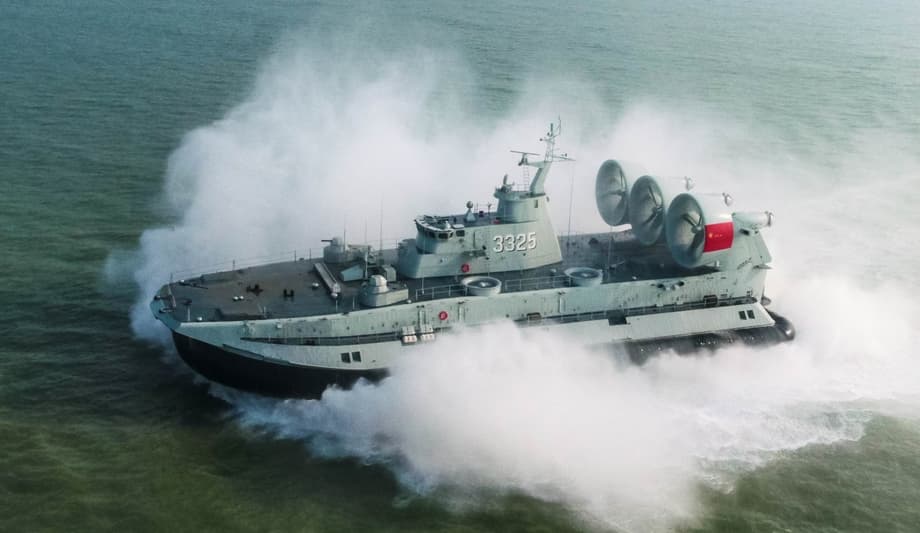
China has quietly moved into series production of the Zubr-class hovercraft, the largest military hovercraft ever constructed, signaling a significant enhancement of its amphibious assault capabilities. Naval News has confirmed that the People’s Liberation Army Navy (PLAN) now operates at least nine of these massive air-cushioned landing craft, with the potential fleet size reaching 10 to 12 vessels. This development marks China as the only nation currently investing in these specialized platforms, which can transport heavy armor and hundreds of troops at speeds exceeding 100 kilometers per hour across the Taiwan Strait.
- Beijing Resurrects Soviet-Era Amphibious Giants
- Technical Specifications of a Cold War Relic
- From Ukrainian Imports to Domestic Production
- Tactical Applications in Taiwan Contingency Planning
- Operational Constraints and Maintenance Challenges
- Integration with Civilian Maritime Assets
- Geopolitical Repercussions and Regional Responses
- The Essentials
The Zubr-class vessels, known in China as the Type 728 or Type 958, represent a unique capability in modern naval warfare. These 555-ton monsters can carry three main battle tanks or 500 fully equipped soldiers, delivering them directly onto beaches that conventional landing craft cannot access. Their appearance in increasing numbers suggests Beijing is methodically preparing for potential contingency operations against Taiwan, where such high-speed, heavy-lift amphibious assets would prove critical in the opening hours of any conflict.
Unlike conventional landing ships, the Zubr rides on a cushion of air generated by powerful blowers, allowing it to cross stretches of water, ice, mud, or sand without hull contact with the surface. This technology enables access to approximately 70 percent of the world’s beaches, including those with submerged obstacles or steep gradients that would stop traditional landing craft. For military planners in Beijing, this capability translates to tactical flexibility when contemplating operations against Taiwan’s varied coastline, which features both developed port facilities and remote beaches suitable for unconventional landing sites.
Until recently, international observers believed China possessed only six Zubr-class vessels. The confirmation of additional hulls entering service indicates Beijing has overcome previous production limitations and established indigenous manufacturing capabilities. This shift from foreign procurement to domestic series production represents a critical milestone in the Chinese amphibious warfare modernization program, reducing reliance on imported technology while allowing for unrestricted fleet expansion based on strategic requirements. The vessels now operate from dedicated facilities at Zhanjiang, where specialized infrastructure supports their unique maintenance needs.
Technical Specifications of a Cold War Relic
The Zubr-class hovercraft embodies the Soviet military design philosophy of the 1980s, characterized by massive scale, brute-force engineering, and immense firepower. Measuring 57.3 meters in length and 25.6 meters in width, with a maximum displacement of 555 tons, the vessel holds the record as the world’s largest military hovercraft. Five gas turbine engines, derivatives of the Kuznetsov NK-12MV powerplant, drive three enormous 5.5-meter diameter propellers at the stern while two additional engines maintain the air cushion through four NO-10 blowers equipped with 2.5-meter axial wheels.
This propulsion configuration generates speeds of 55 to 63 knots, approximately 100 to 117 kilometers per hour, allowing the hovercraft to outpace most naval patrol boats. The vessel maintains seaworthiness up to Sea State 4, with an operational range of 300 nautical miles at cruising speed. Such performance parameters give the Zubr distinct advantages in rapid assault scenarios, particularly when crossing the 170-kilometer-wide Taiwan Strait, a journey the craft can complete in under two hours.
The cargo compartment spans 400 square meters and accommodates flexible loading configurations. In heavy armor mode, the craft transports three main battle tanks totaling 150 tons. For lighter operations, it carries ten armored vehicles plus 230 troops, or up to 500 soldiers in pure infantry configuration. A forward ramp allows direct beach landing, enabling vehicles to drive directly onto hostile terrain without intermediate port facilities. This capability distinguishes the Zubr from smaller hovercraft like the American LCAC, which carries only 75 tons and requires mother ship deployment from well decks.
Defensively, the Zubr carries substantial armament unusual for a landing craft. Each vessel mounts two AK-630M 30-millimeter gatling guns with six rotating barrels and 3,000-round capacity, plus two A-22 Ogon 140-millimeter rocket launchers capable of firing 44 rockets in salvos to suppress beach defenses. For anti-aircraft protection, the craft carries Igla-M surface-to-air missile launchers, roughly equivalent to American Stinger missiles. Some variants also mount anti-ship missile pods, transforming the landing craft into a multi-role assault platform capable of engaging threats before, during, and after landing operations.
From Ukrainian Imports to Domestic Production
Chinese acquisition of Zubr-class technology began in 2009 with a $315 million contract with Ukraine’s Feodosia Shipbuilding Company, located in Crimea. The deal specified two vessels built in Ukraine, designated hull numbers 3325 and 3326, delivered by 2014. Political complications following Russia’s annexation of Crimea in 2014 disrupted the agreement, but China eventually received the final vessels by 2018. The contract also included provisions for two additional units assembled from Ukrainian-supplied kits in China, hulls 3327 and 3328, with technical supervision from Ukrainian engineers.
This initial purchase provided China with complete technical documentation and manufacturing know-how. After completing the kit-assembled units in 2018, production appeared to cease, leading analysts to speculate about production difficulties or strategic reassessments. However, recent imagery has revealed new hulls numbered 3260 and 3261, featuring minor design modifications including fire-control radar installations replacing previous electro-optical systems, redesigned masts with cruciform support structures, and altered lifesaver equipment placement along the superstructure. These differences confirm indigenous construction rather than renumbering of existing vessels.
The confirmed fleet now stands at nine vessels minimum, comprising the four original Ukrainian-era craft plus at least five domestically produced units. Analysts consider a fleet of 10 to 12 vessels reasonable, with capacity for further expansion given Chinese industrial capabilities. This production resumption follows the typical pattern of foreign technology acquisition followed by licensed production and eventual indigenous improvement, similar to developments seen in Chinese aircraft carrier and submarine programs. The new hulls also feature updated electronics and potentially improved propulsion systems compared to the original Soviet-era designs.
Tactical Applications in Taiwan Contingency Planning
The Zubr-class hovercraft occupies a specific niche in the Chinese amphibious order of battle, optimized for rapid, high-capacity transport across the Taiwan Strait. Military calculations suggest that six hovercraft operating unimpeded could execute two round trips daily, delivering over 4,600 troops or significant armored forces within the first 24 hours of operations. When integrated with the growing fleet of Type 075 amphibious assault ships, Type 071 transport docks, and Type 726 LCACs, the Zubr provides heavy-lift capability that complements lighter, more numerous assets.
Beyond the main island of Taiwan, the hovercraft proves particularly suited for operations against smaller outlying islands such as Kinmen, located just six miles from the Chinese mainland. A Zubr-class vessel could reach Kinmen in approximately ten minutes, providing rapid response capability for seizure operations or coercion campaigns short of full-scale invasion. The ability to bypass traditional port facilities and land directly on beaches complicates defensive planning for Taiwanese military commanders, who must now consider defense-in-depth across numerous potential landing sites rather than concentrating forces at major harbors.
The vessels also offer mine-resistant capabilities valuable in contested littoral zones. An active magnetic field compensation system reduces vulnerability to magnetic influence mines, while the air cushion technology means the craft does not trigger contact or pressure mines when passing over them. This characteristic allows assault forces to navigate through mined approaches that would stop conventional landing craft, though the hovercraft remains vulnerable to anti-ship missiles and precision artillery strikes that can puncture the air cushion structure. Defenders could employ Javelin-style anti-armor weapons to damage the top deck, but such attacks would unlikely sink the vessel immediately.
Chinese military doctrine emphasizes the concept of tactical speed, conducting operations faster than adversaries can respond. While intelligence agencies might detect invasion preparations months in advance, eliminating strategic surprise, the two-hour crossing time of the Zubr provides tactical surprise that compresses reaction windows for Taiwanese defenders. This temporal advantage becomes particularly significant when coordinating with missile strikes and electronic warfare attacks designed to suppress coastal defenses during the critical initial landing phase.
Operational Constraints and Maintenance Challenges
Despite their impressive specifications, Zubr-class hovercraft present significant operational limitations that constrain their utility. The design requires intensive maintenance, with units spending considerable time in port rather than at sea. The gas turbine engines consume fuel rapidly, limiting operational duration even with 56 tons of onboard fuel capacity. These factors make the vessels less versatile than traditional landing ships for peacetime operations or sustained presence missions, restricting their employment primarily to high-intensity conflict scenarios where their unique capabilities justify the logistical burden.
Weather sensitivity presents another critical limitation. The hovercraft cannot operate effectively in sea conditions exceeding Sea State 4, where wave heights reach 1.25 to 2.5 meters. High winds and rough seas dramatically reduce speed and stability, potentially grounding the fleet during adverse weather windows. This meteorological dependency means that invasion planners cannot rely on Zubr availability during certain seasons or weather patterns, requiring redundant capabilities through other means such as roll-on/roll-off ferries and conventional amphibious shipping. The inability to sit at sea with troops aboard for extended periods further limits operational flexibility.
The high cost and complex logistics of operating these Soviet-era giants explain why only three nations maintain them in service. Russia operates two vessels inherited from Soviet stocks, while Greece acquired four units, one of which was recently decommissioned in March 2025. The Chinese decision to pursue series production while other operators struggle to maintain minimal fleets demonstrates a unique willingness to absorb the resource requirements of operating such specialized equipment, prioritizing specific tactical advantages over general-purpose utility. This commitment suggests high-level strategic prioritization of Taiwan contingencies within Chinese defense planning.
Integration with Civilian Maritime Assets
Chinese military planners view the Zubr-class vessels as components within a larger amphibious ecosystem that includes extensive civilian shipping resources. Since 2012, the People’s Liberation Army has established strategic projection support fleets within major shipbuilding companies, creating legal frameworks for requisitioning commercial vessels during contingencies. Roll-on/roll-off (RO-RO) ferries, which can carry 300 vehicles and 1,500 passengers each, have participated in military exercises since 2019, practicing beach landings and vehicle offloading operations alongside military hovercraft.
This dual-use approach significantly augments dedicated military lift capacity. Analysts estimate China currently operates approximately 31 large RO-RO ferries capable of military adaptation. When combined with the eight Type 071 amphibious transport docks, three Type 075 landing helicopter docks, and expanding hovercraft fleet, these assets begin to approach the scale necessary for large-scale operations against Taiwan. However, questions remain about the survivability of unarmored civilian vessels and their ability to conduct operations under fire, limitations that make the heavily armed and armored Zubr-class vessels particularly valuable for initial assault waves against defended beaches.
The coordination between military and civilian assets requires extensive training and command integration, which the PLA has pursued through increasingly complex exercises. In 2023, RO-RO ferries from the Bo Hai Ferry Group participated in cross-transportation drills, demonstrating the practical challenges of mixing civilian and military equipment in contested environments. These exercises revealed coordination difficulties between military command structures and civilian maritime operators that the PLA continues to address through repeated training. The self-deploying capability of the Zubr, not requiring well decks like smaller LCACs, allows it to operate independently from commercial ports while maintaining interoperability with naval task forces.
Geopolitical Repercussions and Regional Responses
The expansion of the Chinese hovercraft fleet has triggered responses from regional security analysts and officials in Taiwan. The vessels represent a specific threat to Taiwan’s western coastline defense strategy, requiring adjustments in coastal monitoring and anti-landing preparations. Taiwanese defense experts have noted that while international attention focuses on aircraft carriers and stealth fighters, specialized assets like the Zubr provide concrete tactical advantages in the specific geography of the Taiwan Strait, forcing defenders to spread resources across numerous potential landing sites.
The history of Zubr technology transfer has also generated diplomatic friction. Mei Fu-hsing, director of the Taiwan Strait Security Research Center, recently called upon Ukraine to apologize for past transfers of military technology to China, including the Zubr-class hovercraft acquired between 2009 and 2018. These transfers, occurring during the post-Soviet economic difficulties in Ukraine, provided China with capabilities now directed toward potential operations against Taiwan. While Ukrainian officials have not responded to these calls, the episode highlights the long-term strategic consequences of arms sales and technology transfers to authoritarian regimes. Taiwanese President Lai Ching-te has stated that Taipei will strengthen export controls to prevent similar unintended transfers while maintaining support for Ukraine against Russian aggression.
The Essentials
- China now operates at least nine Zubr-class hovercraft, the world’s largest military hovercraft at 555 tons displacement, with series production confirmed for additional units
- The vessels can carry three main battle tanks or 500 troops at speeds exceeding 55 knots, crossing the Taiwan Strait in approximately two hours
- Originally acquired from Ukraine between 2009 and 2018, China has transitioned to domestic production under the Type 728/958 designation with at least five locally built hulls confirmed
- Each hovercraft carries substantial defensive and offensive armament including 30-millimeter gatling guns, 140-millimeter rocket launchers, and surface-to-air missiles
- Operational limitations include high maintenance requirements, significant fuel consumption, and weather restrictions to Sea State 4 conditions
- The fleet integrates with China’s larger amphibious modernization program including Type 075/071 warships and civilian RO-RO ferry assets
- Only three nations operate Zubr-class vessels: China (9+), Greece (4, with 1 decommissioned), and Russia (2)