A Digital Border Dispute Spirals into Diplomatic Friction
What began as a routine digitization of immigration paperwork has erupted into a rare diplomatic confrontation between Taiwan and South Korea, two economic partners with deep cultural ties but no formal diplomatic relations. At the center of the controversy is a dropdown menu, specifically how South Korea’s new electronic arrival card system categorizes Taiwanese travelers when they enter the country.
- A Digital Border Dispute Spirals into Diplomatic Friction
- How the Electronic System Changed Everything
- Taipei Implements Reciprocal Measures
- The Politics of Naming in East Asia
- Regional Tensions Complicate Seoul’s Position
- Economic Interests Hang in the Balance
- Practical Workarounds for Travelers
- Part of a Broader Pattern
- What Happens After the Deadline
- Key Points
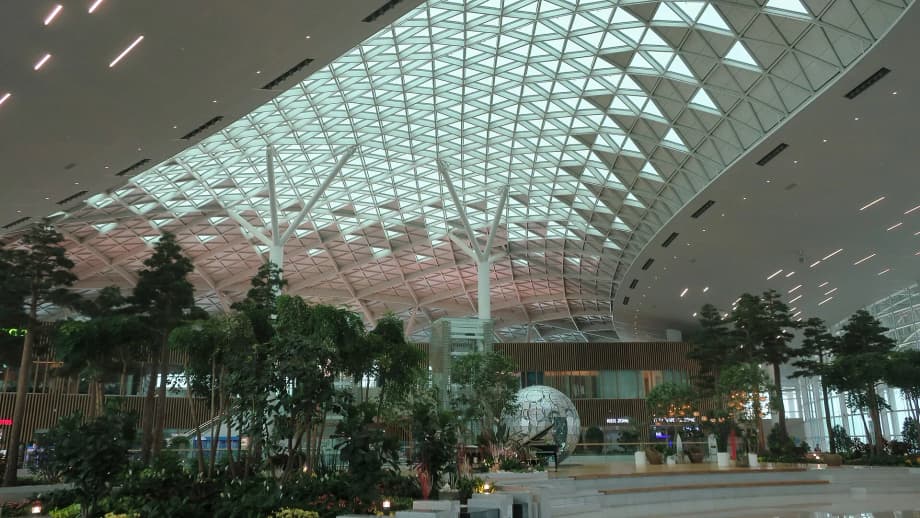
South Korea launched its e-arrival card platform in February 2025 as part of a broader modernization effort to replace traditional paper landing cards at airports including Incheon International. The system requires travelers to submit entry information online up to 72 hours before arrival, selecting their nationality and travel details from preset digital lists rather than handwriting information on physical forms. While the nationality field for passport holders from the island lists “Taiwan,” the departure and destination fields categorize the territory as “China (Taiwan),” a designation that Taipei argues undermines its sovereignty and creates confusion for travelers.
How the Electronic System Changed Everything
The shift from paper to digital might seem like a minor administrative upgrade, but for Taiwan, it represents a significant downgrade in international recognition. Under the previous paper-based system, Taiwanese travelers could simply write “Taiwan” in the nationality and departure fields, allowing for a degree of self-identification that the new rigid digital architecture prevents.
Foreign Minister Lin Chia-lung explained that the dispute emerged specifically because of this digitization. “South Korea had previously shown goodwill by postponing the full phaseout of paper arrival cards,” he noted, referring to Seoul’s decision to delay the complete transition originally scheduled for early 2026. However, the minister stressed that Taiwan views the current labeling as implying the island is part of the People’s Republic of China, a characterization that Taipei rejects.
The inconsistency within the system itself has drawn particular criticism. While individual travelers see “Taiwan” in the nationality field, other sections including group and agency applications retain the “China (Taiwan)” designation. This mixed messaging has left travelers uncertain about how their identity will be recorded at immigration checkpoints, prompting the Taiwanese government to intervene on behalf of its citizens.
Taipei Implements Reciprocal Measures
After months of diplomatic protests yielded no changes, Taiwan began implementing retaliatory measures in March 2026. Effective March 1, the island changed how South Korean nationals are identified on government-issued Alien Resident Certificates, replacing the official designation “Republic of Korea” with the more commonly used “South Korea.” This change affects newly issued and renewed certificates, limiting immediate disruption but sending a clear diplomatic signal.
The retaliation carries particular weight because South Korea places significant importance on its formal name. Approximately a decade ago, Seoul specifically requested that Taiwan use “Republic of Korea” instead of “South Korea” in official documents, a request Taipei honored at the time. Foreign Minister Lin highlighted this history to underscore the asymmetry in the current relationship.
“About a decade ago, the South Korean government requested that Taiwan use its official name, ‘Republic of Korea,’ instead of ‘South Korea.’ Taiwan complied with that request, but Seoul has not reciprocated regarding Taiwan’s designation in its e-arrival system as ‘China (Taiwan),’ which implies that Taiwan is part of the People’s Republic of China.”
Taiwan has established a firm deadline of March 31, 2026, for South Korea to revise its e-arrival system. If Seoul fails to change the listing from “China (Taiwan)” to simply “Taiwan” by that date, Taipei has threatened to alter South Korea’s designation in its own electronic immigration entry system from “Republic of Korea” to “Korea (South).” This would place Seoul in the same parenthetical position it currently assigns to Taipei, creating a mirror image of the current slight.
The Politics of Naming in East Asia
To understand why a dropdown menu has triggered such a fierce response, one must consider the complex web of diplomatic recognition that governs relations across the Taiwan Strait. South Korea, like most countries, adheres to a “One China” policy that recognizes Beijing as the sole legitimate government of China. When Seoul established formal diplomatic relations with the People’s Republic of China in 1992, it simultaneously severed official ties with Taipei, though both sides have maintained unofficial representative offices and robust economic cooperation.
However, the “One China” principle allows for varying interpretations in practical implementation. The United States, Japan, and most European nations typically list “Taiwan” separately in their immigration systems and on visas, maintaining a distinction that respects the island’s de facto independence without granting formal diplomatic recognition. South Korea’s decision to group Taiwan under “China” in its e-arrival system represents a stricter interpretation of the policy than many of its democratic allies employ.
President Lai Ching-te elevated the issue publicly in March, calling on Korea to “respect the will of the Taiwanese people” and noting the close trade and cultural exchanges between the two societies. This rare direct appeal from a Taiwanese head of state to Seoul underscores the sensitivity of the matter. Lawmakers from across Taiwan’s political spectrum have joined the criticism, with members of both the ruling Democratic Progressive Party and opposition Kuomintang suggesting that Taiwan could apply pressure through semiconductor supply chains and tourism demand.
Regional Tensions Complicate Seoul’s Position
The timing of this dispute places South Korea in an increasingly uncomfortable diplomatic position. The controversy follows heightened tensions between China and Japan after Japanese Prime Minister Sanae Takaichi stated in November 2025 that Tokyo might exercise collective self-defense in the event of a Taiwan contingency. Beijing responded with retaliatory measures including seafood import bans and travel warnings, creating a volatile atmosphere across Northeast Asia.
South Korean President Lee Jae Myung has attempted to maintain neutrality, suggesting Seoul could play a mediating role “where possible” while emphasizing that taking sides would only escalate disputes. This balancing act reflects Korea’s economic dependence on China, its security alliance with the United States, and its desire to avoid antagonizing Beijing at a moment when Chinese and Russian military aircraft have repeatedly entered Korea’s air defense identification zone.
Professor Kang Jun-young of Hankuk University of Foreign Studies noted that Korea’s options remain constrained by the 1992 diplomatic pivot to Beijing.
“Taiwan appears to seek clarification of Korea’s position amid regional tensions between China and Japan, but Taiwan also needs to take Korea’s diplomatic and security circumstances into account. Korea also needs to manage the issue carefully to prevent escalation.”
The entry of Chinese and Russian warplanes into Korean airspace on the same day as some of Taipei’s protests served as a stark reminder of the security pressures Seoul faces when navigating relations with Taipei.
Economic Interests Hang in the Balance
Beyond the symbolism, the dispute carries substantial economic weight. Taiwan and South Korea maintain one of the most lopsided trade relationships in the region, with Taipei recording a record deficit of NT$1.16 trillion (approximately $46.7 billion USD) in 2025. This imbalance stems largely from Korean exports of integrated circuits and components essential for Taiwan’s artificial intelligence server production, giving Seoul significant market leverage but also making Taiwan a vital customer for Korean tech exports.
Tourism represents another flashpoint. South Korea ranks among the most popular destinations for Taiwanese travelers, with bilateral visits exceeding 2.47 million annually. Conversely, Taiwanese tourists constitute a significant source of revenue for Korean hotels, retailers, and cultural sites. Taiwan’s Foreign Ministry has explicitly referenced this trade deficit when warning of potential reviews of bilateral relations, suggesting that “unfriendly measures” could have commercial consequences.
Chinese tourism patterns add another layer of complexity. As Beijing’s travel warnings against Japan have redirected mainland tourists toward alternative destinations including South Korea, Seoul has benefited from increased visitor numbers from the People’s Republic. Any move that angers Beijing, including appearing to upgrade Taiwan’s diplomatic status, could jeopardize this tourism windfall at a moment when the Korean economy seeks recovery.
Practical Workarounds for Travelers
While diplomats negotiate behind closed doors, Taiwanese authorities have issued practical guidance for travelers caught in the middle of the spat. The Bureau of Consular Affairs has raised a Level 1 “gray alert” for South Korea, the lowest category of travel advisory, specifically advising Taiwanese citizens to use paper arrival cards rather than the electronic system.
This recommendation allows travelers to bypass the contested digital dropdown menus entirely. Unlike the e-arrival platform, paper forms permit travelers to handwrite their nationality and point of origin, avoiding the forced selection of “China (Taiwan).” Korean authorities have indicated they currently maintain no timeline for phasing out paper cards, ensuring this alternative remains available indefinitely.
Travelers who possess a valid Korea Electronic Travel Authorization (K-ETA) may bypass arrival cards entirely, offering another avenue to avoid the labeling controversy. For those who must complete entry documentation, requesting a paper form from airline staff during the flight or from designated stands at Incheon and other ports of entry provides a straightforward solution that preserves the integrity of their travel documents while complying with Korean immigration requirements.
Part of a Broader Pattern
The South Korea dispute does not exist in isolation. Taiwan has simultaneously lodged protests against Denmark, where immigration authorities have listed Taiwanese residents on residence permits as “China” rather than “Taiwan” since 2024. Taipei has warned Copenhagen of potential adjustments to privileges granted to Danish diplomatic staff if the designation is not corrected, demonstrating a coordinated strategy to push back against what it views as incremental erasure of its international identity.
This multi-front approach signals a shift in Taiwanese diplomacy. Where previous governments might have relied solely on verbal protests, the current administration under President Lai appears willing to impose tangible costs on partners who adopt Beijing-friendly terminology. With local elections approaching in November 2026, domestic political pressure demands that the government demonstrate resolve in defending Taiwanese dignity abroad.
What Happens After the Deadline
As the March 31 deadline approaches, both sides face difficult calculations. South Korea’s Foreign Ministry has stated it is “reviewing the matter while taking various factors into account,” suggesting no immediate plan to alter the current wording. Seoul maintains that similar labeling has appeared in foreigner registration and visa systems since 2004, implying that Taiwan’s objections to the e-arrival system represent a new sensitivity rather than a new problem.
If Seoul holds firm and Taiwan follows through with its threat to relabel South Korea as “Korea (South)” in its own systems, the bilateral relationship could enter a period of sustained friction. However, analysts note that such symbolic disputes rarely escalate into full trade wars, particularly between economies as intertwined as these. Former South Korean ambassador Lee Jae-choon described Taiwan’s protest as “legitimate” and called the current dispute “unfortunate given the overall improvement in ties,” suggesting that pragmatic voices on both sides recognize the value of de-escalation.
For now, the humble paper arrival card serves as both a practical tool for travelers and a symbol of the diplomatic tightrope that smaller democracies must walk when navigating between Taiwanese identity claims and Chinese power.
Key Points
- South Korea’s e-arrival card system, launched in February 2025, lists Taiwan as “China (Taiwan)” in departure and destination fields, triggering formal protests from Taipei.
- Taiwan implemented reciprocal measures on March 1, 2026, changing “Republic of Korea” to “South Korea” on Alien Resident Certificates, with threats to alter electronic arrival systems if Seoul does not comply by March 31.
- The dispute reflects South Korea’s strict interpretation of its “One China” policy compared to allies like the US and Japan, which typically list “Taiwan” separately in immigration systems.
- Taiwan has issued a Level 1 travel advisory recommending that Taiwanese travelers use paper arrival cards rather than the electronic system to avoid the contested labeling.
- The spat occurs amid heightened regional tensions between China and Japan, complicating Seoul’s efforts to maintain neutrality between Beijing, Washington, and Taipei.