A New Era of Subsea Engineering
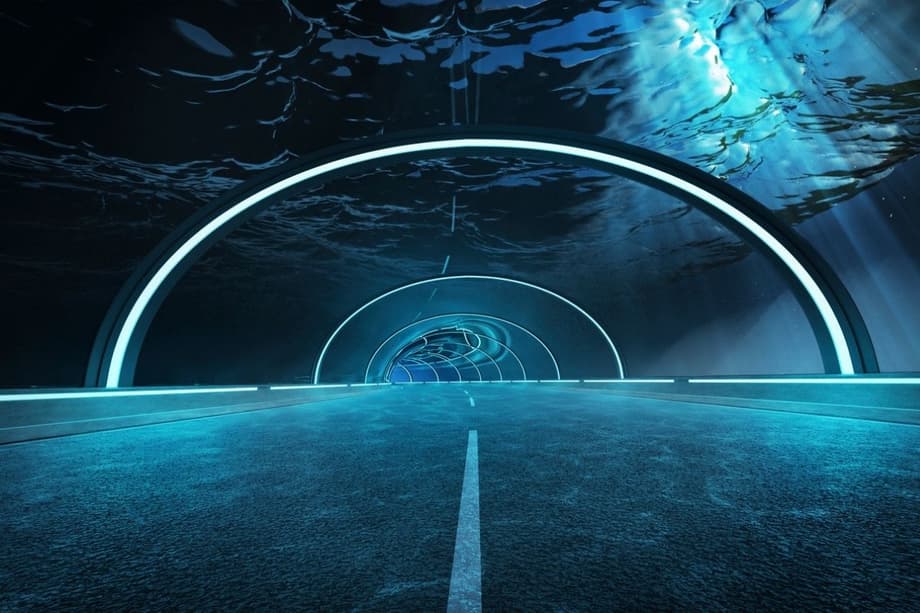
China has formally advanced plans to construct the longest undersea tunnel in the world, a monumental infrastructure project that will burrow beneath the Bohai Strait to connect the port city of Dalian with Yantai. The Bohai Strait Tunnel, officially known as the Bohai Strait Cross Sea Corridor, represents one of the most ambitious engineering endeavors in modern history, stretching approximately 123 kilometers in total length, with nearly 90 kilometers running beneath the seabed.
Once operational, this subsea railway will transform a journey that currently requires six to eight hours by road or ferry into a 40 minute high speed rail trip. The dramatic reduction in travel time promises to reshape economic relationships between the northeastern industrial heartland of China and the bustling economic centers along the eastern coast.
Technical Specifications and Design
The tunnel will employ two parallel tubes beneath the seabed, with trains traveling at speeds up to 240 kilometers per hour. This velocity exceeds that of the Eurostar services operating through the Channel Tunnel between Britain and France. Vehicles will be loaded onto railway carriages for the crossing, allowing both passenger cars and freight to traverse the strait efficiently.
Engineers have designed the structure to sit at least 30 meters below the seabed in predominantly rocky layers. This depth serves dual purposes: minimizing the immense water pressure exerted on the tunnel walls and reducing risks associated with the significant seismic activity of the region. The structural solution involves segmented cladding rings and expansion joints capable of accommodating small displacements caused by tectonic movements.
Economic Integration and Regional Development
Lu Dadao of the Chinese Academy of Sciences has highlighted the transformative potential of the project.
A tunnel across the Bohai would transform transportation in China. By avoiding the hubs in Beijing and Tianjin it would relieve pressure on railways between Beijing and Tianjin, Beijing and Shanghai, and even Beijing and Guangzhou.
The strategic importance of the tunnel extends far beyond convenience for travelers. Currently, circumnavigating the Bohai Sea requires a detour of approximately 1,500 kilometers. The direct undersea link will effectively transform the transportation network from a C shaped system around the bay into a D shaped continuous corridor, eliminating the bottleneck that has historically segregated the two coastal economic zones.
Academic research indicates the project will improve transportation accessibility across 2.18 million square kilometers of territory and reduce average travel times between prefecture level cities nationwide by approximately 16 minutes. The tunnel will strengthen economic linkages between eight major urban agglomerations, including the Central South Liaoning, Shandong Peninsula, and Yangtze River Delta regions.
Tourism and Urban Connectivity
The tunnel promises to revolutionize tourism between Dalian and Yantai, two coastal cities with distinct attractions. Dalian offers modern beaches and a vibrant cultural scene, while Yantai is renowned for historic sites, vineyards, and seafood cuisine. Currently, tourists face significant logistical challenges when attempting to visit both cities, however the high speed link will enable seamless multi destination itineraries.
Local hospitality industries anticipate substantial growth as visitors extend their stays to explore both urban environments. The ability to enjoy breakfast in the wine country of Yantai and dinner along the waterfront promenade of Dalian on the same day represents a fundamental shift in regional tourism dynamics. Hotels, restaurants, and travel agencies in both cities are already preparing for increased demand by developing integrated travel packages.
Environmental Considerations
Despite the economic advantages, the project faces scrutiny regarding its environmental impact. The tunnel route passes near the Changshan archipelago, a chain of 151 islands that serves as a critical habitat for migratory birds and spotted seals. The area is under consideration for designation as a national marine park, which would provide enhanced protection for biodiversity.
Wang Yamei, a professor at Shandong University, has emphasized the need for careful planning to balance development with conservation.
The tunnel needs to be approached very carefully, with rigorous formal analysis, with wildlife considered and experts involved. The tension between the environment and development is an old one, but development is central. Environmental protection is necessary to ensure that development is sustainable.
Storage of excavated earth, noise pollution, water contamination, and dust represent additional concerns during the construction phase. Wang Yumei of Ludong University notes that assessments must pay special attention to migratory birds and the spotted seal population, which represents a Class 2 protected species in China.
Seismic Safety and Engineering Challenges
The Bohai Strait sits within a seismically active zone, presenting formidable engineering challenges. Historical records indicate the region has experienced significant earthquakes, necessitating advanced safety measures. The tunnel design incorporates redundant drainage and pumping systems, continuous deformation monitoring sensors, and high strength waterproofing to prevent flooding.
Real time monitoring technology will detect structural changes instantly, allowing immediate response to potential dangers. The design includes a central service tunnel functioning as an emergency evacuation route and housing technical systems. Fire detection and suppression systems, along with smoke control mechanisms, will protect passengers during emergencies.
Global Comparisons and Cost Estimates
The Bohai Strait Tunnel will surpass existing undersea tunnels by a significant margin. For comparison, the Channel Tunnel between Britain and France extends approximately 37.9 kilometers under water, while the Seikan Tunnel of Japan spans 23.3 kilometers beneath the sea. The Bohai project will nearly double the combined undersea length of these two previous record holders.
Construction costs have escalated since initial estimates. Early projections placed the budget at approximately 200 billion yuan, but recent evaluations suggest the figure could reach 300 billion yuan. The project is expected to require 10 to 15 years for completion once full scale construction begins, compared to the six years required for the Channel Tunnel.
International comparisons highlight the distinctive approach of China to mega infrastructure. While European projects like the proposed Strait of Messina bridge remain stalled due to political disagreements and environmental studies, China has moved forward with funding commitments and practical planning. The Fehmarn Belt Link between Denmark and Germany, scheduled for completion in 2029, will become the longest immersed tunnel in the world at 18 kilometers, yet remains modest compared to the Bohai project.
Current Status and Future Outlook
Plans for the tunnel were formally submitted to the National Development and Reform Commission in May 2019. The project has received inclusion in regional five year plans and gained central government support. Recent reports indicate the project has entered detailed study and feasibility phases, with construction potentially commencing in the near future.
Upon completion in the early 2030s, the tunnel is projected to generate annual revenues of approximately 20 billion yuan through ticket sales and vehicle transport fees. The route will serve as a critical artery for freight movement between industrial parks in the northeast and consumer hubs in the east, while also connecting to maritime routes serving South Korea and Japan.
The project represents a key component of the broader strategy of China to consolidate internal transport corridors while enhancing connectivity with international markets. As construction technology advances and environmental safeguards are implemented, the Bohai Strait Tunnel stands ready to redefine subsea transportation and regional economic integration.
The Essentials
- The Bohai Strait Tunnel will span 123 kilometers total, with 90 kilometers beneath the Bohai Sea, making it the longest underwater rail tunnel in the world
- Travel time between Dalian and Yantai will drop from six to eight hours to approximately 40 minutes via high speed rail
- Trains will reach speeds of 240 kilometers per hour, exceeding Eurostar velocities through the Channel Tunnel
- Construction costs are estimated between 28 billion and 43 billion dollars, with completion expected within 10 to 15 years
- The project will relieve pressure on Beijing and Tianjin rail networks while connecting northeastern industrial regions with eastern economic hubs
- Engineers must address significant seismic risks through advanced structural monitoring and waterproofing systems
- Environmental assessments are evaluating impacts on the Changshan archipelago, a habitat for migratory birds and spotted seals