The Hospital Corridor Reality Check
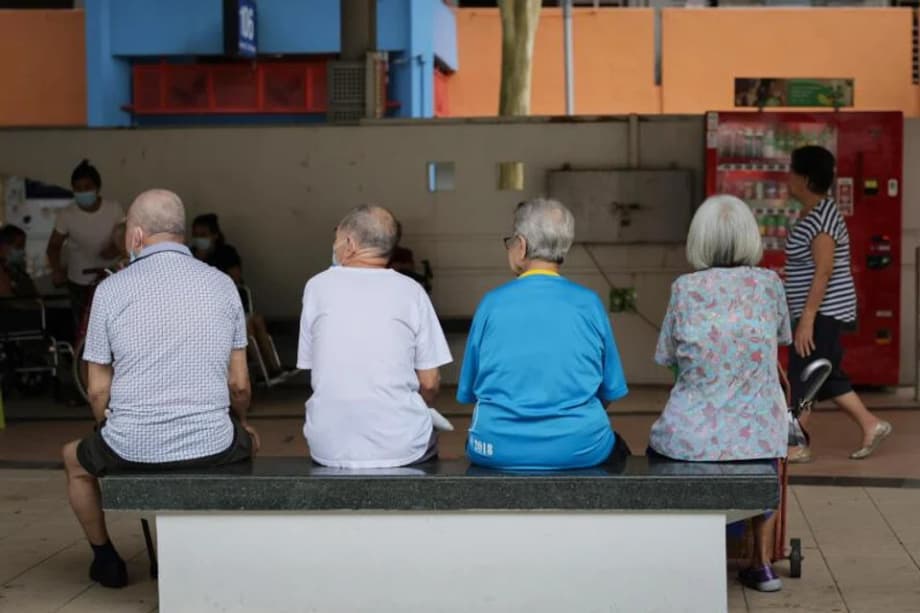
Last December, a visit to Singapore General Hospital revealed a scene increasingly common across the island’s medical facilities. Wheelchairs lined the pathways, carrying seniors who were visibly frail or struggling with mobility. Some were accompanied by family members who were seniors themselves, while others were wheeled briskly by hospital staff moving between tasks. Similar scenes play out at the National University Hospital and Tan Tock Seng Hospital, visual reminders that Singapore’s demographic clock is ticking faster than almost anywhere else on Earth.
By 2026, Singapore will cross a critical threshold. More than 21 percent of the population will be aged 65 or older, officially classifying the city-state as a super-aged society according to United Nations definitions. This transition, which took France 115 years and the United States 69 years, Singapore accomplished in just 28 years. The question facing policymakers, healthcare providers, and families is whether a health system designed for a younger population can adapt to this silver tsunami without sacrificing quality, affordability, or human dignity.
The Super-Aged Threshold Approaches
The United Nations classifies a country as ageing when 7 percent of the population exceeds 65 years, aged at 14 percent, and super-aged at 21 percent. Singapore became an aged society in 2017, just 19 years after reaching the ageing benchmark. The sprint from aged to super-aged will take merely nine years, landing in 2026.
This velocity creates unique pressures. While Japan, South Korea, and several European nations have already reached super-aged status, Singapore’s compression of demographic transition leaves less time for incremental policy adjustments. Official statistics confirm that Singapore’s elderly population has already exceeded 20 percent, making it the first ASEAN nation to approach this milestone.
Health Minister Ong Ye Kung has framed this challenge in stark terms. In parliamentary speeches, he noted that ageing differs from other health conditions because it is a universal human experience that cannot be prevented or cured. The minister outlined a vision where Singapore remains superb even as it becomes super-aged, but achieving this requires fundamental restructuring of how the nation approaches health, work, and community support.
While Singapore will inexorably become a super-aged country, it can also remain a superb country.
This transformation is already visible in Queenstown, one of Singapore’s oldest towns where more than 20 percent of residents are 65 or older. The area now serves as a Health District, integrating healthcare services, community initiatives, and inter-generational housing projects that inject younger populations into aging neighborhoods.
When the Disease Burden Overwhelms
The health system faces a triple threat as the population ages. Chronic conditions, cancers, and mental health issues are becoming more widespread, while the existing hospital-centric model struggles to contain costs. Musculoskeletal disorders alone affect over a billion people globally and cost Singapore approximately $3.5 billion annually through lost productivity and medical expenses. These conditions, often dismissed as inevitable wear and tear, frequently lead to reduced mobility, metabolic diseases, and social isolation.
Minister Ong has likened the situation to an overflowing kitchen sink. While hospitals continue mopping up the water, the tap keeps running. Without slowing the onset of severe diseases, the sheer burden of ageing will overload the healthcare system and potentially cripple government finances. Current projections indicate that those aged 40 and above already account for a disproportionate share of national healthcare spending, a trend that will accelerate as the baby boomer generation enters its eighth decade.
It is like an overflowing kitchen sink. We can mop and soak up the water on the floor, but the work is endless and the effort increasingly trying. At some point, we need to figure out how to turn down the tap.
The traditional model of episodic, reactive care is ill-suited to manage this reality. Seniors with multiple chronic conditions require continuous management rather than emergency interventions. Research from Duke-NUS Medical School indicates that nearly 11 percent of older adults are cognitively frail, a condition associated with functional decline and increased mortality, even without dementia diagnosis. Yet early deterioration often goes unnoticed until significant damage has occurred.
Previously, the ElderShield program provided monthly cash benefits of $400, an amount that fell short of the minimum salary required for foreign domestic helpers who often care for the elderly. National surveys revealed that population expectations were not being met regarding financial protection against the cost of ill health, providing powerful impetus for reform.
Reforming the Social Contract
Singapore’s response represents a philosophical shift away from the neoliberal, productivist ethos that shaped its early development. Historically, the health system emphasized personal responsibility, family support, and limited state welfare. The Central Provident Fund and MediSave schemes reflected an ideology where health was framed as an individual rather than societal responsibility.
This approach is evolving toward collectivist long-term care financing. CareShield Life, which replaced the optional ElderShield program, mandates universal coverage for those over 30 regardless of pre-existing conditions. Unlike its predecessor, CareShield Life offers lifetime payouts that increase with inflation, removing the six-year cap on payout duration. The reform acknowledges that personal responsibility alone cannot sustain health financing when an aging population cannot participate in the workforce.
The implementation of these reforms involved extensive stakeholder engagement from the ground up, allowing values-based policy to develop in line with public opinion. The Ageing Planning Office coordinates these efforts under the Ministry of Health, overseeing the restructuring of long-term care to improve accessibility, quality, and affordability.
Complementing this financial restructuring, Healthier SG launched as a national preventive care strategy. The program encourages enrolment with family physicians to manage health proactively rather than reactively. Participants receive full subsidies for national screenings and vaccinations, with waived co-payments for chronic care management. The strategy recognizes that 60 percent of health outcomes are determined by social factors within communities and families rather than clinical interventions alone.
Our population is not just ageing, but ageing rapidly.
Prime Minister Lee Hsien Loong has emphasized that these reforms require difficult but necessary fiscal adjustments to fund increased spending on ageing infrastructure. The government has committed to raising retirement and re-employment ages to 65 and 70 respectively by 2030, allowing older workers to continue contributing without affecting their CPF savings. Unlike European pension systems facing insolvency, Singapore’s defined-contribution model avoids intergenerational debt.
Technology and the Last Mile
As demand outpaces the supply of human caregivers, Singapore is betting heavily on technology to bridge the gap. At the Lions Home for the Elders, humanoid robot Dexie leads karaoke sessions and physiotherapy exercises, while therapeutic robot seal Paro provides emotional support to residents with dementia. These are not mere novelties but essential tools addressing a manpower crunch that will intensify as the super-aged era dawns.
Beyond institutional settings, smart home technologies are being deployed to support ageing in place. The Sinew project uses discreet in-home sensors to track mobility, sleep patterns, and medication routines, achieving 90 percent accuracy in identifying seniors at risk of cognitive impairment. Smart knitted garments developed at the Singapore University of Technology and Design capture gait symmetry and mobility indicators, providing physiotherapists with objective data for rehabilitation monitoring.
At St Luke’s ElderCare, the Golden Memories program uses generative AI to help seniors document their life stories, while virtual reality sessions allow immobile elders to experience immersive travel. Voice-based AI agents now automate check-in calls to seniors living alone, recognizing Singlish and emotional cues to respond empathetically.
However, experts caution that logistics and implementation science remain underdeveloped in healthcare compared to commercial sectors. The Preventive Health Logistics Ecosystem framework proposed by researchers highlights the need for decentralized care nodes, proactive health triggers, and integrated service flows. Without addressing these operational last mile challenges, even well-designed policies risk remaining aspirational.
Gender, Isolation and Mental Health
The social dimensions of super-aged societies often receive less attention than fiscal or medical concerns, yet they are equally critical. Research indicates that older men face particular vulnerabilities regarding social isolation and loneliness. A 2020 National University of Singapore study found that men living alone were twice as likely as women to be disconnected from social networks, a pattern linked to traditional masculine ideals that equate seeking help with weakness.
Dr William Wan, a 78-year-old community leader, has highlighted how retirement hollows out the lives of men who anchored their identities in career success. The macho-man syndrome makes traditional senior centre activities, often perceived as passive or craft-oriented, unappealing to men who prefer purpose-driven, shoulder-to-shoulder engagement. Of the 314 suicide deaths reported in Singapore last year, 64.3 percent were men, underscoring the lethal consequences of social isolation.
For many men, the idea of a senior centre is at odds with macho-man ideals of strength and independence.
Mental health strategies are evolving to address these nuances. The national tiered care model integrates grassroots initiatives, primary care detection, and specialist services for complex conditions. Social prescribing, where doctors recommend community activities rather than medications, is gaining traction as a tool to combat loneliness and depression. Research on neuroplasticity suggests that older brains retain capacity for adaptation and growth, challenging deficit-based narratives of cognitive decline.
Economic Adaptations for Longevity
Singapore’s economic resilience in the super-aged era depends on extending working lives and rethinking retirement adequacy. The labor force participation rate for seniors aged 65 and above has nearly tripled over two decades to approximately 32 percent. Female participation has also risen significantly, from 51 percent to 63 percent, partially offsetting workforce shrinkage.
Employers are increasingly required to implement flexible work arrangements and job redesign to accommodate older workers. The Workforce Singapore herCareer initiative supports women returning to work, while the Tripartite Guidelines on Flexible Work Arrangements provide structure for age-inclusive employment practices.
Industry leaders note that the confluence of artificial intelligence and ageing demographics presents opportunities rather than merely challenges. Automation can augment human workers in sectors facing labor shortages, particularly healthcare and construction. The key lies in continuous education and training, ensuring that the silver workforce can adapt to evolving economic needs rather than being sidelined by technological disruption.
Finland serves as a reference point, maintaining per capita GDP above $53,000 and economic growth of 2 to 4 percent annually despite being super-aged. Singapore aims to replicate this success through productivity improvements, high-value sector development, and the integration of foreign manpower to complement local talent.
Key Points
- Singapore will become a super-aged society in 2026 when 21 percent of the population exceeds age 65, just nine years after becoming an aged society in 2017
- The health system is shifting from reactive hospital care to preventive community-based models through Healthier SG and expanded long-term care insurance under CareShield Life
- Musculoskeletal disorders alone cost the economy $3.5 billion annually, while chronic diseases and mental health issues mount as the population ages
- Technology including AI care robots, smart garments, and home sensors is being deployed to address caregiver shortages and support ageing in place
- Social isolation affects elderly men disproportionately, with 64.3 percent of suicides occurring among males, prompting redesign of senior activities
- Retirement ages will rise to 65 and re-employment ages to 70 by 2030, while the CPF system avoids the pension crises affecting Western nations