Strategic Flashpoint in the Timor Sea
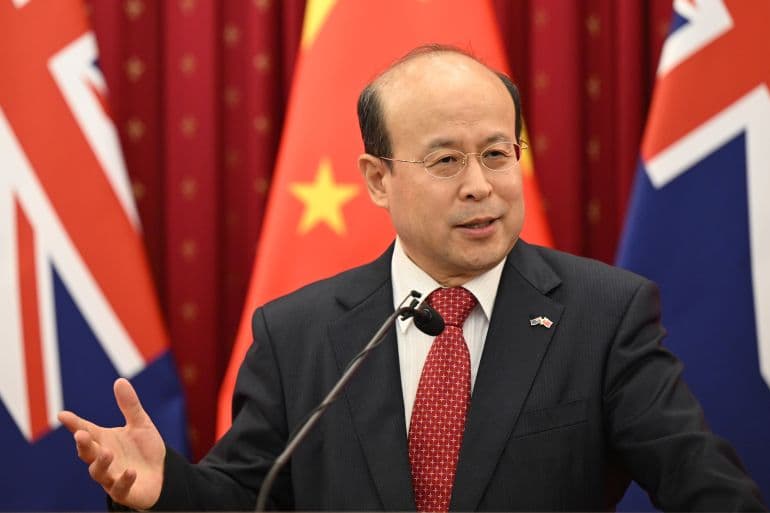
China’s ambassador to Australia has issued an blunt warning to Canberra over its plans to reclaim the Port of Darwin from a Chinese-owned company, threatening unspecified retaliation if the Australian government proceeds with forced divestment. The diplomatic salvo marks a sharp escalation in a dispute that sits at the intersection of national security concerns, international investment law, and the broader rivalry between Beijing and Washington in the Indo-Pacific.
Ambassador Xiao Qian used his annual press briefing in Canberra to criticize the Albanese government’s intention to terminate the 99-year lease held by Landbridge Group, a Shandong-based conglomerate controlled by billionaire Ye Cheng. The port, located in Australia’s remote Northern Territory, has become a symbol of the challenges facing liberal democracies seeking to balance economic cooperation with China against mounting strategic anxieties.
Beijing Draws a Line in the Sand
Xiao did not mince words when addressing the potential buyback, characterizing the move as commercially unethical and warning that Beijing stood ready to defend Chinese corporate interests through concrete measures.
When you’re losing money, you lease it to a foreign company and when it starts making money you want to take it back. That’s not the way to do business.
The ambassador framed the issue as a matter of principle rather than a routine commercial dispute. He indicated that while Landbridge retained autonomy over whether to sell or maintain its position, the Chinese government possessed an obligation to intervene if Australian authorities attempted forced acquisition.
We will see when it’s time for us to say something, do something, to reflect the Chinese government’s position and protect our Chinese companies’ legitimate interests.
A Decade-Old Deal Under Fresh Scrutiny
The controversy traces back to 2015, when the Northern Territory government awarded Landbridge a 99-year lease for approximately 506 million Australian dollars. At the time, the territory faced severe fiscal constraints, and officials hoped the investment would catalyze economic development in the largely rural region. The deal attracted immediate international attention when then-US President Barack Obama expressed concerns to Australian Prime Minister Malcolm Turnbull about the lack of advance consultation, particularly given the port’s proximity to rotating deployments of US Marines.
Landbridge, an energy and infrastructure conglomerate based in Shandong province, committed to expanding the port’s facilities. Terry O’Connor, the company’s non-executive director for Australia, has consistently denied allegations of connections to the People’s Liberation Army, describing such claims as myths fueled by political agendas in Canberra.
International Arbitration Risks
Any Australian attempt to compulsorily acquire the lease faces significant legal obstacles under international investment treaties. Legal experts warn that forced divestment could trigger investor-state dispute settlement (ISDS) arbitration under the China-Australia Bilateral Investment Treaty (CABIT) or the China-Australia Free Trade Agreement (ChAFTA).
ISDS mechanisms allow foreign investors to sue host governments in international tribunals over measures that harm their investments. Under CABIT Article 8, expropriation must satisfy several conditions including non-discrimination and adequate compensation. Tribunals could assess compensation based on formulas that differ from Australian domestic standards, potentially requiring Canberra to pay substantially more than the original lease value. Current estimates suggest Landbridge might demand upwards of 1.3 billion Australian dollars for the remaining lease rights, compared to the roughly 506 million paid in 2015.
ChAFTA provisions further complicate matters by promising Chinese investors treatment equal to domestic counterparts. Canberra’s explicit preference for Australian ownership could constitute differential treatment, though national security exemptions may offer limited protection. However, recent ISDS jurisprudence suggests that even where security exceptions apply, tribunals have sometimes awarded compensation.
Military Geography and Regional Rivalry
The Port of Darwin occupies a unique position in Australia’s defence architecture. As the nation’s northernmost maritime facility, it sits adjacent to the Larrakeyah Defence Precinct and hosts infrastructure supporting approximately 2,000 rotating US Marines annually. The Australian Defence Force is currently expanding northern bases to accommodate US bombers and fighter jets, amplifying concerns about foreign control of nearby commercial assets.
The facility’s location, just south of Indonesia and within striking distance of Southeast Asian shipping lanes, has fueled speculation about its utility for intelligence collection or maritime surveillance. China maintains a global network of port investments, often described as the so called String of Pearls strategy, designed to secure maritime chokepoints and support regional ambitions across the Indian Ocean.
While two federal reviews, conducted in 2021 and 2023, concluded that existing monitoring mechanisms adequately addressed security risks, bipartisan political consensus has shifted toward reclaiming the asset. The 2015 lease deal was originally exempt from federal scrutiny under Section 12A(7)(a)(b) of the Foreign Acquisitions and Takeovers Act, a loophole later repealed. Then-treasurer Scott Morrison lacked legal authority to block the acquisition because the deal involved direct acquisition from a state government rather than private sellers.
Recent Chinese naval activity has intensified scrutiny of the port. In early 2025, a Chinese flotilla circumnavigated Australia and conducted live fire exercises in the Tasman Sea, prompting Prime Minister Albanese to seek assurances from President Xi Jinping regarding future military notifications. Ambassador Xiao dismissed these exercises as routine, stating they had nothing to do with Australia despite occurring during the federal election campaign.
Election Promises and Negotiation Realities
Both major Australian political parties committed to returning the port to domestic control during the May 2025 federal election campaign. Prime Minister Anthony Albanese has repeatedly emphasized that placing the facility in Australian hands serves the national interest, while opposition leader Peter Dutton advanced similar proposals.
Despite these pledges, the government faces complex negotiations. Landbridge has indicated openness to discussions regarding sale of the asset, though the company denies active negotiations are underway. Potential buyers reportedly include a consortium involving freight giant Toll Group and US private equity firm Cerberus Capital Management, as well as Australian superannuation funds.
The Albanese government has established a target of completing the transition by the end of 2026, though officials have declined to specify whether this would involve voluntary sale, commercial buyback, or compulsory acquisition under amended Foreign Acquisitions and Takeovers Act powers.
From Red Ink to Black
The financial trajectory of the Port of Darwin has become central to the diplomatic dispute. After years of losses, including a 30 million dollar deficit previously, the operation recorded a 9.6 million dollar profit in the most recent financial year. This turnaround has provided Beijing with ammunition to criticize the buyback as opportunistic asset seizure.
Landbridge has invested substantially in port infrastructure, handling 986,000 tonnes of exports in 2023-24, including iron ore, manganese, and livestock. The facility serves as a critical gateway for northern cattle producers, with over 400,000 head of cattle passing through to Indonesian markets.
Compulsory acquisition would likely require Australian taxpayers to fund hundreds of millions in compensation, while potentially disrupting trade flows and damaging Australia’s reputation as a destination for foreign infrastructure investment.
Navigating Trade Dependencies
The dispute unfolds against a backdrop of renewed but fragile stability in Australia-China relations. After years of trade sanctions costing Australian exporters an estimated 20 billion dollars annually, Beijing recently lifted restrictions on wine, barley, coal, and other commodities. Two-way trade reached 218 billion dollars in 2024-25, making China Australia’s largest trading partner by a considerable margin.
International affairs experts suggest that large-scale economic retaliation over the Darwin Port remains unlikely, given the mutual damage such measures would inflict. However, the issue intersects with other bilateral tensions, including the detention of Australian-Chinese writer Yang Hengjun under a suspended death sentence for espionage charges, and Australia’s stance on Taiwan reunification, which Ambassador Xiao described as allowing no room for compromise.
During a July 2025 meeting with President Xi, Albanese notably avoided raising the Darwin Port issue directly, focusing instead on naval transparency and human rights cases. This selective silence suggests Canberra is attempting to compartmentalize the dispute while pursuing its strategic objectives.
The Essentials
- China’s ambassador has warned of retaliation if Australia forces the sale of Darwin Port from Landbridge Group, which holds a 99-year lease signed in 2015
- The Australian government pledged to return the port to domestic control during the 2025 election campaign, citing national security interests
- Legal experts warn that compulsory acquisition could trigger international arbitration under China-Australia investment treaties, potentially costing taxpayers hundreds of millions in compensation
- The port is strategically located near US Marine rotations and Australian Defence facilities, handling nearly one million tonnes of exports annually including livestock and minerals
- After years of losses, the port recently became profitable, complicating the moral and legal case for government intervention
- Potential buyers include Toll Group with Cerberus Capital Management, and Australian superannuation funds, with a target completion date of end-2026