The Perfect Storm of Plenty
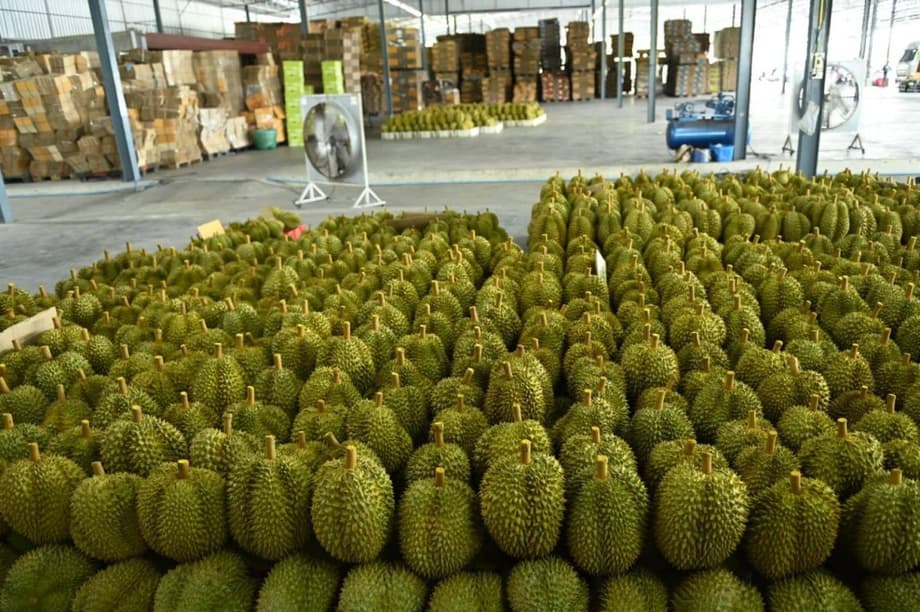
Thailand’s durian orchards are preparing for a bountiful year that could turn into a logistical nightmare. The Department of Internal Trade (DIT) forecasts total durian supply will reach 1.78 million tonnes in 2026, representing a 10% increase from the previous year. The eastern region alone will contribute 1.06 million tonnes, accounting for nearly 60% of national output. Yet this abundance arrives at a moment when the industry faces severe constraints in harvesting, packing, and transporting the fruit to market.
Wittayakorn Maneenetr, director-general of the DIT, confirmed that supply peaks will create unique pressures. The eastern harvest runs from March through June, while southern production begins between June and August. This calendar creates a critical overlap in June, when both regions simultaneously flood the market with produce. During this window, the shortage of collection centres, which serve as crucial intermediaries between farmers and exporters, threatens to leave tonnes of fruit rotting in the fields.
The challenge intensifies when considering Thailand’s position in the global market. While Thai production climbs toward 1.78 million tonnes, Vietnam projects output of 2 million tonnes this year, positioning itself to capture market share in China, which consumes the vast majority of Southeast Asia’s durian exports. Thailand supplied 76% of global durian exports in 2020, but maintaining this dominance requires solving workforce gaps that have plagued the sector since the COVID-19 pandemic.
The Disappearing Harvest Hands
The labour crisis stems from a confluence of demographic shifts, border policy changes, and lingering pandemic effects. For years, Thai durian farms relied heavily on skilled Cambodian workers who possessed the expertise to select, cut, and pack the spiky fruit without damaging its delicate flesh. These workers are now returning home in greater numbers, creating a vacuum in the workforce that Myanmar labourers, who require extensive training to meet industry standards, cannot immediately fill.
Research published in Geoforum reveals that farmer adaptations to COVID-19 disruptions have produced lasting structural changes in Eastern Thailand’s agricultural landscape. Interviews with 52 farmers conducted in mid-2024 found that while 44% now use heavy machinery compared to 33% before the pandemic, the labour-intensive nature of durian harvesting means machines cannot replace human hands for the critical tasks of picking and sorting. The study documented increased participation in cooperatives and adoption of e-commerce channels, but these innovations do not resolve the fundamental shortage of workers capable of handling the physical harvest.
Parliamentary testimony from March 2024 cited statistics showing 192,655 “excess workers” in manufacturing and services who could theoretically transition to agriculture, yet plantation owners hesitate to hire them due to concerns about forced labour allegations and compliance with international standards. This hesitation highlights the tension between immediate labour needs and long-term ethical sourcing requirements that major export markets increasingly demand.
Farmers indicated using more heavy machinery and adopting new distribution channels like e-commerce, but many of these shifts continue to produce lasting consequences for environmental, social, and economic systems.
Yara Thailand, a major crop nutrition supplier, identifies labour shortages as one of the primary pressures facing the sector alongside rising input costs and climate volatility. The company has responded by promoting drone-based fertilizer application and fertigation systems that reduce manual labour requirements, yet these technologies address cultivation rather than the harvesting bottleneck that threatens the 2026 season.
Supply Chain Bottlenecks Beyond the Orchard
Even if farmers manage to harvest their crops, structural limitations in the export infrastructure create additional risks. The DIT has warned of impending container shortages during the peak season, a recurring problem that strands perishable goods at ports. The overlap between eastern and southern harvests in June will particularly strain the network of collection centres, which function as aggregation points where fruit is graded, packed, and prepared for shipment.
Chinese import regulations add another layer of complexity. Authorities have intensified inspections for chemical residues, specifically targeting Basic Yellow 2 dye and cadmium contamination. These strict standards, while protecting consumer safety, create delays that compound the pressure of moving large volumes quickly. The DIT maintains ongoing negotiations with Chinese officials to identify contamination sources and streamline inspection protocols, but compliance remains a moving target for exporters.
The logistical challenges extend to transportation routes. Thailand currently relies on two primary pathways to reach Chinese markets. The first traverses the northeastern border, passing through Laos and Vietnam to enter China’s Guangxi Zhuang Autonomous Region. The second, known as the R3A route, begins at the northern border and travels through Laos to reach Yunnan province. Officials are pushing to expand utilization of the R3A corridor from Chiang Khong to Kunming, which could open access to western and central China with Chengdu potentially serving as a distribution hub. This route offers shorter distances than the Vietnam alternative, potentially reducing transit time for perishable cargo.
The Vietnam Challenge
While Thailand grapples with internal constraints, Vietnam has emerged as a formidable competitor. Vietnamese durian exports to China jumped approximately 17% last year after resolving earlier phytosanitary issues, and the country now projects production of 2 million tonnes, exceeding Thailand’s forecast. This shift threatens Thailand’s historical dominance in the Chinese market, which imported 928,645 tonnes of Thai durian worth 4.5 billion baht in 2023.
Data from the first half of 2024 illustrates the competitive pressure. While Thailand exported 595,681.88 tonnes worth 79.3 billion baht during this period, price competition among over 1,500 traders drove costs to unsustainable levels. By late June 2024, prices at China’s Jiangnan market had dropped to 600 yuan per box (18.5 kg), approximately 146 baht per kilogram, while Thai procurement costs plus packaging expenses reached 185-195 baht per kilogram. This price inversion caused heavy losses for established traders and drove inexperienced buyers from the market.
The entry of Vietnamese fruit during Thailand’s southern season creates additional pricing pressure. When Vietnamese supply overlaps with Thai southern harvests, Chinese buyers gain leverage to drive down prices, squeezing margins for Thai farmers who already face rising production costs due to drought and input inflation.
Political Responses and Farmer Demands
The crisis has prompted high-level government intervention. Prime Minister Paetongtarn Shinawatra visited Chanthaburi province in May 2025, meeting with fruit growers at Suan Rak Tawan Farm to address what farmers described as an existential threat to the industry. During the session, growers urged immediate action on labour shortages, requesting extensions to work permit periods for migrant workers from three to six months and permission for workers to travel between provinces to follow harvest cycles.
Chanthaburi MP Yanthicha Buaphuean raised specific proposals during the Prime Minister’s visit, emphasizing that the current three-month permit duration insufficiently covers the agricultural calendar. She also highlighted the need for a 100-million-baht compensation fund for families affected by wild elephant incursions, a secondary crisis affecting eastern plantations.
Farmers have also proposed unconventional marketing solutions. During the Chanthaburi meeting, growers urged the government to enlist Thai K-pop sensation Lalisa “Lisa” Manobal as a global ambassador for Thai fruits. They believe her international influence could expand exports beyond the saturated Chinese market into South Korea, India, and the Middle East, potentially doubling annual export value from the current 200-300 billion baht to 500 billion baht.
Opposition figures have also entered the debate. Thanathorn Juangroongruangkit, representing the People’s Party, outlined a four-point agenda for the East that specifically addresses fruit sector labour shortages. He proposed expanding the migrant worker card system to accelerate legal hiring while ensuring protections against forced labour allegations. His plan also includes water management reforms and technological solutions for human-elephant conflicts that destroy crops.
The government will consult with the Ministry of Agriculture and Cooperatives to find sustainable solutions, and will actively promote research and development to strengthen Thai produce against increasing competition from neighbouring countries.
Technology and the Future of Harvesting
While Thailand struggles with labour-dependent models, neighbouring Malaysia offers a glimpse of technological alternatives. Malaysian durian farmers are deploying 5G-connected sensors and AI-powered pest detection systems to optimize yields with fewer workers. Smart farming solutions provider Sustainable Hrvest uses soil sensors connected to automatic sprinkler systems to monitor moisture and temperature, reducing the manual labour previously required for farm management.
Tan Han Wei, founder of the Malaysian tech firm, explains that sensors detect waterlogging and heat stress while AI systems identify pest outbreaks with 70% accuracy. These technologies become particularly valuable as labour shortages drive up wages and reduce availability of farm workers. Malaysia’s Penang region has also implemented track-and-trace systems to ensure authenticity and quality control throughout the supply chain.
Thailand has begun adopting similar innovations, though adoption remains uneven. Yara Thailand’s FarmCare app, launched in 2022, now serves over 390,000 farmers with digital tools for fertilizer calculation and weather forecasting. The company recently added drone-service booking features that allow farmers to schedule precision fertilizer application via smartphone, directly addressing labour constraints in cultivation. However, harvesting remains stubbornly resistant to automation due to the durian’s physical characteristics and the precision required to determine ripeness.
The contrast between Thailand’s labour crisis and Malaysia’s technological pivot suggests that long-term competitiveness may require substantial investment in automation. Yet such transitions demand capital and training that smallholder farmers, who dominate Thai production, may struggle to access without government support.
Market Diversification Efforts
Facing saturation in China and domestic labour constraints, Thai authorities are pursuing aggressive market diversification. The DIT is conducting market testing of chilled and frozen durian in Middle Eastern countries, where initial feedback indicates growing demand. Indian tourists represent another target demographic, with promotion campaigns aimed at familiarizing Indian consumers with the fruit’s distinctive characteristics.
Domestically, the department plans supermarket promotions and mobile grocery outlets in smaller villages to increase local consumption and absorb surplus production that cannot find export channels. These initiatives aim to reduce dependence on the Chinese market, which currently accounts for approximately 80% of Thai durian exports.
The push for alternative routes and markets reflects a recognition that Thailand’s agricultural dominance cannot rely indefinitely on low-cost labour. As Vietnamese production scales up and Chinese quality standards tighten, the Kingdom must either solve its workforce puzzle or accelerate technological adoption to maintain its position as the true “King of Fruits” in the global market.
Key Points
- Thailand forecasts durian supply of 1.78 million tonnes in 2026, up 10% year-on-year, with the eastern region contributing 59.5% of total output
- Severe labour shortages threaten the harvest as skilled Cambodian workers decline and Myanmar replacements require extensive training
- Collection centre shortages and container deficits expected during June overlap of eastern and southern harvest seasons
- Vietnam projects 2 million tonnes of durian production, positioning to challenge Thailand’s dominance in Chinese markets
- Chinese authorities maintain strict inspections for Basic Yellow 2 dye and cadmium residues, creating export delays
- Prime Minister Paetongtarn Shinawatra visited Chanthaburi in May 2025 to address labour issues and propose work permit extensions from three to six months
- Farmers propose recruiting K-pop star Lisa Manobal as global ambassador to expand exports beyond China into India, Middle East, and South Korea
- Malaysia’s adoption of 5G sensors and AI pest detection offers technological model for reducing labour dependence
- First half 2024 exports reached 595,681 tonnes worth 79.3 billion baht, but price competition drove margins below sustainable levels