Manufacturing Calories from Carbon Dioxide
Chinese researchers have dramatically accelerated a process that turns industrial waste gas into edible starch, achieving a tenfold increase in productivity compared to their groundbreaking 2021 method. The advance, reported by the Chinese Academy of Sciences (CAS), brings the world closer to industrial-scale starch production without farmland, crops, or traditional agriculture. Scientists at the Tianjin Institute of Industrial Biotechnology (TIB) have refined their cell-free enzymatic system to convert carbon dioxide into the complex carbohydrate at speeds that now dwarf natural photosynthesis. The development represents a potential paradigm shift for global food security, offering a pathway to produce essential food ingredients and industrial raw materials while bypassing the environmental costs of conventional farming.
The research team, led by Professor Cai Tao, has spent the past five years optimizing the chemical-biochemical hybrid pathway first unveiled in the journal Science. Their original 2021 breakthrough demonstrated starch synthesis from CO2 at rates 8.5 times faster than corn plants. The latest improvements have multiplied that output by an additional factor of ten, creating a system that operates with efficiency levels previously confined to theoretical speculation. This artificial starch anabolic pathway (ASAP) now stands poised to challenge the agricultural status quo that has dominated human civilization for millennia.
The Chemistry of Synthetic Photosynthesis
The process mimics nature but eliminates the biological inefficiencies inherent in plant growth. Rather than waiting months for corn to mature, the laboratory method completes the conversion in hours. The pathway consists of eleven core reactions that transform gaseous carbon dioxide into polymeric starch through a carefully orchestrated sequence of chemical and enzymatic steps.
First, an inorganic catalyst reduces carbon dioxide to methanol under controlled conditions. This simple molecule then serves as the building block for a cascade of enzymatic reactions. The research team sourced and engineered enzymes from thirty-one different species, selecting and modifying sixty-two candidates to identify the ten most effective catalysts for the job. These biological machines convert methanol into three-carbon and six-carbon sugar units, which are then polymerized into either amylose or amylopectin, the two primary components of natural starch.
The resulting synthetic starch is chemically and physically identical to its agricultural counterpart. Laboratory analyses confirm matching composition and properties, meaning the artificial product could substitute directly for corn starch in food products, pharmaceuticals, paper manufacturing, textiles, adhesives, and biodegradable plastics. The method also allows for customization of the starch composition, potentially producing varieties with specific digestion rates or functional characteristics tailored to industrial needs.
From Laboratory to Factory Floor
Translating laboratory success into commercial viability presents challenges that exceed the scientific breakthrough itself. Professor Cai Tao acknowledged the difficulty of scaling during an interview with China Science Daily, explaining the progression from proof-of-concept to industrial application requires overcoming substantial economic barriers.
“It’s difficult to go from zero to one, it’s difficult to reduce costs, and it’s even more difficult to achieve industrial application in the end. Nevertheless, we still have to rise to the challenge.”
The primary obstacle involves enzyme costs. In the original 2021 system, a single key enzyme accounted for half of all material expenses. The team has focused intensively on improving this bottleneck, using artificial intelligence to screen for more stable and efficient enzyme variants while developing methods to make the biological catalysts reusable. These improvements have greatly reduced the quantity of enzymes required while maintaining reaction efficiency.
The researchers have also optimized reaction conditions to slash energy costs. The process operates under controlled laboratory conditions, allowing for predictable yields unaffected by weather, seasons, or climate variations. This consistency offers a stark contrast to agricultural production, where droughts, floods, and pests can devastate annual outputs.
Redefining Agricultural Economics
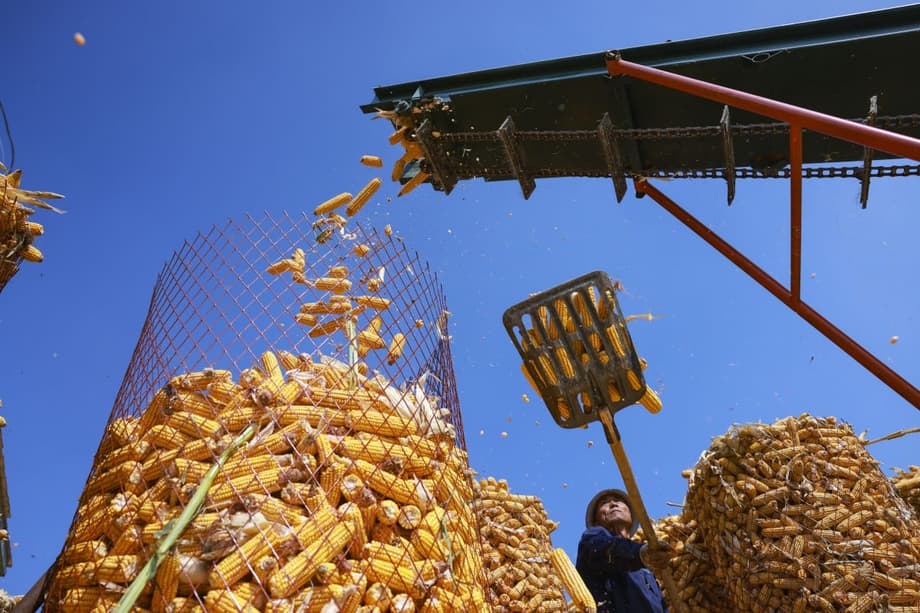
The potential resource savings extend beyond simple efficiency metrics. According to calculations by the TIB team, a bioreactor occupying one cubic meter could theoretically produce the annual starch equivalent of approximately one-third of a hectare of cornfields. If production costs can be reduced to levels competitive with traditional farming, the technology could eliminate the need for more than ninety percent of the cultivated land and freshwater currently devoted to starch production.
This land-use transformation carries profound implications for global agriculture. Currently, industrial starch production relies almost exclusively on corn, a crop that demands vast tracts of arable land, intensive irrigation, and heavy applications of fertilizers and pesticides. The competition between food crops and industrial feedstocks for limited farmland has intensified as global populations rise and climate change threatens agricultural yields.
Ma Yanhe, the founding director of TIB, articulated the vision driving this research in a 2021 statement that remains relevant today. He noted that industrialization represented both the initial ideal and ultimate goal of the project, emphasizing that the team would not abandon the effort despite the difficulties encountered during development.
The environmental benefits compound when considering the carbon cycle implications. Rather than releasing carbon dioxide into the atmosphere, the process consumes it as a raw material. When powered by renewable electricity, the system could achieve carbon-negative starch production, actively removing greenhouse gases from the atmosphere while creating valuable commodities. A 2023 study by the same team published in Science Bulletin demonstrated their system could achieve 3.5 times higher energy efficiency and synthesis rates 23 times faster than natural plant systems.
Alternative Biological Pathways
While the enzymatic approach dominates headlines, parallel research demonstrates other viable routes from carbon dioxide to starch. Scientists have developed an alternative method using engineered yeast, specifically the oleaginous strain Yarrowia lipolytica, to produce what they term “starch-rich micro-grain.”
This biological approach reconfigures yeast metabolism to accumulate starch at levels reaching 47 percent of the cell’s dry weight. By rewiring starch biosynthesis and gluconeogenesis pathways while manipulating cell morphology to increase size, researchers achieved spatial-temporal productivity approximately fifty times higher than traditional crop cultivation. The yeast method utilizes acetate, which can be electrosynthesized from carbon dioxide using renewable electricity, creating another pathway for carbon-negative food production.
The engineered yeast can consume agricultural waste such as straw when combined with acetate, offering a route to convert cellulose into edible starch. This capability addresses another agricultural challenge: the underutilization of crop residues. While the enzymatic and microbial approaches differ in methodology, both share the common goal of decoupling food production from traditional farming.
National Context and Global Implications
China’s investment in synthetic starch technology reflects acute national pressures. The country must feed the world’s largest population using limited per-capita farmland and water resources. Agricultural activities contribute substantially to national carbon emissions through fertilizer production, machinery fuel consumption, rice cultivation methane releases, and energy-intensive irrigation systems.
Recent data from 2005 to 2021 shows China has pursued dual-scale agricultural management, combining larger farmland operations with shared professional services to reduce carbon intensity while maintaining output. However, these improvements may prove insufficient as climate change intensifies and arable land faces degradation. Synthetic starch offers a complementary strategy that could free millions of hectares of land for ecosystem restoration or food crop cultivation while meeting industrial demand for the carbohydrate.
The technology also aligns with China’s broader energy transition. As the nation expands renewable electricity generation and reduces power sector emissions, the availability of clean energy makes carbon capture and utilization technologies increasingly viable. The CO2-to-starch process requires energy input, particularly for the initial conversion to methanol and for hydrogen production through water electrolysis. When powered by solar or wind energy, the system effectively stores electrical energy in chemical bonds, creating a form of food-based energy storage.
Key Points
- Chinese scientists at the Tianjin Institute of Industrial Biotechnology have increased carbon dioxide-to-starch conversion productivity by ten times compared to their 2021 breakthrough method.
- The artificial process uses eleven enzymatic steps to convert CO2 into starch identical to agricultural products, operating at speeds now approximately 85 times faster than natural corn synthesis.
- A one-cubic-meter bioreactor could theoretically match the annual starch output of one-third of a hectare of cornfields, potentially saving over ninety percent of the land and water used in traditional starch production.
- Research teams are using artificial intelligence to optimize enzymes and reduce costs, addressing the primary barriers to commercial industrial application.
- Parallel research using engineered yeast offers an alternative biological pathway with fifty times higher spatial productivity than crop cultivation, utilizing electrosynthesized acetate as feedstock.
- The technology could reduce agricultural carbon emissions, eliminate competition between food and industrial crops for farmland, and provide a carbon-negative manufacturing route when powered by renewable energy.