The Capacity Explosion Transforming Malaysia
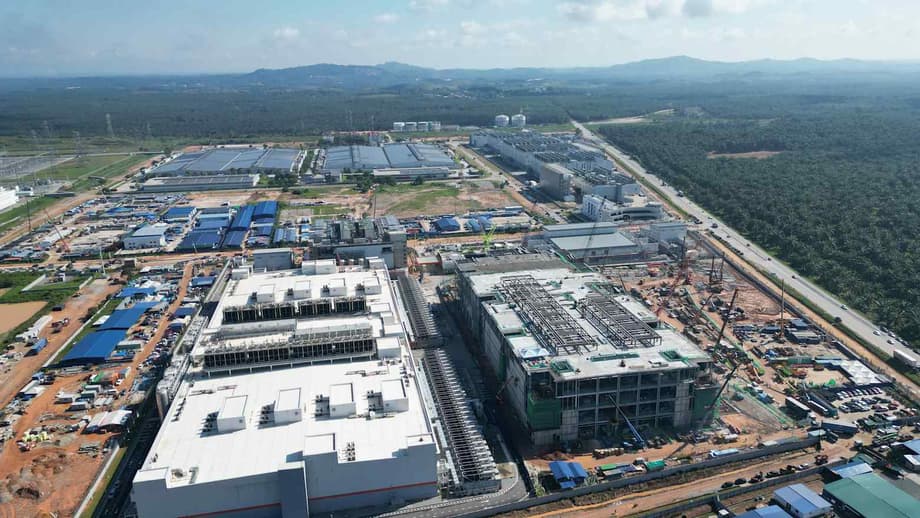
Malaysia is experiencing one of the most dramatic infrastructure expansions in Southeast Asian history, with the country’s data center capacity set to more than double by the end of 2026. According to new research from real estate group Jones Lang LaSalle (JLL), this surge positions Malaysia as the fastest-growing data center market in the Asia-Pacific region, capturing over two-thirds of all data center capacity currently under construction across Southeast Asia’s five largest economies.
The numbers reveal the scale of this transformation. The Malaysia Data Center Market, valued at USD 6.14 billion in 2025, is projected to reach USD 11.40 billion by 2031, growing at a compound annual growth rate of 10.86%. Currently hosting approximately 51 operational colocation data centers, the country is adding capacity at a pace that outstrips traditional regional hubs like Singapore and Hong Kong. This growth represents not merely an expansion of digital infrastructure, but a fundamental reordering of how global technology firms approach the Asian market.
The timing coincides with an unprecedented global investment supercycle. JLL’s global outlook indicates that nearly 100 gigawatts of new data centers will be added worldwide between 2026 and 2030, effectively doubling global capacity. Within this context, Malaysia has emerged as a critical node in the architecture of artificial intelligence computing, attracting investments from Microsoft, Google, Amazon, ByteDance, Nvidia, and Alibaba.
Why Malaysia Became the Region’s Data Center Darling
Several converging factors explain Malaysia’s sudden ascendancy in the data center hierarchy. The most immediate catalyst was Singapore’s three-year moratorium on new data center projects, followed by the city-state’s implementation of rigid green data center specifications that effectively capped expansion in the traditional regional hub. As global cloud adoption accelerated during the pandemic, technology firms seeking proximity to Singapore’s financial and technological ecosystem found Malaysia an attractive alternative.
Geography provides Malaysia with an inherent advantage. The southern state of Johor, separated from Singapore by a narrow strait, offers land availability and lower costs while maintaining latency advantages for serving the broader Southeast Asian market. Cyberjaya, Malaysia’s designated technology city, hosts more than 22 existing data centers with nine additional facilities planned, cementing its status as the country’s premier digital infrastructure hub.
Cost competitiveness remains a significant draw. Construction costs in Malaysia range from $8 million to $10 million per megawatt, substantially lower than in Singapore. This cost differential extends to operational expenses, though recent policy changes are altering the calculus. In July 2025, Malaysia implemented new power tariffs specifically targeting data centers, with facilities exceeding 100 megawatts classified under ultra-high voltage categories facing potential annual cost increases of $15 million to $20 million per facility.
Prime Minister Anwar Ibrahim’s government has actively courted these investments through the 2021 Artificial Intelligence Roadmap, which frames a national AI ecosystem as essential for Malaysia to achieve developed nation status by 2030. The 2026 state budget allocated RM 2 billion (approximately USD 490 million) toward building a sovereign AI cloud, part of a broader RM 5.9 billion commitment for AI-related research, development, commercialization, and innovation initiatives.
The Infrastructure Strain Threatening Growth
Despite the optimistic projections, Malaysia’s data center boom is colliding with hard physical constraints. The International Energy Agency (IEA) has identified Malaysia as a critical pressure point in global energy systems, noting that data centers could account for as much as one-fifth of the country’s electricity demand growth by 2030. This projection places Malaysia alongside Japan and the United States as nations where AI-driven computing infrastructure will most dramatically reshape energy consumption patterns.
The reality on the ground is already straining resources. Water shortages in Johor and Selangor have forced state authorities to slow approvals for new data center construction. Data centers consume vast quantities of water for cooling systems, with a single AI-optimized facility potentially using up to 20 lakh liters daily. Microsoft, one of the largest investors in the region, has internally projected that its global water needs for data centers could increase by 150 percent by 2030, though the company has revised estimates downward after implementing new conservation technologies.
Electricity presents an even more formidable challenge. Malaysia’s grid relies heavily on coal and natural gas, creating tension between the country’s net-zero commitments and its need to power new facilities. The government plans to add six to eight gigawatts of gas-fired power by 2030 specifically to address data center demand, a move that risks locking the country into carbon-intensive pathways. Construction costs are rising accordingly, with JLL forecasting a 6 percent increase to $11.3 million per megawatt globally in 2026, and Malaysia experiencing 5-7 percent year-over-year cost escalation due to inflation and regulatory changes.
Grid connection wait times now exceed four years in primary markets, prompting operators to explore behind-the-meter power arrangements and on-site battery storage. Natural gas is projected to play a major role in alleviating grid constraints, though some hyperscalers reject these solutions on sustainability grounds. In response, Malaysia’s Green Data Center Guidelines under the Malaysia Digital Economy Corporation (MDEC) mandate Environmental Impact Assessments for large-scale developments and encourage energy-efficient infrastructure.
The Sovereignty Question: Hosting vs. Owning
Malaysia’s data center strategy reveals a fundamental tension between attracting foreign investment and achieving technological sovereignty. While the country has successfully positioned itself as a host for international hyperscalers, critics argue this risks locking Malaysia into the role of a passive infrastructure provider rather than an active participant in the AI revolution.
The government’s sovereign AI cloud initiative aims to address this imbalance by ensuring AI models can be trained, stored, and deployed on Malaysian soil under domestic oversight. However, the RM 2 billion allocated for this purpose pales in comparison to international commitments. OpenAI has announced intentions to invest USD 1.4 trillion in computing infrastructure over the next decade, while Meta committed over USD 600 billion to US infrastructure by 2028. Former President Trump announced private sector investments of up to USD 500 billion for AI infrastructure in January 2025.
Analysis suggests many existing data center commitments in Malaysia focus on inference (model deployment) rather than training, which requires significantly more computational power and specialized chips. While inference facilities generate economic value, they do not elevate Malaysia into the tier of “compute-north” countries that shape how advanced AI models are developed. This distinction matters because training facilities typically generate greater technological spillover and higher-skilled employment opportunities.
The Asia-Pacific Data Center Association projects that Malaysia’s AI industry will create 30,900 jobs annually by 2030, including high-value roles for network engineers, cloud infrastructure specialists, and ICT security professionals. However, research indicates that data centers create the fewest jobs per square foot of any major facility type, employing thousands during construction but fewer than 200 during operations. There is growing concern that research and engineering positions will be filled by foreign workers while locals are relegated to temporary construction roles and low-level maintenance positions.
Global Players Place Their Bets
Microsoft stands among the most aggressive investors in Malaysia’s digital infrastructure. The company announced plans to establish a second cloud region, designated “Southeast Asia 3,” in Johor Bahru, featuring three availability zones and projected to become operational within two to three years. This expansion comes despite Microsoft facing severe capacity constraints globally, with Chief Technology Officer Kevin Scott acknowledging that “massive crunch is probably an understatement” regarding the company’s ability to build infrastructure fast enough since ChatGPT’s launch.
Microsoft is not alone in its expansion. NTT DATA acquired land worth $88.5 million from Tropicana Corporation Berhad in August 2024 to develop a six-building data center campus in Johor, with the first facility expected online by 2027. Google, Amazon, ByteDance, Nvidia, and Alibaba have all committed significant resources to Malaysian facilities, creating a competitive landscape where land and power availability increasingly determine market entry.
Amid this foreign investment surge, local champion Bridge Data Centres (BDC) demonstrates that indigenous capacity can compete at the highest levels. Backed by Bain Capital, BDC operates over 300 megawatts of live capacity in Malaysia, making it the country’s largest operator. The company has pursued a strategy of vertical integration, accumulating approximately 600 patents related to data center designs and systems, and maintaining in-house engineering capabilities rather than outsourcing operations.
Eric Fan, CEO of Bridge Data Centres, emphasizes that his company is “not a real estate play” but a technology company focused on “frontier solutions.” BDC expects to almost double its Malaysian workforce in 2026 as new campuses come online in Johor and the Klang Valley. The company has established education partnerships with institutions like the Singapore Institute of Management to develop regional talent, though Fan acknowledges that AI-driven demand is increasing costs by 15-20 percent compared to pre-AI designs due to advanced liquid cooling requirements.
Navigating the Geopolitical Tightrope
Malaysia’s rise as a data center hub intersects dangerously with intensifying US-China technological competition. As one of China’s largest trading partners in ASEAN, Malaysia faces pressure to maintain economic ties with Beijing while navigating Washington’s tightening export controls on advanced GPUs and potential tariffs on data center equipment. These restrictions could significantly impact Malaysia’s AI build-out by raising costs and limiting access to necessary chips.
Simultaneously, Malaysia’s neutrality has made it an attractive location for companies seeking to diversify supply chains away from concentrated risks. Chinese firms have reportedly viewed Malaysia as a potential loophole to circumvent US export controls by accessing advanced chips through third-party nations. This dynamic creates complex compliance challenges for Malaysian authorities attempting to balance economic opportunities with diplomatic realities.
The recent US-Malaysia Reciprocal Trade Deal may complicate Malaysia’s National Semiconductor Strategy, which aims to maintain the country’s position in midstream semiconductor production while gradually increasing complexity. Compliance with US export restrictions might constrain Malaysia’s ability to serve as a neutral intermediary in the global chip supply chain, potentially undermining the supply chain autonomy that Putrajaya initially envisioned.
These geopolitical considerations extend to energy security. The IEA warns that cyberattacks on energy utilities have tripled in the past four years and grown more sophisticated through AI applications. As data centers become critical infrastructure, their vulnerability to both physical and cyber threats increases, requiring coordination between technology firms, energy providers, and national security agencies.
The Regional Ripple Effect
Malaysia’s expansion is reshaping competitive dynamics across Southeast Asia. The Philippines, through PLDT Inc., has announced plans to build a 100-megawatt hyperscale data center in Cavite, with Chairman Manuel V. Pangilinan explicitly stating the goal to expand capacity “to be at least equal to the capacity of Malaysia.” This 12th facility for PLDT, scheduled to begin construction in 2026 and complete by 2028, signals that neighboring countries view Malaysia’s capacity as the benchmark for regional relevance.
Indonesia, Thailand, and Vietnam are similarly accelerating data center investments, with the Asia-Pacific region projected to account for 40 percent of global data center capacity by 2030. The region is poised to reach approximately 30 gigawatts of total capacity, fueled by $800 billion in investments. However, Malaysia’s first-mover advantage and proximity to Singapore provide a head start that competitors will struggle to match.
This regional competition occurs against a backdrop of potential oversupply concerns. Since 2023, data centers and GPU clusters have been built at a pace that could exceed near-term AI demand. If AI workloads fail to keep pace with infrastructure expansion, the industry could face consolidation and repricing. However, JLL’s analysis suggests that the transition from AI training to inference workloads in 2027 will redistribute demand from centralized clusters to distributed regional hubs, potentially absorbing excess capacity in locations like Malaysia that serve broader Southeast Asian markets.
Key Points
- Malaysia’s data center capacity is projected to more than double by end-2026, capturing over two-thirds of Southeast Asia’s new construction
- The market is valued at USD 6.14 billion (2025) and projected to reach USD 11.40 billion by 2031
- Microsoft is building a second cloud region in Johor Bahru, while local operator Bridge Data Centres maintains 300+ MW of live capacity
- Water shortages in Johor and Selangor and electricity grid constraints are forcing authorities to slow approvals and implement new power tariffs
- New tariffs (July 2025) increase energy costs by 10-14%, with facilities over 100 MW facing up to $20 million in additional annual costs
- Malaysia aims to balance foreign investment attraction with technological sovereignty through a RM 2 billion sovereign AI cloud initiative
- Geopolitical tensions between the US and China create compliance challenges regarding advanced chip access and export controls
- The Asia-Pacific region is projected to account for 40% of global data center capacity by 2030, with Malaysia leading Southeast Asian growth