Breaking the Tether: A Historic Connection
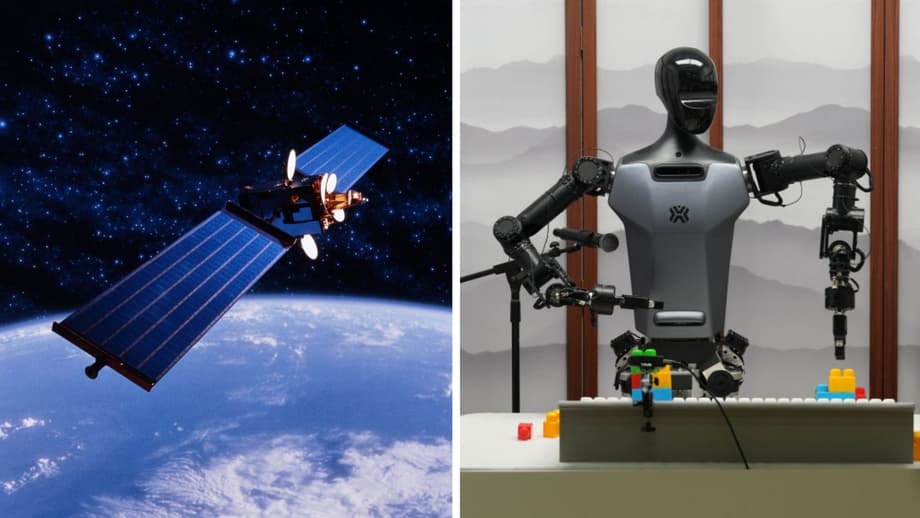
On January 23, 2026, a humanoid robot in Beijing accomplished something that engineers have long envisioned but never achieved in public demonstration. The “Embodied Tien Kung,” developed by X-Humanoid at the Beijing Innovation Center of Humanoid Robotics, established a direct communication link with a satellite orbiting hundreds of kilometers above Earth. This connection allowed the machine to complete a complex physical task while streaming high definition video and telemetry data back to operators in real time, all without relying on cellular towers, Wi-Fi networks, or any ground based internet infrastructure.
The demonstration took place at the 3rd Beijing Commercial Space Industry High Quality Development Promotion Conference, where the robot connected to a GalaxySpace low Earth orbit (LEO) internet satellite. According to X-Humanoid, this marked the first instance globally of a humanoid robot maintaining a stable satellite link while performing autonomous physical operations. The achievement represents a significant step toward liberating advanced robotics from the geographic constraints that have traditionally limited their deployment to urban areas with robust connectivity.
Satellite internet has long promised to connect remote corners of the globe, but integrating this capability into humanoid robots introduces new possibilities for autonomous machines operating in areas where traditional networks cannot reach. The test demonstrated that these robots could eventually work in disaster zones, remote mining operations, offshore platforms, and other challenging environments while maintaining constant communication with human supervisors located anywhere on the planet.
The significance of this breakthrough extends beyond the technical achievement. It signals a convergence of China’s commercial space sector and its rapidly advancing robotics industry, two strategic priorities that Beijing has identified as crucial for future economic competitiveness. By successfully merging these technologies in a public demonstration, Chinese firms have moved closer to creating truly autonomous systems capable of operating independently of terrestrial infrastructure. The demonstration also served as a powerful statement about China’s growing capabilities in both artificial intelligence and aerospace engineering, showcasing a level of integration that has remained difficult to achieve for research teams in other countries.
The Demonstration: A Robot on a Mission
During the conference, organizers designed a practical test that would challenge the robot’s capabilities while demonstrating real world utility. The scenario involved retrieving a symbolic “Joint Project Completion Acceptance Certificate” from an unmanned vehicle and delivering it to a representative at a newly constructed aerospace industrial park in suburban Beijing. While the physical task appeared straightforward, the complexity lay in executing it while maintaining a stable satellite connection throughout the entire operation.
The sequence began when a driverless vehicle autonomously traveled from a government service center to Rocket Avenue, a newly completed thoroughfare in Beijing’s Economic and Technological Development Area. As a GalaxySpace internet satellite passed overhead, the Embodied Tien Kung identified the optimal communication window, performed system diagnostics, and established its link with the orbiting spacecraft. This timing proved critical, as LEO satellites move rapidly relative to ground positions, creating brief windows of connectivity that require precise coordination.
Once connected, the robot approached the unmanned vehicle, retrieved the certificate, and transported it to a destination building. Throughout this process, the machine transmitted a 720p live video feed from its forward facing camera alongside detailed telemetry data including joint movements and positional information. This data traveled to the satellite and bounced back to a command center almost instantaneously, allowing operators to monitor the robot’s progress from both first person and external perspectives simultaneously.
The demonstration also showcased multi terminal connectivity capabilities. Alongside the humanoid, smartphones and computers maintained connections to the same satellite network, proving that the system could handle multiple devices without degradation. This multi link functionality suggests that future deployments could involve teams of robots and human supervisors all connected through a single satellite infrastructure, coordinating complex operations in areas where traditional internet remains unavailable.
Technical Innovation Behind the Link
The successful connection relied on several advanced technologies working in concert. GalaxySpace provided a new generation of internet satellite equipped with phased array flat panel antenna technology. Unlike traditional parabolic dishes that require mechanical pointing, phased arrays use electronic beam steering to maintain signal lock without physical movement. This capability proves essential for mobile applications like humanoid robots, which change orientation and position constantly during operation.
Low Earth orbit satellites typically circle the planet at altitudes between 500 and 2,000 kilometers, significantly closer than traditional geostationary satellites positioned at 35,786 kilometers. This proximity reduces signal latency, enabling the near real time data transmission observed during the demonstration. These altitudes allow for round trip signal travel in mere milliseconds, compared to the noticeable delays experienced with traditional satellite internet. However, the trade off involves rapid orbital movement, meaning satellites remain visible from any single ground location for only brief periods, necessitating either multiple satellites in constellation or precise timing of operations.
The “no ground network support” claim requires clarification for readers unfamiliar with satellite communications. While the robot did not depend on local cellular or Wi-Fi infrastructure at the demonstration site, the satellite itself connects to ground stations elsewhere on Earth to route data to command centers. The breakthrough lies in eliminating the need for terrestrial internet infrastructure at the robot’s specific location, not in creating a completely ground independent system. This distinction matters for understanding where such technology proves most valuable: locations with poor or nonexistent local connectivity but clear sky access. For emergency responders or military operators, this capability means robots could enter areas with completely destroyed infrastructure while maintaining full situational awareness with command centers located thousands of kilometers away.
Practical Applications and Future Deployment
Satellite connected humanoids could transform numerous industries where humans currently perform dangerous or inaccessible work. Mining operations in remote regions could deploy these robots for inspections and maintenance without building extensive communication infrastructure. Emergency responders could send humanoid machines into disaster zones immediately after earthquakes or floods, when ground networks often fail, to search for survivors or assess structural damage while maintaining visual contact with rescue coordinators. The ability to deploy intelligent machines without first establishing communication towers or fiber optic cables dramatically reduces the cost and complexity of robotic assistance in crisis situations.
Offshore oil platforms and maritime operations present another immediate use case. Workers on remote platforms or ships at sea often face limited connectivity options. Humanoid robots capable of performing maintenance, inspections, or cargo handling while connected via satellite could reduce human exposure to hazardous conditions while ensuring continuous oversight from onshore experts. The technology also applies to scientific field exploration in polar regions, deserts, or mountainous terrain where researchers currently risk personal safety to gather data.
Space industry applications represent perhaps the most ambitious frontier. Chinese firm Engine AI recently announced plans to send their PM01 humanoid robot into space through a partnership with Beijing Interstellar Human Spaceflight Technology, potentially making it the first humanoid astronaut. Satellite connectivity serves as a crucial stepping stone toward such goals, demonstrating that humanoid robots can maintain communication links in environments where traditional networking proves impossible. The harsh conditions of space, including vacuum, microgravity, extreme temperature swings, and intense radiation, require robust communication systems that do not depend on ground infrastructure.
China’s Strategic Push in Robotics
This achievement arrives amid a broader acceleration of China’s humanoid robotics sector. According to Counterpoint Research, global sales of humanoid robots reached approximately 16,000 units in 2025, with the vast majority sold in China. The market experienced staggering 508% year on year growth, reaching around $440 million in value. Chinese firms dominate this expansion, having applied the same strategies of heavy investment, rapid iteration, and vertical integration that previously transformed the country’s electric vehicle industry.
Beijing has identified humanoid robotics as a strategic priority, with the Innovation Center of Humanoid Robotics serving as a key hub for coordinating research and development. The Tien Kung platform represents one of several Chinese humanoid projects competing for both domestic and international markets. While Tesla’s Optimus generates significant Western media attention, Chinese manufacturers currently lead in actual deployment numbers, with projections suggesting sales could exceed 100,000 units by 2027. This dominance reflects years of focused government support and private sector innovation that has created a robust supply chain for robotic components and artificial intelligence systems.
The integration of commercial space capabilities with robotics reflects China’s dual approach to technological development. GalaxySpace, the satellite provider for this demonstration, has been developing phased array technologies and LEO constellations to provide global internet coverage. By combining these space assets with ground based robotics, Chinese firms create synergies that enhance the capabilities of both sectors. This convergence creates a unique ecosystem where advances in one sector immediately benefit the other, accelerating the development timeline for both satellite constellations and robotic platforms. This approach mirrors historical patterns where space race investments drove broader technological advances, though in this case the applications remain firmly focused on terrestrial and near space commercial opportunities.
A Pattern of Outdoor Achievement
The satellite connection represents the second time Tien Kung has claimed a “world’s first” achievement involving complex outdoor operations. In February 2025, the same robot successfully climbed 134 outdoor steps to reach the summit of Haizi Wall Park in Beijing, navigating uneven terrain, varying step heights, and environmental factors like wind and changing lighting conditions. This earlier demonstration proved that humanoid robots could handle complex locomotion outside controlled laboratory environments.
Together, these achievements suggest a deliberate strategy by X-Humanoid to test their platforms in increasingly challenging real world conditions rather than optimizing solely for indoor factory settings. The outdoor stair climbing demonstrated physical robustness and adaptive locomotion, while the satellite connection proved communication resilience and operational independence from infrastructure. Combined, these capabilities point toward robots that could eventually deploy rapidly to any location on Earth without requiring previously established roads, networks, or facilities.
The progression also highlights the rapid pace of development in Chinese robotics. Within less than a year, the same platform moved from navigating static outdoor terrain to performing tasks while connected to orbiting spacecraft. The stair climbing demonstration required sophisticated balance algorithms and terrain adaptation, while the satellite connection demanded precise timing and communication protocols, showing the breadth of engineering expertise at X-Humanoid. This velocity of improvement reflects both the competitive pressure within China’s domestic robotics market and the substantial government and private investment flowing into the sector.
Challenges Remaining
Despite the successful demonstration, significant challenges remain before satellite connected humanoids become commonplace. LEO satellite coverage requires constellations of hundreds or thousands of spacecraft to provide continuous global connectivity. Current networks offer intermittent coverage depending on orbital mechanics, meaning robots might face communication blackouts during critical operations unless multiple satellites or data storage and forwarding protocols bridge the gaps.
Power consumption presents another obstacle. Humanoid robots already face battery limitations during physical tasks. Adding satellite communication hardware and the processing required for high definition video transmission increases energy demands substantially. Future deployments will require either improved battery technology, tethered power supplies, or on site charging solutions that the robots can autonomously utilize.
Latency and bandwidth constraints, while improved over geostationary satellites, still limit the complexity of remote operations that human supervisors can perform in real time. High precision manipulation or rapid response scenarios might exceed the capabilities of current LEO networks. Additionally, the cost of satellite data transmission remains high compared to terrestrial alternatives, potentially limiting applications to high value tasks where human risk or travel costs outweigh communication expenses.
The Bottom Line
- X-Humanoid’s Embodied Tien Kung became the first humanoid robot to establish a direct link with a low Earth orbit satellite while performing a physical task, demonstrated on January 23, 2026, in Beijing.
- The robot retrieved a certificate from an unmanned vehicle and delivered it to a building while streaming 720p video and telemetry data via GalaxySpace’s phased array satellite without using ground based internet.
- The demonstration utilized multi terminal connectivity, simultaneously supporting the robot, smartphones, and computers on the same satellite network.
- Applications include remote inspections, disaster response, mining operations, offshore platforms, and eventually space missions where terrestrial networks are unavailable.
- The achievement follows Tien Kung’s February 2025 feat of climbing 134 outdoor steps, showing rapid progression in outdoor operational capabilities.
- China currently dominates the global humanoid robot market with 508% year on year growth, applying strategies similar to those used in the electric vehicle sector.
- Challenges remain regarding continuous satellite coverage, power consumption, and communication costs before widespread deployment becomes practical.