The Sudden Collapse of a Vital Market
Japan’s tourism industry is confronting an unprecedented crisis as Chinese visitors, long the backbone of the country’s inbound travel economy, have vanished almost overnight. According to data released by the Japan National Tourism Organisation (JNTO), arrivals from mainland China plummeted to 330,400 in December 2025, representing a staggering 45 percent decline from the same month a year earlier.
- The Sudden Collapse of a Vital Market
- How a Taiwan Remark Triggered a Tourism Freeze
- From Bookings to Cancellations: The Business Fallout
- The South Korea Pivot: Where Chinese Tourists Are Going Instead
- Safety Claims and Tokyo Robberies
- Silver Linings for Overtourism Weary Locals
- Diversification Strategies: Japan’s Response to the China Risk
- Key Points
The timing could hardly be worse. The Lunar New Year holiday, traditionally one of the busiest periods for Chinese outbound travel, begins February 15, yet Beijing has explicitly instructed its citizens to avoid Japan during this peak season. The Chinese foreign ministry and diplomatic missions issued the advisory on January 26, citing security concerns and a claimed rise in crimes targeting Chinese nationals.
Despite the sharp drop in Chinese arrivals, Japan’s overall visitor numbers for December remained surprisingly resilient at nearly 3.62 million, up 3.7 percent year on year. This apparent paradox, driven by visitors from other parts of Asia, Europe and the United States taking advantage of the weak yen, masks a deeper economic threat. Chinese tourists have historically accounted for roughly 23.7 percent of all inbound visitors and represent an even larger share of spending due to their appetite for luxury goods and high end experiences.
How a Taiwan Remark Triggered a Tourism Freeze
The roots of this tourism collapse extend far beyond travel logistics into the volatile terrain of geopolitics. The crisis began November 7, 2025, when Japanese Prime Minister Sanae Takaichi, the nation’s first female leader, made remarks in parliament that departed from Japan’s traditional policy of strategic ambiguity regarding Taiwan.
Takaichi suggested that a Chinese military attack on Taiwan could constitute a survival threatening situation for Japan, potentially triggering a response by Japan’s self defense forces. While she later described these remarks as hypothetical and consistent with existing security legislation, Beijing reacted with fury.
China’s Vice Foreign Minister Sun Weidong summoned Japan’s ambassador to Beijing, marking the first such diplomatic summons in over two years. Chinese state media and officials condemned the remarks as the first explicit threat of force against China in 80 years, with some commentators drawing parallels to Japanese militarism of the 1930s and 1940s.
Within days, China transformed diplomatic anger into economic leverage. On November 14, the Chinese foreign ministry issued its first travel advisory urging citizens to avoid Japan. The Chinese embassy in Tokyo later repeated the warning, citing reports of rising xenophobic sentiments and attacks against Chinese nationals. By January 26, with the Lunar New Year approaching, Beijing had escalated the advisory to a formal recommendation against travel during the holiday period.
Recently, Japanese leaders have openly made explicit provocative remarks regarding Taiwan, severely worsening the atmosphere for exchanges between Chinese and Japanese people and posing significant risks to the personal and life safety of Chinese citizens in Japan.
This statement from China’s embassy in Japan explicitly linked the travel warning to Takaichi’s Taiwan comments, making clear that the tourism restrictions serve as punishment for Japan’s diplomatic posture.
From Bookings to Cancellations: The Business Fallout
The impact rippled through Japan’s tourism infrastructure with remarkable speed. RCC Inc., a major Tokyo based travel agency specializing in Chinese inbound tourism, reported losing approximately 30 group tour bookings in a single day following the November advisory. Between 2,000 and 3,000 Chinese travelers had been using the agency’s services monthly this year, up from around 800 per month in 2024.
Aviation markets reacted immediately. Spring Japan, a budget carrier operating flights between Narita International Airport and seven Chinese destinations, received more than 200 inquiries about cancellations within days of the advisory. Chinese carriers including Air China, China Eastern and China Southern began offering free cancellations for Japan flights through late October, effectively encouraging passengers to abandon their travel plans.
Sichuan Airlines cancelled its planned Chengdu to Sapporo route until at least March 2026. Flight data from Cirium shows that scheduled flights from China to Japan have slumped 48 percent to just above 800 for the Lunar New Year period, while flights between mainland China and South Korea have jumped nearly 25 percent to more than 1,330.
Hoteliers across Japan report varying degrees of pain. In Osaka, the Kansai region’s tourism hub, the Convention and Tourism Bureau confirmed that 50 to 70 percent of Chinese bookings at roughly 20 hotels have been cancelled through the end of December. Kyoto, another major destination for Chinese group tours, recorded a 12.1 percent year on year drop in overnight stays by Chinese visitors at major hotels in November, the first decline since the COVID-19 pandemic.
The retail sector has felt equally sharp blows. Duty free sales to foreign visitors at four major Japanese department store operators fell by between 10 percent and 20 percent in December compared to the previous year. Isetan Mitsukoshi shares plunged 10.7 percent following the November advisory, while Oriental Land dropped 5.9 percent and Japan Airlines slid 4.4 percent.
Tomoko Ako, a professor at the University of Tokyo specializing in China studies, noted that while the current advisory remains a recommendation rather than a binding prohibition, further deterioration in relations could see China require travel agencies to halt tours entirely or reduce flight frequencies between the two countries.
The South Korea Pivot: Where Chinese Tourists Are Going Instead
As Japan’s tourism sector struggles with the sudden absence of its largest market, South Korea is experiencing an unprecedented surge. Market researcher China Trading Desk projects that 230,000 to 250,000 mainland Chinese visitors will arrive in South Korea during the nine day Lunar New Year holiday starting February 15, representing a jump of up to 52 percent over the previous year.
This shift marks the first time since the COVID-19 pandemic that South Korea will overtake Japan as the top destination for Chinese travelers during the Spring Festival period. Japan, by contrast, faces a projected 60 percent nosedive in Chinese arrivals for the same holiday.
Several factors explain this dramatic pivot. Seoul has aggressively courted Chinese tourists by extending visa free entry policies for tour groups through June and easing visa requirements for individual travelers. The weak South Korean won offers similar shopping advantages to Japan’s weak yen, but without the accompanying political friction.
Perhaps most significantly, South Korean pop culture continues to drive destination choice among younger Chinese travelers. Seoul, Busan and Jeju Island have become magnets for tourists seeking beauty treatments, fashion and entertainment experiences. Tony Medina, who runs Seoul Medical Guide connecting tourists to skincare and plastic surgery clinics, reported receiving several hundred inquiries from mainland Chinese clients for the holiday period, compared to only a handful the previous year.
Regional Asia continues to dominate Chinese travel preferences according to the latest China Trading Desk survey, with Singapore, Malaysia and South Korea leading the list. Japan has fallen sharply from second place to seventh in the rankings of preferred destinations, a drop that reflects how sensitive travel demand remains to political signals.
One 20 year old college student from Guangxi province, identified as Lisa Zhang, told media outlets she had originally planned to visit Japan for skiing but switched to South Korea due to the cheaper currency and geopolitical tensions. She noted that her parents would worry about her safety in Japan due to perceived anti China sentiment.
Safety Claims and Tokyo Robberies
China’s justification for the travel advisory centers on alleged security risks for Chinese nationals in Japan. Beijing has pointed to specific incidents, including a major robbery in Tokyo’s Ueno district on January 29, 2026, where assailants used pepper spray to attack a group including Chinese nationals and stole approximately 420 million yen (around $2.7 million USD).
A subsequent incident occurred hours later at Haneda Airport, where attackers targeted a Japanese man transporting 190 million yen in a suitcase. While the robbers failed to escape with the money in this case, the coordinated nature of the crimes raised alarms about organized crime targeting individuals carrying large cash sums.
The Chinese Embassy in Japan cited these incidents along with broader claims of rising xenophobic sentiments and harassment targeting Chinese citizens. However, Japanese officials have disputed these characterizations, noting that Japan maintains relatively low crime rates compared to other major global cities.
Some analysts view the safety claims as pretextual, designed to provide plausible cover for what is essentially a politically motivated economic sanction. By framing the advisory around security rather than diplomacy, Beijing maintains the formal position that it is protecting citizens rather than punishing Japan, though the timing and rhetoric clearly link the warning to Takaichi’s Taiwan remarks.
Silver Linings for Overtourism Weary Locals
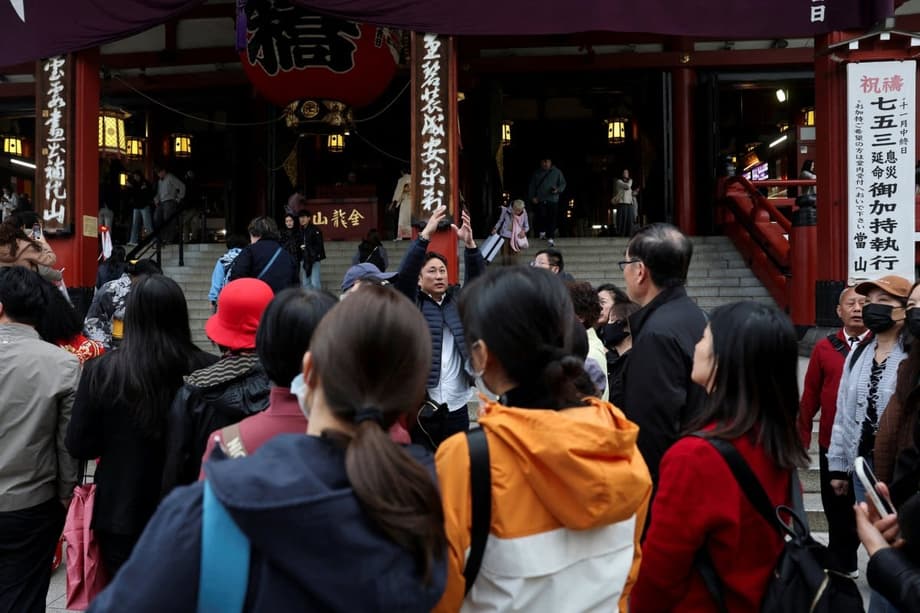
While businesses dependent on Chinese tourism face significant financial pressure, some segments of Japanese society have welcomed the sudden reduction in visitor numbers. Overcrowding at major tourist hotspots has become a chronic issue in recent years, with residents of Kyoto, Tokyo’s Asakusa district and Hiroshima’s Miyajima island complaining of congestion, noise and environmental degradation.
Reporting from Miyajima, one of Japan’s most famous sightseeing destinations, suggests that while overall tourist numbers remain stable, the demographic composition has shifted noticeably. Local cafe owners reported seeing primarily European, North American and Taiwanese visitors, with mainland Chinese tourists virtually absent.
One cafe owner on the island noted that large tour groups from China had sometimes been difficult to accommodate, suggesting that the shift toward individual travelers from Western countries might actually improve the visitor experience for all parties.
In Tokyo’s Asakusa district, rickshaw driver Kai Iwasaki observed that while Chinese customers once comprised roughly 30 percent of his business, their disappearance has been offset by increased visitors from Europe, America and Southeast Asia. Hotel managers in the capital report that vacant rooms created by Chinese cancellations are filling quickly with alternative clientele.
This diversification aligns with broader government goals to reduce dependence on any single market. According to JNTO data, while China remained the largest source of inbound tourists at roughly 23 percent through October 2025, this represents a decline from about 30 percent in 2019. In October alone, 13 countries and regions including South Korea, Taiwan and the United States recorded their highest visitor numbers to Japan.
Diversification Strategies: Japan’s Response to the China Risk
Faced with the possibility that Chinese tourism may not return to previous levels for months or even years, Japanese businesses are accelerating efforts to diversify their customer bases. The strategy, widely termed managing the China risk, involves expanding marketing efforts toward Europe, the United States, Australia and Southeast Asia.
Fujita Kanko, operator of Hotel Chinzanso and the Washington Hotel chain, reported no significant impact from the Chinese advisory, attributing this resilience to expanded marketing efforts targeting non Chinese markets since the pandemic. The Imperial Hotel Tokyo similarly noted only minor banquet cancellations.
Regional destinations are also adapting. Hokkaido, which experienced temporary impacts on group tours, remains popular with individual travelers from other markets. Hotels in Sapporo’s Susukino district report that while approximately 20 nights of Chinese bookings have been cancelled, visitors from other Asian countries and Western nations continue to fill rooms.
Economist Takahide Kiuchi of Nomura Research Institute estimates that China’s travel alert could cause economic damage of 2.2 trillion yen (approximately $14 billion) to Japan if sustained. However, the immediate impact has been cushioned by the weak yen, which continues to attract budget conscious travelers from alternative markets.
Aviation and travel analyst Kotaro Toriumi predicts the impact will likely extend into spring, with a full recovery unlikely for at least six months to a year. He suggests that urban areas might actually benefit from some relief from overtourism pressures, allowing for a rebound in domestic Japanese travelers who had been priced out or crowded out by international visitors.
Yet the extended implications remain uncertain. If Beijing maintains the advisory through 2026, Japan could lose an estimated $9.59 billion in tourist revenue, equivalent to roughly 0.29 percent of the country’s GDP. The situation underscores the vulnerability of tourism dependent economies to geopolitical fluctuations and the importance of maintaining diversified source markets.
Key Points
- Chinese visitor arrivals to Japan dropped 45 percent in December 2025, falling to 330,400 from the previous year
- The decline follows travel advisories issued by Beijing after Japanese Prime Minister Sanae Takaichi’s remarks regarding Taiwan security
- South Korea is expected to overtake Japan as the top Lunar New Year destination for Chinese tourists, with arrivals projected to jump 52 percent
- Osaka hotels report 50 to 70 percent cancellation rates for Chinese bookings, while Kyoto recorded its first post pandemic decline in Chinese overnight stays
- Duty free sales at major Japanese department stores fell 10 to 20 percent in December due to reduced Chinese spending
- Japan could face economic losses of up to $14 billion if the travel restrictions persist through 2026
- Some Japanese businesses and residents welcome the reduction in tourist crowds, citing overtourism concerns at major attractions