The Strategic Choice Facing Chinese Muslim Entrepreneurs
When Chinese Muslim food and beverage entrepreneurs look to expand beyond their home market, they face a counterintuitive decision. Despite Indonesia hosting the world’s largest Muslim population with over 229 million adherents, these business owners consistently choose Malaysia as their first overseas destination. This preference reflects a calculated strategy based on language accessibility, political stability, and operational practicality rather than market size alone.
- The Strategic Choice Facing Chinese Muslim Entrepreneurs
- Language as the Critical Business Lubricant
- Malaysia as the Launchpad for Regional Expansion
- Why Indonesia Remains the Second Choice
- Navigating Halal Certification Complexities
- Adapting Products for Southeast Asian Palates
- The Post-Pandemic Business Exodus
- Geographic Concentration and Market Dynamics
- Competitive Pressures and Local Concerns
- At a Glance
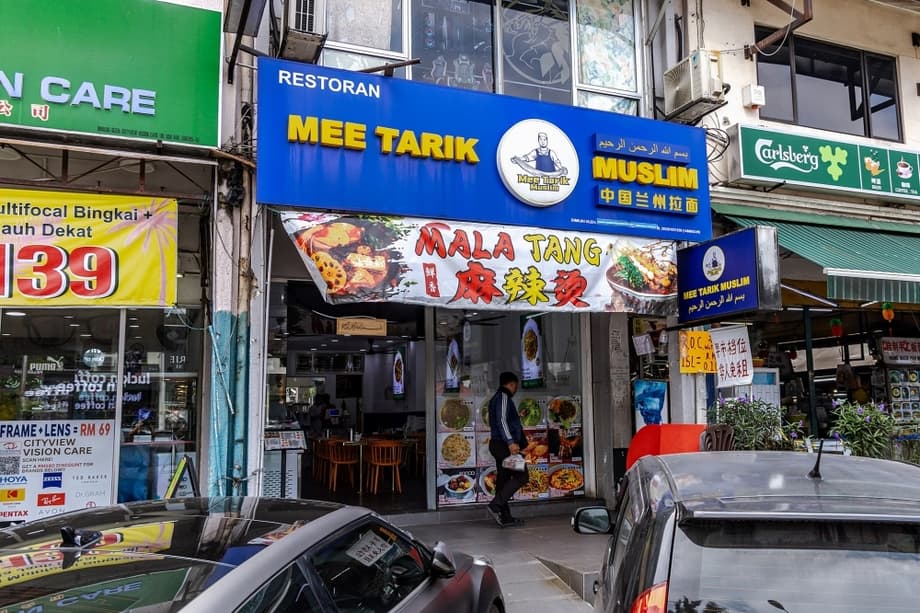
Since the COVID-19 pandemic disrupted China’s domestic F&B sector through prolonged lockdowns and supply chain interruptions, operators from Muslim communities in northern and western China have accelerated their overseas expansion. These entrepreneurs, primarily from regions such as Xinjiang, Ningxia, and Gansu, operate halal restaurants serving Chinese Islamic cuisine, including the increasingly popular Lanzhou beef ramen and hand pulled noodles. Rather than targeting the biggest available market immediately, they prioritize environments where they can establish operations with minimal linguistic and cultural friction.
Malaysia offers a unique demographic alignment for these entrepreneurs. The country’s population of over 34 million includes approximately 20 million Muslims and more than six million ethnic Chinese. This composition creates a rare marketplace where halal requirements intersect with Chinese language accessibility and cultural familiarity. The nation functions as a natural bridge between Chinese business practices and Southeast Asian Muslim consumer markets, offering a testing ground where products can be refined before regional scaling.
According to Malaysia Chinese Restaurant Association president Gao Haoyun, language accessibility serves as the primary determinant for this strategic preference.
Chinese Muslims typically speak Mandarin but are generally less proficient in English. This makes Malaysia a comparatively easy place for them to do business. Although they are Chinese Muslims operating halal restaurants, Malaysia’s multicultural environment allows them to handle company registration, secretarial matters and staff recruitment in Mandarin. Therefore, language accessibility is a crucial factor.
The shared linguistic infrastructure allows entrepreneurs to handle complex business functions entirely in Mandarin, significantly reducing the operational barriers that typically challenge foreign entrants.
Language as the Critical Business Lubricant
For entrepreneurs from China’s Muslim communities, language barriers present the most immediate obstacle to international expansion. These operators typically speak Mandarin as their primary business language but possess limited English proficiency, creating significant challenges in navigating regulatory frameworks and commercial negotiations in most Southeast Asian markets.
Malaysia’s multilingual business environment offers a distinct advantage. The ethnic Chinese community in Malaysia maintains strong Mandarin proficiency, unlike their counterparts in Indonesia where historical assimilation policies and the New Order regime suppressed Chinese language use. This linguistic continuity allows mainland Chinese entrepreneurs to conduct due diligence, negotiate leases, manage supply chains, and supervise staff without the cost and complexity of professional translation services.
Gao Haoyun explained that although Chinese Muslim operators run halal restaurants, Malaysia’s multicultural environment enables them to manage all business functions in Mandarin. This accessibility extends to government interactions, banking procedures, and legal documentation, areas where language barriers often derail foreign investments in other markets.
By contrast, the Chinese community in Indonesia generally exhibits weaker Mandarin proficiency. Business communication in Indonesia occurs primarily in Bahasa Indonesia, while English serves as the secondary language for international commerce. For mainland Chinese entrepreneurs unfamiliar with English and lacking local networks, company registration, taxation, and regulatory compliance become challenging obstacles closely tied to national policy frameworks.
Malaysia as the Launchpad for Regional Expansion
Chinese Muslim entrepreneurs view Malaysia not as a final destination; instead, they treat it as a crucial launchpad for broader Southeast Asian expansion. The strategy involves establishing operational building blocks, including product development, personnel training, and management systems, before attempting entry into the larger Indonesian market.
This phased approach allows businesses to adapt their offerings for Muslim consumers while remaining in a relatively familiar cultural environment. Malaysia’s halal certification system, administered by the Department of Islamic Development Malaysia (JAKIM), provides credentials recognized across many Muslim markets. Entrepreneurs can perfect their compliance protocols, supply chain management, and quality control systems before facing Indonesia’s more complex regulatory landscape.
With assistance from multilingual Malaysian Chinese partners who often speak three or four languages, including Bahasa Indonesia, entering the Indonesian market becomes far smoother. These local partners serve as cultural bridges, helping mainland Chinese businesses navigate the linguistic and bureaucratic differences between the two countries.
The launchpad strategy has precedent in broader Chinese F&B expansion patterns. Brands such as Mixue Ice Cream and Tea, Yili Group’s Joyday, and Chagee have utilized similar approaches, establishing strong Malaysian presences before scaling into Indonesia. Mixue opened over 1,000 stores in Indonesia within two years of entry, but only after testing operations and building supply chain expertise in Malaysia and Vietnam.
Why Indonesia Remains the Second Choice
Despite Indonesia’s massive halal economy, valued at approximately $279 billion in 2023 with projections to reach $807 billion by 2030, the country presents significant hurdles for direct entry. Political considerations and historical tensions create an environment of heightened risk for Chinese entrepreneurs.
Gao Haoyun cited Malaysia’s political stability as a key differentiator, noting that ethnic Chinese hold representation at all levels of government, from ministers to lawmakers. This visibility contrasts sharply with Indonesia’s history, including the May 1998 riots during the final days of President Suharto’s regime, when widespread looting and targeted attacks disproportionately affected ethnic Chinese communities in Jakarta and other major cities.
Beyond political factors, Indonesia’s regulatory environment poses substantial challenges. The Halal Product Assurance Law mandates certification through the Badan Penyelenggara Jaminan Produk Halal (BPJPH) in coordination with the Indonesian Ulema Council (MUI). While Malaysia formalized its halal infrastructure decades ago under JAKIM, Indonesia’s centralized system remains relatively new and coordination between BPJPH, MUI, and Halal Inspection Agencies continues to evolve.
In January 2023, Mixue faced protests from Islamic groups in Jakarta questioning its halal status, illustrating the sensitivities foreign brands encounter. Although MUI eventually granted certification, the incident highlighted the bureaucratic complexities and public scrutiny that can delay market entry.
Navigating Halal Certification Complexities
Halal compliance represents a non-negotiable requirement for F&B brands targeting Muslim consumers in Southeast Asia. Approximately 60 percent of Malaysia’s population and 87 percent of Indonesia’s population follow Islam, making certification essential for mainstream market access. However, the path to certification differs significantly between the two countries.
Malaysia’s JAKIM certification ranks among the most robust globally, recognized in 47 countries. The process, while demanding, follows defined protocols integrated with international quality benchmarks such as ISO standards. For Chinese Muslim entrepreneurs, the ability to work with Mandarin speaking consultants and navigate the system with support from Malaysia’s established Chinese Muslim business networks reduces the complexity of achieving compliance.
Indonesia’s system, while comprehensive, presents additional layers of complexity. Government Regulation No. 42 of 2024 introduced significant updates, including extended deadlines for micro and small enterprises and streamlined applications for foreign products. However, the requirement for coordination between multiple agencies, including BPJPH and MUI, creates potential bottlenecks.
Recent incidents underscore the high stakes of halal compliance. In January 2025, a Mixue outlet in Malaysia faced backlash for using trash bags labeled “non-Halal” in English, despite the bags having no contact with food. The incident went viral and required a formal apology and procurement system overhaul. Such sensitivity demonstrates why entrepreneurs prefer to establish their understanding of halal protocols in Malaysia’s more forgiving environment before attempting Indonesia’s larger but more scrutinized market.
Adapting Products for Southeast Asian Palates
Taste preferences vary significantly between Malaysian and Indonesian consumers, presenting another reason why Chinese Muslim entrepreneurs favor the sequential entry strategy. Indonesian consumers generally prefer richer, sweeter flavors compared to Malaysian tastes, requiring product reformulation for successful market penetration.
Chinese brands use their Malaysian operations as testing laboratories to refine recipes for Southeast Asian palates. Yili Group’s Joyday ice cream brand exemplifies this approach, developing products like Crunchy Matcha Cheese and spicy chocolate variants specifically designed for Indonesian preferences after gathering consumer data from initial Malaysian operations.
Research indicates that Indonesian consumers value sweetness, aromatic profiles, and creamy textures more intensely than Chinese consumers. Yili Group Vice President Dr. Yun Zhanyou noted that Indonesian consumers prioritize flavor and texture, particularly sweet, rich tastes like fruit and chocolate. This contrasts with Malaysian preferences, which often favor the subtle sweetness of ingredients like gula Melaka (palm sugar) and less intense sugar levels.
Malaysia’s position as a multicultural society with Malay, Chinese, and Indian culinary influences provides a middle ground for adaptation. Successful products in Malaysia typically require less modification for Indonesian markets than direct exports from China, making the country an ideal stepping stone for regional expansion.
The Post-Pandemic Business Exodus
The acceleration of Chinese Muslim F&B expansion into Malaysia traces directly to the COVID-19 pandemic’s impact on China’s domestic market. Prolonged lockdowns devastated dine-in operations and disrupted supply chains, creating an urgent need for revenue diversification among halal-focused operators.
Competition intensified during China’s uneven economic recovery, squeezing profit margins for restaurants in major Chinese cities. For many halal operators, particularly those from regions with significant Muslim populations like Xinjiang and Gansu, overseas expansion shifted from a long-term ambition to an immediate survival strategy.
Malaysia’s business-friendly policies and strong bilateral ties with China provided a welcoming environment for these displaced entrepreneurs. The country recorded $203.6 billion in bilateral trade with China in 2024, representing 16 consecutive years as Malaysia’s largest trading partner. This economic integration enables smoother entry for Chinese businesses, with established logistics networks and familiar regulatory frameworks.
The pandemic also created market gaps in Southeast Asia. Boycott movements targeting Western F&B brands such as Starbucks and McDonald’s in Malaysia and Indonesia, linked to the Middle East conflict, opened space for alternative providers. Chinese Muslim brands, positioning themselves as neutral alternatives with competitive pricing, have capitalized on these shifts in consumer loyalty.
Geographic Concentration and Market Dynamics
Chinese Muslim F&B outlets cluster in three strategic Malaysian urban hubs: George Town in Penang, Johor Bahru, and the Klang Valley. These locations offer distinct advantages for different stages of business development, from tourism-dependent operations to high volume urban retail.
The Klang Valley, comprising Kuala Lumpur and surrounding suburbs, represents the most competitive and rapidly growing market. According to industry data, the region hosts approximately 60 percent of Malaysia’s Chinese F&B outlets, totaling between 11,000 and 12,000 establishments out of 20,000 to 25,000 nationwide. The area’s large population and high consumer spending power drive rapid outlet expansion, though competition remains fierce.
George Town attracts Chinese Muslim entrepreneurs targeting tourist demographics, particularly visitors from mainland China seeking familiar halal cuisine. Johor Bahru serves as a logistics hub for businesses planning eventual expansion into Singapore or southern Indonesia.
This concentration creates both opportunities and challenges. While the density of Chinese F&B outlets facilitates supply chain efficiencies and shared service providers, local Malaysian entrepreneurs have expressed concerns about market saturation. Anonymous operators cited in recent reports question how chains like Mixue sustain operations with bubble tea priced at RM5 and ice cream at RM2, suggesting potential long-term sustainability questions for ultra low cost models.
Competitive Pressures and Local Concerns
The rapid influx of Chinese F&B brands has generated mixed reactions across Malaysia and Indonesia. While consumers benefit from increased choice and competitive pricing, local entrepreneurs face pressure from well capitalized chains offering products at price points difficult for domestic operators to match.
Industry observers note that Chinese brands bring advanced operational efficiencies, technology integration, and supply chain management that local competitors struggle to replicate. However, analysts caution that low-price strategies may face sustainability challenges as production costs rise and market saturation increases.
Cultural sensitivity remains an ongoing concern. Beyond halal certification, brands must navigate Malaysia’s complex ethnic dynamics. A Mixue job posting specifying preferences for Malay or Chinese applicants previously sparked controversy by excluding Indian community members, requiring formal apologies. Such incidents demonstrate that even after establishing linguistic and regulatory footholds, foreign operators must maintain high cultural awareness.
Despite these challenges, the trend shows no signs of slowing. With Malaysia pushing for an ASEAN common halal logo and deeper integration with Gulf Cooperation Council markets, Chinese Muslim entrepreneurs view their Malaysian operations as increasingly strategic. The country offers not just a launchpad for Indonesia, but a potential hub for accessing broader Muslim markets across Southeast Asia and the Middle East.
At a Glance
- Malaysia serves as the primary entry point for Chinese Muslim F&B entrepreneurs expanding from China, despite Indonesia’s larger Muslim population of 229 million.
- Language accessibility drives the preference, as Malaysia’s ethnic Chinese community maintains strong Mandarin proficiency unlike Indonesia’s assimilated Chinese population.
- Entrepreneurs use Malaysia as an operational launchpad to build products, personnel systems, and halal compliance expertise before expanding to Indonesia.
- Malaysia’s JAKIM halal certification system offers clearer protocols compared to Indonesia’s newer BPJPH framework, reducing entry barriers.
- The Klang Valley hosts approximately 60 percent of Malaysia’s Chinese F&B outlets, making it the primary hub for new entrants.
- Post-pandemic diversification needs and boycott impacts on Western brands have accelerated Chinese F&B expansion into both markets.
- Malaysia recorded $7 billion in halal exports during the first half of 2025, representing 16.1 percent of national exports.