What is driving Tokyo condo prices higher and why fixes are limited
Tokyo’s new condominium market has surged to fresh records this year, squeezing local households and testing policymakers. The average price of a newly built condo in the Tokyo metropolitan area reached 94.89 million yen between April and September, according to the Real Estate Economic Institute. That marked a jump of 19.3 percent compared with the same period a year earlier. The backdrop is a perfect storm of scarce supply, strong investor demand, and a weak yen that makes Japanese property look cheaper to buyers with foreign currency. Debate over the role of foreign purchasers has sharpened, yet preliminary government findings suggest their share of transactions remains modest.
- What is driving Tokyo condo prices higher and why fixes are limited
- Prices hit a record as supply and the yen shape demand
- Are foreign buyers the main factor
- Why WTO rules constrain nationality based curbs
- Developers move to curb flipping
- What tools remain available without targeting nationality
- How other countries have acted and what that means for Japan
- What officials and economists say
- What it means for buyers and the market
- Key Points
Officials have moved to document what is happening before considering new rules. Prime Minister Sanae Takaichi instructed the land ministry to identify how many condos are being bought by foreign nationals and to publish the results quickly. Since spring, the Land, Infrastructure, Transport and Tourism Ministry (MLIT) has been mining property registries to track the nationality and location of buyers. Early signals point to a limited foreign share, but even a small proportion of purchases can influence prices in a thinly supplied market.
Calls to cap or ban foreign purchases face a structural hurdle. When Japan entered the World Trade Organization in the 1990s, it embraced core principles of equal treatment that make nationality based restrictions on real estate hard to impose. Rewriting those commitments would take time and could trigger objections from trading partners. With few easy national levers, the first visible moves have come from the private sector, where major developers have tightened contract terms to discourage quick resales that can fuel price spikes.
The result is a market where demand keeps outrunning supply while both government and industry search for tools that can work within legal boundaries and without inflaming social tensions.
Prices hit a record as supply and the yen shape demand
The Tokyo condo cycle is being driven as much by scarcity as by demand. New supply has fallen sharply over the past decade. Developers brought about 45,000 new units to market in 2014 across the metropolitan area. That figure dropped to around 23,000 in 2024. Redevelopment delays, higher construction and land costs, and limited capacity in the building trades have all constrained output. When fewer homes are listed, each release attracts more bidders and prices ratchet up.
Currency has added another force. The yen’s slide in recent years has lowered the effective price for buyers holding dollars, euros, or other stronger currencies. For a purchaser funding in dollars, a 10 percent currency swing can offset much of a price increase on the ground. That arbitrage has coincided with Tokyo’s rising draw as a perceived safe market in a volatile world. Investors see stable political conditions, a deep mortgage market, and strong rental demand in central wards.
Cheap borrowing at home has also mattered. Japanese mortgage rates remain low by global standards. Even with a gradual shift in the central bank’s policy settings, fixed rate loans are still affordable for many households. Low financing costs support higher purchase prices, especially when the number of units is capped by zoning, available plots, and construction schedules. The combination of low rates, currency effects, and tight supply has set the stage for record high averages reported this year.
Are foreign buyers the main factor
Foreign ownership draws attention because it is visible, and the currency gap makes it intuitive to link overseas demand to rising prices. The data that exists is more nuanced. MLIT’s registry review, which is expected to be published, has pointed to a smaller foreign share of purchases than public debate often assumes. A recent survey found that about 3 percent of new property buyers in Tokyo had overseas addresses. That is not the full picture of nationality, since some foreign nationals live and work in Japan, yet it suggests the market is far from being dominated by overseas capital.
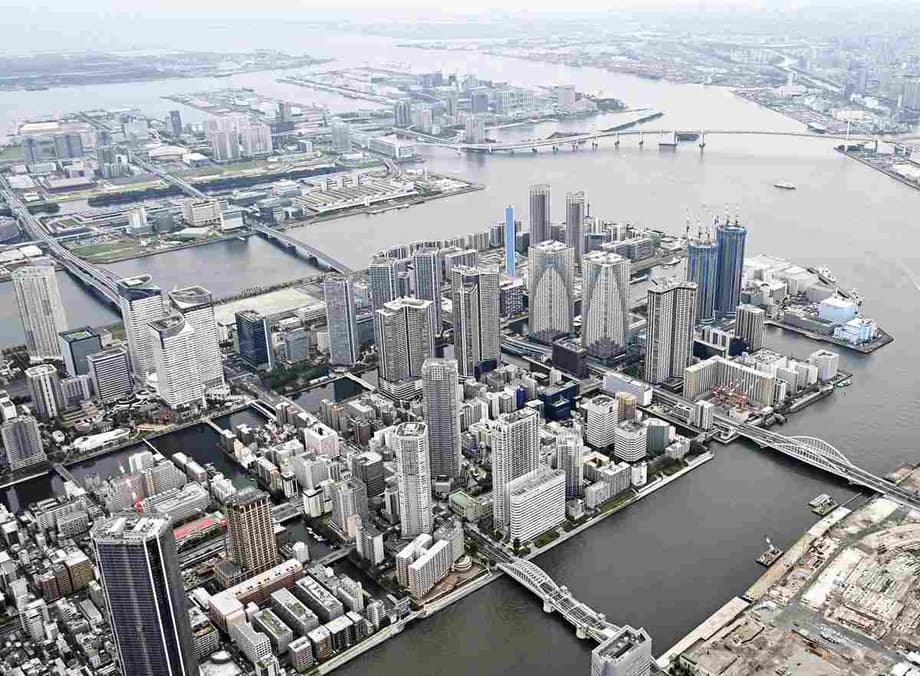
Even a minor foreign presence can affect price formation when supply is tight, especially in sought after neighborhoods near new stations or waterfront redevelopments. Units at marquee projects may attract a mix of end users and investors. Some buyers capture gains by reselling contracts before completion, a practice that can push asking prices higher for the next release. That is why developers have started to write anti flipping clauses that apply to all purchasers regardless of nationality.
Government officials have been careful to address public concern without stoking xenophobia. The priority has been to map the real scale of foreign buying and to reinforce rules around identification and reporting, including clearer registry information. There is also a push to strengthen the enforcement of housing and lodging rules so that units sold for residential use are not illegally converted to short term tourist rentals.
In short, overseas demand is one factor among several. The dominant forces remain basic economics: a decade of shrinking supply meeting steady urban demand, in a market where financing has been cheap and the currency has magnified Tokyo’s appeal to global investors.
Why WTO rules constrain nationality based curbs
Japan’s policy room is narrowed by trade commitments that discourage discrimination by nationality. The multilateral trading system built through the Uruguay Round created the WTO and embedded principles like most favored nation and national treatment. Those concepts mean that, in sectors where commitments apply, a member should not treat a foreign person less favorably than a domestic one. Japan chose a liberal approach to real estate transactions when it joined the WTO era in 1995, encouraging inbound investment and avoiding nationality based restrictions on property purchases.
Altering that stance is possible in theory but hard in practice. Changing commitments typically requires discussions with trading partners and can invite reciprocal pressure. Countries that have residents investing in Japan could object or seek compensation. Some economies, including the United States and Australia, preserved space in their regimes to differentiate between foreign and domestic buyers in land acquisitions. Japan did not build in such limits, which is why it faces a higher bar if it wanted to pivot.
There are exceptions for security. Japan passed a law in 2021 that allows the government to review and regulate the use of land around critical sites like Self Defense Forces bases and nuclear facilities. That framework focuses on monitoring and potential intervention if use raises national security concerns. It does not create a nationwide ban on purchases by foreign nationals, and it does not address the price dynamics playing out in the private housing market.
Within these guardrails, the most realistic options are neutral measures that apply to all buyers and sellers. Tools that discourage short term speculation or that raise holding costs on vacant units do not single out nationality and can be structured to respect trade rules. The friction point is political: such measures affect domestic investors and households too.
Developers move to curb flipping
With government options constrained, private companies have acted first. Large developers have tightened sales contracts to choke off quick resales that can stoke price inflation across a project. One firm notified prospective buyers at a major Tokyo waterfront development that if a unit is resold before handover, the deposit will be forfeited and the contract terminated. Another company introduced a five year no resale period at multiple projects in Tokyo, with a penalty equal to 20 percent of the property price for violations. These steps apply to all purchasers, regardless of nationality or residence.
Such clauses target a specific behavior rather than a type of buyer. Assignments before completion, sometimes at steep markups, can set new “comparable” prices that influence what later buyers are asked to pay. Reducing the incentive to flip aims to keep a larger share of units in the hands of end users and to stabilize pricing within a development. If adopted widely, these provisions could become a de facto standard for high demand launches in central wards.
Developers also have sales tools that can prioritize households likely to live in the property. Lotteries, occupancy declarations, limits on multiple purchases by the same name, and stricter verification of financing all make it harder to accumulate units as a trade. The challenge is to balance fair access with due diligence, and to do so without discriminating on nationality, while still maintaining healthy presales that fund construction.
What tools remain available without targeting nationality
Policy discussion is shifting from who buys to how the market operates. A menu of origin neutral options could take some heat out of prices or at least improve fairness for local residents.
• Tax quick resales across the board. A heavier tax on gains realized within a short period after purchase would make flipping less attractive. Japan already taxes short holding periods at higher rates for individuals, but authorities could tighten rules to cover assignments before handover or extend the window for higher rates. Careful design is needed to avoid penalizing genuine life events that force a sale.
• Raise carrying costs on vacant homes. A vacancy tax that applies to all non occupied units, regardless of owner nationality, can encourage leasing or sale. Several cities worldwide use such taxes to nudge empty properties back into circulation. Exemptions for renovations or documented hardship can keep the policy fair.
• Expand supply. The surest way to relieve price pressure is to build more. Faster approvals for conversions of underused office space, modest increases in allowable floor area ratios in well served areas, and infrastructure that supports higher density can deliver more units over time. Targeted subsidies can promote mid market housing rather than only luxury towers.
• Support first time buyers without stoking prices. Down payment assistance, lower closing costs, or mortgage guarantees for households below certain income thresholds can help locals compete, though any broad credit support risks lifting prices if supply is fixed.
• Increase transparency. Standardized reporting of buyer nationality or residence status at closing, aggregated and anonymized, would settle debate about the role of foreign purchasers. Stronger beneficial ownership rules can also limit the use of opaque vehicles in real estate.
• Enforce housing use rules. Ensuring that residential units are not used for illegal short term lodging protects neighbors and preserves supply for residents.
How other countries have acted and what that means for Japan
Several markets have experimented with measures aimed at foreign buyers, but those choices reflect their own legal frameworks and trade commitments. Canada imposed a temporary ban on foreign home purchases starting in 2023 and later extended it. Singapore applies additional buyer stamp duty that is far higher for non residents than for citizens and permanent residents. Australia channels most foreign purchases into new construction and uses strict enforcement to prevent illegal acquisitions of existing homes. New Zealand restricted most non resident purchases of existing homes in 2018, with certain treaty based exceptions.
These examples show a range of tools, yet they also highlight why Japan is constrained. Each country’s trade commitments and domestic laws differ. Japan’s WTO era approach did not reserve special treatment for domestic buyers in property transactions, and Tokyo has relied on openness to attract investment. A U turn toward nationality based restrictions would be complex and contentious. Policymakers are more likely to focus on neutral measures that change incentives for all buyers and to address supply bottlenecks that underpin today’s high prices.
What officials and economists say
Ministers have stressed the need to understand the facts and to keep policy within legal limits. The land minister has pledged to work with other agencies to address issues around condo transactions while supporting social cohesion. MLIT’s registry based review is central to that effort and is expected to clarify how big the foreign share really is. One person involved in the review said the proportion appears lower than public debate suggests.
Economists caution against searching for a single villain. Osamu Tanaka, executive chief economist at the Dai ichi Life Research Institute, said the focus should be broad rather than narrow.
Even if the percentage of real estate acquired by foreign nationals is small, it could still have the impact of pushing up prices. Since there is no single cause, a comprehensive approach is required.
That view dovetails with the current strategy: curb behaviors that inflate prices, improve data, enforce existing rules, and push on supply. None of those steps will deliver an overnight drop in averages. They can, however, relieve pressure at the margin and improve the chances that households who live and work in Tokyo can buy homes in the neighborhoods they rely on.
What it means for buyers and the market
For would be owner occupiers, the new normal is more competition for fewer units and stricter sales contracts. Buyers should expect tighter verification and clauses that restrict assignment before handover. For investors, quick turn strategies are becoming riskier as developers expand penalties and as tax ideas aimed at short holding periods gain traction. For sellers and developers, the pool of bidders is still deep, yet pricing power now comes with greater scrutiny from the public and from regulators.
The next signpost is MLIT’s publication of its registry study. That will not solve the affordability question on its own, but it should ground the debate in facts. The larger task is rebuilding a sustainable pipeline of housing in a city that remains a magnet for jobs and students. Within the boundaries of trade rules, Japan has tools to cool speculative behavior, to make better use of existing homes, and to grow supply. Those steps, taken together, are the clearest path to a healthier market.
Key Points
- Average new condo prices in Tokyo reached 94.89 million yen between April and September, up 19.3 percent year on year.
- New supply has shrunk from about 45,000 units in 2014 to around 23,000 in 2024, tightening the market.
- MLIT is reviewing registries to measure purchases by foreign nationals, with early indications that the share is modest.
- Japan’s WTO era commitments make nationality based restrictions on property purchases difficult to impose.
- Developers are adding anti flipping clauses, including deposit forfeiture for pre handover resales and five year resale bans with steep penalties.
- Origin neutral policies such as higher taxes on quick resales, vacancy taxes, stronger enforcement, and supply expansion are the most viable options.
- Other countries have used foreign buyer rules and taxes, but Japan’s trade commitments and legal choices limit similar approaches.
- The next milestone is the release of MLIT’s registry study, which will inform policy choices focused on behavior and supply rather than nationality.