A private led leap for South Korea’s Nuri program
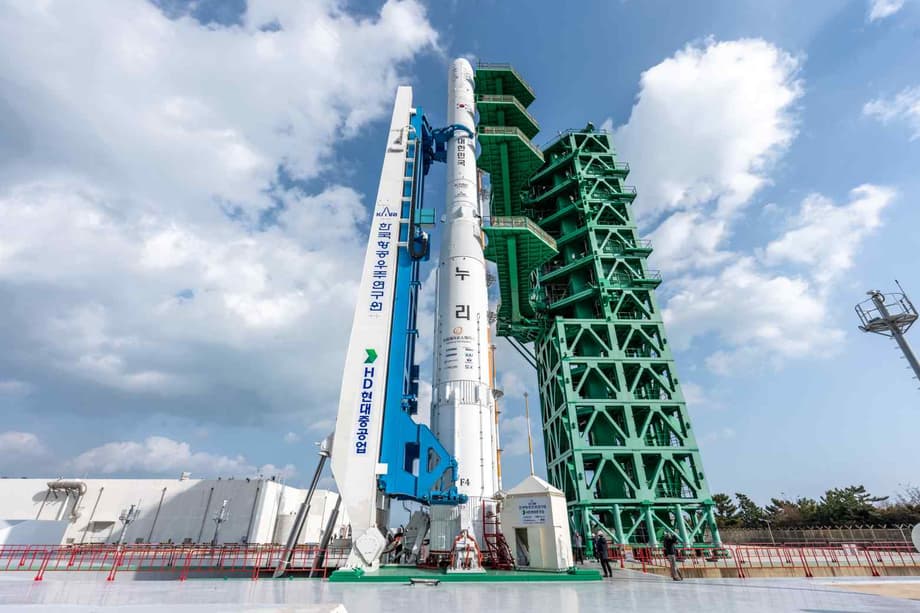
South Korea has carried out a milestone mission for its space ambitions, sending its homegrown Nuri rocket into orbit with a private company leading the manufacturing and assembly for the first time. The flight, the fourth for Nuri, marked a clear shift from a government centered program to one in which industry takes the lead. The three stage launcher placed a main midsize science satellite and a suite of small cubesats into low Earth orbit, underscoring a new model for how the country plans to build, operate, and fund its access to space.
- A private led leap for South Korea’s Nuri program
- What launched and when
- Who is leading the rocket now and why it matters
- The payloads and what they will do
- From state driven to private led, the policy shift
- How Nuri got here, a brief history
- The emerging market and competition
- Risks and what needs to improve
- What comes next for Nuri and beyond
- What to Know
The night time liftoff showed both technical maturity and a new operating structure. Engineers managed a late issue with an umbilical pressure sensor, held the countdown, then proceeded to launch at 1:13 a.m. local time from the Naro Space Center in Goheung. Within minutes, the rocket executed textbook stage separations and guided its payloads toward a target orbit roughly 600 kilometers above Earth. The mission confirmed that Korea can combine a state designed vehicle with private sector production and launch operations.
For policy makers and industry leaders, the mission represents more than a single success. It is the first Nuri campaign with a private system integrator responsible for the full build and assembly process, under a technology transfer from the national program. The result is a pathway for regular launches by companies that can sustain a supply chain, attract investment, and compete in a global market for satellite rides.
What launched and when
Nuri rose from its coastal pad in South Jeolla Province after an 18 minute delay linked to a sensor reading. The countdown resumed after teams cleared the data, and the rocket climbed into a clear night sky. About two minutes after liftoff, Nuri completed first stage shutdown and separation, then second stage separation around the five minute mark. The vehicle pushed past 500 kilometers in altitude near seven minutes, shut down its third stage around 12 minutes, and began the sequence to release payloads along the planned track.
The main satellite, Compact Advanced Satellite 3, a 516 kilogram science spacecraft, separated cleanly and soon reported home. Controllers confirmed initial contact from the King Sejong Station in Antarctica at 1:55 a.m., with later passes through ground facilities in Daejeon and Svalbard. Those links indicated healthy operation and power generation, including deployment of solar panels.
In the minutes after the main satellite separation, the rocket deployed 12 additional cubesats at roughly 20 second intervals into a similar 600 kilometer orbit. University and research teams reported that several of the microsatellites checked in on schedule. Others were programmed to call in later in the day as they passed over assigned ground stations. Such staggered contacts are common for small satellites that must wait for geometry and ground windows to align.
Who is leading the rocket now and why it matters
Until now, the Korea Aerospace Research Institute designed and led the development of Nuri. With this launch, the baton has moved to industry for execution. Hanwha Aerospace served as the system integrator, managing the full assembly and leading more than 300 partner companies across the country. The handover is the result of a comprehensive technology transfer agreement that gives Hanwha the ability to manufacture and launch the KSLV II, the formal name for Nuri, through 2032 under close collaboration with the national program.
Hanwha takes the reins
Hanwha Aerospace now holds the rights to build and operate the launcher, including design data and manufacturing processes transferred from the government. The company assembled all six liquid engines used across Nuri’s stages, including five 75 ton class engines and a 7 ton class engine. Each engine requires thousands of precision parts and hundreds of discrete manufacturing steps, a level of complexity that demands reliable supply chains and rigorous quality control. Markets took notice, with shares of Hanwha Aerospace rising after liftoff, a sign of investor confidence in a more commercial role for the company.
Hanwha has said it plans to build a complete space business that connects launch, satellites, and downstream services by working with affiliates such as Hanwha Systems and Satrec Initiative. The goal is to create a domestic ecosystem that can serve public missions and also compete for commercial work. Under the transfer arrangement, the company will keep working closely with the national program team to absorb operational know how and mature the vehicle for repeat flights.
KAI and the launchpad team
Korea Aerospace Industries developed the main satellite using its own platform and components selected to avoid export control restrictions. CAS500 3 carries instruments to observe auroras, measure plasma and magnetic fields, and support life science experiments in orbit, including trials in three dimensional cell culture. The satellite is the largest science payload yet flown by Nuri and acts as both a research platform and a demonstration of local satellite manufacturing capabilities.
On the ground, HD Hyundai Heavy Industries designed, built, and operates the Naro Space Center launchpad systems used across all Nuri flights. The infrastructure has been fully localized, from strongback and fueling systems to umbilicals and safe arm mechanisms. This reduces dependence on foreign suppliers and gives teams the control needed to turn the pad around for more frequent launches.
The payloads and what they will do
CAS500 3 is designed to study fine structures in Earth’s upper atmosphere. A wide field airglow camera will watch auroral and airglow activity tied to the Sun and Earth’s magnetic field. Separate instruments will measure plasma density and magnetic vectors to help map space weather dynamics. The satellite also carries equipment for biological experiments that examine how cells behave in microgravity conditions, research that can inform medicine and future biomanufacturing in space. Data from the mission will be shared across research institutions and may improve understanding of how space weather affects communication and navigation services on the ground.
The dozen cubesats broaden the mission. Several built by universities and labs will test communication payloads, study the atmosphere using GPS signals, or evaluate infrared sensors that can track ocean plastics. Others will measure radiation or trial new solar cell technologies. Collectively, these microsatellites give research teams a timely ride to orbit and give the launch system a real world test of integration and deployment procedures for mixed payloads.
From state driven to private led, the policy shift
Korea’s space policy is moving toward commercial operations anchored by a national launcher. For the fourth Nuri flight, the state oversaw the final launch authorization and mission management, while private companies led the build and operations. Policymakers say the government will continue to cover public missions, then add commercial services as reliability improves. Plans are in place for fifth and sixth launches in 2026 and 2027, with a seventh under consideration for 2028. Officials are also examining a path to fly at least once per year to create a steady cadence that supports jobs, supplier investment, and cost reduction.
Leaders framed the night launch as a turning point. South Korea’s president, Lee Jae Myung, highlighted the step toward industry leadership and scientific self reliance.
“This is the first time private companies participated in the entire process, and proving the independence of South Korea’s science and technology will be the foundation for future generations.”
Yoon Young bin, administrator of the Korea AeroSpace Administration (KASA), outlined the plan to build launch rhythm and boost reliability.
“We will conduct at least one launch per year until 2032 to raise the success rate to over 90%.”
Bae Kyung hoon, minister of Science and ICT, tied the mission to a wider agenda that includes deeper exploration.
“Building on today’s success, we will pursue next generation launch vehicles, lunar exploration and deep space missions.”
Hanwha Aerospace’s chief executive, Son Jae il, underscored why a national launcher under industrial leadership is vital for long term access.
“We cannot rely on foreign launch vehicles.”
How Nuri got here, a brief history
Nuri, also known as KSLV II, is Korea’s first fully indigenous orbital launcher. The program took shape over more than a decade under the leadership of the Korea Aerospace Research Institute with widespread industry participation. The first flight in October 2021 reached space but failed to place a dummy payload in orbit. The second flight in June 2022 orbited six satellites, a breakthrough that confirmed the basic design. The third mission in May 2023 carried eight small satellites, including a radar test satellite and research cubesats, and placed them successfully in orbit.
The launcher itself is a three stage vehicle powered by five 75 ton class engines in the first and second stages and a 7 ton class engine in the third stage. Fully fueled, the rocket weighs about 200 metric tons. It is built primarily with domestic technology and marks a break from Korea’s earlier path that included the Naro rocket, which used a foreign built first stage. Nuri gives Korea independent access to orbit, an asset that proved valuable after international launch markets tightened and after payloads originally booked on foreign rockets needed alternative rides.
The emerging market and competition
Behind the launch is a wider industrial strategy. Hundreds of local companies have supplied engines, avionics, structures, and ground systems. Defense and aerospace small and medium enterprises are moving into space components and payloads. Duksan Nepcores, a navigation specialist, has provided satellite navigation receivers across all four Nuri flights and is developing anti jamming devices and miniaturized receivers for small satellites. M and C Solution is working on actuators for solid and liquid propulsion systems, and Xenoco is developing X band transmitters for satellite payloads. These suppliers see a growing market for low Earth orbit constellations that will demand frequent, reliable launches.
Forecasts point to expanding opportunities. One market study projects Korea’s launch services market could grow from roughly 313 million dollars in 2024 to more than 815 million dollars by 2033. Another report expects an average of about one thousand small satellites to go to orbit annually over the next decade, with the small satellite launch market reaching tens of billions of dollars worldwide by the end of the decade. A home market with a national launcher can capture part of that demand while supporting domestic satellite builders and component makers.
Industry leaders caution that without a steady launch cadence the supply chain will struggle. The gap of two and a half years between the third and fourth Nuri flights made it hard for some companies to retain specialized staff and keep production lines hot. That is why KASA and the government are pushing for at least one launch each year. Investors have responded to the latest mission, with shares of Hanwha Aerospace and HD Hyundai Heavy up after the launch. A predictable flight rate would give suppliers the confidence to invest in tooling, inventory, and workforce expansion.
Risks and what needs to improve
For all the excitement, Nuri’s track record still needs to mature. The launcher’s success rate sits near 75 percent, a figure that will improve only with repeat flights and continuous learning. KASA officials have set a target of more than 90 percent by the early 2030s. Achieving that target depends on flying regularly, diagnosing anomalies quickly, and driving down per launch cost. Current estimates put the cost around 120 billion won per mission. Teams will look for savings through streamlined processes, better reuse of ground hardware, and gradual design refinements. Unlike some foreign launchers that are designed for reuse, Nuri is an expendable vehicle, so cost control will rely on production efficiency and volume.
There are also programmatic risks. Long gaps between missions can drain human capital and force suppliers to shift priorities. Stable budgets, clear schedules, and a known manifest are the best tools to avoid those problems. Government officials have said that if private demand is not sufficient in the near term, the state would underwrite a basic annual cadence to keep the ecosystem healthy. For the cubesats that did not check in immediately after launch, teams continue to track pass opportunities and expected call in times. Delayed contact does not necessarily indicate a failure, and verification typically unfolds over days of passes.
What comes next for Nuri and beyond
The next steps are already on the calendar. The fifth Nuri flight is planned for 2026 and the sixth in 2027. KASA is preparing a budget request for a seventh flight in 2028 and has outlined an ambition to fly at least once per year from then through 2032. Hanwha Aerospace will continue to lead assembly and operations, with KAI, HD Hyundai Heavy, and hundreds of partner companies filling crucial roles across the vehicle and ground systems. The cadence will allow industry to refine processes and improve both performance and reliability.
Alongside Nuri, engineers are sketching a next generation launcher that can lift heavier payloads and potentially reduce cost per kilogram to orbit. That vehicle would support planned science missions, lunar exploration, and deeper space objectives. For satellites, the government and industry are aligning on a roadmap that includes Earth observation, communications, and space science payloads built domestically. With regular access to orbit, Korean universities and start ups can test new technologies in space, while established firms expand satellite services at home and abroad.
What to Know
- South Korea’s fourth Nuri flight placed a 516 kilogram science satellite and 12 cubesats into a roughly 600 kilometer orbit.
- For the first time, Hanwha Aerospace led manufacturing and assembly under a government technology transfer that runs through 2032.
- Liftoff occurred at 1:13 a.m. local time after an 18 minute delay linked to an umbilical sensor reading.
- CAS500 3 established initial contact with the King Sejong Station in Antarctica at 1:55 a.m., with later links through Daejeon and Svalbard.
- KAI built the main satellite, and HD Hyundai Heavy delivered and operates the fully localized launchpad systems.
- The government plans launches in 2026 and 2027, is preparing a seventh in 2028, and aims for a yearly cadence to raise reliability above 90 percent.
- Industry participation spans more than 300 companies, with defense and aerospace suppliers moving into space components and payloads.
- Officials say stable schedules and funding are needed to avoid gaps that strain the supply chain and workforce.