The Unseen Battle for AI Memory Dominance
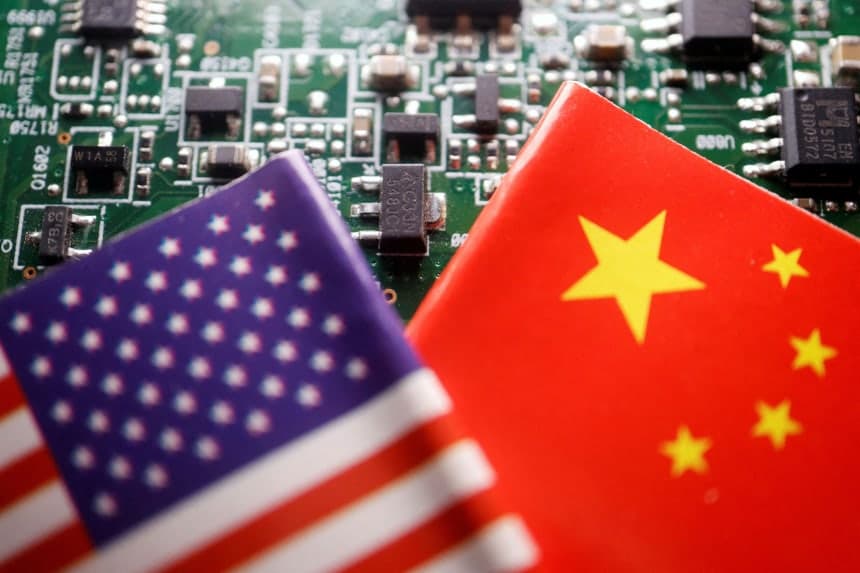
The global semiconductor industry is witnessing a dramatic recalibration of power as China mounts an unprecedented challenge to South Korea’s long standing supremacy in memory chip manufacturing. For decades, Korean giants Samsung Electronics and SK Hynix, alongside American rival Micron Technology, have commanded more than 90 percent of the global DRAM market, creating a fortress of technological expertise that seemed impenetrable. Yet that dominance now faces its most serious test from an ambitious domestic challenger backed by billions in state capital and fueled by geopolitical urgency.
ChangXin Memory Technologies (CXMT), founded just over a decade ago in 2016, has emerged as China’s standard bearer in the memory sector, rapidly advancing from a negligible player to capturing approximately 4 to 5 percent of global DRAM market share. The company achieved profitability for the first time in 2025 and is now preparing a blockbuster $4.2 billion initial public offering on the Shanghai Stock Exchange, signaling both commercial viability and strategic national importance. This financial maneuvering occurs against a backdrop of tightening technological competition between Washington and Beijing, where memory chips have become critical chokepoints in the artificial intelligence supply chain.
Despite the mounting pressure, industry experts maintain that Korea’s technological lead remains substantial, particularly in the high bandwidth memory (HBM) segments essential for training large language models and powering advanced AI applications. Korean chipmakers were first to commercialize DDR5 memory in 2020 and are currently shipping fifth generation HBM3E products to major AI customers while preparing next generation HBM4 offerings. This represents a lead that analysts estimate at roughly two to three years in standard DRAM and three to four years in the more complex HBM stacking technologies.
China’s Memory Champion Emerges from State Backing
CXMT’s ascent has been fueled by one of the world’s largest semiconductor subsidy programs, the state led National Integrated Circuit Industry Investment Fund, commonly known as the Big Fund. With accumulated capital exceeding 690 trillion yuan (approximately $95 billion), this initiative represents Beijing’s determination to achieve semiconductor self sufficiency amid intensifying technology competition with the United States. The fund’s third phase, launched in 2024, specifically targets advanced AI chips and HBM development alongside broader supply chain strengthening.
The company’s technological progress has been remarkable by historical standards. According to its IPO prospectus, CXMT has transitioned from early stage development to volume manufacturing in just a few years, recently announcing mass production of DDR5 and LPDDR5X memory products for PCs, servers, and mobile devices. In the HBM sector, CXMT began mass production of HBM2 in late 2024 and has set ambitions to produce HBM3 class products by 2026 and potentially HBM3E by 2027, a timeline that would narrow the gap with global leaders to three or four years.
Independent analysis from TechInsights confirms that CXMT can currently manufacture DRAM at the D1y and D1z nodes, equivalent to approximately 17 to 13 nanometers, with DDR5 density comparable to leading global competitors’ 2021 offerings. The company is reportedly developing sub 15 nanometer nodes (D1α and D1β) essential for HBM3E production, potentially following Micron’s 2021 precedent of achieving D1α without extreme ultraviolet lithography.
Lee Jong-hwan, a professor of system semiconductor engineering at Sangmyung University, notes that China’s strategic objectives extend beyond immediate commercial success.
The technology gap with China is evident. But China’s ultimate goal is not short term profitability. Its chip ambition is directly linked to its competition with the US, including AI and military capabilities.
Measuring the Technology Divide
The precise dimensions of the technological gap reveal a complex picture of advancement and limitation. In standard DRAM manufacturing, Korean and global leaders have moved into fifth and sixth generation 10 nanometer class nodes, known as 1b and 1c, enabling higher density and superior power efficiency. Chinese firms currently operate mainly at the 1z node, an earlier generation of sub 20 nanometer technology that delivers lower yields and higher production costs.
This process node differential translates into significant competitive advantages for Korean manufacturers. Chips produced at 1b and 1c nodes can deliver higher performance at lower power while being produced more economically at scale, advantages that compound over successive product generations. The National Academy of Engineering of Korea estimates this gap at roughly two to three years, a narrowing from the decade long lag observed previously but still substantial in an industry where each generation brings major efficiency gains.
In NAND flash memory, the disparity appears narrower though still pronounced. Market leaders Samsung and SK Hynix currently mass produce 286 to 321 layer chips, among the industry’s most advanced offerings. Chinese manufacturers, led by Yangtze Memory Technologies (YMTC), have accelerated to produce 232 layer NAND chips. Notably, YMTC has developed hybrid bonding technology considered more advanced than that of Korean rivals in certain applications, demonstrating that Chinese progress, while uneven, includes genuine breakthroughs in specific technical domains.
The divide widens considerably in high bandwidth memory, where Korean dominance remains most pronounced. HBM production involves the technically demanding vertical stacking of DRAM chips using through silicon vias to improve performance and power efficiency, an area widely seen as the highest barrier in memory manufacturing. While CXMT has announced ambitions to enter this market, Korean chipmakers are already delivering HBM3E at scale and preparing for HBM4 introduction. This leadership depends less on headline process nodes than on stacking precision, thermal control, and yield stability refined through years of close collaboration with AI chip designers.
Industrial Espionage and the Protection of Secrets
The competitive pressure has manifested in dramatic legal confrontations over intellectual property protection. On December 26, 2025, South Korean prosecutors indicted 10 individuals, including former Samsung Electronics executives and engineers, for allegedly leaking advanced 10 nanometer DRAM manufacturing secrets to CXMT. Five suspects remain in custody while five others were charged but released on bail, marking one of the most significant industrial espionage cases in Korean history.
According to the Seoul Central District Prosecutors’ Office, the accused occupied key research and development positions at CXMT after departing Samsung. Investigators found that one departing researcher copied hundreds of steps of proprietary DRAM process information by hand, recording critical details on process sequencing, equipment specifications, and yield optimization. These handwritten notes were allegedly used to recreate and adapt Samsung’s manufacturing flow at CXMT, enabling the Chinese firm to become the first domestic producer of 18 nanometer DRAM chips in 2023.
Prosecutors estimate the economic damage to Samsung at approximately 5 trillion won ($3.56 billion) in lost sales for 2024 alone, with potential long term consequences reaching tens of trillions of won. The investigation revealed that CXMT obtained additional DRAM technology from SK Hynix via a supplier, further accelerating its development timeline. The indicted individuals reportedly draw annual salaries at CXMT three to five times higher than their previous earnings at Samsung, reaching billions of won per year.
Shim Dae-yong, a professor at Dong-A University who spent 26 years overseeing DRAM business at SK Hynix, emphasizes that capital alone cannot overcome technological barriers.
Semiconductor business is not something that can be mastered with money alone. The industry’s rapid upgrade cycles mean legacy technologies quickly lose relevance after their peak, limiting the long term economic impact of dominance in lower end segments.
Market Share Wars and Pricing Pressure
The competitive dynamics are reshaping market structures in measurable ways. According to Counterpoint Research data from the third quarter of 2025, SK Hynix maintained leadership in overall DRAM sales with 34 percent market share, followed closely by Samsung at 33 percent and Micron at 26 percent. CXMT has rapidly climbed to 5 percent share, up from 3 percent in late 2024, representing significant momentum in a mature market.
In the strategically crucial HBM segment, SK Hynix commands 57 percent market share, with Samsung surging to 22 percent and Micron holding 21 percent. Samsung’s gain came after struggling with restricted exports to China in the first half of the year, demonstrating the volatility introduced by geopolitical controls. Suppliers have reportedly sold out of HBM products through 2026 as AI demand continues to surge.
CXMT has employed aggressive pricing strategies to gain traction, offering DDR4 DRAM chips at prices nearly half those of established competitors. This discounting has pressured margins for Samsung, SK Hynix, and Micron while benefiting downstream consumers. The Chinese firm’s 16Gb DDR5 products achieve bit density similar to Micron’s 2021 offerings according to teardown analyses, though with larger die sizes and unverified yield rates that likely translate to higher manufacturing costs.
The demand environment favors expansion, with Chinese cloud service providers including Tencent, Baidu, and Alibaba projected to spend a combined $31.98 billion in 2025, representing a nearly 40 percent increase from 2024. South Korea’s semiconductor exports rose 22.2 percent year on year to a record $173.4 billion in 2025, driven by this AI boom, even as competition intensifies.
Geopolitical Controls and Equipment Chokepoints
The technological race occurs within a tightening web of export controls and national security restrictions. In December 2024, the United States released new export control packages specifically targeting Chinese access to high bandwidth memory and semiconductor manufacturing equipment essential for HBM production. These rules added over 140 Chinese chip manufacturers and toolmakers to the Commerce Department’s Entity List, aiming to constrain China’s AI development by using the HBM chokepoint.
The restrictions have created immediate operational challenges for CXMT. Maintenance personnel from American semiconductor equipment firms embedded at the company have been instructed to leave, affecting development timelines for DRAM and HBM. While CXMT stockpiled sufficient equipment to sustain operations through 2026 or 2027, existing export controls limit the ability to develop and scale advanced production beyond current nodes without access to extreme ultraviolet lithography tools.
China’s efforts to develop domestic EUV capabilities continue, with reports indicating completion of a prototype tool aimed at producing working chips by 2028, though analysts view commercial production as closer to 2030. Without EUV access, CXMT may face challenges similar to those encountered by other Chinese foundries in improving yields and die sizes at below 15 nanometer nodes, potentially capping their ability to match the efficiency of Korean and American competitors.
Access to global markets presents additional constraints. CXMT remains unlisted on the Entity List as of early 2026, but Washington has reportedly discussed adding the company since January, posing significant risk to its commercial activities. Even without listing, the technology gap and geopolitical tensions deter foreign firms from adopting CXMT’s HBM for their AI accelerators, limiting the company primarily to domestic Chinese customers despite its technological advances.
Key Points
- South Korean firms Samsung and SK Hynix maintain dominance with over 90 percent of the global DRAM market alongside Micron, though CXMT has grown to 5 percent share
- Technology gaps persist at roughly two to three years in standard DRAM and three to four years in high bandwidth memory, with Korean leaders producing 1b/1c nodes while Chinese firms operate at 1z
- CXMT filed for a $4.2 billion Shanghai IPO after achieving first profitability in 2025, backed by China’s $95 billion Big Fund semiconductor subsidy program
- South Korean prosecutors indicted 10 former Samsung employees in December 2025 for leaking 10 nanometer DRAM technology to CXMT, causing an estimated $3.56 billion in damages
- US export controls in December 2024 restricted equipment access for HBM manufacturing, while Chinese AI demand drove Nvidia H20 shipments exceeding one million units before the ban
- CXMT plans HBM3 mass production by 2026 and HBM3E by 2027, narrowing the gap with Korean leaders currently shipping HBM3E and developing HBM4