A shared defence pledge clears Türkiye's parliament
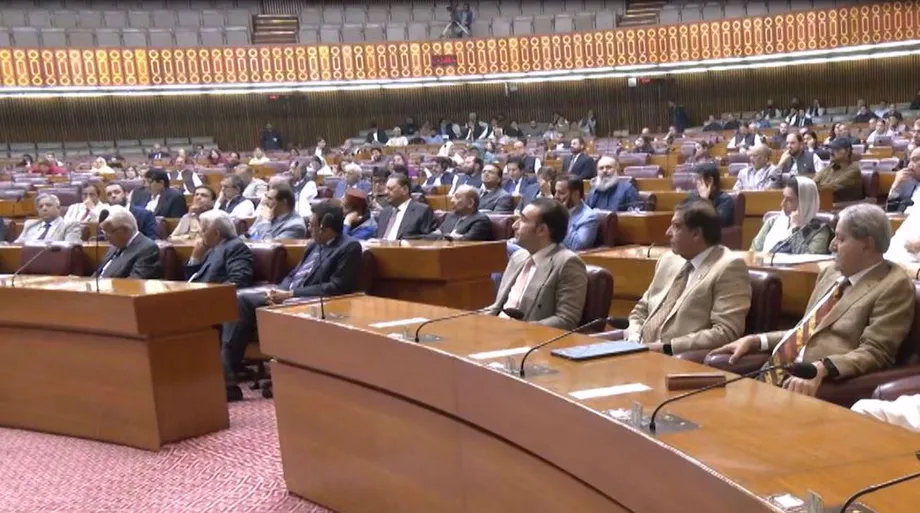
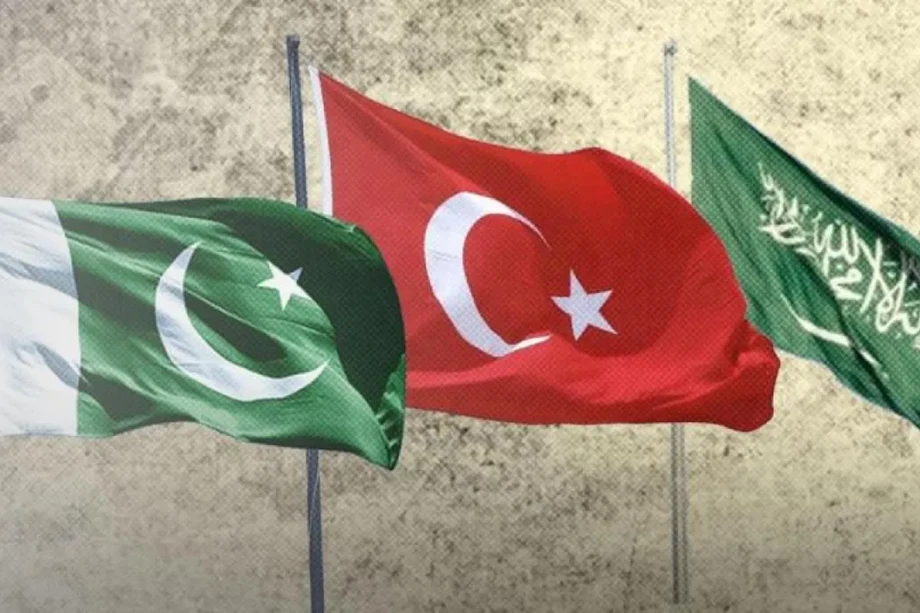
Türkiye has enacted Law No. 7597 approving ratification of the Mecca Joint Defence Agreement with Pakistan and Saudi Arabia, following a parliamentary vote of 279 in favour and 119 against. The law appeared in the Official Gazette dated November 14, 2026, advancing an agreement that treats an external armed attack on any member as an attack on all three.
Contents
- A shared defence pledge clears Türkiye's parliament
- What the Turkish law changes
- How the agreement reached this point
- What happens if a member is attacked?
- Türkiye keeps parliamentary control over troop deployments
- A permanent committee will coordinate cooperation
- Weapons production, intelligence and supplies
- Regional conflict gives the pact immediate weight
- A lasting agreement that other countries may join
- Key Points
The legislation puts implementation of its provisions under President Recep Tayyip Erdogan. The agreement goes beyond a promise of military help: its 16 articles cover joint weapons production, technology exchanges, intelligence, counterterrorism, training and supplies ranging from ammunition to fuel.
A further legal step governs when the treaty itself becomes binding. The agreement enters into force when the final instrument of ratification, the formal document confirming a country's consent, is deposited with its secretariat. No date for that final deposit has been announced.
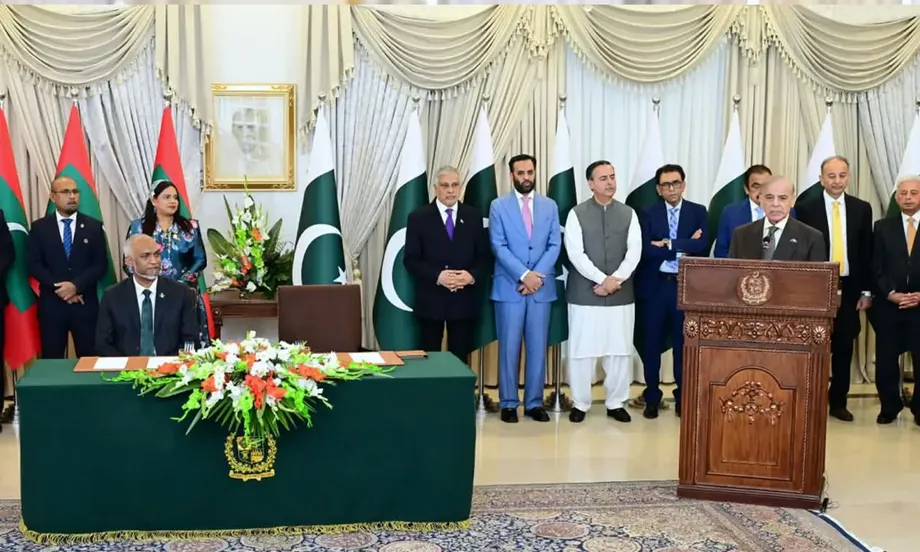
Erdogan, Saudi Crown Prince Mohammed bin Salman and Pakistani Prime Minister Shehbaz Sharif signed the pact in Mecca on August 7. Saudi Arabia and Pakistan subsequently completed their domestic approval procedures, Turkish Deputy Foreign Minister Levent Gümrükçü told a parliamentary committee on October 27.
The agreement combines a lasting security commitment with national control over military decisions. Assistance following an attack would be decided through consultations, an assessment of needs and resources, and each country's legal procedures. Sending Turkish troops abroad would still require parliamentary permission.
What the Turkish law changes
The Turkish Grand National Assembly approved the legislation on November 5, with 398 lawmakers participating. Support amounted to about 70% of the votes cast, with a majority of 160 votes. Publication followed the November parliamentary approval, which left troop deployments subject to a separate decision.
The approval law is dated November 13, while the Official Gazette issue carrying it is dated November 14. One account places its entry into force on November 13; the publication provisions and the Gazette date place the law's effect on November 14.
Law No. 7597 approves ratification of the agreement formally titled the Mecca Agreement for Joint Defense Between the Republic of Türkiye, the Islamic Republic of Pakistan and the Kingdom of Saudi Arabia. Its publication completes the legislative approval stage described by Turkish officials.
The three governments must also organise how their commitments work in practice. That includes arranging consultations, planning assistance and coordinating institutions that will oversee military and industrial cooperation.
How the agreement reached this point
The pact developed through a series of political, military and legislative steps. Pakistan and Saudi Arabia first concluded a bilateral Strategic Mutual Defence Agreement in September 2025. Türkiye's participation turned that relationship into a broader arrangement involving three countries.
The principal dates show how operational planning advanced alongside formal ratification:
- August 7, 2026: Erdogan, Mohammed bin Salman and Sharif signed the trilateral agreement in Mecca.
- October 5: An emergency meeting in Riyadh agreed to implement collective defence measures and arrange military support for Saudi Arabia under national laws.
- October 20: Türkiye submitted the agreement to parliament.
- October 23: Pakistan's Foreign Office announced that Pakistan and Saudi Arabia had completed ratification.
- October 27: Gümrükçü told Turkish lawmakers that both partners had completed domestic approval and notified the other parties.
- November 5: Türkiye's parliament approved the legislation by 279 votes to 119.
- November 14: The Turkish approval law appeared in the Official Gazette.
The Pakistani and Saudi ratifications had left Türkiye as the member still completing domestic approval. The November law moves that process forward while preserving the treaty's requirement for the final ratification document to reach the secretariat.
What happens if a member is attacked?
Article 2 contains the central promise: an armed attack originating outside one member is treated as an attack against all. It calls for immediate assistance when a member faces an armed attack or military aggression by another country or group of countries.
The governments then determine the nature and extent of support after assessing what the attacked country needs and what the others can provide. Available assistance includes military capabilities, but decisions require consultation and agreement under each country's constitution and laws.
Collective defence means countries promising to help one another resist an attack. Deterrence is the intended preventive effect: a potential attacker must consider the prospect of facing a coordinated response from several states.
Article 1 also commits the members to cooperate in protecting their independence, sovereignty, territorial integrity and internationally recognised borders. Article 2 places assistance within the right of individual and collective self defence recognised by Article 51 of the United Nations Charter.
The response could therefore involve several kinds of support, including intelligence, equipment, supplies and military capabilities. The circumstances of an attack, the assistance requested and the resources available would shape the collective decision.
Türkiye keeps parliamentary control over troop deployments
Turkish lawmakers debated the agreement against the possibility of deeper involvement in regional fighting, particularly around Yemen. Saudi Arabia has faced attacks by the Houthi movement, making the practical meaning of the defence commitment an immediate political issue.
Fuat Oktay, chairman of parliament's Foreign Affairs Committee, described the alliance as defensive and said Türkiye would retain control over its participation. He told lawmakers that the country would:
not be drawn into an uncontrolled process against its will.
Oktay said deploying troops would require future parliamentary approval. Defence Committee chairman Hulusi Akar also said parliament would need to authorise such a deployment and described the pact as complementing Türkiye's NATO membership.
Türkiye remains bound by its existing international agreements, which the Mecca pact preserves. Turkish Foreign Minister Hakan Fidan has compared its collective defence provision technically with NATO's Article 5, while explaining that the members would determine assistance through consultation.
A permanent committee will coordinate cooperation
The agreement establishes a Strategic Political and Defence Committee comprising the foreign ministers, defence ministers and chiefs of general staff of the three countries. Its task is to direct cooperation, develop defence and security ties, and address problems during implementation.
The committee is to meet twice a year, with hosting rotating among the members. National leaders may also meet annually when necessary. Those arrangements give the governments a regular forum for discussing threats and agreeing on practical measures.
A secretariat based in Saudi Arabia will support the partnership. Its secretary general serves a term of three years, with the position rotating among the founding members. Retired Pakistani General Nauman Mahmood was selected as the first holder of the post.
The appointment followed the October implementation decision in Riyadh. At that meeting, the countries agreed on rapid deployment of military forces and capabilities to Saudi Arabia, subject to approved arrangements and national legislation. Their announcement left the size, timing and precise missions of deployments unspecified.
The committee and secretariat create a standing route for turning political promises into decisions. Ministers and military chiefs will have to connect assessments of threats with requests for support, training plans and the equipment each country can supply.
Weapons production, intelligence and supplies
Article 7 sets out cooperation in defence technology and manufacturing. The countries intend to encourage joint production, share technologies, conduct research and development, train specialist personnel and exchange technical experience among manufacturers and research institutions.
Those provisions could bring Saudi funding together with Turkish and Pakistani industrial capabilities. The International Institute for Strategic Studies, in its defence pact analysis, traces trilateral discussions on industrial cooperation to 2023 and describes Saudi interest in developing domestic production and reducing reliance on American supplies.
Military training includes personnel exchanges, joint programmes and exercises. The aim is to improve interoperability, meaning the ability of different armed forces to communicate, coordinate and operate together.
Intelligence exchanges would use secure channels agreed by the members, with confidentiality and information protection requirements. The pact also calls for closer counterterrorism cooperation, including operational cooperation.
Logistical assistance could include weapons, ammunition, fuel, spare parts and other equipment during peace, war or emergencies. Availability and compatibility matter: equipment supplied by one country must suit the systems and needs of the country receiving it.
Regional conflict gives the pact immediate weight
The agreement was signed amid tensions following the American and Israeli war against Iran and attacks affecting Gulf states. Saudi Arabia's exposure to Houthi attacks has given the partnership an immediate security purpose, alongside its longer programme of military and industrial cooperation.
The IISS analysis records an earlier Pakistani deployment of 8,000 troops, fighter aircraft and air defence systems to Saudi Arabia in early April 2026, more than a month after the war began and as a ceasefire was agreed. That deployment preceded the August trilateral agreement and followed the bilateral Saudi and Pakistani pact.
Diplomacy has continued alongside defence planning. Representatives of Iran, Saudi Arabia, Pakistan and Türkiye agreed at October security talks in Tehran to keep dialogue open as concern grew over renewed fighting and threats to shipping and civilian infrastructure.
The IISS analysis identifies differing security priorities within the new grouping: Ankara views Israel as a greater threat than Iran, while Riyadh takes the opposite view. Reaching joint decisions will require the members to manage those differences when deciding which threats demand collective action.
Pakistan's nuclear role is unresolved. Defence Minister Khawaja Asif initially said, in discussing the 2025 Saudi and Pakistani agreement, that nuclear capabilities would be available under that pact, then said nuclear weapons were not on the radar. The three governments have announced no arrangement extending nuclear deterrence under the new trilateral agreement.
A lasting agreement that other countries may join
The pact has no expiry date. Members must remain for at least 10 years after it enters into force, after which withdrawal requires at least three months of written notice through diplomatic channels. Some descriptions call it an agreement lasting 10 years; the detailed provisions make that period the minimum commitment before withdrawal.
Projects already agreed and underway would continue to be protected following withdrawal or termination. Obligations to safeguard classified information would also remain, giving sensitive exchanges protection beyond a country's membership.
Other states may join if all three founding members agree. Egypt is a possible future participant: it already belongs to the R-4 consultative mechanism with Pakistan, Saudi Arabia and Türkiye. Fidan has said Egyptian participation could follow once technical issues are resolved.
The next formal milestone is the deposit of the last ratification instrument. Practical work includes organising committee meetings, coordinating assistance, preparing exercises and developing industrial projects. For the three governments, those decisions will determine how the shared defence promise operates during a crisis.
Key Points
- Türkiye's Law No. 7597 appeared in the Official Gazette dated November 14, following approval by 279 votes to 119.
- The treaty enters into force when the final ratification instrument is deposited with its secretariat.
- An external armed attack on one member is treated as an attack on all three; assistance is decided through consultation and national legal procedures.
- Turkish troop deployments abroad still require parliamentary permission.
- A committee of ministers and military chiefs will coordinate cooperation, supported by a secretariat in Saudi Arabia.
- The pact covers joint production, technology, intelligence, training, counterterrorism and logistical support.
- Members cannot withdraw during the first 10 years; departure afterward requires at least three months of written notice.