A deal within reach, still out of reach
ASEAN ended its Manila chairmanship with a South China Sea code of conduct unfinished, even as the bloc's latest maritime outlook warned that land reclamation, dangerous activities and serious incidents were putting people at risk and damaging the marine environment. The second edition of the ASEAN Maritime Outlook, released this month, called for restraint and measures that build trust as negotiations with China continue.
Contents
- A deal within reach, still out of reach
- What ASEAN's outlook puts on the record
- How the talks reached the final fifth
- What the 80 percent figure leaves open
- The incidents behind the warnings
- Panata Island and Scarborough Shoal in November
- Philippines and France drill in the Sulu Sea
- From a port call to bridges in Mindanao
- Beijing's red lines and the shadow of the 2016 ruling
- The final text: binding rules, maps and meanings
- Disinformation becomes part of maritime security
- Singapore inherits a crowded ASEAN agenda
- Trade, public opinion and pressure beyond the water
- Myanmar and the limits of ASEAN consensus
- What changes for crews, traders and governments
- Key Points
The numbers sound close. The Department of Foreign Affairs said on Nov. 15 that about 80 percent of the draft had provisional agreement. President Ferdinand Marcos Jr. said two days later that negotiations were 85 to 90 percent complete, with much of the remaining work on definitions. Philippine Foreign Secretary Ma. Theresa P. Lazaro later described the figure more precisely: more than 80 percent of the draft's paragraphs had provisional agreement.
Those percentages describe movement in a negotiation that has run for 24 years, from a nonbinding 2002 declaration to talks expected to continue under Singapore in 2027. For a fishing crew, the practical questions remain what happens when a water cannon turns on and what rule applies when a militia boat comes close to a patrol vessel. The unfinished part includes the questions that decide whether the code has force: its legal nature, the waters it covers and how its terms are defined.
What ASEAN's outlook puts on the record
The ASEAN Maritime Outlook said negotiations with China had been held monthly since November 2025. It said both sides were working toward an effective and substantive agreement consistent with international law, especially the 1982 United Nations Convention on the Law of the Sea, usually called UNCLOS. UNCLOS sets the rules for maritime zones such as exclusive economic zones, where a coastal state has rights to resources such as fish and offshore energy.
The bloc's warning focused on conduct at sea. It said continuing land reclamation, dangerous activities and serious incidents endangered people's safety and damaged the marine environment. Land reclamation means building up reefs or shallow areas to create usable land, often for ports or installations. It can alter habitats and intensify disputes because it changes the physical facts on the water.
The Philippines has said any code must be effective, substantive, consistent with international law and respectful of the rights of states outside the negotiations. That last point matters to countries such as the United States, Japan, Australia and India, which are not parties to the ASEAN China talks but have shipping, security or economic interests in the waterway.
How the talks reached the final fifth
The code has been discussed for more than two decades, and its history explains why officials speak about percentages rather than a signing date. Negotiators have built a text step by step, leaving the hardest political questions for the end. A regional code is meant to set rules for encounters at sea, but it cannot settle the underlying claims over islands, reefs and maritime zones.
- 2002: ASEAN and China sign the Declaration on the Conduct of Parties in the South China Sea, known as the DOC, a nonbinding statement of principles.
- 2013: consultations on a code begin.
- 2017: negotiators complete a framework.
- 2018: a single draft negotiating text emerges.
- 2024: the third reading of the draft is completed.
- 2026: the 49th ASEAN Summit in Manila adopts 117 documents, but not the code.
- Jan. 1, 2027: Singapore takes over as ASEAN chair and inherits the negotiations.
The missed 2026 deadline followed a target set in 2023 to finish within three years. Philippine Foreign Secretary Ma. Theresa P. Lazaro said at the Manila summit that agreement covered more than 80 percent of the draft's paragraphs. ASEAN Secretary General Kao Kim Hourn said 85 documents were adopted at the summit and 32 at related meetings, with the code absent from the list.
Chinese Premier Li Qiang told the 29th China ASEAN Summit that Beijing looked forward to early adoption of a code. China has also described its South China Sea policy as a dual track approach: disputes are handled through talks between directly concerned countries, while China and ASEAN work together to maintain regional stability. The parties agreed this year on the relationship between the proposed code and the 2002 DOC, and all sides have committed to keep abiding by the DOC while a code remains unfinished.
What the 80 percent figure leaves open
Philippine officials have been careful about what the percentage measures. Foreign Secretary Lazaro said it refers to paragraphs given provisional agreement, not a finished document. President Marcos described the remaining work as fights over the meaning of ordinary words. He said in October:
The discussions have been going on for a while, and sometimes it's a bit frustrating that just the definitions of ordinary words are becoming bones of contention.
Definitions matter because they decide what a ship must do when it meets another vessel. If a code covers certain waters but not others, a crew outside that map may receive no protection from its rules. If it calls for restraint without saying how restraint is measured or reported, governments can read the same sentence in different ways.
The unresolved issues named in the negotiations are the code's legal nature, its geographical scope, the role of outside powers and definitions of terms. ASEAN Secretary General Kao said implementation is also central. He said unresolved issues could be referred to senior officials and, if needed, foreign ministers.
The incidents behind the warnings
The push for a code is tied to encounters that can turn ordinary missions into dangerous events. In July 2026, as Manila hosted the 59th ASEAN foreign ministers meeting, Chinese coast guard ships used water cannons against Philippine vessels delivering fuel to fishermen near Bajo de Masinloc, also known as Scarborough Shoal. Philippine crews completed the fuel mission.
In September, Chinese vessels hindered a resupply mission to Second Thomas Shoal after two years of relative calm. In October, Chinese coast guard ships and aircraft hindered a Philippine air patrol near Scarborough Shoal and obstructed a fisheries protection operation between Thitu Island, held by the Philippines, and Subi Reef, held by China. Those incidents came after the ramming of a Philippine fisheries bureau boat in another part of the Spratly Islands.
For fishing communities, the cost begins before fish are sold. Fuel and ice are paid for up front, and the government provides fuel and ice assistance to lower those costs. When a trip is cut short by harassment, the fuel has still been burned. That is why a written rule about water cannons, boarding or safe distance can matter as much as a summit statement.
Panata Island and Scarborough Shoal in November
On Nov. 23, a confrontation near Panata Island in the Spratly Islands involved the Philippine Coast Guard patrol vessel BRP Cabra and Chinese Maritime Militia vessels. Philippine Coast Guard spokesperson Rear Adm. Jay Tarriela said CMMV 11098 and CMMV 11086 were anchored about 5.1 and 5.2 nautical miles from Panata Island, inside the territorial sea of the Philippines. Cabra issued radio challenges telling them to leave.
Tarriela said CMMV 11086 then moved toward Cabra's starboard quarter at about 10 knots and closed to roughly 200 yards. Cabra took evasive action. The militia boat also moved toward a rigid hulled inflatable boat carrying eight Philippine Coast Guard personnel, which also evaded. No injury or damage was reported, and China Coast Guard ship 4109 was monitored nearby. On Nov. 24, a separate incident near Scarborough Shoal damaged a Bureau of Fisheries and Aquatic Resources vessel.
The Chinese Embassy in Manila rejected the description of Chinese vessels as illegally anchored and said they were operating within Chinese jurisdiction. It said China opposes what it calls unilateral Philippine actions targeting Chinese fishermen. The embassy said:
China firmly opposes the Philippine side's unilateral actions targeting Chinese fishermen.
Both accounts place the vessels in disputed waters and underline the need for rules that are clear before an encounter starts.
Philippines and France drill in the Sulu Sea
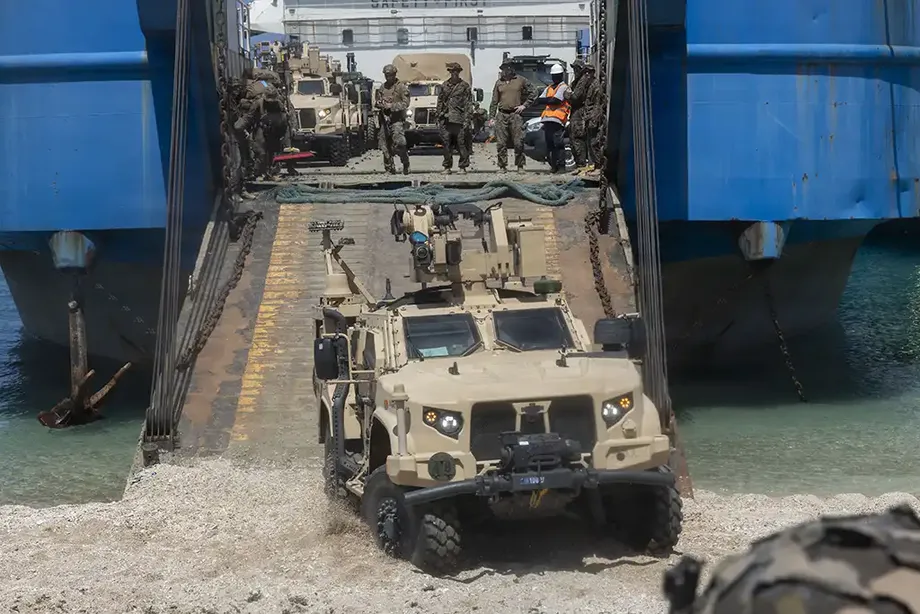
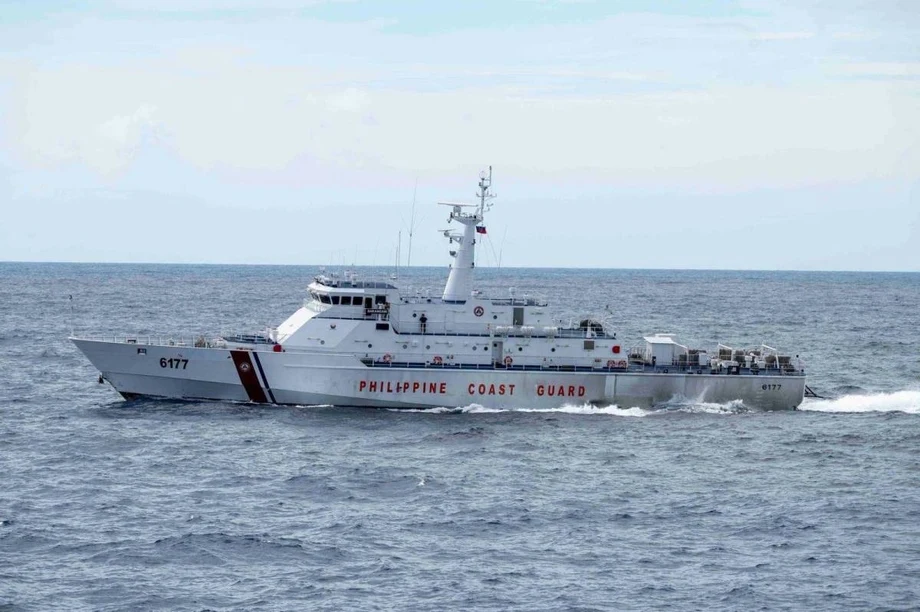
While the code talks stalled, the Philippines deepened practical cooperation with France. From Nov. 20 to 22, the Philippine Coast Guard vessel BRP Sarangani, the French Navy frigate FS Vendemiaire and the Philippine Navy frigate BRP Diego Silang took part in the third joint maritime activity by the two countries in the Sulu Sea. The activity included communications exercises, personnel exchanges, vertical replenishment between ships, division tactics, watch officer maneuvers and Visit, Board, Search and Seizure drills.
The exercise brought aircraft and helicopters into the mix: a Dauphin helicopter from Vendemiaire, an AW109 from Diego Silang, a Philippine Air Force C-208B surveillance aircraft and S-70i Blackhawk helicopters. Vendemiaire is based in Noumea, New Caledonia, and is deployed under Mission Himantura, France's annual operational deployment in the Asia Pacific.
Sarangani was commissioned into the Philippine Coast Guard in October after serving with Taiwan's coast guard. The Sulu Sea activity was its first international maritime exercise. The patrol ship had drawn attention the previous month when it helped Philippine Navy vessels monitor China's aircraft carrier Liaoning and three guided missile destroyers as they moved through the Basilan Strait toward the Celebes Sea. Rear Adm. Constancio Arturo Reyes Jr., chief of Naval Command Western Mindanao, said the drills showed growing operational cooperation and an ability to address shared maritime security challenges.
From a port call to bridges in Mindanao
FS Vendemiaire then docked in Davao City from Nov. 23 to 26. Coast Guard District Southeastern Mindanao and Naval Forces Eastern Mindanao sent off the ship on Nov. 26. Its commanding officer, CDR Jean Christophe D'Herbécourt, and Naval Forces Eastern Mindanao CDR Jerome Bryan S. Mauring exchanged tokens of appreciation.
The Philippines and France signed a Status of Visiting Forces Agreement in March 2026, and it entered into force after Philippine Senate concurrence in October. A visiting forces agreement is a legal framework that allows military personnel from each country to take part in activities on the other's territory. French Ambassador to the Philippines Donatienne Hissard said France supports respect for international law, freedom of navigation and stronger Philippine maritime security under the agreement.
The port call also carried an economic agenda. A French delegation that included Egis, Matière and CMA CGM discussed railways, bridges, tunnels, transport systems, maritime connections, renewable energy, food processing and information technology. French officials discussed expanding the Farm to Market Bridges Development Program from an initial 300 bridges nationwide to 600 or 650. For rural communities, such bridges can reduce transport costs and improve access to schools, health services and markets. France and the Philippines are preparing to mark 80 years of diplomatic relations in 2027, and the French Film Festival has been part of cultural cooperation since 1995.
Beijing's red lines and the shadow of the 2016 ruling
China has said it remains committed to resolving differences with the Philippines through dialogue, provided that talks do not compromise its claim. The Chinese Embassy in Manila said Beijing is ready to engage in diplomatic discussions with Manila but that those discussions should not undermine what it calls China's sovereignty and maritime rights and interests. The embassy said:
China is committed to properly handling differences with the Philippines through dialogue and consultation and to safeguarding peace and stability in the South China Sea and the region.
The same embassy said China does not object to normal cooperation between the Philippines and other countries, including defense partnerships. It drew a line around that cooperation. The embassy said:
China does not oppose normal cooperation between the Philippines and other countries, but such cooperation must not undermine China's sovereignty and maritime rights and interests, nor damage peace and stability in the South China Sea.
Chinese Ministry of National Defense spokesperson Senior Col. Chen Xi criticized Philippine Defense Secretary Gilberto Teodoro after a defense cooperation agreement with Australia. Teodoro had said the agreement would strengthen Manila's ability to retaliate against Beijing. Chen also accused Japan of using academic research to meddle in South China Sea issues. On countermeasures, Chen said:
We will continue to take necessary countermeasures against provocations and resolutely thwart any attempt to destabilize the South China Sea.
Beijing rejects the 2016 ruling by the Permanent Court of Arbitration that largely backed Manila's maritime rights. An arbitral award is a formal decision by a panel of arbitrators. The tribunal ruled that China's historic rights claims within the relevant part of its nine dash line had no lawful effect where they exceeded the maritime entitlements allowed by UNCLOS. China continues to reject the award and maintains its claim over waters Manila calls the West Philippine Sea.
The final text: binding rules, maps and meanings
Honorary Professor Leszek Buszynski of the Australian National University's Strategic and Defence Studies Centre identified three sticking points in the talks: whether the code would be legally binding, its geographical scope and the role of external powers. Speaking at the Southeast Asia Maritime Media Fellowship in Canberra, he warned that leaving those questions unresolved would weaken the result. He said:
Unless these fundamental differences were resolved, the proposed CoC risked becoming little more than a restatement of the 2002 Declaration on the Conduct of Parties in the South China Sea (DOC).
Buszynski said the code should be consistent with UNCLOS. He also said ASEAN countries are drawn into competition between major powers whether they want that role or not. That view sits beside Beijing's preference for keeping outside powers out of dispute settlement and Manila's insistence that the rights of states outside the talks be respected.
Legal status is the first test. A binding agreement creates obligations that governments can be held to under international law; a political declaration relies more on diplomacy and peer pressure. Scope is the second test, because a rule that does not cover the waters where vessels meet cannot guide those encounters. Implementation is the third, because governments need a way to record violations and raise complaints. No completed text, final enforcement procedure or date for agreement has been announced.
Disinformation becomes part of maritime security
Professor Michael J. Jensen of the University of Canberra said information campaigns now shape how the public understands territorial disputes and whether people trust governments to protect national interests. Jensen, who is deputy director of the university's Institute for Governance and Policy Analysis, said governments should look at the political goals behind misleading narratives instead of spending all their time answering each false claim.
He said constant rebuttal can exhaust public resources and let the people spreading false claims set the terms of debate. Jensen said:
Dealing with disinformation is now part of the daily task of every part of the government.
For maritime disputes, clear communication can be practical. Publishing vessel positions, explaining what a coast guard is allowed to do and describing what happened during an incident gives citizens a factual baseline. It also helps neighbouring governments and outside partners understand where pressure is being applied.
Singapore inherits a crowded ASEAN agenda
Singapore takes over the ASEAN chairmanship on Jan. 1, 2027, the year the grouping marks 60 years. The Philippines handed over the role at the Manila summit on Nov. 17. Singapore has chosen Deeper Integration, Wider Partnerships as its theme, with economic cooperation and regional initiatives alongside security files.
ASEAN Secretary General Kao said he was confident Singapore could guide the code to completion, drawing a parallel with the way Singapore brought negotiations on the ASEAN Charter to a close after taking them over from the Philippines in 2007. He said:
I have every reason to believe that Singapore will lead ASEAN to finalise the COC negotiations.
Kao said the remaining differences concern the agreement's legal nature and how its provisions would be implemented. He said both sides remained committed to finishing, and that a workable deal must satisfy both. He said:
We need to have a code of conduct that is agreeable, workable and acceptable by both sides.
Singapore's year will also include other tests. ASEAN Secretary General Kao warned that the ceasefire between Thailand and Cambodia could collapse unless both countries intensify negotiations. Fighting in July and December 2025 killed at least 150 people and displaced about one million, according to the International Crisis Group. A ceasefire reached on Dec. 27, 2025 has largely held, and Singapore will lead the ASEAN Observer Team monitoring it in 2027. Kao said:
We should not allow the third round to take place. I think we must prevent another possible eruption of fighting.
Trade, public opinion and pressure beyond the water
The South China Sea dispute sits inside a wider relationship built on trade. China's trade surplus with ASEAN reached USD 276 billion in 2025, up 45 percent from the previous year. Chinese exports to ASEAN rose 13 percent in 2025 and 19 percent in January to April 2026, while exports to the United States fell 10 percent. ASEAN accounted for 18 percent of China's exports, compared with 11 percent for the United States.
The same relationship is uncomfortable for many ASEAN publics. The 2026 State of Southeast Asia Survey found 52 percent of respondents favouring alignment with China and 48 percent favouring the United States. It also found 43.8 percent said Beijing could use its economic and military power to threaten the interests and sovereignty of their countries. Those figures show a region weighing economic opportunity against fear of pressure.
Concerns extend beyond shipping lanes. China has 11 dams on the upper Mekong, and a 2026 IUCN study found that no routine operational data is publicly available for the largest ones. Toxic waste in rivers in northern Thailand has been traced to mines in Myanmar's Shan State reportedly run by Chinese companies, including a state owned firm, in areas controlled by the United Wa State Army. Malaysia acknowledged in January 2026 that Chinese Coast Guard presence at North and South Luconia Shoals off Sarawak had been the norm since 2013. Indonesia, which is not a claimant in the disputes, continues to report Chinese vessels in its exclusive economic zone in the North Natuna Sea. Vietnam has called on all parties to exercise restraint and follow international law.
China Coast Guard Regulation No. 3 allows the detention of foreign vessels and people in waters Beijing calls under Chinese jurisdiction for up to 60 days. China's industrial overcapacity, meaning production capacity beyond what domestic demand can absorb, has also put pressure on ASEAN manufacturers, especially in Thailand. Partners such as India, Japan, Australia and the European Union have room to help with maritime domain awareness, which means tracking activity at sea, and with investment that adds value locally.
Myanmar and the limits of ASEAN consensus
ASEAN's ability to act together is also tested by Myanmar. Secretary General Kao acknowledged that the grouping's efforts had fallen short of expectations but said ASEAN had moved toward what he called calibrated engagement. Min Aung Hlaing, Myanmar's leader, visited Laos, Thailand, Vietnam, Cambodia and Malaysia in 2026. ASEAN has kept limits on Myanmar's political representation at top level meetings while pressing for an end to violence, dialogue, humanitarian aid, mediation and a special envoy's visit under the consensus agreed in April 2021.
The United Nations says more than 100,000 people have been killed in the conflict between Myanmar's military and armed opposition groups since the February 2021 coup, with millions displaced. On Nov. 19, the International Court of Justice ruled that Myanmar committed genocide against the Rohingya during a military crackdown in 2017. It ordered compensation and steps to support the safe return of displaced Rohingya. Myanmar's military backed government expressed great disappointment.
ASEAN also has dispute settlement provisions under its Charter and the Treaty of Amity and Cooperation in Southeast Asia, including mediation, arbitration and a High Council that has never been activated. ASEAN signed the Digital Economy Framework Agreement at the November Manila summit. The agreement aims to deepen digital trade across a grouping of 11 members, and countries are working to ratify it within 180 days. Kao said countries with less developed digital infrastructure could join later. ASEAN's consensus model gives every member a voice, but it also means a single government can slow a collective position.
What changes for crews, traders and governments
For coast guard crews, the difference between a declaration and a binding code can be the difference between a complaint after an incident and a rule that guides conduct before one. The Manila summit standoff put those practical concerns in front of regional leaders. A code that names the waters it covers, defines restricted actions and sets a way to document violations would give crews and diplomats a shared script.
For Manila, earlier diplomacy has not removed the risks at sea. A calmer ties push in early November brought Foreign Secretary Lazaro and Chinese Foreign Minister Wang Yi together by phone, with both sides calling for dialogue and fewer needless tensions. Confrontations continued in the following weeks.
The Philippines has also added a legal track in a separate maritime forum. Its continental shelf filing in July sought recognition of seabed and subsoil rights beyond 200 nautical miles off western Palawan. That process concerns the sea floor and ground beneath it, not sovereignty over the water above. China and Malaysia objected. The filing shows why maritime disputes now run through several channels at once: seabed law, territorial claims, trade policy, coast guard operations and alliance building.
Key Points
- ASEAN ended the chairmanship held by the Philippines without a South China Sea code of conduct, although leaders adopted 117 documents at the 49th summit.
- Philippine officials put provisional agreement at about 80 percent of the draft's paragraphs, while President Marcos said talks were 85 to 90 percent complete.
- The unresolved issues include legal status, geographic scope, definitions, implementation and the role of outside powers.
- ASEAN's maritime outlook warned that land reclamation, dangerous activities and serious incidents endangered safety and harmed the marine environment.
- Philippine and French forces drilled in the Sulu Sea, while FS Vendemiaire visited Davao and French companies discussed infrastructure and other investments.
- China said dialogue must not undermine its claims and criticized closer Philippine defense ties with other countries.
- Singapore takes over ASEAN's chairmanship on Jan. 1, 2027 and will steer the code talks and the Thailand Cambodia ceasefire observer team.