A carefully prepared departure for Belgium
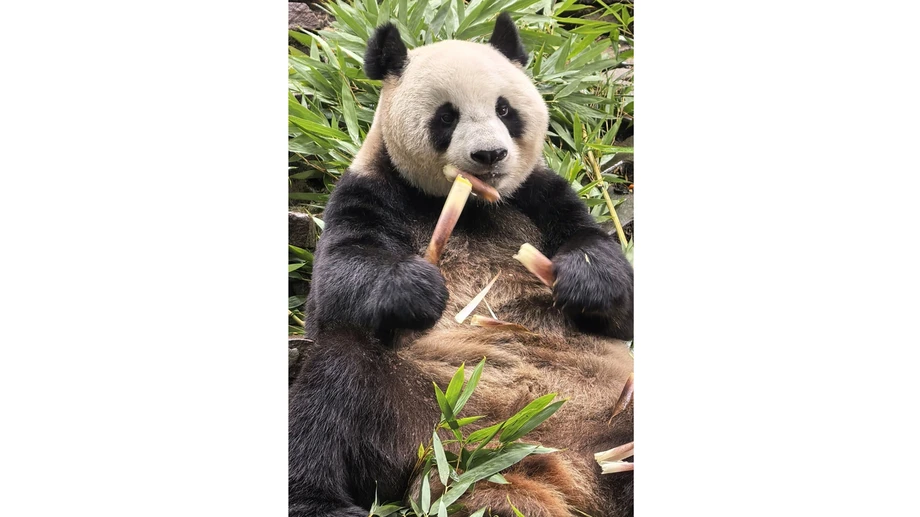
Ran Ran, a female giant panda born on May 31, 2017, and weighing about 110 kilograms, left China on Saturday for Pairi Daiza in Belgium. At the age of nine, she is joining a conservation and research program scheduled to continue until February 2029. Her destination is already home to Xing Hui, a male giant panda at the age of 17 who has been waiting for a new companion.
Contents
- A carefully prepared departure for Belgium
- Ran Ran's history, and Xing Hui's role
- The agreement behind the journey
- Twelve years of pandas in Belgium
- Why the Belgian panda family changed
- Building trust before Ran Ran settles in
- The pandas' measurable effect on Pairi Daiza
- What the cooperation means for conservation
- The partnership in dates
- What to Know
The China Wildlife Conservation Association (CWCA) said Ran Ran completed quarantine and a medical examination before departure and was found to be in good health. Quarantine is a period of isolation used to check for disease and reduce the risk of spreading it. For the flight, her caregivers prepared food, water and medical supplies, including bamboo shoots and carrots. A Chinese veterinarian and a Belgian keeper travelled with her.
Ran Ran had been living at the Wolong Shenshuping Giant Panda Base in Sichuan Province, part of the China Conservation and Research Center for the Giant Panda (CCRCGP). Chinese experts inspected the panda facilities at Pairi Daiza and provided technical guidance. The Belgian park renovated and upgraded the habitat, secured a reliable supply of edible bamboo, assembled an experienced animal care team and established management procedures and technical standards. Her arrival in Belgium had been planned for November 2026, with the exact date to be announced after the final preparations and administrative procedures.
Ran Ran's history, and Xing Hui's role
Ran Ran's name, written 冉冉 in Chinese, conveys gentleness and tenderness, as well as growth and flourishing, according to Pairi Daiza. Her Chinese keepers describe a gentle female who enjoys spending time alone, appreciates a peaceful environment and particularly likes tender bamboo shoots. Those observations give her new caregivers practical guidance for feeding, daily routines and helping her become accustomed to unfamiliar surroundings.
Program records identify her as Ran Ran (#1062). She was born at the Hetaoping Wild-Training Base to Long Xin (#516), within the conservation work of the Chinese panda center. In August 2023, Ran Ran gave birth to twins named Long Ye and Feng Ye, whose father was a wild panda. She later lived at Wolong Shenshuping, where Belgian staff could learn about her behaviour and preferences from the keepers who knew her best.
Xing Hui (#745) is the father of the three cubs previously born at Pairi Daiza, but the two sides stated explicitly that there is no breeding plan for him and Ran Ran. Her role is companionship and cooperative research. That makes her stay different from the earlier chapter in which Hao Hao and Xing Hui produced cubs, and places the immediate focus on Ran Ran's welfare, adaptation and participation in the joint program.
The agreement behind the journey
The legal basis for the move is a supplementary agreement signed by the CWCA and Pairi Daiza on September 16, 2026. A supplementary agreement adds to an existing accord instead of starting the partnership again. In this case, it builds on a cooperation agreement lasting 15 years that was signed in 2013. Under the new arrangement, China is providing a healthy adult female born in captivity, with Ran Ran's participation scheduled to last until the program concludes in February 2029.
The CWCA announced Ran Ran's selection on Monday, October 26, 2026. The decision followed consultations between Chinese and Belgian institutions after Hao Hao returned to China for medical treatment. Both sides agreed that another adult female would allow their conservation work to continue while giving Xing Hui a companion.
The timing also carries diplomatic meaning. China and Belgium established diplomatic relations on October 25, 1971, making 2026 the 55th anniversary year. The CWCA described the panda partnership as a bridge between the countries. The two sides pledged to deepen cooperation in wildlife protection, with attention to animal welfare, scientific research and mutual benefit. Pairi Daiza used its Ran Ran announcement to thank the CWCA, the CCRCGP, Chinese authorities, scientists and keepers for more than 12 years of shared knowledge.
Twelve years of pandas in Belgium
The partnership began in February 2014, when Hao Hao and Xing Hui arrived at Pairi Daiza. A few weeks later, their habitat was officially inaugurated in the presence of Chinese President Xi Jinping and his wife, Peng Liyuan, together with King Philippe and Queen Mathilde of Belgium. The ceremony gave the conservation program an unusually prominent public start.
Hao Hao gave birth to the pair's first cub, Tian Bao, on June 2, 2016. Twins Bao Di and Bao Mei followed on August 8, 2019. Pairi Daiza describes the three births as milestones in its history and as achievements made possible by Chinese and Belgian teams working together on reproduction and animal care.
Eric Domb, founder and president of Pairi Daiza, spoke before Ran Ran's departure about the trust developed during those years and the emotional effect of caring for the pandas.
The forthcoming arrival of Ran Ran fills us with joy. For twelve years, our Chinese friends have done us the great honour of placing their trust in us, sharing their knowledge with us and inviting us to join their commitment to giant panda conservation.
Domb also thanked the Chinese partners for renewing their trust and promised that the park would put its heart into giving Ran Ran a good life. His comments connect the new arrival to a relationship built through daily veterinary work, breeding expertise, keeper exchanges and public education, rather than to a single animal transfer.
Why the Belgian panda family changed
The family at Pairi Daiza had already changed substantially before Ran Ran was selected. Tian Bao, Bao Di and Bao Mei returned to China on December 10, 2024, in accordance with the commitments of the conservation program. Their father, Xing Hui, remained in Belgium.
Hao Hao returned to China in December 2025 for medical treatment after experiencing recurring moderate ascites, according to the CCRCGP. Ascites is a buildup of fluid inside the abdomen. Pairi Daiza says Hao Hao continues to receive attentive, specialised care from her Chinese keepers and that updates about her condition are received at the park with affection.
After consultations about Hao Hao's departure, the partners agreed to introduce another adult female. That decision led to Ran Ran and preserved the research partnership without establishing a breeding plan. For Xing Hui, it means a new companion after the return of his mate and three offspring. For the park's veterinarians and keepers, it means applying experience accumulated since 2014 to a different panda with her own history, habits and preferences.
Building trust before Ran Ran settles in
Liu Yang, a veterinarian and giant panda keeper at Pairi Daiza who has worked with the animals for years, said the Belgian and Chinese teams were already exchanging information about Ran Ran's habits and preferences. Speaking before the journey, Liu Yang explained why meeting her in China was part of the preparation.
I will soon travel to the Wolong Shenshuping Giant Panda Base in China to meet her, observe her behaviour, get to know her better and begin building a relationship of trust with her.
Liu Yang also said the park would help Ran Ran settle into her new home at her own pace. That approach fits the description supplied by her Chinese keepers: a panda that values quiet, spends contented periods alone and has a clear preference for tender bamboo shoots. The upgraded facilities, dependable bamboo supply and detailed care standards are intended to support that adjustment.
Pairi Daiza has said Ran Ran's welfare will remain the priority throughout transport and adaptation. No date has been given for her first appearance before visitors. The immediate work is therefore practical: monitor her health after the journey, establish familiar feeding and care routines, and allow her to become comfortable with the enclosure and the people responsible for her.
The pandas' measurable effect on Pairi Daiza
Giant pandas have also transformed the wildlife park's finances. Attendance rose by 12 percent during their first year in Belgium, while net profit multiplied by five. Net profit is the money remaining after expenses. Ticket sales contributed to that growth, alongside spending on restaurants and merchandise.
The figures show how the business developed over a longer period. Annual net profit was below 1 million euros in 2013, reached 4 million euros in 2015 after the pandas arrived, and stood at 14 million euros in 2025. The 2025 result was 3.5 times the 2015 figure: 14 million euros compared with 4 million euros.
The additional revenue and public recognition helped finance new themed areas, which Eric Domb calls worlds, with new animals, dedicated infrastructure and elaborate scenery. Other attractions and investments also contributed to the park's growth, but there is a clear financial division between the period before 2014 and the years that followed. Ran Ran consequently arrives with a conservation and research assignment at a place where pandas have also become central to the visitor experience.
What the cooperation means for conservation
Pairi Daiza places the partnership within China's wider effort to protect giant pandas and their natural habitats. The wild population increased from approximately 1,100 animals in the 1980s to nearly 1,900 in the park's current account. That is an increase of about 800 animals, or roughly 73 percent above the earlier figure. The park attributes the growth in particular to conservation measures carried out in the wild.
Since 2013, Chinese specialists and Belgian teams have shared knowledge on giant panda breeding, veterinary care, disease prevention, public education and scientific research. The Chinese side describes positive results for wildlife conservation and the protection of global biodiversity. China has also pledged to continue working with Belgian partners to safeguard the health and welfare of giant pandas living overseas.
Ran Ran's defined contribution will be companionship and cooperative research, with no plan for a cub. Her safe arrival, feeding, health monitoring and gradual adaptation are the next observable stages. The present agreement runs until February 2029, giving the institutions a fixed period in which to continue their joint work.
The partnership in dates
Several agreements, births and returns explain why one panda's journey carries so much institutional history.
The dates also separate the return of the three young pandas in 2024 from Hao Hao's later return for medical care.
- October 25, 1971: China and Belgium establish diplomatic relations.
- 2013: Pairi Daiza and its Chinese partners sign a cooperation agreement lasting 15 years.
- February 2014: Hao Hao and Xing Hui arrive in Belgium, beginning the program at the park.
- June 2, 2016: Tian Bao is born.
- August 8, 2019: Twins Bao Di and Bao Mei are born.
- August 2023: Ran Ran gives birth in China to Long Ye and Feng Ye.
- December 10, 2024: Tian Bao, Bao Di and Bao Mei return to China.
- December 2025: Hao Hao returns to China for treatment of recurring moderate ascites.
- September 16, 2026: The supplementary agreement is signed, followed by the announcement naming Ran Ran on October 26.
- November 2026: Ran Ran leaves China on a Saturday for her planned arrival at Pairi Daiza.
- February 2029: The current cooperation program is scheduled to conclude.
What to Know
- Ran Ran, born on May 31, 2017, and weighing about 110 kilograms, departed China on Saturday after quarantine and a health examination.
- A Chinese veterinarian and a Belgian keeper accompanied her, with bamboo shoots, carrots, water and medical supplies prepared for the flight.
- She will join Xing Hui, a male giant panda at the age of 17, for companionship and cooperative research. There is no breeding plan.
- The supplementary agreement was signed on September 16, 2026, and Ran Ran's participation is scheduled to continue until February 2029.
- The partnership began with Hao Hao and Xing Hui in February 2014 and produced three cubs, all of which returned to China in December 2024.
- Hao Hao returned to China in December 2025 for treatment of recurring moderate ascites, while Xing Hui remained at Pairi Daiza.
- Pairi Daiza's attendance rose 12 percent in the pandas' first year, and annual net profit eventually reached 14 million euros in 2025.
- The wild giant panda population cited by the park rose from about 1,100 in the 1980s to nearly 1,900, an increase of roughly 73 percent.