A blocked flight, but no release from fear
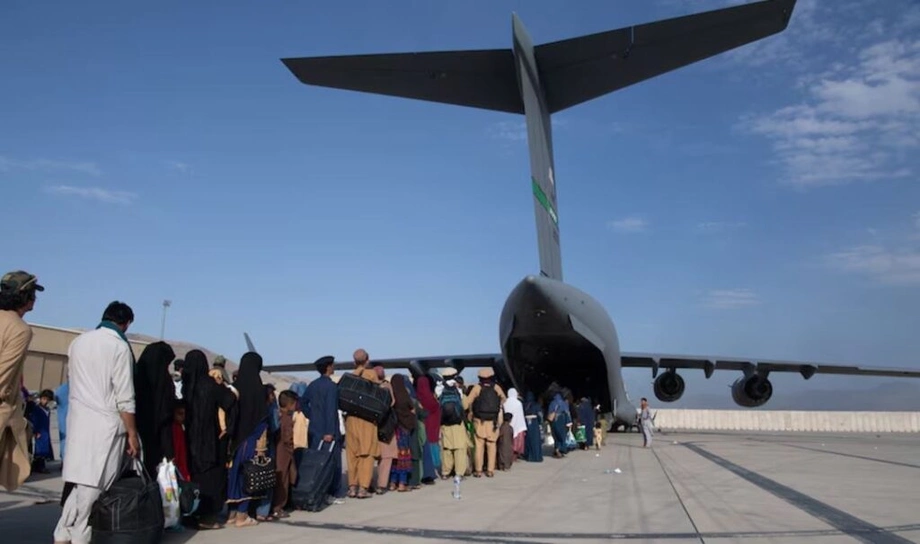
On Nov. 17, 2026, a federal judge in New York granted a preliminary injunction stopping the deportation of Afghans while a legal challenge proceeds. The order followed the cancellation of a flight planned for Nov. 3, part of a Trump administration operation to send nearly 200 Afghans through Pakistan to Afghanistan, where the Taliban are in power. The planned group has also been numbered at 150 people and at more than 150, including some who served alongside U.S. forces, with dozens detained in Louisiana.
Contents
- A blocked flight, but no release from fear
- Why Pakistan is central to the removal plan
- Shaima's choice between her parents and her children
- What deportation would mean for women and girls
- How temporary protection disappeared
- A doctor remains jailed while his health worsens
- Uncertainty stretches from New York to Qatar
- Can Congress force a vote on protection?
- What happens next
- What to Know
The court intervention has not ended the alarms. AfghanEvac says it has credible evidence that immigration authorities planned another removal flight around the Thanksgiving holiday. Shawn VanDiver, president and founder of #AfghanEvac, also said on social media that flights were scheduled for the following week. The organization supplied no exact date, passenger total or names, and the government has publicly announced no new schedule.
Project Rousseau, a nonprofit legal organization, filed its emergency case in the U.S. Southern District of New York on Nov. 2. Two women identified as Jane Does are among the plaintiffs. VanDiver said advocates received reports that at least three women were assigned to the canceled flight. He also said his organization had received reports of at least 76 Afghans being detained since Oct. 14.
Naheed Samadi Bahram, U.S. country director for Women for Afghan Women, a humanitarian organization based in the United States, said repeated immigration policy changes had placed immense strain on Afghan families. She described the uncertainty created by not knowing whether relatives might be detained or returned.
It also brings a lot of stress and anxiety to the community members who are unsure of their future in the United States.
They don't know if they are being deported or sent back to Afghanistan, where the only thing they will be faced with will be death or threats.
Why Pakistan is central to the removal plan
Pakistan would serve as the transit route because Washington has no diplomatic relations with the Taliban and cannot directly arrange the returns with Kabul. A court document concerning one Afghan migrant identified Pakistan as the flight destination, with a subsequent transfer to Afghanistan anticipated. The Department of Homeland Security declined to confirm future removal operations, citing operational security.
The route worries advocates because Pakistan has expelled more than two million Afghan nationals since 2023. Many of the people now facing removal from the United States fled after the Taliban returned to power in 2021. VanDiver said some are brothers and sons of men who served with U.S. forces, leaving their families vulnerable to Taliban retaliation.
Global Refuge called on Oct. 30 for the operation to be stopped or canceled before any flight departed. Rep. Scott Peters, a California Democrat, led a congressional letter to Secretary of State Marco Rubio demanding cancellation of the Nov. 3 flight. The lawmakers warned that sending vulnerable people to Afghanistan or Iran could result in persecution, torture or death, and said removal would break promises made to Afghans who stood beside American troops.
Taliban officials issued their own statement on Nov. 2, expressing deep concern about transfers through Pakistan and saying the Afghan side was ready to engage constructively. AfghanEvac has also said that more than 20 Afghans were previously transferred to Central Africa, even though many had protection or asylum rights in the United States.
Shaima's choice between her parents and her children
Shaima, 56, a mother of four living in New York City, asked to be identified only by her first name because she fears for her family's safety. She said she worked as a doctor in Afghanistan, while her husband spent more than five years working alongside the U.S. government during the war. She initially resisted leaving her home, parents and extended family.
The Taliban's return in 2021 and its prohibition on formal education for girls beyond sixth grade gradually changed her thinking. Shaima said her daughter faced a future without secondary education or employment, with marriage and confinement at home expected instead. Leaving meant abandoning her elderly parents so that her children could escape.
Shaima described the decision in terms that required no legal or political vocabulary.
Should I select my parents or my children, and it's very difficult.
The family arrived in New York in 2024 and applied for green cards about nine months later. A green card provides lawful permanent residency, but Shaima said the family's applications abruptly stalled. She described difficulty obtaining education and employment, followed by intense fear when news of the deportation operation circulated.
Now all the time we are afraid. My husband wants to go to buy some grocery but we are afraid because we don't have green card.
Her daughter can now pursue an education, yet the family still shops, works and plans its days without permanent immigration status.
What deportation would mean for women and girls
Women and girls in Afghanistan have been excluded from secondary school beyond grade six, universities, most employment and political life since the Taliban returned. UN Women says nearly 30% of Afghan girls are married before turning 18, and that the risk of violence against women and girls has increased. Bahram said women would bear the greatest consequences if families were returned, describing them as the backbone of their households.
On Nov. 24, French Foreign Minister Jean-Noël Barrot called Taliban rule gender apartheid, while maintaining that technical contacts with Kabul did not amount to diplomatic recognition. The term describes systematic exclusion from schools, jobs and public life on the basis of sex.
A United Nations briefing on Nov. 20 warned that 22 million women and girls could lose access to essential health care. Nearly 300 humanitarian health facilities had closed or suspended operations, affecting more than one million women and girls. A December 2024 prohibition on women attending nursing and midwifery institutions also reduces the future supply of female medical workers in a country where many women cannot freely receive treatment from men.
These conditions explain why deportation is not simply a change of address for Shaima's daughter or for the women included in the court case. It could determine whether they attend school, practice a profession, obtain medical treatment or move outside their homes without restrictions.
How temporary protection disappeared
Temporary Protected Status, commonly called TPS, allows people from designated countries to remain and work legally in the United States when conditions at home make return dangerous. It does not itself provide citizenship. Afghanistan received the designation in 2022, protecting eligible recipients from removal while allowing them to hold work permits.
Homeland Security announced the termination decision in May 2025. Following a short extension, protection for Afghanistan ended on July 21, 2025, after a federal appeals court declined to postpone the termination for longer. Homeland Security had put the number of people covered by the decision at about 11,700. A special visa program for Afghan immigrants was also paused.
Kristi Noem, who was then homeland security secretary, justified the termination with an assessment of conditions inside Afghanistan.
Afghanistan has had an improved security situation, and its stabilizing economy no longer prevents them from returning to their home country.
Rubio described a different aspect of Taliban conduct in March 2026, when he designated Afghanistan a state sponsor of wrongful detention. He accused the Taliban of kidnapping people to obtain ransom or policy concessions.
Advocates estimate that about 8,000 Afghans now face possible deportation, a much wider population than the passengers singled out for the November operation. Figures cited by advocates also show asylum grant rates for Afghans falling from about 88% in 2024 to under 55% in fiscal year 2026. The grant rate measures approvals among completed asylum decisions. The same figures put the denial rate at 94% in June 2026.
A doctor remains jailed while his health worsens
Ahmad, an Afghan physician identified by a pseudonym, worked as a doctor supporting U.S. and NATO forces during the war, according to his attorneys. He fled Taliban persecution after the 2021 withdrawal and claimed asylum at the border between the United States and Mexico in December 2024. He has remained in Immigration and Customs Enforcement custody since then.
Ahmad is held at the Adams County Correctional Center in Mississippi, a prison operated by the private company CoreCivic under a contract with ICE. His legal representatives say he needs treatment for medical conditions that predated his detention, including a tumor in his neck.
Katie Blankenship of Sanctuary of the South, a legal aid group representing him, said his physical and mental condition was worsening.
He's so desperate to get out of Adams because his health is deteriorating so much.
ICE says immigration detainees receive adequate health care. A 2025 investigation led by Democratic Senator Jon Ossoff nevertheless uncovered dozens of credible reports of medical neglect, while detainees staged hundreds of hunger strikes concerning conditions at immigration facilities.
Mohammad Nazeer Paktiawal, an Afghan special forces veteran and father of six, died in March shortly after ICE agents arrested him near his Texas home. He had fought alongside U.S. troops. Relatives said they pleaded with officers to give him his asthma inhaler. Advocates have counted at least 60 deaths in ICE custody since President Donald Trump took office.
Uncertainty stretches from New York to Qatar
The Afghan population in the United States quadrupled between 2010 and 2024, according to the Migration Policy Institute. Roughly 180,000 Afghans arrived after 2021, when U.S. forces ended their war in Afghanistan and the Taliban regained control. Adjustment has often been difficult: nearly 40% of Afghan immigrants lived in poverty in 2022, compared with 14% of all immigrants, a difference of roughly 26 percentage points.
More than 1,000 additional Afghans remain stranded at Camp As Sayliyah in Doha, Qatar, a former U.S. Army base turned refugee camp, following the suspension of the resettlement process. About 150 are relatives of U.S. service members. The camp had been scheduled to close on Sept. 30, leaving residents with few alternatives beyond returning to Afghanistan.
A bipartisan group of lawmakers wrote to Rubio on Sept. 29 requesting emergency relief. The State Department subsequently delayed the camp's closure deadline by nine months.
VanDiver also wants Congress to examine withdrawals of chief of mission approvals under the Special Immigrant Visa program. Such an approval confirms that an applicant's service meets requirements administered through the State Department. He said withdrawing those approvals made some Afghan allies and their relatives ineligible and exposed them to detention or removal.
Can Congress force a vote on protection?
The Afghanistan TPS Act offers one legislative response. Introduced with bipartisan support in July 2026, it would restore temporary protection for at least 9,000 Afghans until 2029. Eligible recipients could obtain work permits after meeting established vetting standards while pursuing more permanent immigration status.
Supporters are using a discharge petition, a procedure that can bring legislation to the House floor without the usual cooperation of chamber leaders. The petition needs 218 signatures, a majority of the House.
Rep. Jason Crow, a Colorado Democrat and former Army Ranger, introduced the petition on Nov. 9. At that stage, 114 lawmakers had signed, all Democrats. Rep. Jared Golden, a Maine Democrat and Marine Corps veteran of the Afghanistan war, is leading the signature drive.
Golden connected the legislation to his own deployment.
When I was deployed to Afghanistan, I met dozens of locals who put their own lives on the line to help keep us safe.
Golden said thousands of Afghans who assisted American troops and diplomats now live in the United States and deserve the opportunity to build safe and prosperous lives. Rep. Chellie Pingree is a co-sponsor and said she planned to sign the petition, while Senator Angus King co-sponsors the Senate version.
Rep. Sam Liccardo, another sponsor, said in a Monday evening statement that at least 144 representatives had signed, including three Republicans. That leaves the effort at least 74 signatures short of 218. Liccardo said the campaign was intended to prevent Afghan allies from being deported to Afghanistan under Taliban control.
The Afghanistan TPS Act is separate from the Afghan Adjustment Act. The latter focused more narrowly on people who worked with the United States and its allies and would have created a path to citizenship, but it has stalled in Congress for years. Restoring TPS would instead provide temporary residence and employment authorization.
What happens next
The preliminary injunction keeps the deportations stopped while Project Rousseau's case is considered. No date for a final court decision was given. Advocates said court filings also revealed that a second removal flight planned for Nov. 16 had been canceled. VanDiver credited veterans and Afghan advocates with stopping the flights, while cautioning that the government had not abandoned its effort.
AfghanEvac has asked Congress to demand an explanation before any further aircraft departs. It has also advised Afghans in the United States to obtain legal representation. Its Thanksgiving warning gave no exact schedule, passenger count or identities, leaving families to weigh another alarming announcement without knowing who might be affected.
The main developments leading to this point are:
- May to July 2025: Homeland Security announced the end of Afghan TPS, and protection finally expired on July 21 after a short extension.
- Oct. 30, 2026: Global Refuge called for the Pakistan removal plan to be stopped, while members of Congress pressed Rubio to intervene.
- Nov. 2: Project Rousseau sought an emergency court order, and Taliban officials expressed concern about the planned transfers.
- Nov. 3: A federal judge temporarily blocked the initial flight, which never departed.
- Nov. 9: Crow introduced the discharge petition to pursue restored TPS through Congress.
- Nov. 16 and 17: Advocates learned that a second flight had been canceled, and a judge granted the preliminary injunction.
Shaima continues building her family's life in New York. Her children are safe and her daughter can study, although the family's green card applications remain unresolved. She said she urges her children to retain hope despite their journey.
I say our journey is very difficult … but we hope
What to Know
- A New York federal judge granted a preliminary injunction on Nov. 17, 2026, stopping Afghan deportations while the legal challenge continues.
- The November operation was described as involving nearly 200 Afghans, while other figures placed the group at 150 or more than 150.
- AfghanEvac has received reports of at least 76 Afghan detentions since Oct. 14 and warns that another flight may be planned.
- TPS for Afghanistan ended on July 21, 2025; advocates estimate that about 8,000 Afghans now face possible deportation.
- The Afghanistan TPS Act would restore protection until 2029 and provide work permits to eligible recipients.
- At least 144 House members, including three Republicans, have signed the discharge petition; 218 signatures are required.
- Women returned to Afghanistan would face severe restrictions on education, employment, movement and access to health care.
- More than 1,000 Afghans remain stranded at Camp As Sayliyah in Qatar, where the closure deadline was delayed by nine months.