A stadium with 25,000 seats anchors a wider football plan
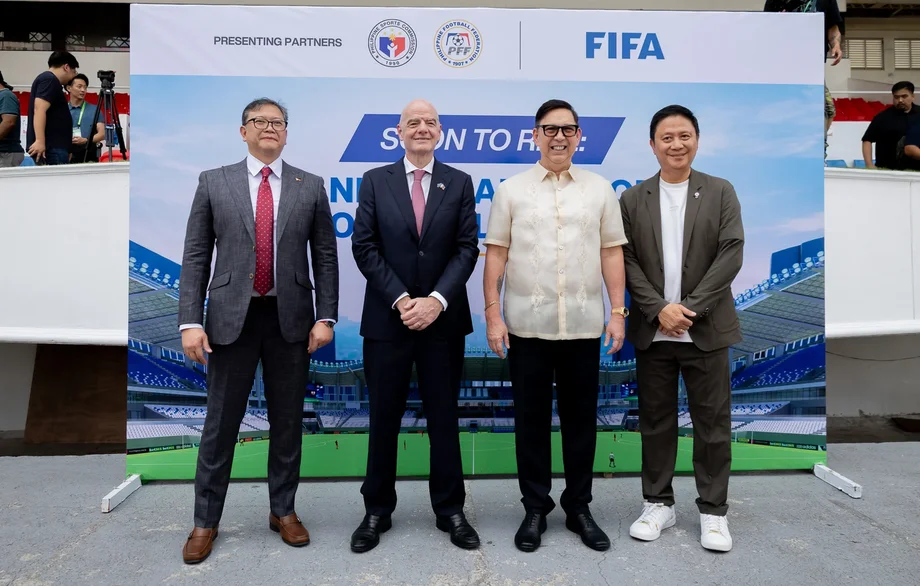
FIFA, the Philippine Sports Commission (PSC) and the Philippine Football Federation (PFF) signed an agreement on November 15, 2026 to redevelop Rizal Memorial Stadium into a football venue with 25,000 seats, a new natural grass pitch and modern facilities. The signing took place at the PSC House inside the Rizal Memorial Sports Complex in Manila. Construction is scheduled to start in the first quarter of 2027, with a construction period of 15 months also set out for the project. Project backers describe it as the first major renovation of the stadium since it opened in 1934.
Contents
- A stadium with 25,000 seats anchors a wider football plan
- How the money and responsibilities are divided
- The futsal tournament that opened the door
- Nine decades of sport and history
- Why removing the track oval is so contentious
- Michael Keon's case for keeping athletics in Manila
- Heritage protection and a more open sports district
- The dates and decisions still to come
- Key Points
FIFA President Gianni Infantino signed for football's world governing body, alongside PFF President John Anthony Gutierrez and PSC Chairman Patrick Gregorio. Executive Secretary Ralph Recto, members of the PFF Executive Committee and officials of the ASEAN Football Federation witnessed the ceremony. Once finished, the stadium will serve as the PFF's new home and as a training and competition venue for national and international football. Gregorio has also said in other remarks that the rebuilt venue would include a roof or retractable cover over seating.
The official grant figure for the Philippine project is contested. One report put the FIFA grant at US$20 million (about ₱1.275–1.28 billion), while another put the stadium rehabilitation at US$13 million (roughly ₱828 million); the US$25 million figure attached to the stadium work and three regional football training centres has also been tied in other reports to FIFA's separate commitment to invest US$25 million in every member association. The funding as described covers the stadium work as well as three regional football training centres, with officials saying it will come at no cost to the government. The centres will be built in Luzon, Bacolod City in the Visayas and Cagayan de Oro in Mindanao. Each will have three regulation pitches positioned side by side and dormitories for athletes and teams. Gutierrez said the centres would let young players train closer to home, make visits easier for parents and provide venues for international youth tournaments.
Gutierrez, who has pursued closer ties with FIFA during his PFF presidency, presented the agreement as a turning point for the historic venue.
Today, we write a new chapter for the Rizal Memorial Stadium.
How the money and responsibilities are divided
The memorandum of agreement assigns a distinct role to each party. FIFA will provide the funding. The PFF will lead planning, procurement and construction of the pitch and related facilities, working with the PSC's engineering team. The PSC will supply the site, the necessary authority and local support while retaining ownership and administration of the wider complex. The agreement runs for 30 years from the date the finished facility is turned over, rather than from the signing ceremony.
Gregorio called the stadium FIFA's gift to the Filipino people and placed it within a broader transformation of the complex. Recto described the investment as an expression of confidence in the country's undiscovered players and in a nation of 115 million people. Gutierrez also called it one of the biggest achievements in modern Philippine sports infrastructure, pointing to its value for players, coaches and young footballers.
Infantino linked the Manila project to his argument that countries outside football's traditional powers should have direct access to the sport and its facilities.
We don't want emerging countries to just watch football on TV. We want every country to be part of football, to be part of top football, to be part of world football.
Today a stadium is a symbol. It's a symbol of a country that wants to project itself into the future. To build a stadium is to give smile, to give happiness, to give hope to a whole country.
The signatories' own documents state that the funding covers the redevelopment of Rizal Memorial Stadium and the construction of three regional football training centres in Luzon, Bacolod City and Cagayan de Oro, each with three full-sized pitches and athlete dormitories. The US$25 million figure has been associated with FIFA Forward, the programme through which FIFA distributes development funding to its member associations. Infantino also said FIFA would invest US$25 million in every member association from January 1 next year, with academies and provincial fields among the uses he identified for the Philippines. The announcements did not provide an itemised budget separating the Manila stadium, the three regional centres and that wider commitment, nor did they give a cost for the stadium alone.
The futsal tournament that opened the door
The agreement follows the Philippines' hosting of the inaugural FIFA Women's Futsal World Cup in 2025. Futsal is FIFA's indoor version of football, played with smaller teams on a hard court. Gutierrez and Gregorio both presented the stadium investment as a tangible return from that tournament, arguing that the country's organisational role strengthened its place within FIFA.
Gutierrez recalled that the Philippines competed against Italy, Lithuania, Portugal, Poland and Brazil for the hosting rights. He said a guarantee from the Philippine government was decisive because financial and operational backing from government formed part of the bidding requirements.
We wanted to show FIFA that we want to play our part. Part of the bidding process was a government guarantee for you to be able to bid, and the other countries couldn't provide that.
The national stadium and regional centres now give that hosting effort a physical legacy beyond Metro Manila. Players in Bacolod and Cagayan de Oro, two areas with established football communities, would gain accommodation and training grounds without having to relocate every development activity to the capital. Gutierrez said the Philippine experience also showed how an active member association could benefit from FIFA's international success.
Recent results supply part of the football context. The Filipinas, the country's women's national team, defeated New Zealand at the 2023 FIFA Women's World Cup. That victory and the 2025 futsal tournament have strengthened the argument that better facilities could give Filipino players more regular access to international football. The new agreement addresses infrastructure; it does not announce a new national team programme, league or competition calendar.
Nine decades of sport and history
Rizal Memorial's importance extends well beyond football. Gutierrez called it the Mecca of Philippine sports, reflecting a venue where generations of athletes trained and where major international events, wartime destruction and popular culture intersected.
- 1934: The stadium opened for the 10th Far Eastern Championships.
- 1945: The complex witnessed the Battle of Manila during the Second World War.
- 1954: Rizal Memorial served as the main hub of the Asian Games in Manila.
- 1966: The Beatles performed at the venue during their turbulent visit to the Philippines.
- 1991 and 2005: The complex again hosted competition during the Southeast Asian Games.
- 2017: The National Historical Commission of the Philippines declared the complex a National Historical Landmark.
- 2023 and 2025: The Filipinas beat New Zealand at the Women's World Cup, and the Philippines later hosted the inaugural FIFA Women's Futsal World Cup.
- November 15, 2026: FIFA, the PSC and the PFF signed the redevelopment agreement.
- First quarter of 2027: Stadium construction is due to begin.
A marker at the complex's baseball stadium commemorates home runs hit there by Lou Gehrig and Babe Ruth more than 90 years ago. Track greats including Lydia de Vega-Mercado, Elma Muros-Posadas and Isidro del Prado trained at Rizal Memorial, as did pole vaulter Ernest John Obiena. Hidilyn Diaz, the weightlifter who became the Philippines' first Olympic gold medallist, and gymnast Carlos Yulo, who later won two Olympic gold medals, also used gyms inside the complex during their early development.
That history explains why a football renovation has become a wider argument about athletics, public access and remembrance. The concrete questions concern which sports will remain at the Manila site, where displaced athletes will train and how the protected character of the complex will be preserved.
Why removing the track oval is so contentious
The signed football agreement concentrates on the pitch and related facilities. The broader redevelopment plan would remove Rizal Memorial's track oval and create a stadium used solely for football. During the 15 months of construction, the national track and field team would move to the PhilSports Complex in Pasig. That venue, formerly known as ULTRA, would in turn be upgraded into an athletics facility capable of hosting major international events.
The technical case for separating the sports is straightforward. A football stadium meeting FIFA requirements needs suitable pitch dimensions, turf, spectator sightlines and supporting infrastructure. An athletics track around the field changes the shape of the venue and places the running lanes between spectators and the pitch. The master plan therefore treats Manila as the football venue and Pasig as the dedicated athletics venue, rather than continuing to accommodate both sports in one stadium.
For football supporters, that would mean a national ground designed around the game instead of a field enclosed by an oval. For runners, jumpers and throwers, the promise is a Pasig facility designed for their events. For athletes and schools already using Rizal Memorial, it would also mean a change of location and routine.
The public announcements have not supplied a detailed timetable or budget for the PhilSports upgrade. They also have not set out where all school and community athletics activities currently held at Rizal Memorial would go during and after construction. Those details matter because the Manila stadium project has FIFA funding and a construction window, while the corresponding athletics arrangements have been described mainly through the wider plan.
Michael Keon's case for keeping athletics in Manila
Michael Keon, the first director of the Gintong Alay sports programme in the 1980s, has emerged as the most prominent opponent of removing the oval. Keon, who competed there as a UAAP athlete in the 1970s, said his objection concerns active use and sporting heritage rather than nostalgia alone.
[The] Rizal Memorial track and field has been there since time immemorial. The top athletes of the Philippines have been both training and competing there for the last, what, 90 years.
Keon said national coaches and athletes privately share his concerns but do not want their names disclosed. He also identified Far Eastern University, San Sebastian and Lyceum among the schools whose athletes train at Rizal Memorial. Moving their sessions to Pasig, he argued, would add public transport journeys and reduce the time student athletes have available for training.
His sporting objection extends to the field events that use space inside and around the oval. He listed javelin, discus, shot put, pole vault and the jumping events among the disciplines that would lose their Rizal Memorial home. He cited Obiena's training at the venue before he became Asian pole vault champion as evidence that the facilities remain connected to present day achievement.
Keon supports football's growth but proposes putting a new international football stadium at PhilSports instead, leaving athletics at Rizal Memorial.
ULTRA was originally a football field, a football stadium. They should actually put a new international football stadium at ULTRA, and not touch the track and field aspect of Rizal Memorial.
Keon intends to write to the PSC, the Philippine Olympic Committee, the Philippine Athletics Track and Field Association and Malacañang to seek a review. He has not announced a date for those submissions. Gregorio declined to comment when asked about Keon's remarks, so the PSC has not yet publicly answered his specific points about school travel, field events and the alternative stadium location.
Heritage protection and a more open sports district
The 2017 landmark declaration and Republic Act No. 10066, the National Cultural Heritage Act of 2009, place formal duties around the redevelopment. The project team says it will secure the necessary clearances and preserve the complex's historical and architectural integrity. In practical terms, the stadium cannot be treated as an empty construction site: the detailed design must pass through heritage processes alongside planning and procurement.
The final design will show how those duties apply to the stadium, the oval and other historic features. No date has been announced for publication of the final plans or for the heritage clearances. Keon's requested review adds another avenue through which the treatment of athletics facilities could be examined.
The district plan also includes spaces intended for people who are not elite athletes. Existing and planned jogging paths and facilities used by the public must be accommodated in the design. The PFF will work with PSC engineers to integrate pedestrian areas, while proposals for the surrounding plaza include space for local runners and fitness users.
Two other proposals would change how people reach and move through the complex. A PSC Plaza is planned in front of SM Harrison, and a pedestrian walkway would connect the LRT station on Taft Avenue with Adriatico Street through the sports grounds. Together with the stadium, these measures would make the redevelopment a district project rather than work confined to the playing field.
The dates and decisions still to come
Construction in the first quarter of 2027 is the next dated milestone. The stadium work is expected to last 15 months, but officials have not announced a precise completion or opening date. The 30 year term of the agreement begins only at turnover, and the PSC will continue to own and administer the complex throughout that period.
Several practical details remain to be published: the allocation of funds between the stadium and regional centres, the final heritage design, the timetable for the PhilSports athletics upgrade and arrangements for schools and community users displaced from Rizal Memorial. The PSC has also given no date for responding to Keon's appeal for a review.
For football players, the signed agreement establishes a funded route toward a national stadium and three regional training bases. For track athletes and nearby students, the decisive issues are the location and readiness of their replacement facilities, the cost and time of travel, and continued space for every athletics discipline. For heritage authorities and local residents, the final plans will determine how much of Rizal Memorial's familiar form and public role survives alongside its new football use.
Key Points
- FIFA, the PSC and the PFF signed the Rizal Memorial redevelopment agreement in Manila on November 15, 2026.
- The planned football stadium will have 25,000 seats, a natural grass pitch, a roof or retractable cover over seating and serve as the PFF's new home.
- Reports differ on the funding: US$20 million (about ₱1.275–1.28 billion) for the FIFA grant, US$13 million (roughly ₱828 million) for stadium rehabilitation and US$25 million tied elsewhere to a separate commitment to invest the same amount in every member association; the covered work includes regional training centres in Luzon, Bacolod City and Cagayan de Oro, each with three pitches and dormitories.
- FIFA supplies the funding, the PFF leads delivery, and the PSC retains ownership and administration of the complex.
- Construction is due to start in the first quarter of 2027 and last 15 months; the agreement runs for 30 years from turnover.
- The wider plan would remove the track oval and move national athletics training to an upgraded PhilSports Complex in Pasig.
- Michael Keon opposes the oval's removal, citing active school use, field events, athlete travel and Rizal Memorial's sporting heritage.
- Heritage clearances, the final design, detailed funding allocations and the PhilSports timetable have yet to be published.