A Handover That Rearranges Two Crews
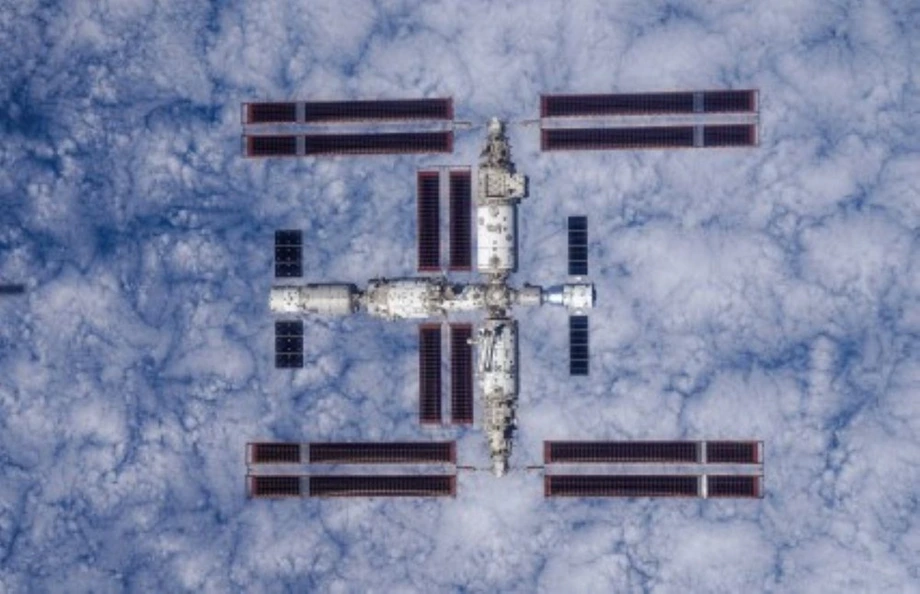
Six astronauts aboard China's Tiangong space station transferred the station's key on Saturday, November 28, 2026, completing the Shenzhou program's ninth handover in orbit, the China Manned Space Agency (CMSA) said. The ceremony set an unusual return plan in motion and placed a Pakistani astronaut inside a Chinese crew rotation for the first time.
Contents
- A Handover That Rearranges Two Crews
- From a Dawn Launch to Docking in 218 Minutes
- Preparations at Dongfeng and Three Symbolic Gifts
- What Ali Is Doing in Tiangong's Laboratories
- Selection, Mandarin and Seven Months of Preparation
- Why Zhu Yangzhu Is Staying for a Year
- A Rescue Rocket and Capsule Are Already Waiting
- National Celebrations and a Wider Diplomatic Message
- What the Flight Means Beyond China and Pakistan
- What to Know
Muhammad Zeeshan Ali, the first foreign national to enter Tiangong and the first Pakistani to reach orbit, will return aboard Shenzhou-23 rather than the Shenzhou-24 capsule that carried him into space. He arrived on November 25 for a short visit as a payload specialist, a crew member whose principal work concerns scientific equipment and experiments rather than flying the spacecraft.
Zhang Zhiyuan will command the return mission, accompanied by Ali and Li Jiaying, whose name is also rendered Lai Ka-ying. Li is Hong Kong's first astronaut and was the only woman aboard the station during the rotation. CMSA said all three had completed their assigned tasks and would travel to the Dongfeng landing site in northern China in the coming days.
Tang Hongbo and Wu Yi will remain aboard Tiangong with Zhu Yangzhu, a member of the Shenzhou-23 crew. Zhu has already spent six months in orbit and will stay to complete an experiment lasting one year. Tang, 51, is making his third spaceflight and has become the first astronaut to board Tiangong three times. Wu, 39, and Ali, 40, are on their first flights.
From a Dawn Launch to Docking in 218 Minutes
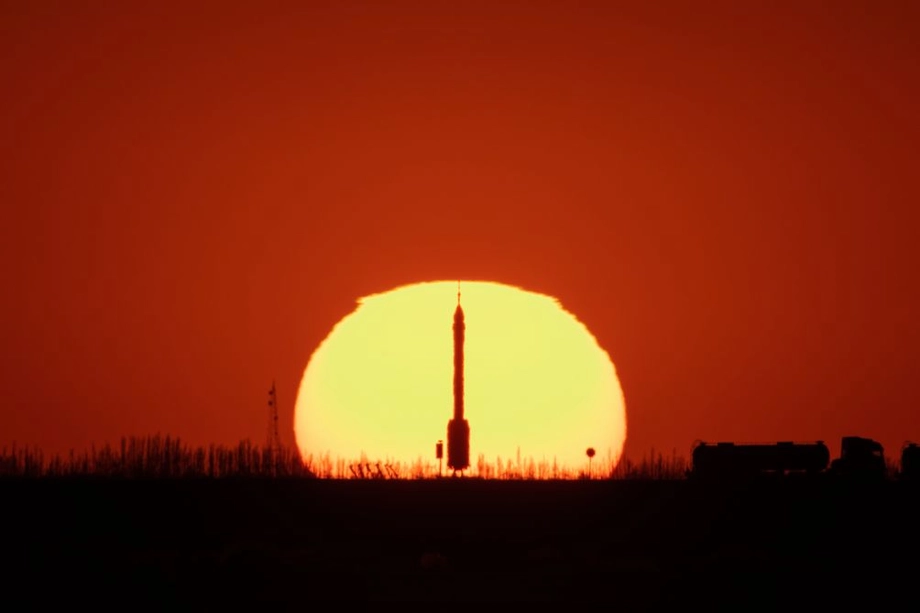
The rotation began before dawn at the Jiuquan Satellite Launch Center in the Gobi Desert. Tang, Wu and Ali departed in Shenzhou-24 atop a Long March 2F Y24 rocket, which separated from the spacecraft about 10 minutes after liftoff. The capsule entered its planned orbit with the crew in good condition.
- May 24, 2026: Shenzhou-23 reached Tiangong with Zhu Yangzhu, Zhang Zhiyuan and Li Jiaying.
- November 25, 8:18 a.m. Beijing time: Shenzhou-24 lifted off from Jiuquan.
- November 25, 11:56 a.m.: The spacecraft docked automatically with the front port of the Tianhe core module, 3 hours 38 minutes after launch.
- November 25, 2:35 p.m.: The new crew entered Tiangong and was embraced by the Shenzhou-23 astronauts.
- November 28: The two crews transferred the station key and completed their formal handover.
The 218-minute journey to docking matched the faster flight profile introduced on Shenzhou-21. Missions from Shenzhou-12 through Shenzhou-20 generally needed about 6.5 hours to reach the station. Li Zhe of the China Aerospace Science and Technology Corporation said this was the fourth Shenzhou rendezvous using the roughly 3.5-hour procedure.
Li Jiaying welcomed the newcomers with a small cake prepared in orbit. The meeting was the ninth gathering of Shenzhou crews aboard China's station and produced what CMSA called the first space handshake between Chinese and foreign astronauts.
A Shenzhou capsule has three seats and serves as a lifeboat while docked. Six astronauts therefore have six seats across Shenzhou-23 and Shenzhou-24. When Shenzhou-23 departs with Zhang, Li and Ali, Tang, Wu and Zhu will remain with three seats aboard Shenzhou-24. Zhu's extended stay is what allows Ali to make a short visit without disturbing that balance.
Preparations at Dongfeng and Three Symbolic Gifts
At Dongfeng, search and recovery teams conducted a comprehensive rehearsal on November 26 involving all the forces assigned to the Shenzhou-23 return. Personnel, vehicles and equipment were declared ready, and weather conditions at that time met the mission's requirements. Other systems supporting tracking, communications and recovery are also preparing for the landing.
Preflight estimates described Ali's visit as lasting about five days, about a week, or between five and 10 days. The handover announcement gives no exact landing date or time, saying only that the three astronauts will return in the coming days.
The returning crew will also carry three presents initially described by CMSA as mysterious gifts from Tiangong. Tang later called them local specialties of the station. Their symbolic names were disclosed during the handover, although the objects themselves were not revealed.
Tang presented Striving to Zhang, describing it as a tribute to 70 years of work across generations in China's space program. Wu presented Happiness to Li, accompanied by wishes for Hong Kong's prosperity, safety and wellbeing. Zhu presented Friendship to Ali, expressing hopes for lasting relations and cooperation between China and Pakistan.
Ali responded after receiving Zhu's gift, speaking about the relationship between the two countries.
This friendship is unbreakable.
On the same day, Pakistani Prime Minister Shehbaz Sharif and Field Marshal Syed Asim Munir, the country's defense forces commander and army chief, spoke with Ali from the headquarters of Pakistan's Space and Upper Atmosphere Research Commission (SUPARCO).
What Ali Is Doing in Tiangong's Laboratories
Ali's short stay still carries a substantial research program. Tiangong consists of the Tianhe living and control module plus the Wentian and Mengtian laboratory modules. Pakistani payloads are being placed in the two laboratories, where Ali helps install samples and equipment, operate them and complete scheduled observations.
Pakistan's four joint projects cover biotechnology and materials research. Chinese institutes selected the experimental payloads from more than 300 proposals submitted by Pakistani universities. SUPARCO built and tested the equipment in advance, after which Chinese engineers reviewed and approved it for flight.
His assignments include photosynthetic cyanobacteria, tiny organisms that use light in a way similar to plants, and the cultivation of microalgae as a possible source of food and oxygen on future missions. Another experiment examines how radiation and weightlessness affect quinoa seeds. Researchers also want to learn how biological processes connected with food production and climate resilience change in orbit.
The wider Shenzhou-24 mission includes more than 90 experiments and technology tests, not all of them assigned to Ali. The program covers space life sciences, aerospace medicine and combustion. One area of research examines vascular aging, with the aim of improving prevention and treatment. Tang and Wu will continue this work after Ali leaves, during a mission expected to last about six months.
Selection, Mandarin and Seven Months of Preparation
Ali, a Pakistan Air Force pilot and wing commander, emerged from a field of roughly 20 finalists. Another military pilot, Khurram Daud, reached the final stage and served as the backup. Selection included medical examinations, psychological assessment, technical aptitude and tests of tolerance for the heavy forces experienced during launch.
Seven months of preparation in Beijing included intensive Mandarin lessons. The spacecraft's switches, software, procedures and spoken announcements use Mandarin, so conversational ability alone was insufficient. Ali also studied technical vocabulary, Chinese songs and poetry, practiced calligraphy and played table tennis with his colleagues. Tang said differences in language, culture and psychology initially made teamwork harder, but sustained joint training built trust.
Ali listed centrifuge work, rescue and survival exercises and emergency procedure training before identifying language as his greatest difficulty.
To be honest, the biggest challenge was mastering the Chinese language.
The assignment became public in stages. A November 7 mission announcement confirmed that the Pakistani visitor would fly up on Shenzhou-24 and return on Shenzhou-23 without identifying the astronaut. Subsequent selection and language preparation centered on Ali and Daud, while Pakistan's prelaunch preparations still kept open which man would fly. The crew then completed a final dress rehearsal at Jiuquan on November 21, using bilingual manuals and food prepared according to halal dietary rules.
Ali is more precisely described as Pakistan's first astronaut in orbit and its first professionally trained astronaut on an orbital mission. Namira Salim flew on Virgin Galactic's Galactic 04 mission in October 2023, but that was a suborbital journey, meaning it went into space and returned without circling Earth.
Why Zhu Yangzhu Is Staying for a Year
Zhu's extension will produce China's first full year in space by one astronaut and its longest continuous individual stay. Six months of that period had elapsed by the handover. He is studying how the human body adapts to prolonged weightlessness and life inside a confined orbital station.
Medical and psychological information from the experiment can help mission planners prepare for longer journeys. China intends to land astronauts on the Moon by 2030, and researchers also see value in such work for possible missions farther into space. A lunar expedition requires crews to remain healthy far from the rapid return options available in low Earth orbit.
CMSA has not yet announced when Zhu will finish the experiment or which spacecraft will bring him home. His place aboard Shenzhou-24 with Tang and Wu covers the immediate rotation, while the arrangements for the end of his year in orbit remain unannounced.
A Rescue Rocket and Capsule Are Already Waiting
At Jiuquan, a Long March 2F Y25 rocket and Shenzhou-25 spacecraft are on standby in the vertical assembly building. Together they form a rescue stack that can undergo rapid testing and transfer if the Shenzhou-24 crew needs another vehicle. Ground teams added heaters and insulation for temperatures around 1 degree Celsius, installed about 20 voltage stabilizers on the tower and replaced propellant pumps that had served for more than 20 years.
The precaution follows China's first emergency space launch in 2025. Suspected debris damaged a viewport on Shenzhou-20, whose crew returned on November 14 aboard Shenzhou-21. Shenzhou-22 then launched on November 25 to provide the Shenzhou-21 crew with a return vehicle. The current standby arrangement keeps a rocket and capsule ready before such a problem arises.
National Celebrations and a Wider Diplomatic Message
Sharif described the flight as a journey beyond the stars and connected it with the ambitions of Pakistan's young people and scientists. President Asif Ali Zardari and Chinese President Xi Jinping exchanged congratulatory letters. Xi said Beijing was willing to work with other countries to support the peaceful use of outer space and improve global space governance.
Blaine Curcio, managing director of Orbital Gateway Consulting, said Pakistan had placed considerable trust in China by sending its pilot on a rocket built there. He also noted that Ali was gaining detailed experience of China's human spaceflight operations.
It makes China better prepared to do it again, and also makes it clear to other countries that China is open to this type of collaboration.
Space cooperation between the two countries dates to the early 1990s. China has launched Pakistani satellites, and a rover built in Pakistan is expected to fly on a Chinese lunar mission around 2028. The astronaut agreement signed in February 2025 led to this flight about 21 months later. The mission also coincides with 75 years of diplomatic relations and the 70th anniversary of China's space program.
What the Flight Means Beyond China and Pakistan
Tiangong's international pitch has developed outside the International Space Station framework. The 2011 Wolf Amendment bars NASA from bilateral programs with the Chinese government. Tiangong has about 340 cubic meters of pressurized volume, roughly one third of the International Space Station, while current NASA planning has the larger station ending operations from 2030.
Andrew Jones, a journalist specializing in China's space program, said China is understood to be preparing to double Tiangong's size. He suggested that expansion could support more international visits and possibly space tourism, particularly if Western commercial stations are not ready when the International Space Station retires.
Roughly 50 countries have sent citizens into space, but only the United States, Russia and China have done so using spacecraft developed at home. Pakistan has neither its own crewed spacecraft nor an independent launch vehicle, so China supplied the transportation, station access and operational training. Pakistan supplied the astronaut and experiments, giving its scientists direct work in orbit while China demonstrated a service it could offer other partners.
China's crewed lunar target remains 2030 despite a delay to its robotic Chang'e-7 mission, while the United States is aiming for 2028 through its Artemis program. Against that competition, Ali's flight is a short scientific visit with a much larger diplomatic audience.
What to Know
- The Shenzhou-23 and Shenzhou-24 crews transferred Tiangong's key on November 28, 2026.
- Zhang Zhiyuan, Li Jiaying and Muhammad Zeeshan Ali will return aboard Shenzhou-23 to Dongfeng, but no landing date has been announced.
- Ali is Tiangong's first foreign visitor and the first Pakistani to reach orbit.
- Zhu Yangzhu remains with Tang Hongbo and Wu Yi to complete China's first full year in space by one astronaut.
- Shenzhou-24 launched on November 25 and docked after 3 hours 38 minutes.
- Pakistani experiments include photosynthetic microorganisms, microalgae and quinoa seeds, within a mission program of more than 90 tests.
- A Shenzhou-25 spacecraft and its rocket are on standby for a possible rescue launch.