Four Teeth Redraw the Ancient Human Map
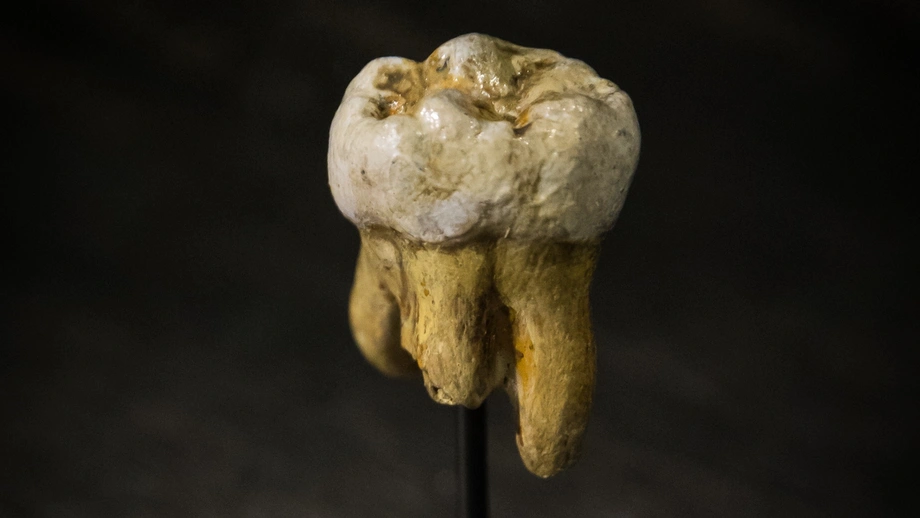
Four isolated teeth from two karst caves in Guangxi have pushed Denisovans into subtropical southern China and added a question mark to the human family tree. The teeth came from Chuanshandong in Long'an County, Nanning, and Longchuandong in Luzhai County, Liuzhou. Two from Longchuandong match Denisovans. Two from Chuanshandong match no established ancient human group in East Asia. The Nature study was published by the journal Nature on 25 November 2026; the public announcement was datelined Beijing at 15:52:30 on 26 November, and a later version carried 27 November. Its DOI is 10.1038/s41586-026-11341-6.
Contents
- Four Teeth Redraw the Ancient Human Map
- How Old Are the Teeth, and Why Do the Sediments Look Younger?
- Why Southern China Was Hard to Read
- Longchuandong Adds a Denisovan Address in Lingnan
- Chuanshandong Puts a Question Mark on the Family Tree
- How Do Scientists Describe the Mystery Group?
- Neighbouring Fossils Make the Puzzle Sharper
- What Is Still Unknown, and What Comes Next
- Why the Discovery Changes the Picture of Ancient Asia
- Key Points
The research team came from the Institute of Vertebrate Paleontology and Paleoanthropology under the Chinese Academy of Sciences, with the Guangxi Institute of Cultural Relics Protection and Archaeology and other institutions. Song Xing is lead author. Qiaomei Fu, director of the institute's Ancient DNA Laboratory, is a senior co-author. The paper says the team surveyed a migration corridor across Guangxi from 2016; the team also said the corridor work began in 2015. Both descriptions point to the same broad sweep, more than 500 km from Chongzuo in the southwest to Guilin in the northeast. The four teeth were recovered in 2021. An aerial photograph of Gengwang Lake in Long'an County, taken on 23 April 2020 and credited to Cao Yiming, accompanied the announcement.
The finding matters because Lingnan, a region covering much of today's Guangdong and Guangxi, was a major blank on the ancient human map. Denisovans had been identified from DNA in a finger bone from Denisova Cave in Siberia in 2010. Many people in Southeast Asia and Oceania still carry some Denisovan DNA. Fossils or molecular traces later linked the group to the Tibetan Plateau, Penghu in the Taiwan strait, Harbin in northeast China and Bianfu Cave in southwest China. Until now, few ancient human fossils had been reported from the warm subtropical south. The Guangxi teeth show that Denisovans lived there. They also show that something else lived there at about the same time.
For readers, the change is concrete. A map that once placed most East Asian archaic humans in a broad Denisovan group now has at least two branches in southern China. Archaic humans means human relatives that are not modern Homo sapiens. The group includes Homo erectus, Neanderthals, Denisovans and other extinct branches. The Middle Pleistocene ran roughly 770,000 to 130,000 years ago. The new evidence does not put a face or a name on the Chuanshandong population. It does give scientists a protein and tooth shape signature they can search for in other caves.
How Old Are the Teeth, and Why Do the Sediments Look Younger?
Dating was done on the teeth themselves and on the layers around them. Uranium series dating measures how much uranium absorbed from groundwater has decayed into thorium. The left third premolar from Chuanshandong returned an isotope dilution uranium series age of 100.8 ± 0.2 ka, with ka meaning thousand years. Because the tooth may have been buried later than it was shed, researchers treat that figure as a minimum age. The right third premolar from the same cave is 62.1 ± 0.3 ka. The two premolars are similar in shape and wear, so they may come from one individual.
Longchuandong produced an upper second molar dated 42.6 ± 0.4 ka and a lower fourth premolar dated 104.5 ± 0.4 ka. That puts the Denisovan evidence across a long stretch of time, from about 104,500 years ago to about 42,600 years ago. The Beijing announcement simplified the range to between 43,000 and 105,000 years old and described the Chuanshandong teeth as at least 101,000 years old.
Optically stimulated luminescence, a method that dates the last time mineral grains were exposed to light, gave younger ages for the fossil bearing layer at Chuanshandong: 49.5 ± 2.6 ka to 34.2 ± 4.1 ka. Animal fossils suggest an Ailuropoda and Stegodon fauna younger than 300,000 years, including Asian elephant and Malayan tapir. The team concluded that water and slope gravity probably moved isolated teeth from near cave entrances deeper into the caves. That means the burial layer can be younger than the tooth. No stone artefacts or other cultural relics were found with the ancient human fossils at either site.
A short timeline shows the sequence that led to the find.
- 2010: Denisovans are identified from DNA extracted from a finger bone in Denisova Cave, Siberia.
- 2015 or 2016: The Guangxi corridor survey begins, depending on whether the team account or the paper's methods section is used.
- 2021: Four teeth are recovered from Chuanshandong and Longchuandong.
- 25 November 2026: The Nature study is published, followed by announcement dates of 26 and 27 November.
Why Southern China Was Hard to Read
Warm and humid conditions are unkind to ancient DNA. DNA breaks down quickly in such caves, especially over tens of thousands of years. That is why the Guangxi team turned to enamel proteins. Tooth enamel is the hard outer covering of a tooth. Its proteins can survive far longer than DNA in hot, wet places.
Palaeoproteomics, the study of ancient proteins, reads inherited strings of amino acids. Amino acids are the building blocks of proteins. A change at one position in the string can act like a signpost when it is consistently present in one ancient group and absent in others. The method has already helped identify Denisovan fossils from Xiahe on the Tibetan Plateau, Penghu, Bianfu Cave, Xujiayao and Harbin.
The Guangxi team first screened cave material with ZooMS, or Zooarchaeology by Mass Spectrometry, then used liquid chromatography tandem mass spectrometry on an Orbitrap Exploris 480 at Capital Medical University. The researchers built a custom Hominidae enamel database with 12 main enamel proteins, including AMELX, AMELY, AMBN and ENAM. They recovered 2,894 peptides from the Longchuandong molar, 2,038 from the Longchuandong premolar and 2,099 from the Chuanshandong premolar. Short fragments and high rates of chemical change in asparagine and glutamine supported the conclusion that the proteins were ancient rather than modern contamination.
Proteins from the sex linked amelogenin gene showed that all three sampled teeth belonged to males. The paper states that ancient DNA would be the test most likely to settle the identity of the puzzling Chuanshandong teeth, but such DNA has not yet been recovered from them.
Longchuandong Adds a Denisovan Address in Lingnan
The two Longchuandong teeth do not look like outliers. The upper second molar most closely resembles Denisova 4, a molar from Denisova Cave in the Altai Mountains of Siberia. The size of its hypocone, a cusp on an upper molar, and its enamel dentine junction without branching fit the Denisovan pattern. The enamel dentine junction is the boundary where enamel meets the softer dentine underneath. The lower fourth premolar has a roughly symmetrical outline and roots that do not taper, unlike the tapering roots typical of modern humans.
Protein results point the same way. Both Longchuandong teeth carry AMBN 273V, a variant of the enamel protein ameloblastin found in Denisovans from Harbin, Penghu, Bianfu Cave and the Altai. A family tree analysis placed them with Denisova 3, a Denisovan from Denisova Cave, at 100 percent support. The paper calls the Longchuandong fossils a Denisovan affinity population.
That label is careful. The teeth are not a complete skull or jaw, and the protein evidence rests on specific enamel variants rather than a full genome. Still, the combination of tooth shape and protein markers makes Longchuandong the first fossil evidence of Denisovans in subtropical Lingnan. It extends the known range from northern and central China, the Tibetan Plateau and other sites into the lowland south.
The site itself adds context. Longchuandong lies in karst landscape in Luzhai County, Liuzhou. Many fossils there were isolated teeth, likely sorted and moved into the deep cave by water. The animal remains include a typical Ailuropoda and Stegodon fauna. No tools were found with the ancient human teeth, so the team cannot say how these people lived or whether they made stone technology at that site.
Chuanshandong Puts a Question Mark on the Family Tree
The two lower third premolars from Chuanshandong are the puzzle. They are worn to a similar degree, sit close together in the same deposit and may belong to one person. Their roots are complex and keep nearly the same breadth from neck to tip, a trait often seen in Homo erectus. Their crowns are short, and their enamel dentine junction is short as well.
Other features look later. The crowns are more symmetrical than those of Homo erectus, with reduced distolingual protrusion and no clear metaconid apex. Those are traits closer to later Homo. The authors describe a mosaic, meaning a mix of old and newer features, and say the teeth did not align well with any established East Asian Homo member. They also differ from ancient humans from Panxian Dadong, which fall within the modern human range in some dental measures.
Protein data sharpened the puzzle. The Chuanshandong tooth carries AMBN 253G, a variant reported in East Asian Middle Pleistocene Homo erectus from Zhoukoudian, Hexian and Sunjiadong. It lacks AMBN 273V, the variant linked to Denisovans. It also carries AMELY 179M, an ancestral form shared with Homo antecessor and great apes but absent from living humans, Neanderthals and Denisovans.
When the team placed those variants in an evolutionary tree, Chuanshandong appeared as a sister group to the common ancestor of Neanderthals, Denisovans and Homo sapiens, with 100 percent posterior probability. Posterior probability is a statistical measure of how strongly the data support a branch in the tree. In plain terms, the tooth may sit near an old split in the human family, but the evidence comes from a small number of protein positions in one sampled tooth.
How Do Scientists Describe the Mystery Group?
The authors use the phrase unresolved archaic Homo for Chuanshandong. They do not name a new species. The reason is practical. Two isolated premolars cannot show the whole anatomy of a population. There is no skull, no jaw, no limb bone and no tool kit from either cave to connect with the teeth.
Qiaomei Fu, director of the Ancient DNA Laboratory at the Institute of Vertebrate Paleontology and Paleoanthropology and a co-author of the study, said the team needs more evidence before choosing a name. She described the caution in direct terms.
We could call it the Chuanshandong group temporarily, but we need more fossil and molecular evidence to determine its affinity with other archaic Homo," Fu said. "It's not clear whether they are our cousins.
The paper offers two possible histories for the Chuanshandong lineage. It may have evolved in Lingnan's special environment. It may also have once lived across a wider part of East Asia, then moved into Lingnan as a refuge and survived there. The paper leaves open the possibility of mixing with Homo erectus. The team also suggests that southern China may have acted as both a geographic refuge and an evolutionary melting pot, with different human populations using the same region at different times.
John Hawks, an anthropologist at the University of Wisconsin-Madison who was not involved in the study, said the label unresolved archaic Homo may be too firm. He said the key question is which ancient group carried the observed protein variation.
"The paper characterizes this as an 'unknown Homo'. I wouldn't put it that way. The question is which group has variation of the proteome," Hawks said.
Hawks noted that there are almost no Denisovan premolars of this kind for comparison. He also pointed out that if Homo erectus carried the variants seen in Chuanshandong, the teeth could belong to a late Homo erectus population. The paper itself says the AMBN 253G variant is likely inherited from Homo erectus.
Neighbouring Fossils Make the Puzzle Sharper
The closest comparison comes from Chongzuo, also in Guangxi. Two papers published a week before the Lingnan study assigned teeth from Naxian and Baxian caves to Homo erectus. Those fossils were dated to between 324,000 and 184,000 years ago. Four carried an ameloblastin variant seen until then only in older Chinese Homo erectus.
That nearby record changes what Chuanshandong might mean. If the Chuanshandong premolars are Homo erectus, the species would have survived in mainland China closer to 100,000 years ago, far later than the securely dated Chongzuo range. If they are not Homo erectus, then southern China hosted yet another lineage alongside Denisovans. Either outcome makes Guangxi a central place for testing how long ancient human groups persisted in Asia.
The broader record already complicates old assumptions. Denisovan fossils have been linked to Siberia, the Tibetan Plateau, Taiwan, northeast China, southwest China and Laos. Some ancient fossils from Xuchang and Xujiayao show features that do not fit neatly with the standard Denisovan picture, including unusual inner ear shapes or skull traits. The new Guangxi teeth add dental and molecular diversity to that pattern.
The study gives scientists a baseline for population structure, regional variation and possible gene flow, the movement of DNA between populations. The paper gives no date for when Homo sapiens reached Lingnan and reports no shared context between the Guangxi teeth and modern humans. The question of whether the mystery population met modern humans therefore stays open.
What Is Still Unknown, and What Comes Next
Several basic questions remain open. There is no ancient DNA from the teeth, no associated stone tool and no skull or jaw that can be tied to the same population. The family tree for Chuanshandong rests on a few amino acid positions from one sampled premolar. Warm and humid cave conditions make the search for DNA hard.
Fu said the team is already analysing new finds from the same Guangxi caves. The authors identify ancient DNA as the test that would clarify whether Chuanshandong was a separate lost branch or a late member of Homo erectus. No timetable for that work was given. The paper also does not say how many people the two Chuanshandong teeth represent, beyond noting that they may come from one individual.
The next scientific step is to find more fossils in the same deposits and compare both proteins and shape. A jaw would be especially useful because premolars can look similar across different human groups. A second molar with the same rare protein pattern would also help. Until then, the team's wording is likely to hold: Denisovans in subtropical China, and an unresolved ancient human beside them.
Why the Discovery Changes the Picture of Ancient Asia
For decades, scarce fossils left southern China on the edge of debates about human evolution. The region has caves rich in animal fossils, but warm and wet conditions have limited molecular work. The new study uses a different toolkit, combining physical comparison, uranium series dating, optically stimulated luminescence, animal fossils and ancient proteins. That combination gives researchers a way to work where DNA fails.
The practical result is a revised map. Denisovans are no longer a mainly northern and central Asian story with a few southern outposts. They reached Lingnan, a subtropical region with a different ecology from the Altai or Tibetan Plateau. The Chuanshandong teeth show that another ancient population also occupied that world. Whether it was a local branch, a late Homo erectus group, or a relative of an older lineage is still unsettled.
The find also matters because of what Guangxi can offer next. The survey corridor is more than 500 km long, the cave deposits contain mammalian fossils that help date them, and the team has more material to analyse. Each new tooth can test whether the protein patterns seen in 2026 are local quirks or markers of wider populations.
Key Points
- Four teeth from Chuanshandong and Longchuandong in Guangxi show at least two ancient human lineages in subtropical southern China.
- The Longchuandong teeth date to about 104,500 and 42,600 years ago and carry the Denisovan marker AMBN 273V.
- The Chuanshandong premolars are at least 100,800 years old and lack the Denisovan marker, but carry AMBN 253G and AMELY 179M.
- Water and gravity likely moved the teeth deeper into the caves, making the burial layers younger than the fossils.
- Scientists call Chuanshandong an unresolved archaic Homo because two teeth are not enough to name a species.
- Researchers plan to study more Guangxi fossils; ancient DNA would be the clearest test, but no timetable was given.