Rashes, Itching and a City Breathing Bad Air
Saurabh Shah, a consultant dermatologist at Saifee Hospital in Mumbai, says the patients who walk into his clinic change with the weather. When the city's air turns bad, more of them arrive with itching, redness and rashes than in cleaner weeks.
Contents
- Rashes, Itching and a City Breathing Bad Air
- A Review of 184 Studies Points Beyond the Lungs
- Depression, Asthma Control and the Developing Brain
- Children, Older People and Those Who Work Outdoors
- The Danger Does Not Leave With the Winter
- Does Polluted Air Raise the Risk of Dementia?
- When the Air Itself Sets Off a Headache
- The Insurance Bills Tell the Same Story
- How Bad Is the Air Being Measured?
- What Would Bring the Numbers Down
- Key Points
I am seeing a 10-15 per cent rise in patients coming with skin complaints when air pollution is severe.
Those complaints include skin allergies, itching and other inflammatory conditions, Shah said. Dermatologists in Delhi and Mumbai put the rise at 10 to 20 per cent during spells of heavy pollution, and the reason sits in the chemistry of the particles themselves.
Fine particles and the gases that travel with them set off oxidative stress, a state in which harmful molecules called free radicals build up inside cells, together with inflammation. A protective barrier weakened this way loses moisture faster and becomes easier to irritate, so eczema, dermatitis and acne can all worsen in the same week that hospitals admit more breathless patients.
Skin is the body's largest exposed surface and meets polluted air directly, which helps explain why a problem usually filed under lungs turns up in dermatology clinics. The skin findings arrive alongside a wider shift in how researchers describe the harm. Prolonged exposure to airborne pollutants has been connected in study after study to depression, anxiety and cognitive decline, conditions that rarely appear on a death certificate but shape how millions of people work, study and care for their families.
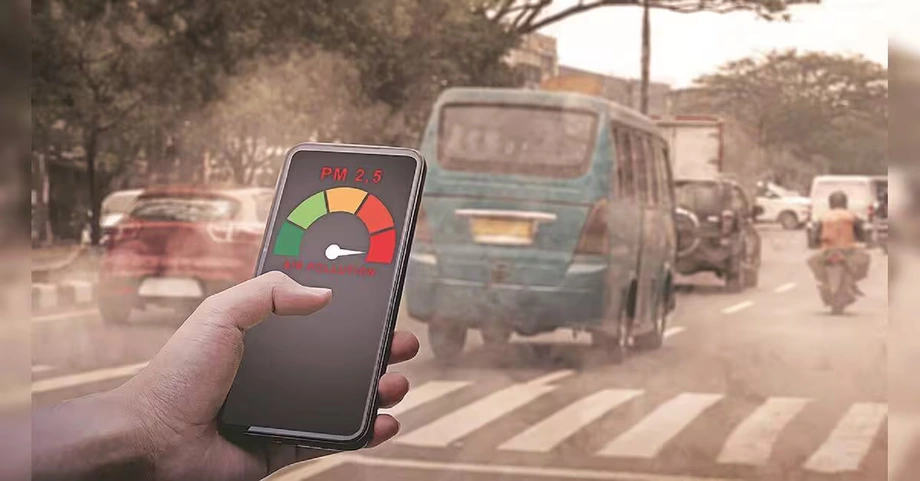
Fine particulate matter, known as PM2.5, means airborne particles measuring 2.5 micrometres or less across, roughly 30 times thinner than a human hair. They pass deep into the lungs and can enter the bloodstream, carrying inflammation to organs far from the nose.
A Review of 184 Studies Points Beyond the Lungs
The Centre for Research on Energy and Clean Air examined 184 studies published between 1975 and 2025 and found that 169 of them, or 91.8 per cent, reported at least one association between air pollution exposure and a worse health outcome. Delhi accounted for the largest share of the research, with 26 studies, followed by Punjab, Maharashtra and Uttar Pradesh.
Cardiovascular disease produced the clearest signal. Eleven studies across India examined heart and circulation outcomes, and ten reported at least one association with air pollution. Three identified links between PM2.5 and hypertension, atherosclerosis (the build up of plaque inside arteries) and arterial stiffness, the loss of flexibility in vessel walls. Research in Delhi tied higher PM2.5 exposure to more deaths each day from all causes other than accidents, including cardiovascular and respiratory deaths.
Seven of the studies found no meaningful association for certain pollutants or health outcomes, which reflects how uneven the research base remains across Indian cities and seasons.
Depression, Asthma Control and the Developing Brain
Mental health appears in the same review. A Delhi study of asthma patients found that brief exposure to PM2.5, PM10, nitrogen dioxide and sulphur dioxide was associated with severe depression and poorer asthma control. Another study linked PM10 exposure to attention deficit hyperactivity disorder. Research on household cooking pollution found an association with depression.
Dr Rajesh Sagar, professor of psychiatry at AIIMS in New Delhi, said pollution could affect mental health beyond anxiety and depression, with possible effects on brain development and cognitive function, particularly among children and young people. Researchers believe inflammation set off by pollutants may reach the brain and influence mood and thinking.
Children, Older People and Those Who Work Outdoors
Children in industrial areas were found to have a higher prevalence of asthma in several studies, and exposure to household cooking fuels was associated with respiratory allergies and infections. Schoolchildren in places with more environmental lead exposure showed elevated blood lead levels.
Older people, especially those above 60 to 65, form another vulnerable group. Studies of mortality in Delhi found stronger associations between PM2.5 and daily deaths among elderly residents. Autorickshaw drivers, street vendors and sanitation workers reported respiratory complaints, eye irritation and reduced lung function, a burden that follows from spending most working hours in the open.
The Danger Does Not Leave With the Winter
Delhi's air draws attention in November and December, yet the health risks continue through the year. Years spent in a polluted neighbourhood have been associated with poorer lung function and higher blood pressure, and indoor air carries hazards of its own. Studies found that prolonged exposure to solid cooking fuels such as biomass, coal and dung was linked to respiratory allergies, infections and tuberculosis.
The scale of that exposure shows up in national averages. A nationwide mortality study found that each rise of 10 micrograms per cubic metre in PM2.5 was associated with an 8.6 per cent increase in annual mortality in India between 2009 and 2019.
Does Polluted Air Raise the Risk of Dementia?
Work published in the Journal of Neuroinflammation on November 11, 2026, offers a biological route from dirty air to the brain. Researchers led by Case Western Reserve University, University Hospitals and the Louis Stokes Cleveland VA Medical Center studied 475,325 participants in the UK Biobank. People living in the most polluted third of areas were 25 per cent more likely to develop Alzheimer's disease or a related dementia than those in the least polluted third, while genetic susceptibility to Alzheimer's raised risk independently of pollution.
The mechanism runs through microglia, immune cells that patrol the brain, clear damaged cells and debris, respond to infection and regulate inflammation. Prolonged PM2.5 exposure altered which genes were switched on in these cells, including changes in chromatin accessibility, the way genetic instructions are packaged and read. Pathways for inflammation, oxidative stress, waste removal and communication between neurons were affected. The researchers also observed a compromised blood-brain barrier and, in the hippocampus, which is central to memory and learning, impaired formation of new neurons alongside increased neuronal death.
Sanjay Rajagopalan, professor of medicine and director of the Cardiovascular Research Institute at Case Western Reserve University and senior author of the study, described what the experiment showed.
By recreating in mice what happens when people breathe polluted air, we found that pollution causes major changes in which genes are active in the brain's immune cells.
India's dementia burden makes the question urgent. A nationwide study published in Alzheimer's & Dementia in 2023, drawing on the Longitudinal Ageing Study in India, estimated that 7.4 per cent of Indians aged 60 and above were living with dementia, about 8.8 million people. What remains unsettled is how far the new findings travel: the human data came from a British population and the biological work was done in mice, while India's pollution mix, genetic diversity and access to care differ from the UK cohort.
When the Air Itself Sets Off a Headache
Migraine follows a different pathway. Dr Shiva Kumar R, a senior neurologist at Poorna Neuro Holistic Care and Manipal Hospital on Sarjapur Road in Bengaluru, describes pollution as an environmental trigger rather than a cause, one that acts on people already prone to attacks. Oxidative stress from PM2.5, nitrogen dioxide and ozone can drive inflammation that influences the nervous system.
These inflammatory responses can influence the nervous system and potentially activate pathways involved in migraine, including the trigeminovascular system, which plays a central role in migraine pain.
The trigeminovascular system carries pain signals from the head. A headache tied to pollution may arrive with dizziness, fatigue or a general sense of discomfort, while migraine brings recurrent attacks of moderate to severe pain, often with nausea and sensitivity to light and sound. Kumar advises people with a history of migraine to watch air quality forecasts, note whether attacks fall on polluted days, limit time outdoors during bad spells, wear a fitted N95 mask, stay hydrated and keep a symptom diary. A sudden and unusually severe headache, or one with weakness, confusion or difficulty speaking, needs urgent medical attention.
The Insurance Bills Tell the Same Story
Data from the insurance marketplace PolicyBazaar shows how the burden has grown. Claims linked to pollution rose to 12 to 13 per cent of all health claims in the 2025-26 financial year from 6 to 7 per cent in 2023-24, while the volume of such claims grew 4.3 times. The average claim size moved only slightly, to about Rs 62,662 from roughly Rs 60,000, which points to more people falling ill rather than costlier treatment.
Siddharth Singhal, head of health insurance at PolicyBazaar, sets out the trend.
Pollution-linked respiratory and cardiovascular claims have increased over the past four years, rising almost 4.3x in volume and nearly doubling their share of overall claims from 6-7 per cent in FY24 to 12-13 per cent in FY26.
Cardiovascular conditions made up 43.5 per cent of claims linked to pollution, other respiratory infections 35 per cent, pneumonia 11.2 per cent and bronchitis 6 per cent. Working professionals aged 31 to 55 accounted for 59 per cent of claims, people aged 55 and above for 31 per cent, adults aged 21 to 30 for 6.7 per cent and children below 20 for 3.7 per cent. Delhi recorded the most claims, followed by Pune, Bengaluru, Mumbai and Hyderabad, while tier-II and tier-III cities together accounted for 55 per cent. Nearly 56 per cent of claims in the 2025-26 year fell between October and March.
Dr Harish Chafle, a senior consultant chest physician, bronchoscopist, intensivist and sleep disorders specialist at Gleneagles Hospitals in Parel, Mumbai, sees the clinical side of those figures.
There has definitely been a rise in patients with respiratory ailments, particularly those who already have conditions such as asthma, COPD, and interstitial lung disease. Many of them are returning with viral pneumonia and bacterial pneumonia.
Chafle also described previously healthy older patients arriving with asthma-like symptoms, saying they had never had a cough this severe or one that kept getting worse. Insurers are cautious about the link. Vikas Gupta, head of the health administration team at Bajaj General Insurance, said claims are classified by diagnosis and treatment rather than by the environmental conditions behind an illness, which makes the pollution share hard to isolate. Vaibhav Kathju, founder of Inka Insurance, said respiratory claims have risen mainly in north India and the Delhi National Capital Region, and that insurers are using risk-based pricing to set premiums.
How Bad Is the Air Being Measured?
India's average PM2.5 concentration in 2023 was 41 micrograms per cubic metre, more than eight times the World Health Organization's annual guideline of 5. Byrnihat, on the Assam and Meghalaya border, averaged 133.4 micrograms per cubic metre in 2024, and Delhi recorded 244 in November 2026.
Estimates of the death toll vary with the method used. PM2.5 was linked to about 970,000 deaths in India in 2023 in one tally, while a FICCI and EY paper put air pollution deaths above two million for the same year and judged the economic loss at 9 to 9.5 per cent of gross domestic product on 2022 figures. A separate estimate put the cost at $260 billion in 2024, about 6 per cent of GDP, with low output at work and premature deaths the largest items. Air pollution was estimated to have cut India's average life expectancy by 3 years and 6 months at 2023 pollution levels, and related losses reached 1.36 per cent of GDP in 2019.
Newborns carry the sharpest risk. About 33 per cent of neonatal deaths in 2023 were attributed to air pollution, and exposure during pregnancy has been linked to effects on placental function and the transfer of oxygen and nutrients.
What Would Bring the Numbers Down
The review's recommendations go to enforcement and standard setting. It calls for stricter application of the National Ambient Air Quality Standards, wider monitoring and time-bound targets for cutting emissions sector by sector, along with tighter industrial emission controls and a faster shift away from biomass, coal and dung for cooking and heating. India's ambient standards were last revised in 2009, and the review argues they should be updated to match the health evidence gathered since.
For the next phase of the National Clean Air Programme, the researchers propose a regional approach organised around airsheds, the geographical basins within which pollution mixes and travels, rather than a focus on individual cities. Airshed planning matters because particles do not stop at municipal boundaries, and the haze that settles over Delhi forms from sources spread across a far wider region.
Key Points
- Dermatologists in Delhi and Mumbai report a 10 to 20 per cent rise in skin complaints when air pollution peaks, with itching, allergies, eczema and acne among the conditions.
- A review of 184 studies found 91.8 per cent reported at least one link between air pollution and a worse health outcome, spanning heart disease, high blood pressure, depression and ADHD.
- Research published in the Journal of Neuroinflammation on November 11, 2026, found people in the most polluted areas were 25 per cent more likely to develop Alzheimer's disease or related dementias.
- Claims linked to pollution rose to 12 to 13 per cent of all health claims in 2025-26 from 6 to 7 per cent in 2023-24, with cardiovascular conditions at 43.5 per cent.
- India's average PM2.5 was 41 micrograms per cubic metre in 2023, eight times the WHO guideline, and 33 per cent of neonatal deaths that year were attributed to air pollution.
- The review recommends updating national air standards last revised in 2009 and moving the National Clean Air Programme to an airshed approach.