Global Progress Masking Regional Gaps
Worldwide measles deaths have fallen to their lowest recorded level, a testament to decades of vaccination efforts. However, the highly contagious disease is regaining ground in several countries, including Pakistan, India, and Bangladesh. The World Health Organisation (WHO) reported on Friday that declining vaccination coverage and clusters of unvaccinated children are threatening the hard won progress against the disease. The global tally stands at an estimated 72,000 deaths in 2025, representing a 91 per cent reduction since 2000.
Contents
Despite this global success, the WHO warns that countries which had eliminated the virus are now losing that status. Bolivia, Mexico, and the United States lost their measles elimination status this month, highlighting the growing challenge of containing the virus even in nations with established healthcare systems. The Americas, previously the only WHO region verified to have eliminated measles, have suffered a major setback with cases increasing eightfold since 2000 to reach approximately 73,000 in 2025.
WHO data show that 92 countries are now verified as having eliminated measles, down from 95 at the end of 2025. The WHO Director General Tedros Adhanom Ghebreyesus stated that measles does not forgive complacency. The virus finds its way into more pockets of vulnerable individuals and can spread within and beyond affected countries if outbreak response is not timely and comprehensive.
Measles deaths have never been lower, thanks to the extraordinary lifesaving power of vaccines. But measles does not forgive complacency.
Pakistan's Ranking in the Global Outbreak
Pakistan remains among the high burden countries experiencing serious outbreaks. Provisional WHO surveillance data covering April to September 2026 recorded 8,201 confirmed cases in the country. This places Pakistan sixth among nations reporting major outbreaks. Only Bangladesh, Indonesia, Guatemala, India, and Yemen reported higher case numbers during the same period.
Separate figures from Pakistani health authorities indicate that the situation deteriorated considerably during the first half of the year. Approximately 4,541 cases were reported in the first quarter alone. Figures covering January to May showed around 9,950 infections and 83 child deaths nationwide. The two sets of figures reflect different reporting periods and surveillance sources, but they underline the growing scale of the challenge facing the country's immunisation programme.
Regional figures show that Khyber Pakhtunkhwa reported approximately 1,712 cases in the first quarter, followed by Punjab with 1,198 and Sindh with 1,183. Sindh, however, recorded the highest number of deaths, accounting for 40 of the 71 fatalities reported during the first four months of the year. Recent reports from Qambar Shahdadkot district in Sindh highlight the local impact, with at least three children dying and more than 10 others contracting the disease, raising concerns among local residents about the Health Department's measures.
Recent local outbreaks in Sindh demonstrate how quickly the virus can spread in communities with low immunity, urging health authorities to launch emergency vaccination campaigns in affected areas.
The Zero-Dose Children Crisis
At the centre of the concerns in Pakistan is the large number of children who have never received routine vaccinations. More than one million Pakistani children are estimated to be zero dose, meaning they have not received even a single routine vaccine dose. Many others remain only partially immunised and vulnerable to infection. These children form a significant pool in which measles keeps finding room to spread.
Several overlapping factors are contributing to the outbreak. Vaccine hesitancy, gaps in healthcare access, interruptions in immunisation services, and malnutrition all play critical roles. Children under five remain particularly vulnerable to severe complications from the highly contagious virus, including blindness, pneumonia, and encephalitis. The pandemic era further degraded routine immunizations, leaving a generation of children susceptible to previously controlled diseases.
Researchers have identified specific social media news content leading to vaccine hesitancy, such as misinformation about infertility and brain stroke. Utilizing conversational social media platforms like WhatsApp has proven successful in tackling misinformation among youth and their families. Community co design approaches involving academic, religious, and healthcare institutions have been employed to develop trust and confidence in vaccines, especially in Muslim settings where the engagement of females is crucial.
Community strategies for vaccine acceptance show that leveraging trusted local institutions can effectively drive change and generate demand for vaccination in underserved urban populations.
Campaign Responses and Strategies
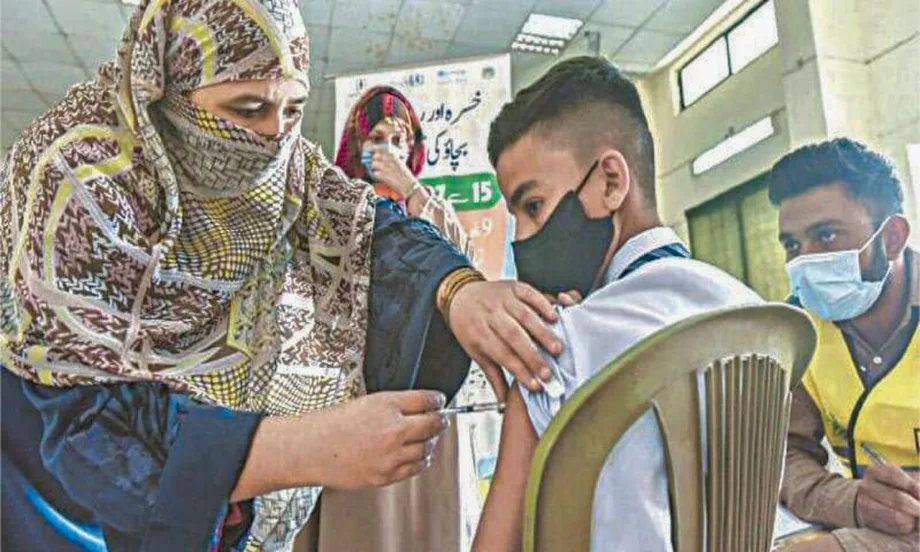
In an effort to curb the spread and close immunity gaps, a nationwide measles rubella campaign launched in late 2025. The campaign targeted approximately 34 million children aged six to 59 months. Health workers have also combined measles rubella vaccination activities with polio immunisation campaigns in high risk districts to reach more children efficiently.
Worldwide, 84 per cent of children received a first dose of the vaccine in 2025 and 77 per cent a second dose. The Southeast Asia Region, where Pakistan is located, has the highest first dose coverage of any region at 96 per cent. Despite these high regional averages, the WHO report notes that disparities between and within countries can mask the true extent of the vulnerability. High regional averages can sometimes hide the pockets of unvaccinated children who drive local outbreaks.
Low income countries reported lower coverage compared to high income nations, with just 69 per cent first dose and 57 per cent second dose coverage. This disparity means that children in conflict and crisis settings remain far less likely to be vaccinated, creating persistent reservoirs for the virus. The WHO urges all member states to maintain high vaccination coverage of at least 95 per cent with two doses of measles containing vaccine in every district.
Vaccination guidance from the WHO includes providing vitamin A supplementation to all children diagnosed with measles to reduce complications and mortality. Prompt provision of vitamin A is recommended, with specific dosages based on the age of the child.
Expert Perspectives on Containment
Health experts have called for stronger disease surveillance and timely diagnosis to prevent further outbreaks. The lack of trust in government hospitals and doctors, considered by some as part of a global health hoax narrative, has contributed to the hesitancy. Ensuring that health care workers are vaccinated is also critical to avoid infections acquired in a health care setting.
Dr. Rubina Qasim and colleagues emphasized the value of community co design for vaccine confidence interventions. Their work in Karachi highlighted that utilizing local values and traditions can significantly improve vaccine uptake. Similarly, Dr. Abdul Momin Kazi and Dr. Fauzia Malik noted the effectiveness of mHealth and social media based interventions in improving childhood immunization coverage and tackling COVID 19 vaccine hesitancy in Sindh Province.
These research findings provide context on how social behavior influences health outcomes. The integration of traditional community structures with modern digital tools offers a robust pathway to address the zero dose children crisis. Public awareness campaigns must continue to evolve to counter emerging misinformation and rebuild trust in immunization services.
Social media interventions have shown promise in reaching families directly, allowing for rapid dissemination of accurate information and reducing the spread of rumors that deter parents from seeking vaccination for their children.
The Road to Sustained Elimination
Measles vaccination has saved more than 60 million lives since 2000, according to WHO estimates. The virus remains a leading cause of death among young children globally, despite the availability of safe and effective vaccines. Transmission occurs via droplets from the nose, mouth, or throat of infected persons. Initial symptoms usually appear 10 to 12 days after infection and include high fever, runny nose, conjunctivitis, and cough.
A patient is infectious four days before the start of the rash to four days after the appearance of the rash. Most people recover within two to three weeks. However, severe complications can arise, particularly in malnourished children or those with weakened immune systems. The WHO emphasizes that elimination is not a finish line but a status that must be defended with two doses of vaccine for every child everywhere.
The resurgence of measles in Pakistan serves as a urgent warning. Persistent vaccination gaps can quickly reverse years of progress. The country must address the root causes of hesitancy and access to ensure that the gains made over the last two decades are not lost to complacency or logistical failures.
What to Know
- Pakistan recorded 8,201 confirmed measles cases between April and September 2026, ranking sixth globally.
- More than one million Pakistani children are considered zero dose, having never received a routine vaccine.
- The WHO estimates 72,000 global measles deaths in 2025, a 91 per cent decline since 2000.
- A nationwide campaign in late 2025 targeted 34 million children aged six to 59 months with measles rubella vaccines.
- Sindh province recorded the highest share of child deaths, highlighting regional disparities in healthcare access.
- Community led strategies involving social media and local institutions are being used to combat vaccine hesitancy.