A Chorus of Green Frogs at a Lake Called Coca-Cola
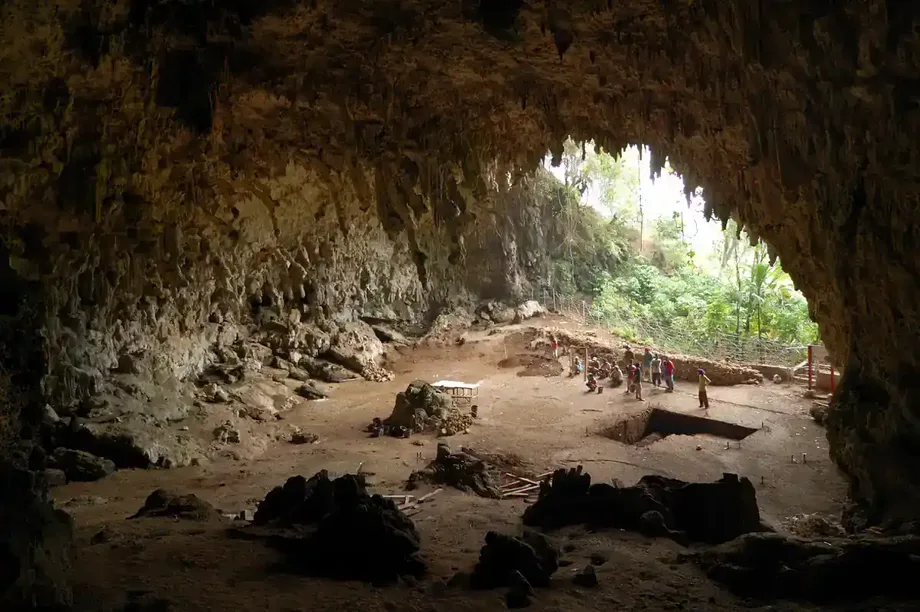
Climbing through the rainforest of the Mekongga Mountains in Southeast Sulawesi, a team of biologists reached a small seasonal lake called Danau Coca-Cola and found the water covered in bright green frogs. The animals sat on leaves, on branches and on one another, calling in a chorus loud enough to stop the group.
Contents
- A Chorus of Green Frogs at a Lake Called Coca-Cola
- The Pond Above 6,100 Feet
- A Frog That Glides Rather Than Flies
- The Jelly Mass and What It Suggests
- How Do You Prove a Frog Is a New Species?
- A Timeline From First Sighting to Formal Name
- Named for Hellen Kurniati
- A Second Frog, a Gecko and Two Fish
- Why Sulawesi Keeps Producing New Species
- From a New Frog to a Possible National Park
- What Is Still Not Known
- Key Points
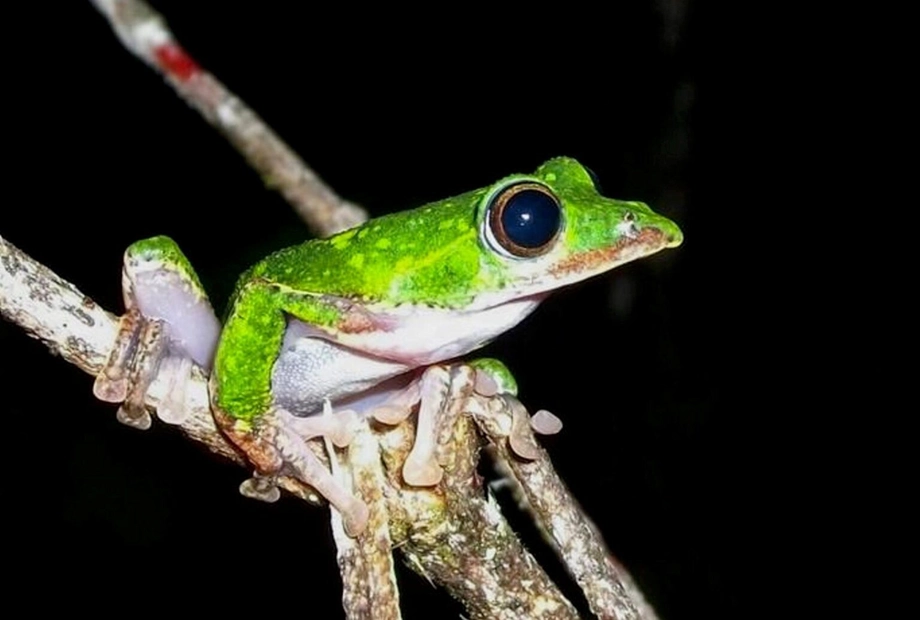
The frogs are a species new to science. Their formal description appeared in the journal Zootaxa on November 11, 2026, and the animal has been named Rhacophorus kurniatiae. It is small enough to sit on a person's cheek, it glides between trees on wide webbed feet, and it raises its young in a way no other Asian flying frog is known to use: its eggs and tadpoles develop inside a mass of clear jelly.
The find rests on fieldwork carried out between 2009 and 2013, when researchers from Indonesia's Museum Zoologicum Bogoriense and the University of California, Davis walked riverbeds and camped through lightning storms to record wildlife from near sea level to the mountain's highest peak. Researchers describe the Mekongga range as unsurveyed before that work. What is new is the published description rather than the first sighting, since the frogs were collected more than a decade ago and have been studied in collections since.
Wahyu Trilaksono, a herpetologist at the Museum Zoologicum Bogoriense and the paper's lead author, collected the animals and suspected at once that they had never been recorded.
The Pond Above 6,100 Feet
Danau Coca-Cola sits more than 6,100 feet (about 1,860 metres) above sea level in the mountain forest. The pond is the main breeding site known for the species, and it is where the team counted thousands of frogs.
Alan Hitch, a research affiliate at the UC Davis Museum of Wildlife and Fish Biology, led the field team as a postdoctoral researcher. He remembers the moment the group came over a rise and saw the water.
We were moving up the mountain, and we came across this big pond covered in these green frogs; they were all over. You don't really see frogs in big congregations like that. This was something super special.
The frogs had gathered to breed. A lake that fills and dries with the seasons offers water for only part of the year, which is where the species' odd way of laying eggs comes in: the jelly clutches hang on vegetation above or near the waterline instead of sitting in it.
A Frog That Glides Rather Than Flies
Rhacophorus is the genus of frogs known as Asian flying frogs, amphibians that live in trees and range from India and southern China to Japan, the Philippines and the Greater Sunda Islands. Most are green or brown, with large eyes, slender bodies and long toes joined by wide sheets of skin.
The name oversells the skill. These frogs do not fly. They leap and spread their webbed hands and feet to slow the fall, which lets them glide from one tree to the next.
The frogs at Danau Coca-Cola had both the look and the movement of flying frogs, which is why nothing about them seemed out of place at first. Their snouts are unusually pointed and their calls differ from those of their relatives. The breeding habit is what set them apart from every other member of the genus.
The Jelly Mass and What It Suggests
Most Asian flying frogs build foam nests. The parents whip secretions and water into a frothy covering around the eggs, which keeps them damp while the larvae grow. The new species instead fixes an irregular mass of jelly to vegetation that hangs over or near water, and the eggs and then the tadpoles develop inside the gel.
Alamsyah Elang Nusa Herlambang, a researcher at the Museum Zoologicum Bogoriense and the paper's corresponding author, said the behaviour had no known parallel in the group.
This Rhacophorus has a different reproductive strategy from all other Asian flying frogs. It's the first time we have seen Rhacophorus with gelatinous matrix for its reproduction strategy. It's unique.
The paper proposes that the jelly may suit water that does not last. The authors write that the distinct reproductive mode may reflect an adaptation to temporary aquatic habitats and may represent a transitional or derived state within the genus. That is a proposal about how the trait evolved, not a mechanism the team demonstrated in an experiment.
How Do You Prove a Frog Is a New Species?
Recognising an unfamiliar animal in the field is only the start. The team compared the frogs against the roughly 40 other described Rhacophorus species, measuring 28 physical characteristics and analysing DNA and recordings of the animals' calls. Pointed snouts, distinct vocalisations and the jelly clutch are the differences the paper sets out.
Hundreds of specimens held in museum collections went into the comparison. Andrew Engilis Jr., curator of the UC Davis Museum of Wildlife and Fish Biology, explained why that step matters.
The team looked at hundreds and hundreds of specimens of frogs to describe the new species. Sometimes species can look the same, but their behavior is different and their genetics are different, these are called cryptic species. This frog is an example of that. It looks very similar to other Rhacophorus, but its genetics and behavior show that it's very distinctive.
A cryptic species is one that looks almost the same as a known species while differing in genetics, behaviour or both. Genetically, the closest relative is Rhacophorus boeadii, and the paper describes the divergence between the two as small on the markers studied, which is why appearance alone could not settle the question.
A Timeline From First Sighting to Formal Name
- 2009 to 2013: the team surveys the Mekongga Mountains from near sea level to the summit, walking rivers and camping through storms.
- During those surveys: Trilaksono collects the green frogs at Danau Coca-Cola, above 6,100 feet.
- November 11, 2026: the description is published in Zootaxa, volume 5900, issue 4, pages 349 to 370, under DOI 10.11646/zootaxa.5900.4.3.
- November 17, 2026: the study is publicised, with Tiffany Dobbyn writing the university's account of the find.
The UC Davis announcement lists the National Institutes of Health's International Cooperative Biodiversity Groups as the source of expedition funding, with support from the Fogarty International Center, the Office of Dietary Supplements, the National Science Foundation, the Department of Energy, the US Department of Agriculture and the Indonesia Endowment Fund for Education. The work ran with the Indonesian Institute of Sciences and the UC Davis natural history museums consortium.
Named for Hellen Kurniati
The species name honours Hellen Kurniati, a herpetologist at the Museum Zoologicum Bogoriense who spent years studying Indonesia's amphibians and reptiles before her death. She worked in the field with Hitch, and photographs from those expeditions show the two of them documenting a frog that would later carry her name.
She had a heart of gold, and I think that's part of what drove her to do such great work.
The name was chosen by the Indonesian scientists on the team, who placed the new frog alongside the species she had spent her career describing.
A Second Frog, a Gecko and Two Fish
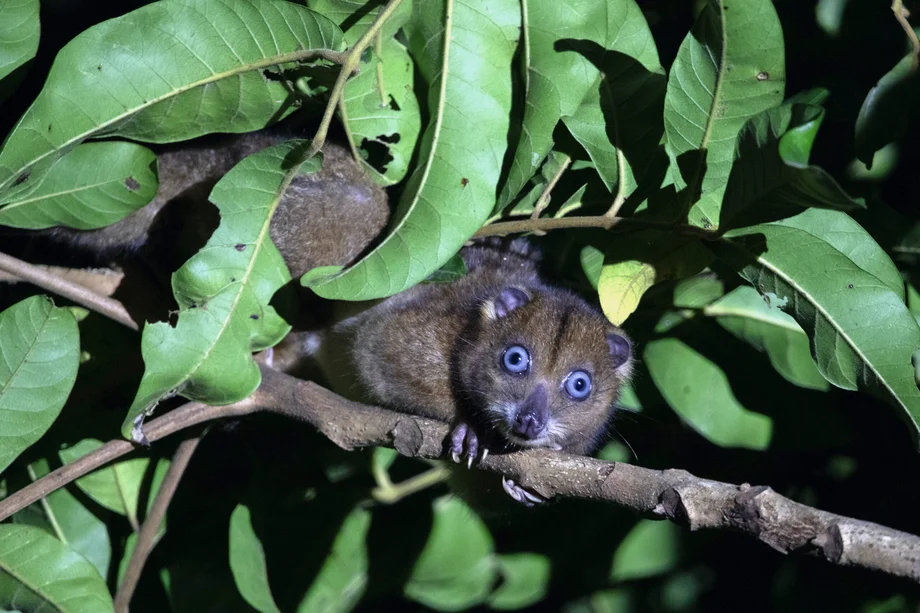
Rhacophorus kurniatiae is the second new frog species the team described from the Mekongga surveys. The same programme produced Cyrtodactylus hitchi, a gecko named for Hitch whose toes bend like fingers, along with two new species of fish. Worms with tails like whips and fish with long, thin snouts came out of the same mountain forest, and further descriptions are in progress, covering more frogs, mammals and possibly a bird.
Engilis served as associate program leader for biodiversity discovery on the Indonesia project. He said the volume of new material was the point of the exercise rather than a byproduct.
Why Sulawesi Keeps Producing New Species
Sulawesi sits on the equator near Borneo and ranks among the oldest landmasses on Earth. A large share of its wildlife is endemic, meaning it is found nowhere else. Mountain ranges cut the island into isolated pockets of forest, and animals confined to a single peak or valley can drift apart from their relatives until they become separate species.
The authors make that argument for the frogs themselves. They write that the discovery reveals further unstudied lineage diversification within Sulawesi's mountain amphibian fauna and points to the urgency of targeted surveys in mountain regions under growing human pressure.
Instrumental records alone would not have found this frog. It took specimens in hand, tissue for DNA and recordings of calls, a combination the authors describe as an integrative approach to hidden diversity.
From a New Frog to a Possible National Park
Conservation is where the discovery may have its largest effect. Engilis links the survey work directly to protection of the landscape.
When you're a conservation biologist, your ultimate goal is conserving biodiversity. As a result of all the work we did in defining the Mekongga's unique diversity, including these new species, this region of Sulawesi is now under consideration to become a national park. Continuing our species discovery will hopefully help accelerate that process.
National park status is a formal land use category, decided by the Indonesian government, that would put the mountain's forests under protection rather than logging or conversion. The Mekongga range is under consideration, and the scientists involved argue that each additional species strengthens the case. No decision has been announced.
What Is Still Not Known
The frogs have so far been documented around one high lake, so the paper gives no reliable estimate of how many exist or how far they range. Whether the jelly clutch is an adaptation to seasonal pools remains a hypothesis about evolution, and no experiment has tested how the eggs fare compared with foam nests.
No timetable has been given for the national park review, and no boundary has been drawn. The fieldwork itself dates from 2009 to 2013, so the current condition of the forest around Danau Coca-Cola is not recorded in this study.
Key Points
- Researchers have described Rhacophorus kurniatiae, a small green flying frog from the Mekongga Mountains of Southeast Sulawesi.
- The description was published in Zootaxa on November 11, 2026, based on surveys conducted between 2009 and 2013.
- Thousands of the frogs were found at Danau Coca-Cola, a seasonal lake above 6,100 feet (about 1,860 metres).
- The species lays its eggs in a mass of jelly on vegetation over water, the first gelatinous clutch recorded in Asian flying frogs.
- Identification rested on 28 physical characteristics, DNA and call recordings compared against about 40 other Rhacophorus species.
- The name honours the late Indonesian herpetologist Hellen Kurniati of the Museum Zoologicum Bogoriense.
- The expedition also produced a gecko, Cyrtodactylus hitchi, two fish species, and a second new frog.
- The Mekongga region is under consideration to become a national park, with no decision or date announced.