Why Is Indonesia Being Compared to the Strait of Hormuz?
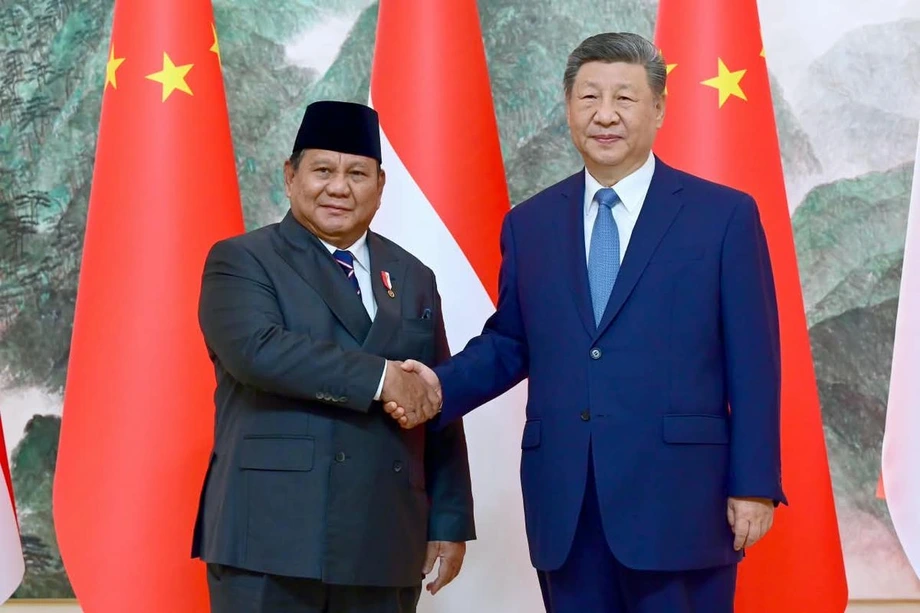
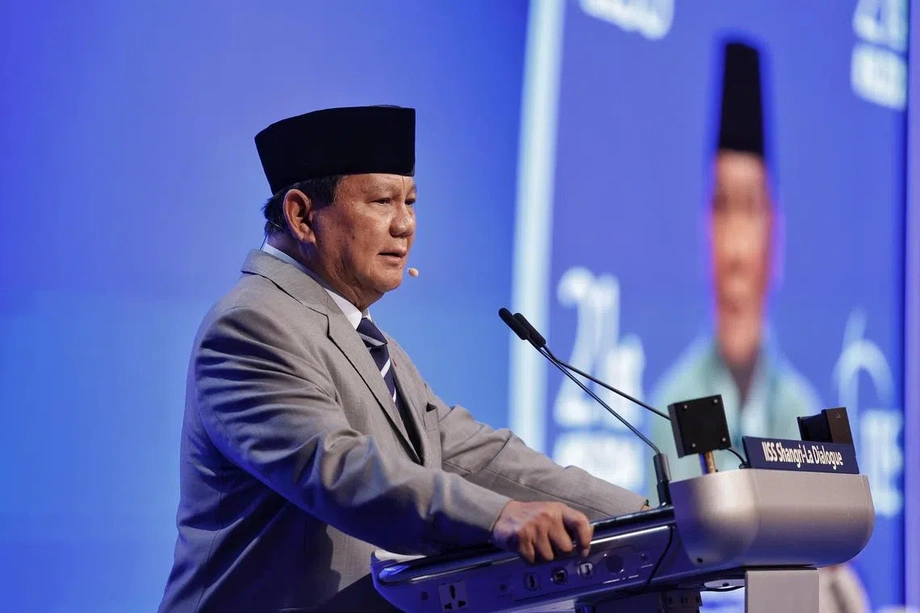
On Friday evening, November 27, 2026, President Prabowo Subianto told the 2026 Bank Indonesia Annual Meeting (PTBI) in Jakarta that the country's waterways are as strategically important as the Strait of Hormuz. He said nearly 70 percent of world trade passes through Indonesian waters. The speech was given at the central bank's headquarters complex, in the Grha Bhasvara Icchana hall.
Contents
- Why Is Indonesia Being Compared to the Strait of Hormuz?
- Why Is the Strait of Malacca Harder to Shut?
- What Laws Protect Ships in the Strait?
- Who Keeps the Strait Open Together?
- What Has Happened Around Hormuz in 2026?
- What Is Indonesia Planning in Response?
- What Did Bank Indonesia and Prabowo Say About the Economy?
- Key Points
Prabowo, the head of state, used the Hormuz comparison to ask about risk. The Strait of Hormuz is a narrow sea passage that carries oil and gas tankers, and trouble there has already shaken the world economy. He wondered what a similar disruption would mean for the straits in Indonesian waters.
Indonesia occupies a very strategic position. It could be said that nearly 70 percent of world trade passes through our waters.
He made the point in a speech about the country's history. Prabowo said Indonesia's location had exposed it to disruptions and challenges for hundreds of years. He argued that these experiences had made the nation more alert.
We have been shaped by various challenges. And now we are becoming more sensitive, more aware and more vigilant.
He also said a strong nation must be willing to face hard times, and he urged courage in the face of disruption.
We must not be afraid of challenges. We must not be afraid of disruptions. And we must be honest with ourselves.
A chokepoint is a narrow stretch of sea that ships must pass through, so a problem there can block a large share of world traffic. The Strait of Hormuz is the best known example for energy. It lies between Iran to the north and the Musandam Peninsula of Oman to the south, and its narrowest point is about 33 kilometers wide. Roughly a quarter of all seaborne oil trade and about a fifth of global liquefied natural gas (LNG) shipments normally pass through it. LNG is natural gas cooled into liquid form so it can be carried by ship.
Iran has restricted the strait since the conflict began on February 28, 2026. Oil prices have climbed above $100 per barrel. Ships now need Iranian permission to pass, and Tehran is considering charging service fees. Vessels that do not follow those rules have been attacked, while the United States has periodically struck Iran's coastline to challenge Tehran's control.
Indonesia's government communications chief, Syahganda Nainggolan, said the crisis cut oil supply by as much as 16 million barrels per day at its peak. That single figure shows how quickly a chokepoint can take large volumes of energy off the market.
Why Is the Strait of Malacca Harder to Shut?
The Strait of Malacca runs about 900 kilometers between Indonesia's island of Sumatra and the Malay Peninsula. It links the Indian Ocean with the South China Sea and the Pacific, and it is the shortest sea route between Europe, the Middle East and East Asia. Its narrowest stretch, the Phillip Channel near Singapore, is less than 3 kilometers across.
More than a fifth of global maritime traffic passes through Malacca. The strait carries more than a quarter of global seaborne oil shipments, a larger share than Hormuz handles. Much of that crude has already passed through Hormuz after leaving the Persian Gulf, and it is then heading to China, Japan and South Korea. A separate estimate, based on total oil consumption rather than shipping, puts the share of world oil use that passes through both straits at about 20 percent.
The two waterways face different threats. Hormuz faces the danger that a coastal state will deliberately close it for political goals. Malacca's importance comes from its geography, so a long disruption there would spread across the whole trading system linking the Indian and Pacific Oceans. Heavy traffic also raises the chance of collisions, and piracy, though far lower than in earlier decades, remains a concern.
What Laws Protect Ships in the Strait?
No single authority runs Malacca. Indonesia, Malaysia and Singapore share responsibility for its security and navigation. The three countries that border a strait are called littoral states. All three have ratified the 1982 United Nations Convention on the Law of the Sea (UNCLOS), which sets the rules for the world's oceans.
Under UNCLOS, ships of every nation have the right of transit passage. This means they can move continuously and quickly through the strait. Coastal states cannot suspend that passage, restrict access arbitrarily or charge tolls. The law does not make a disruption impossible, but it makes a deliberate closure much less likely, because a state blocking the route would have to break its treaty duties.
That rule now matters in a new way. Finance Minister Purbaya Yudhi Sadewa has proposed introducing transit fees in Malacca during the Hormuz crisis. Charging ships to pass would conflict with the ban on tolls. No decision or start date for such fees has been announced.
Ships have other options. The Sunda, Lombok and Makassar Straits provide detours through the Indonesian archipelago. The Sunda Strait has tight navigational limits. Lombok and Makassar can take larger vessels but add considerable sailing time, fuel use and cost.
Who Keeps the Strait Open Together?
Cooperation among the three littoral states dates back decades. Since the 1970s, Indonesia, Malaysia and Singapore have coordinated naval patrols, operations against piracy and traffic management. None of the three controls the whole strait, and none could secure it alone.
Their interests still differ. Singapore has the most to lose from any disruption. Its port is the world's second busiest container port and the main transshipment hub linking the Indian and Pacific Oceans. Transshipment means moving cargo from one ship to another, and a long halt would hit the core of Singapore's economy.
Major powers also watch the strait closely. China has long worried about relying on a route it does not control, a concern known as the Malacca Dilemma. Beijing has built alternative routes through the Belt and Road initiative, the China-Myanmar corridor and the China-Pakistan corridor. The United States also maintains security ties with Singapore, Malaysia and Indonesia, a relationship that continues under the second Trump administration.
What Has Happened Around Hormuz in 2026?
The crisis has unfolded over several months, with clashes and talks shaping the route.
- February 28, 2026: The conflict begins, and Iran moves to close its waters to shipping.
- September 14, 2026: Iran's Foreign Ministry meets Gulf states in Oman to discuss the strait.
- Friday, November 20, 2026: A tanker is hit by an unidentified projectile near Khasab, Oman, and a fire breaks out on board.
- Saturday, November 21, 2026: The UK Maritime Trade Operations (UKMTO) reports two tanker strikes, one about 11 nautical miles north of Khasab and another 17 nautical miles east of it. No deaths are reported, and the environmental impact is not yet known. UKMTO has not confirmed whether both reports involve the same ship.
Oman, which lies on the strait's edge, has played a mediating role. Its foreign policy is described as active neutrality. Oman is a sultanate, ruled by a sultan with absolute power. Oman and Iran have discussed for several weeks how the waterway should be managed in the future.
Beyond Hormuz, the route opens into the Gulf of Oman, a wider and deeper sea that leads to the Arabian Sea. Supertankers carrying crude from Saudi Arabia, Iraq, Kuwait and the United Arab Emirates pass through Hormuz and then the Gulf of Oman on their way to buyers in Indonesia, China, Japan, India and Western countries.
What Is Indonesia Planning in Response?
Syahganda Nainggolan, head of the Government Communication Agency, made the government's case at the Forum Energi Nasional 2026 in Jakarta on Wednesday, November 25, 2026. His remarks were translated from Indonesian. He said the Hormuz crisis taught Indonesia to think harder about its power in Malacca, and he pointed to a large gas find as the reason.
Indonesia is now also thinking about its power in the Malacca Strait. Going forward we must take this into account, because we have found one of the largest gas reserves in the world in Andaman, in Aceh.
The government plans to link that gas to a transit port in Andaman, built together with India. Syahganda said the port would encourage India to buy from Indonesia across several sectors, including energy. He also said he hoped Indonesia could help control the Malacca Strait, which would give it stronger bargaining power in energy matters.
We will also work with India to build a transit port there so that India also imports from us in various sectors.
The government is also pushing domestic energy independence. It is moving biodiesel from B50 toward B100 and developing ethanol, using domestic resources to reduce imports. No cost, construction timetable or completion date for the Andaman port has been given.
What Did Bank Indonesia and Prabowo Say About the Economy?
Prabowo used the meeting to praise the central bank. He said its job is demanding given the country's vast territory and strategic position. He thanked its leaders for working closely with the government and reaffirmed the government's commitment to the bank's independence. He added that Indonesia needs a central bank that consistently protects national interests.
On growth, Prabowo said the economy expanded by 5.47 percent in the third quarter of 2026, despite global turmoil. He credited the country's economic fundamentals but warned against complacency. He said growth must reach ordinary people, and he put it this way:
The economy must grow in the factories, the rice fields, the markets, and the homes of every Indonesian.
Bank Indonesia's Governor, Perry Warjiyo, set out the central bank's approach at its 2025 annual meeting in December 2025. He called the approach Sumitronomics, built on stable prices, a stable rupiah and a fast moving economy. The bank's strategy has five pillars.
- Stability: anchor inflation, stabilize the rupiah, keep the fiscal deficit below 3 percent of GDP and strengthen banks.
- Real sector: raise capital, labor quality and productivity, add value through processing, and speed up bureaucracy.
- Financing: bring banks, financial institutions and private investors into industrial financing, since the state budget cannot carry it alone.
- Digitalization: expand QRIS, BI-FAST, mobile banking and e-commerce.
- Global partnerships: promote local currency transactions and cross border digital payments.
The bank projected growth of 4.7 to 5.5 percent for 2025, 4.9 to 5.7 percent for 2026 and 5.1 to 5.9 percent for 2027. The 5.47 percent figure for the third quarter of 2026 falls within the 2026 range, although it covers one quarter while the projection covers a full year. Those forecasts predate the November 2026 speech.
Key Points
- Prabowo said nearly 70 percent of world trade passes through Indonesian waters, at the Bank Indonesia Annual Meeting on November 27, 2026.
- Iran has restricted the Strait of Hormuz since February 28, 2026, and oil topped $100 per barrel.
- The Strait of Malacca is about 900 kilometers long, and its Phillip Channel is less than 3 kilometers wide.
- Malacca carries more than a quarter of global seaborne oil shipments, a larger share than Hormuz.
- UNCLOS transit passage bars tolls, but Finance Minister Purbaya Yudhi Sadewa has proposed transit fees in Malacca.
- Indonesia plans to use Andaman gas reserves and a transit port built with India, with no timetable announced.
- Indonesia's economy grew 5.47 percent in the third quarter of 2026.
- Still unknown: whether Iran's service fees take effect, when the Andaman port would open and whether Malacca fees will be approved.