A Warning Signed in Kathmandu and Addressed to Two Ministries
The Nepal Teachers' Federation, the umbrella body that negotiates for school teachers and is known in English as the Confederation of Nepalese Teachers, issued its warning on Sunday, the 14th of Mangsir in the Nepali calendar, which fell on 29 November. The statement carried the signatures of chairman Sundar Panta and general secretary Tul Bahadur Thapa and was released by the federation's national committee.
Contents
- A Warning Signed in Kathmandu and Addressed to Two Ministries
- What the Seven Demands Ask For
- The Pension Question, in Plain Terms
- Allowances Already Paid, Now Demanded Back
- A Bill Approved in 2023 That Few Outside the Cabinet Have Read
- How Federalism Moved the School Door to the Municipal Office
- The Court Order, the 24 Days and a 7:30 Morning Meeting
- What a Shutdown Costs 4.6 Million Children
- How the Dispute Reached This Point
- Key Points
Its central charge is that agreements are signed and then shelved. During the talks that follow every teachers' movement, the government agrees to address the demands on the table; when the time comes to deliver, the federation says, the same government goes quiet. Because of that pattern, its statement argues, teachers and school employees have had to fight for the same grievances again and again.
The current government, too, has not shown any sensitivity towards the concerns and grievances of teachers and employees. If this situation continues, the Nepal Teachers' Federation will be compelled to launch a strong and decisive protest.
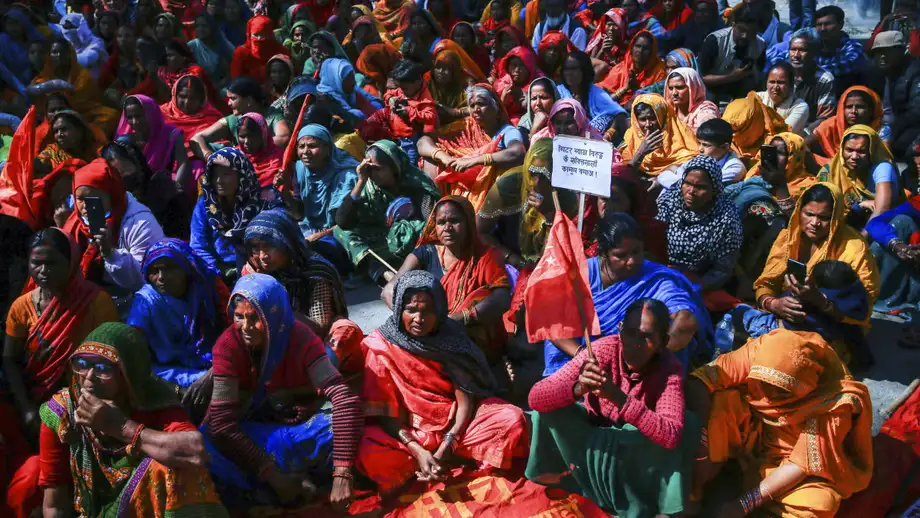
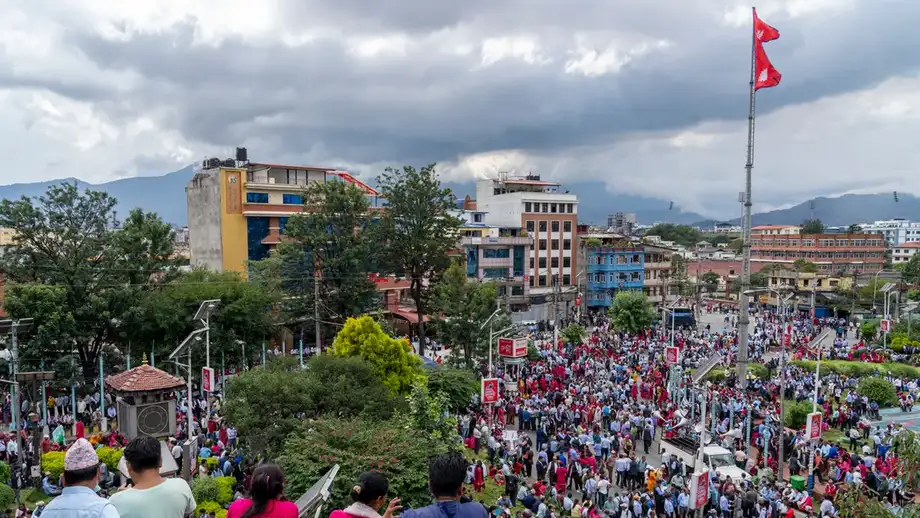
The warning was addressed to the government and to the Ministry of Education, Science and Technology, which the federation asked to treat the demands seriously. No date was attached to the threatened action. Laxmi Kishor Subedi, the confederation's president, has said an extended secretariat will publish the final schedule for an agitation that would mean street demonstrations and shut classrooms.
Seven demands sit behind the warning, and each is attached to a grievance that teachers say has outlived several ministers, several budgets and at least one court order. The pension rules, the allowances and the draft law at the centre of the dispute have all been discussed before. None of them has been settled.
What the Seven Demands Ask For
The list mixes questions of retirement income with questions about who pays a school's staff and who writes the rules they work under. In the federation's own framing, the seven points are:
- Keep the old pension arrangement for teachers appointed permanently before the new School Education Act comes into force.
- Apply a pension built from monthly contributions to teachers appointed after the act, and count years spent on temporary service when eligibility is calculated.
- Restore the local and remote area allowances that teachers in remote districts have been receiving, and withdraw the letters demanding repayment of money already paid out.
- Create posts and salaries funded by the government for school employees and for early childhood development teachers.
- Consult the confederation while the new education law is drafted, and issue it with past agreements written into it.
- Address the list of 54 demands adopted at the federation's third national council.
- Approve the federation's proposed amendment to the Education Regulations.
Two of the seven are about money that has already moved. The allowance demand concerns payments teachers received in the past and are now being asked to return. The pension demand concerns income they have not received yet and will not receive, unless the rules change before they retire.
The Pension Question, in Plain Terms
Nepal's public payroll has two ways of paying a retired worker. Under a defined benefit arrangement, the state promises a monthly pension, usually calculated from final salary and length of service, and the money comes from government revenue. Under a system built on monthly contributions, the worker and the employer each pay a share into a fund, and the pension is drawn from that pot.
The federation wants the older arrangement protected for everyone already holding a permanent appointment when the new act takes effect, with the contributions model applied only to those appointed afterwards. It also wants years served on temporary contracts counted towards eligibility. A teacher who spent a decade on temporary terms before winning a permanent post would otherwise retire on a smaller pension, because those years would disappear from the calculation.
Successive governments have promised not to disturb the terms of serving teachers while the sector is reformed. The federation's complaint is that the promise has never been written into a law its members can point to.
Allowances Already Paid, Now Demanded Back
The third demand is the sharpest, because it concerns money already in teachers' hands. Teachers posted in remote districts have received a local and remote area allowance for years, and the federation says those payments are now being recorded as irregular expenditure in the government's audit process, with letters sent asking teachers to pay the money back.
Such an allowance exists to compensate for hardship: distance from hospitals and markets, difficult travel, and the cost of living far from family. Treating years of regular payment as an overpayment turns a staffing incentive into a debt. The federation has asked the government to correct the decision immediately and calls the letters unjust rather than merely mistaken, which shows how much weight it puts on the issue.
School employees and early childhood development teachers sit in the same corner of the dispute. Many work in schools without a post that the government has funded, and the federation wants posts created and salaries attached to them, so that a person teaching a class is paid the same way whoever signs the cheque.
A Bill Approved in 2023 That Few Outside the Cabinet Have Read
The demand for consultation has a history. On 1 August 2023, a Cabinet meeting approved a Bill Related to School Education and decided to table it in the Federal Parliament. The contents of the bill were not made public.
Two days later, the confederation issued a press note signed by its then president, Kamala Tuladhar, and general secretary, Laxmi Kishor Subedi, asking that understandings already reached with the Ministry of Education, Science and Technology be written into the draft. The note named the groups it wanted covered: teachers appointed on the relief quota, existing higher secondary teachers, early childhood development teachers, temporary and contractual teachers, special education teachers, technical stream teachers, staff on the practice teaching grant, and institutional teachers.
We will be compelled to announce programmes of protest again if there is betrayal on this. We are ready for dialogue and discussion if the government wishes for the same on the draft of the bill officially with the main stakeholder.
Three years later the same argument is being made in different words. The federation now asks for what it calls the Progressive School Education Act, a version of the law that carries past agreements inside it, together with approval of its proposed amendment to the Education Regulations and action on the 54 demands its third national council adopted.
How Federalism Moved the School Door to the Municipal Office
The fight over the law is also a fight over who runs a school. Schedule 8 of the 2015 Constitution handed oversight of school education to local governments, and the federation has resisted that transfer from the start. Its position is that hiring, transfers and management should stay with a federal Teacher Service Commission, so that a teacher's posting does not depend on the politics of a municipal committee.
That resistance has twice emptied classrooms on a national scale. Schools were shut in September 2023, and teaching was disrupted again by April 2025 as the bill stayed stalled. An agreement signed with the confederation in September 2023 carried six points, and teachers say it has not been honoured.
The unresolved cases are concentrated among staff outside the permanent cadre. More than 40,000 relief quota, temporary and early childhood development teachers are waiting for a guaranteed route to permanency, the very group the federation wants the law to cover.
The Court Order, the 24 Days and a 7:30 Morning Meeting
A protest that has kept teachers out of classrooms for 24 days has already reached the Supreme Court. Issuing an interim order on a writ petition filed by advocate Shrawan Chaudhary, the court said on a Thursday that the strike had, prima facie, denied students their right to education, and that it would continue if the court stayed out of it. The order directed the government to ensure the protesting teachers were back in their classrooms within three days.
The Ministry of Education, Science and Technology responded with a statement undersigned by Joint Secretary Yuvaraj Paudel, inviting the Nepal Teachers' Federation to talks at 7:30 in the morning on the Saturday, in the presence of the Minister for Education, Science and Technology, Raghuji Pant. The statement urged the federation's president and other officials to attend and said the aim was to settle the demands through dialogue and consultation. A meeting called for the Friday had not taken place.
The teachers on strike have put pay at the top of their list: salary and benefits at par with civil servants. Their other demands include payment of grades, allowances for relief quota teachers, access to a dedicated hospital or discounted health checks at the Civil Service Hospital, and permanent status for temporary teachers through internal competitions. A demand to let them work under the federal government is being played down after criticism that it contradicts the constitution.
No date was fixed for the protest to end, and no plan was set out for what would follow if the Saturday meeting failed. The federation had not said publicly whether its leaders would attend.
What a Shutdown Costs 4.6 Million Children
The strike weapon works because of the numbers behind it. About 28,000 community schools, which educate roughly two thirds of Nepal's students, employ the teachers who would walk out, and more than 4.6 million children attend them. The education ministry received Rs 211.17 billion in the budget for the 2025/26 fiscal year, money that pays salaries, builds classrooms and runs training.
Learning inside those classrooms is already under strain. In a national assessment of Grade 10 students, about 60 percent fell short of the minimum mathematics standards set by the curriculum, a finding that sits awkwardly beside the Rs 211 billion education budget approved for the ministry.
Every day a teacher spends at a protest is a day of lessons lost in a system where lost time is hard to recover. The demands also carry a price that has to be found in the same budget. Pay at par with civil servants for teachers, and funded posts for early childhood development staff, would add recurrent spending to a ministry that is already the largest line in the national budget.
How the Dispute Reached This Point
- 1 August 2023: the Cabinet approves the Bill Related to School Education and decides to send it to the Federal Parliament. Its contents are not published.
- 3 August 2023: the confederation asks that its agreements with the ministry be written into the bill.
- September 2023: nationwide school shutdowns, followed by an agreement with the confederation that carries six points.
- April 2025: teaching is disrupted again as the bill remains stalled.
- 29 November 2026 (14 Mangsir 2083): the federation issues a statement signed by Sundar Panta and Tul Bahadur Thapa, warning of a strong and decisive protest over seven demands.
Key Points
- The Nepal Teachers' Federation warned of a strong and decisive protest on 29 November if its seven demands are not met.
- The statement was signed by chairman Sundar Panta and general secretary Tul Bahadur Thapa and blamed successive governments for leaving agreements unimplemented.
- The demands cover pensions, temporary service counted towards retirement, remote area allowances, funded posts for school employees and early childhood development teachers, consultation on the new law, a list of 54 demands and an amendment to the Education Regulations.
- The Cabinet approved a School Education bill in August 2023 and has not published its contents.
- More than 40,000 relief quota, temporary and early childhood development teachers are waiting for a route to permanent posts.
- The Supreme Court ordered an end to a protest now in its 24th day, and the ministry called talks for 7:30 in the morning on a Saturday with minister Raghuji Pant.
- No date has been announced for the new protest; the federation says an extended secretariat will publish the schedule.