A Kanpur teenager receives a new chance to stand straight
A team of eight doctors in Kanpur used artificial intelligence, 16 screws and two metal rods to straighten the spine of Govind, a 16 year old boy who had lived with a severe congenital deformity. The operation took place on 27 November under neurosurgeon Dr Manish Singh. AI guided the position, direction and depth of each screw while the surgeons carried out the delicate work by hand.
Contents
- A Kanpur teenager receives a new chance to stand straight
- What was happening to Govind's body?
- How did AI help the surgeons see a safe route?
- Why did 16 screws leave so little room for error?
- Who carried out the hospital's first procedure of this kind?
- How did a farmer's son receive the expensive treatment free?
- From years of difficulty to a few decisive days
- What has recovery changed for Govind so far?
- What does this first case change for patients in Kanpur?
- Key Points
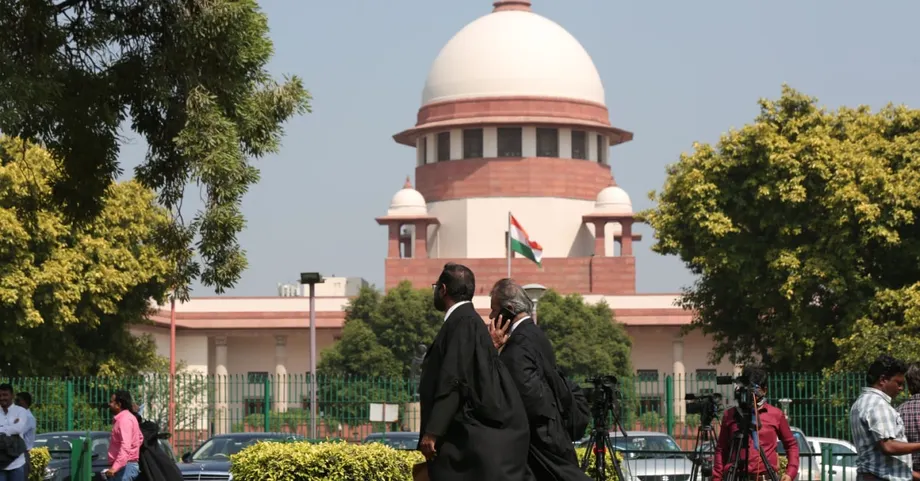
The procedure was performed at the super speciality hospital attached to GSVM Medical College on Kanpur's GT Road. The institution is also identified as Lala Lajpat Rai Super Speciality Hospital, or Hallet Hospital, and its neurosurgery service is associated with the college's Neuro PGI department. It was the hospital's first corrective procedure of this kind and the team's first operation performed under AI guidance.
Dr Singh's statement confirms that this was Hallet Super Speciality Hospital's first successful surgery of its kind. The available material includes no statement or document issued by GSVM Medical College, Lala Lajpat Rai Super Speciality Hospital or the Kanpur district administration confirming the operation.
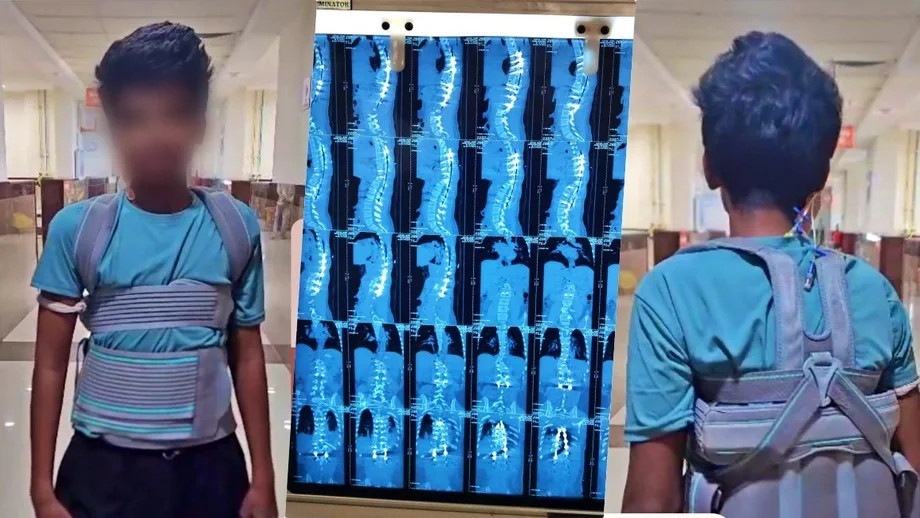
Govind was afterwards described as stable, comfortable and able to walk upright in the ward. His height increased by six centimetres because his curved spine could finally be extended into a straighter position. Doctors continued to monitor him and expected to discharge him within two days.
What was happening to Govind's body?
Govind had congenital kyphoscoliosis, meaning that the structural problem in his spine was present from birth. Kyphosis bends the spine abnormally forwards and can produce a rounded or hunched upper back. Scoliosis curves it sideways. Govind had both problems, together with a rotation of the spine, so his condition was more complicated than a simple sideways curve.
His back developed a hump, one shoulder dropped further to the side and he could not stand straight. Walking, carrying out everyday tasks and even looking ahead became difficult and painful. His spine had formed a curve resembling the letter S, which the treating doctors said was affecting his heart and lungs. They described kyphoscoliosis as a rare condition found in roughly one in 10,000 people.
Dr Singh, who headed the neurosurgery team, explained the underlying problem in simple terms.
In some people, the spine is bent and twisted from birth. In medical language, this is called spinal deformity.
The spine is made up of small bones called vertebrae. When some of these bones do not develop fully or normally, they can pull the spine out of its usual alignment. The resulting deformity can cause persistent pain and restrict movement. If it progresses without treatment, the abnormal shape can also interfere with the lungs and heart.
How did AI help the surgeons see a safe route?
Before entering the operating theatre, the doctors carried out CT and MRI scans. A CT scan provides detailed images of bone, while an MRI is especially useful for examining soft tissue and nerves. The scan data was uploaded to a neuronavigation machine, which produced a digital map showing the structure of Govind's spine, the position of nerves and possible safe routes for the screws.
Dr Singh also described taking 200 to 300 X-ray images from different angles during the planning process. These images were connected with the AI and navigation system to build a fuller picture of the deformity. Using that prepared map during surgery reduced the need for repeated imaging and therefore helped limit Govind's exposure to radiation while the operation was underway.
During the procedure, a screen displayed the spine's internal structure. Before each screw was inserted, the surgeons checked its intended location against the map. The system indicated where the screw should go, which direction it should follow and how deep it could safely be placed. It worked much like a navigation display in a vehicle, but the doctors remained responsible for every decision and every movement.
This distinction matters because AI did not perform the operation independently. It helped the team interpret Govind's unusual anatomy and check their work in real time. The surgeons still had to expose the spine, place the implants and correct the curve themselves.
Why did 16 screws leave so little room for error?
Dr Singh described an operation lasting eight hours on 27 November, carried out by eight doctors. GSVM principal Prof Sanjay Kala gave the duration as nine hours, while Dr Singh's detailed description of the imaging and implant work put it at about 10 hours. The descriptions agree on the central implant figure: 16 screws were placed along the spine.
Two special metal rods were then attached to the screws to hold the spine in its corrected position. The surgical description identifies them as cobalt rods. Prof Kala's summary instead referred to 16 screws and a cobalt plate. Cobalt implants were described as considerably more expensive than titanium alternatives, although no price for the implants or total hospital bill was given.
The spinal cord and nearby nerves run through this narrow area and carry messages between the brain and the body. Dr Singh warned that a screw misplaced by even a few millimetres could damage those nerves. The possible consequences included permanent paralysis, loss of movement in the lower body or lifelong disability.
In explaining why navigation was valuable, the hospital team cited accuracy figures of up to 85 percent for conventional surgery and 98.5 percent with AI guidance. For Govind, the practical benefit was that the surgeons could compare every screw with the digital plan before proceeding, rather than relying only on what they could see directly. The reports do not identify the source of either percentage, leaving unclear whether the figures come from manufacturer literature, a published study or the hospital's own experience.
Who carried out the hospital's first procedure of this kind?
Dr Manish Singh led the operation in his roles as head of neurosurgery and the doctor in charge of the super speciality hospital. The surgeons named alongside him were Dr Anchul Dutta, Dr Saurabh Singh, Dr Balbhadra, Dr Jolly Sinha and Dr Sunil. They formed part of the wider team described as having eight members.
Prof Sanjay Kala, the principal of GSVM Medical College, said the team had achieved a new milestone by completing the difficult scoliosis correction with AI technology for the first time. Earlier spinal operations had taken place at the institution, but the doctors had not previously managed this combination of severe deformity, extensive implant work and AI navigation.
Dr Singh called the introduction of kyphoscoliosis surgery at the hospital a major achievement because it is regarded as one of the most difficult forms of spinal surgery. The successful case establishes a working process at the hospital for imaging, digital planning, navigation and correction, rather than simply demonstrating a piece of equipment.
How did a farmer's son receive the expensive treatment free?
Govind is the son of Arun Kumar, a farmer from Sheetalpur village, also identified as Shitalpur Mahua. His home has been described as Sheetalpur in Sarsaul and as a village near Mahua in the Narwal area, with another description locating Shitalpur Mahua in Kanpur Dehat. His family had limited financial resources, and Arun Kumar could not have paid for the operation himself.
Financial assistance from the Chief Minister's Relief Fund covered the treatment, making it free for the family. That support was decisive because the procedure required a large specialist team, many hours in theatre, advanced imaging, navigation equipment and costly implants. Dr Singh's statement also confirms that support from the fund made the treatment free, but it gives no sanctioned amount.
For Arun Kumar, the result was deeply personal. He thanked the doctors and said his son would now be able to walk straight like other children. The funding meant that Govind's access to the operation did not depend on whether his father could raise the money in time.
From years of difficulty to a few decisive days
Govind's congenital condition developed into a deformity that dominated his daily life well before the operation. The main stages of his treatment were:
- At birth: Govind had an underlying abnormality in the development of his spine, although the severity of its effects became clear later.
- About five to six years before surgery: His family sought medical attention as he struggled with the deformity, pain, a hunched back and increasing difficulty with ordinary activities.
- Before the operation: Doctors used CT, MRI and numerous X-ray images to examine his bones and nerves and prepare the digital navigation map.
- On 27 November: Dr Singh's team placed 16 screws and used metal implants to bring the spine into a straighter position.
- In the days immediately afterwards: Govind was monitored in hospital, began walking upright in the ward and was described as stable, with discharge expected within two days.
The timeline shows why the result cannot be measured only by the hours spent in theatre. Years of physical difficulty preceded the surgery, while the immediate recovery involved observation, movement and checks on whether his condition remained stable.
What has recovery changed for Govind so far?
Govind was soon walking straight in the ward, something he had previously been unable to do. Doctors said his pain had eased and his general condition had improved. The six centimetre increase in his height came from straightening his spine, allowing him to stand closer to his full stature rather than from new growth in just a few days.
A team of doctors continued to watch his health after the operation. He was described as healthy, stable and comfortable, with preparations underway for discharge. Doctors expected that step within two days, but they did not provide a firm calendar date.
Speaking from the super speciality hospital after surgery, Govind gave a short assessment of his condition.
I am fit now.
He also said he felt much better and was delighted by the increase in his height. His immediate ambition was to return to his village, play with his friends and live an ordinary life without the difficulties that had followed him for years.
What does this first case change for patients in Kanpur?
For families facing similar spinal disorders, the operation shows that this form of correction can now be attempted at a government medical college hospital in Kanpur with AI navigation and support from public relief funding. Govind did not have to be turned away simply because his father was a farmer with limited means.
The case also gives the hospital practical experience with a demanding procedure in which imaging, planning and implant placement must work together. Doctors say the technology can reduce risk by improving precision, but its value still depends on the judgement and skill of the surgical team.
The available reports provide no follow-up information on Govind's later checkups or on any scheduled next AI-navigated case at the hospital. His immediate recovery was encouraging, with walking, reduced pain and expected discharge marking the first stage rather than a complete account of his future health.
Key Points
- Govind, who was 16, underwent surgery in Kanpur on 27 November for congenital kyphoscoliosis.
- Dr Manish Singh led a team of eight doctors in the hospital's first procedure of this kind using AI guidance.
- CT, MRI and numerous X-ray images were used to create a digital map of Govind's spine and nerves.
- The surgeons placed 16 screws and used metal implants to straighten the spine, with the main surgical description identifying two cobalt rods.
- The operating time was described as eight hours by the surgical team, nine hours by Prof Sanjay Kala and about 10 hours in Dr Singh's detailed account.
- A misplaced screw could have damaged nerves and caused permanent paralysis, so the navigation system guided each screw's position, direction and depth.
- The Chief Minister's Relief Fund paid for the treatment, which was free for Govind's father, farmer Arun Kumar.
- Govind was stable, walking upright and six centimetres taller after surgery, with discharge expected within two days.