Fewer deaths, millions still needing care
India has recorded a 38% reduction in tuberculosis mortality since 2015 and a 94% treatment success rate among patients whose TB responds to standard medicines, according to the Union health ministry, citing the World Health Organization's Global Tuberculosis Report 2026. The reported mortality decline exceeds the global reduction of 35% by three percentage points.
Contents
- Fewer deaths, millions still needing care
- What the mortality figures show
- A campaign reaching people without symptoms
- Care extends beyond prescribing medicines
- India's burden keeps Asia at the centre
- Deaths are falling faster than new illness
- Diagnosis and drug resistance leave major gaps
- New tests aim to bring confirmation closer
- Domestic funding and the next India update
- Key Points
The findings, released on November 12, come alongside a vast effort to find people with TB before they seek care. Between December 7, 2024, and November 8, 2026, India's TB Mukt Bharat Abhiyaan brought more than 250 million people into screening activities and identified 4.864 million cases, including 1.497 million people without symptoms, the ministry said.
India nevertheless accounted for 25% of people who developed TB worldwide in 2025. Its progress therefore carries unusual weight: improvements in diagnosis and treatment in India affect roughly one quarter of the global disease burden.
WHO's Global Tuberculosis Report 2026 estimates that 10.6 million people developed TB and 1.13 million died from it in 2025. The assessment draws primarily on information from 187 countries and areas representing more than 99% of the world's population and TB cases.
TB is caused by bacteria and usually affects the lungs. It can spread through the air from someone with infectious pulmonary TB. Medicines can cure it, but finding the disease promptly and helping patients complete treatment remain central to reducing deaths and transmission.
India's campaign figures show why screening matters: almost 31% of the 4.864 million detected cases were among people without symptoms, calculated from the ministry's total of 1.497 million such patients.
What the mortality figures show
The health ministry put India's estimated TB mortality rate at 28 deaths per 100,000 people in 2015 and 18 per 100,000 in 2025. Expressed per million people, those figures are 280 and 180.
The published endpoints amount to a decline of about 35.7%, while the ministry and the reported WHO findings give a headline reduction of 38%. The calculation behind that difference was not explained in the ministry's account.
WHO's mortality assessment incorporated evidence from the Registrar General of India's Sample Registration System, community assessments using verbal autopsy, and records from the Ni-kshay programme. A verbal autopsy uses information about a person's symptoms and circumstances before death to help estimate the likely cause when medical certification is limited.
India's 94% treatment success rate applies to patients with drug-susceptible TB, meaning disease that responds to the relevant standard medicines. Treatment success generally includes people recorded as cured and those who completed treatment. The figure describes outcomes among patients receiving care, while the screening campaign addresses the earlier challenge of finding people who need it.
A campaign reaching people without symptoms
India's intensified screening programme used more than 110 million chest X-rays and about 30 million rapid molecular tests during the campaign period. Portable digital X-ray equipment, supported by artificial intelligence, helped extend screening into communities.
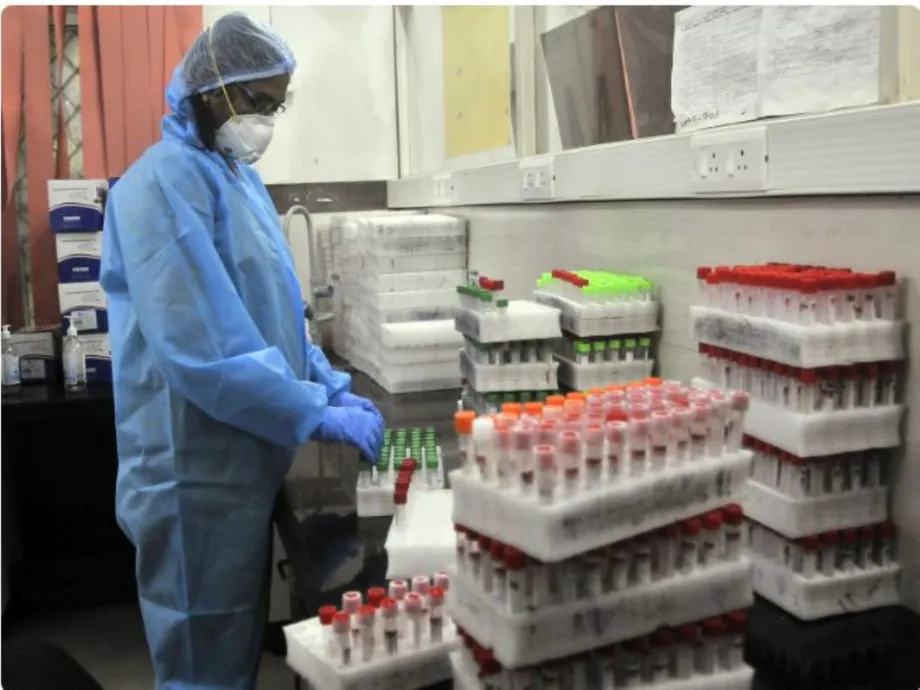
An X-ray can identify changes in the lungs that need further investigation. Molecular tests look for genetic material from TB bacteria and can provide rapid confirmation. Some also detect resistance to important medicines, helping health workers select treatment.
The 1.497 million people identified without symptoms illustrate the practical value of looking beyond patients who arrive at clinics feeling ill. Community screening gives health workers a chance to offer testing and start appropriate care earlier.
The campaign developed through several stages:
- December 7, 2024: The first intensified campaign, lasting 100 days, began in 347 priority districts across 33 states and Union territories before expanding nationally.
- During 2025: Authorities declared 67,933 panchayats, or village councils, free of TB under the programme.
- March 24, 2026: A second campaign lasting 100 days began, targeting 158,000 villages and urban wards considered at high risk, vulnerable populations and settings where people gather or live closely together.
- November 8, 2026: The ministry's campaign tally reached more than 250 million people brought into screening activities and 4.864 million identified cases.
Care extends beyond prescribing medicines
The National TB Elimination Programme combines active searches for cases, rapid diagnosis, prompt treatment, preventive treatment and care adjusted to individual patients' needs. Screening is also being connected with the identification and management of diabetes, undernutrition and other illnesses.
Ni-kshay, the programme's digital platform, supports patient tracking, treatment monitoring and management. AI tools are being used to locate concentrations of disease and identify patients at greater risk of poor outcomes. The programme also includes the Khushi AI chatbot and an avatar video bot.
Nutritional assistance is another part of treatment support. Under the Ni-kshay Poshan Yojana, eligible patients receive financial help for nutritional needs during treatment. Through Ni-kshay Mitra, individuals, institutions and organisations provide food support and help with the emotional and social pressures of illness.
Local authorities, private healthcare providers, civil society groups and community leaders are involved in screening, awareness and patient support. JOSH teams are also being formed at block and ward level, led by designated senior officers and supported by five National Cadet Corps cadets and five MY Bharat volunteers. Their work centres on community outreach and mobilisation.
India's burden keeps Asia at the centre
India's 25% share of global TB cases was followed by Indonesia at 10%, the Philippines at 6.8%, China at 6.5% and Pakistan at 6.4% in 2025. Those five countries together accounted for 54.7% of the worldwide total.
Nigeria, the Democratic Republic of the Congo and Bangladesh completed the eight countries responsible for about 67% of cases. A broader group of 30 countries accounted for 88%, according to WHO.
WHO's South-East Asia Region recorded 35% of new cases, followed by the Western Pacific Region at 27% and the African Region at 25%. These are WHO administrative regions, with their own country groupings.
Progress varied sharply. Between 2015 and 2025, the TB incidence rate fell 42% in the European Region, 30% in Africa and 18% in South-East Asia. The Western Pacific recorded no net change, while incidence in the Americas rose to 13% above its 2015 level after increasing for five consecutive years.
Deaths are falling faster than new illness
Globally, an estimated 10.6 million people developed TB in 2025, about 75,000 fewer than in 2024. The incidence rate, meaning new cases relative to population size, fell from 131 to 129 per 100,000 people, a reduction of 1.6%.
WHO says the global incidence rate has declined 14% since 2015. Its End TB Strategy called for a 50% reduction by 2025, leaving a gap of 36 percentage points against that milestone. The strategy's target for 2030 is an 80% reduction from 2015.
The world reached the strategy's first mortality milestone five years later than planned. Treatment has saved an estimated 86 million lives since 2000, yet TB remains the leading cause of death from a single infectious agent.
WHO Director-General Dr Tedros Adhanom Ghebreyesus welcomed the fall in illness and deaths while calling for wider access to services. In WHO's November 12 statement, he described the continuing human cost:
And yet, more than one million people still die each year from a disease that is preventable and treatable.
The different pace of progress in deaths and new illness points to two tasks for health services: treating people successfully once they are found and reaching others early enough to interrupt the spread of disease.
Diagnosis and drug resistance leave major gaps
WHO estimates that 8.4 million of the 10.6 million people who developed TB in 2025 were diagnosed. That left 2.2 million people, roughly one in five, either undiagnosed or absent from official reporting.
Only 59% of newly diagnosed patients received a rapid diagnostic test recommended by WHO. The target is universal access by 2027, requiring an increase of 41 percentage points.
Drug resistance makes the treatment gap more difficult. An estimated 370,000 people developed TB resistant to rifampicin, a major TB medicine, in 2025. Only 42% received treatment. Among those treated, use of the WHO recommended regimen lasting six months rose from 18% in 2024 to 42% in 2025.
India was among four countries that together accounted for more than half of global multidrug-resistant TB cases in 2025, although its incidence has gradually declined. Multidrug-resistant TB is resistant to at least rifampicin and isoniazid, two central medicines in standard treatment.
New tests aim to bring confirmation closer
WHO has issued recommendations on molecular tests that can operate close to where patients receive care, tongue swabs and sputum pooling. These approaches address practical problems exposed by large screening campaigns: collecting samples, moving them to laboratories and processing enough tests quickly.
Tongue swabs provide a sample option for adults and adolescents who cannot produce sputum, the mucus coughed up from the lungs. Sputum pooling combines samples for an initial test, reducing machine use and costs when the approach is suitable.
India has nearly 11,000 molecular testing facilities, many using the domestic Truenat platform alongside GeneXpert. At an ICMR innovation summit, 86 TB diagnostic innovations were presented. An ICMR panel found that 10 were already approved and available for programme use, recommended faster consideration of 15, and placed 33 at an earlier development stage.
The technologies include portable testing using tongue swabs and laboratory assays designed for larger volumes. The ICMR validated Quantiplus MTB FAST assay can process up to 96 samples in one run on existing RT-PCR equipment at a reported cost below 200 rupees per test. Using machines already installed in public laboratories could expand capacity without requiring a new device at every site.
Domestic funding and the next India update
India meets 96% of its TB programme funding requirements through domestic resources, according to the health ministry. That high domestic share comes as countries face pressure on international health assistance.
Worldwide domestic TB funding rose 14% to US$5.6 billion between 2024 and 2025, partly offsetting a decline in international financing of a similar scale. Research remained far below its funding target: US$1.2 billion was invested in 2023, compared with a goal of US$5 billion annually by 2027.
India's disease estimates are also undergoing further review. The Indian Council of Medical Research's National Institute for Research in Tuberculosis conducted a nationally representative prevalence survey in 2025 and shared its findings with WHO. Prevalence measures how many people have a disease at a given time; incidence measures how many develop it over a period.
WHO, India's Central TB Division and ICMR are analysing district surveillance data alongside this work. Updated estimates of trends in India's TB incidence are expected in early 2027, followed by an updated country profile.
WHO uses its latest published historical estimates to assess changes over time because new evidence can revise earlier figures. The forthcoming India update will provide the next assessment of the country's progress, while the immediate programme priorities remain finding cases, confirming diagnosis, starting effective treatment and supporting patients through recovery.
Key Points
- India reported a 38% fall in TB mortality since 2015 and 94% treatment success among patients with drug-susceptible TB.
- India accounted for 25% of global TB cases in 2025.
- Intensified screening identified 4.864 million cases, including 1.497 million people without symptoms, through November 8, 2026.
- Domestic resources meet 96% of India's TB programme funding requirements.
- Globally, 2.2 million people with TB were undiagnosed or unreported in 2025.
- Updated estimates of India's TB incidence trends are expected in early 2027.