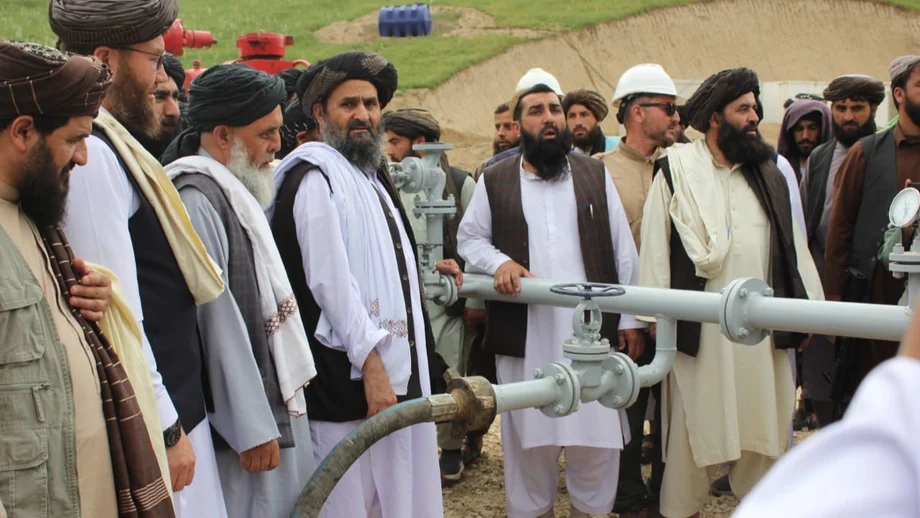
A production increase shaped by a cancelled contract
Afghanistan's Amu Darya basin is producing nearly 1,100 tons of crude oil a day, according to the Ministry of Mines and Petroleum. The ministry wants new wells to raise capacity to 2,000 tons a day and says 955,697 tons have been extracted and sold from the basin since 2021.
Contents
- A production increase shaped by a cancelled contract
- What Kabul and the Chinese company promised in 2023
- How output moved from 200 tons to nearly 1,100 tons
- How 100,000 tons were awarded to Afghan buyers
- Why more crude has not ended Afghanistan's fuel imports
- What reaching 2,000 tons a day would require
- The economic stakes for Kabul and the northern provinces
- What remains undecided
- Key Points
The production milestone follows a reversal for what had been presented as Afghanistan's flagship international energy project. In January 2023, the Taliban administration signed a contract lasting 25 years with Xinjiang Central Asia Oil and Gas Company, known as CPEIC, its first major foreign investment agreement after returning to power in 2021. The ministry later cancelled the agreement, referring to the Chinese Afghan contractor as Afghan-China and citing breaches of its terms. Extraction subsequently continued under ministry management.
The basin contains the Qashqari, Zamrudsay and Angot fields, while the wider contract area also included Bazarkami and Aq Darya. Geological estimates put proven reserves at about 87 million barrels. Proven reserves are quantities that assessments judge can be recovered with reasonable certainty, rather than fuel already refined or ready for sale. The fields lie in northern Afghanistan, where the original project covered parts of Sar-e Pul, Jawzjan and Faryab provinces.
Rising sales and a changed operator now define the project. The authorities can point to more crude coming out of the ground, while also facing the task of securing the capital, equipment and technical capacity that the Chinese partnership was supposed to supply. Those investment commitments sit alongside the immediate work of drilling wells, maintaining production and finding buyers for the oil.
What Kabul and the Chinese company promised in 2023
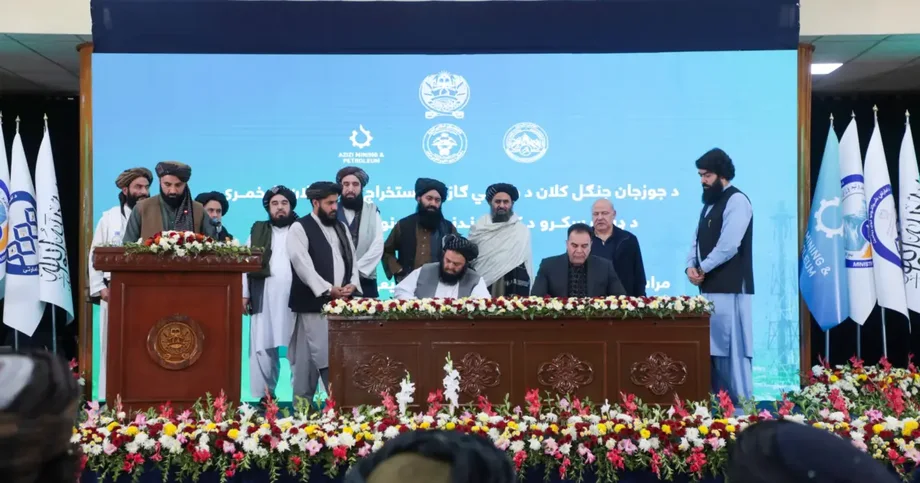
Acting Minister of Mines and Petroleum Sheikh Shahabuddin Delawar signed the agreement with a company official at a ceremony in Kabul. Acting Deputy Prime Minister Mullah Abdul Ghani Baradar Akhund and Chinese Ambassador Wang Yu attended, underlining the political importance both governments attached to the deal.
The contract covered about 4,500 square kilometers, equivalent to 1,737 square miles, across Sar-e Pul, Jawzjan and Faryab. The Chinese side committed to invest $150 million during the first year and $540 million over the first three years. Afghanistan's share was described as beginning at 20% and rising gradually to 75%, although the public announcement did not provide the detailed formula for calculating that share.
Delawar said extraction would begin at 200 tons a day and gradually reach 1,000 tons. Output at the time of signing was about 200 tons a day from nine active wells. The promised production increase was accompanied by a substantial employment pledge for northern communities.
Baradar used the ceremony to place the project within a broader economic program and to set a public condition for the Chinese operator:
Recently, several projects were approved by the Economic Commission, and with their undertaking, fundamental steps will be taken for the prosperity of the country and public welfare. We request that the company continue the procedure in accordance with international standards and in the best interests of the people of Sar-e Pul.
Delawar, whose ministry signed the agreement, separately tied the project to local employment:
Over 3,000 local people will get jobs in this project.
Wang Yu described the agreement as important for economic growth and as a positive step toward closer relations between Kabul and Beijing. At the signing, Afghan authorities also estimated that the country held more than $1 trillion in untapped natural resources, a figure covering resources across Afghanistan rather than Amu Darya oil alone.
How output moved from 200 tons to nearly 1,100 tons
More than 24 new wells were drilled and activated in the Qashqari field in Sar-e Pul during the three years after the signing. Daily extraction consequently reached nearly 1,100 tons, five and a half times the level recorded when the contract was signed. Current output has also passed the 1,000 tons a day that Delawar originally presented as the project's gradual production goal.
The main stages show how the project changed around the original agreement:
- 2021: The Taliban returned to power. The ministry later used this year as the starting point for its cumulative figure of 955,697 tons extracted and sold.
- January 2023: The contract lasting 25 years was signed with CPEIC, when the basin was producing about 200 tons a day from nine wells.
- The following three years: More than 24 new wells were drilled and activated at Qashqari, helping daily output approach 1,100 tons.
- After the contract cancellation: Extraction continued under the management of the Ministry of Mines and Petroleum.
- Latest ministry update: New wells were planned to raise capacity to 2,000 tons a day, with no completion date announced.
Output therefore grew across both the life and the aftermath of the Chinese agreement. The public account does not divide the drilling work and production increase into periods before and after cancellation. It does establish that the ministry was running extraction when it announced the latest production and sales figures.
How 100,000 tons were awarded to Afghan buyers
A new tender allocated 100,000 tons of Amu Darya crude to domestic companies. Petrovita received two awards totaling 80,000 tons, while Balkh Energy secured the remaining 20,000 tons. The allocations covered all three principal producing fields identified by the ministry.
Humayun Afgan, the ministry spokesman, set out the companies and their offered prices in a statement:
Different companies were present in this tender. Petrovita won 40,000 tons of crude oil from the Qashqari field at minus $7 per barrel and 40,000 tons from the Zamrudsay field at minus $10 per barrel. Balkh Energy was also declared the winner of 20,000 tons from the Angot field at minus $11 per barrel.
Petrovita's awards represent 80% of the tendered volume, with Balkh Energy receiving 20%. The announced figures are price differentials, meaning adjustments to a reference price rather than the complete value of a barrel. A differential is added to or subtracted from that benchmark when a sale is calculated. The ministry statement did not identify the benchmark or publish the full pricing formula, so the final price cannot be calculated from the discounts alone.
The tender gives domestic trading companies a direct role in the basin's sales. A considerable share of the crude allocated through such auctions is intended for export or limited processing, reflecting the difference between Afghanistan's ability to extract oil and its capacity to turn that oil into finished fuel.
Why more crude has not ended Afghanistan's fuel imports
Afghanistan needs about 3.5 million to 4 million tons of refined petroleum products each year, including petrol, diesel and liquefied petroleum gas. Most of this supply is imported from Iran, Russia, Turkmenistan and Uzbekistan. Crude production in the north can generate revenue and provide material for processing, but it does not arrive at the wellhead as fuel that vehicles, generators or households can use.
At a steady rate of 1,100 tons a day, the basin would produce about 401,500 tons of crude over a year. Reaching 2,000 tons a day would raise that annualized volume to approximately 730,000 tons. These figures describe crude oil, while the demand estimate covers finished fuels. Refining separates crude into products with different uses and yields, so the two sets of tonnages cannot be substituted directly for one another.
The country's limited refining capacity explains much of the continuing import requirement. Small refineries at Hairatan port and elsewhere in Balkh province have restricted ability to process the heavy crude found in Amu Darya into fuel meeting Euro standards. Heavy crude is denser and requires equipment and processes suited to its properties. Euro standards set fuel quality requirements, including limits relevant to pollution.
Much of the extracted oil is consequently sold as crude rather than processed domestically into a full range of finished products. Higher production can reduce some dependence on imports and supply part of the local market, but Afghan consumers still rely heavily on foreign petrol, diesel and gas. That leaves fuel supply exposed to import costs and movements in international oil prices even when domestic extraction rises.
What reaching 2,000 tons a day would require
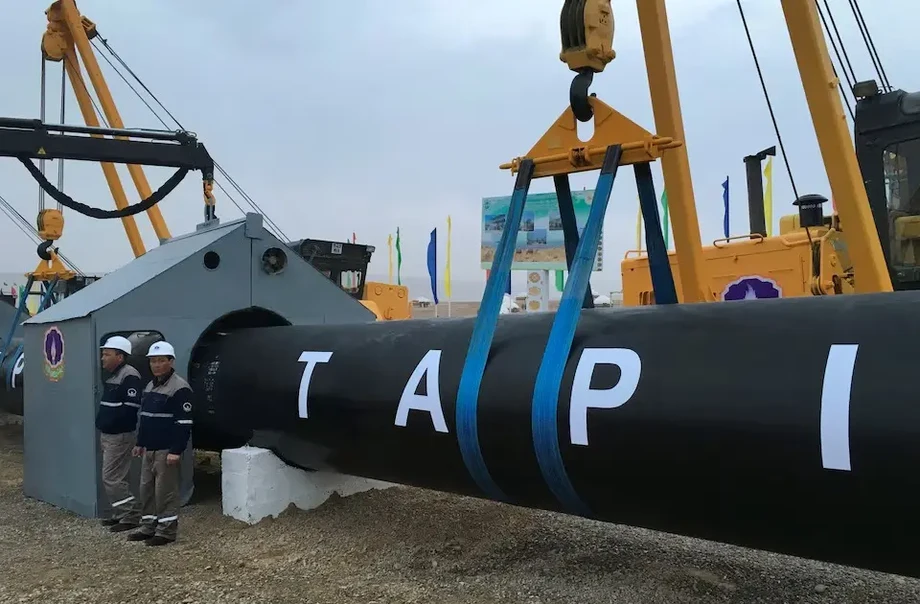
The ministry's target depends on more than drilling additional holes in the ground. New wells require modern drilling equipment, technical crews and consistent maintenance. Higher volumes also require networks for moving and storing crude so that oil can travel from the fields to buyers or processing facilities without creating bottlenecks.
Raising output from nearly 1,100 tons to 2,000 tons requires about 900 additional tons each day, an increase of roughly 82% over the current level. The target would also be ten times the 200 tons produced daily when the Chinese contract was signed. Achieving that capacity on a lasting basis requires stable field operations as well as the successful completion of new drilling.
Energy specialists discussing the plan have connected it to transparent contracts, secure operating conditions and investment in domestic processing. Those requirements address different parts of the same chain: contracts determine who finances and manages the work, field operations determine how much oil is produced, and refineries determine how much of its value can be retained inside Afghanistan.
The economic stakes for Kabul and the northern provinces
Amu Darya crude sales provide revenue for Kabul's development budget and income other than taxes. For the northern provinces, the original agreement also promised employment and a larger commercial presence. The tender demonstrates that the authorities can continue selling crude without the Chinese partnership, but the cancelled investment commitments leave the financing of further expansion and processing less certain.
Economist Hasibullah Mahbzada connected mining revenue to wider economic growth while stressing the investment needed to use those resources effectively:
Afghanistan's mines are an important key to the country's economic growth. Their extraction to proper standards could turn Afghanistan into one of the region's economic players, but realizing this potential requires more investment and the development of infrastructure in this sector.
Economist Abdul Hasib Safi directed his argument toward foreign capital and modern technology:
We need to invite foreign investors to invest in Afghanistan's oil and gas sector and use mechanized methods and modern equipment to enable the standard extraction and processing of these resources.
Both arguments return to a practical constraint. Afghanistan can auction crude under ministry management, while larger economic gains depend on equipment, processing capacity and durable contracts. The original Chinese agreement promised capital on a scale that domestic crude sales alone do not automatically replace.
What remains undecided
No completion date was given for the 2,000 tons a day target. The ministry has also not publicly itemized the alleged breaches behind the contract cancellation or provided a precise cancellation date in the latest announcements. No replacement foreign extraction agreement or large refinery project was announced alongside the new production figures.
There is also no updated employment figure showing how many local residents currently work in the basin. The pledge of more than 3,000 jobs remains a commitment made at the 2023 signing, rather than a verified current payroll total. Similarly, the latest figures do not disclose how much of the promised $540 million Chinese investment was actually spent. The next measurable developments will be the activation of additional wells, implementation of the crude tender and any decision to finance modern refining capacity.
Key Points
- The Ministry of Mines and Petroleum says Amu Darya is producing nearly 1,100 tons of crude a day, with a target of 2,000 tons.
- A total of 955,697 tons has been extracted and sold since 2021, according to the ministry.
- The January 2023 contract with CPEIC lasted 25 years on paper and promised $540 million of investment during its first three years.
- The ministry later cancelled the Chinese Afghan contract for alleged breaches and continued extraction under its own management.
- Output has risen from about 200 tons a day from nine wells at signing, helped by more than 24 new wells at Qashqari.
- Petrovita and Balkh Energy received 100,000 tons of crude in a new domestic tender.
- Afghanistan still needs 3.5 million to 4 million tons of refined products annually and imports most of them because domestic refining capacity remains limited.