Approval sought after a trial running for about two years
Grab Malaysia is seeking government approval to make its variable Grab Service Fee (GSF) permanent, after saying that more than 170,000 drivers who joined the new earnings structure saw their incomes rise. Executive director Rashid Shukor set out the request in Petaling Jaya on Friday, Nov 27, 2026, following a proof of concept approved by the Transport Ministry in August 2024 and run for about two years.
Contents
- Approval sought after a trial running for about two years
- How a distant pickup changes the fee
- Two sets of figures, and what each measures
- Why Grab wants drivers to judge a week, not one trip
- Driver group explains gross and net fee displays
- Government review reaches beyond one company
- Key dates in the trial and review
- What the model is meant to change on the road
- Autonomous rides remain at an early stage for Malaysia
- What to Know
A proof of concept is a limited trial used to test whether an idea works before a wider decision is made. Grab is working with the Transport Ministry (MOT) and the Land Public Transport Agency (APAD), the regulator for land public transport, on permanent adoption. Participation remains voluntary for drivers while approval is sought.
The structure replaces a fixed commission with a fee that can vary according to the effort required to reach a passenger. Grab pays for pickup distance and time from the moment a driver accepts a booking, while leaving the passenger fare unchanged. Rashid said the trial data had produced consistently strong results and that passengers were experiencing fewer cancellations.
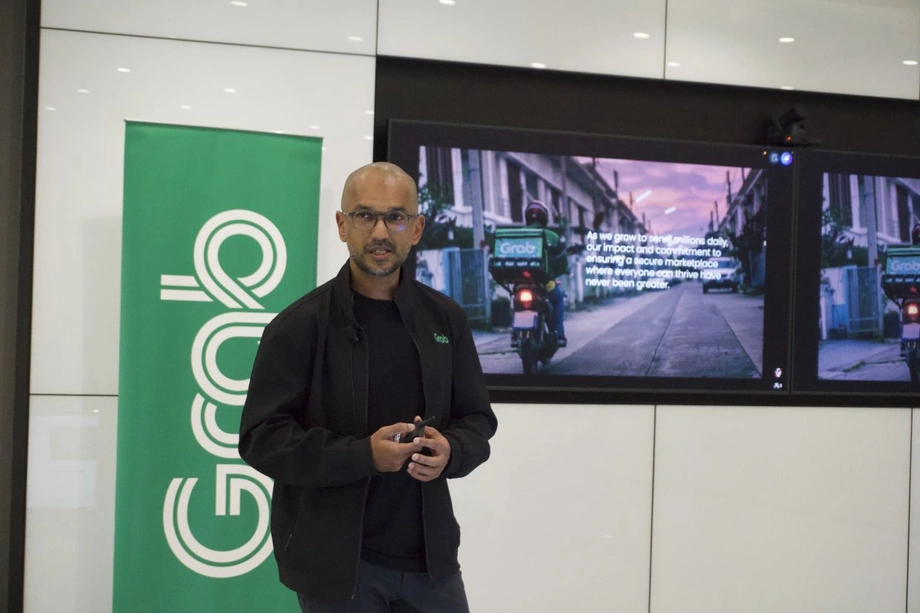
Rashid explained Grab's position at a media roundtable on earnings and reliable rides.
We would love for it to be a permanent fixture, and we've seen better customer experience due to fewer cancellations. Right now, the concept is on an opt-in basis. So we are working closely with MOT and APAD to get this (GSF) approved because we want it to benefit everyone.
How a distant pickup changes the fee
Rashid said the arrangement being replaced charged drivers a fixed 30 per cent commission regardless of how far they travelled to collect a passenger. Drivers had long complained that reaching a distant pickup consumed time and fuel, yet the fare calculation generally covered only the journey from the pickup point to the destination.
Under GSF, a driver who is already close to a passenger may pay a higher service fee, while a driver travelling from farther away pays less and keeps a larger share of the fare. Rashid used an RM10 fare to illustrate the principle: the passenger still pays RM10, but Grab's fee changes according to the pickup effort.
He said an exceptionally long journey to collect a passenger could produce an unusual result.
In an extreme case where a driver had to travel from considerably further away to fulfil a booking, the service fee could turn negative, meaning the driver would receive more than the passenger's fare for that trip.
A negative fee therefore means that the calculation adds compensation beyond the passenger fare rather than leaving the driver to absorb the entire cost of reaching the pickup point. Grab argues that this can make drivers more willing to accept bookings they might previously have declined.
The Transport Ministry described a somewhat broader calculation in its parliamentary reply. It said GSF takes account of distance, location, travel time and the driver's current movement from a passenger's drop-off point to a new pickup location. The fee can vary for daily trips, but the trial maintains a 20 per cent cap on average commission over a week or a month. Individual trips can consequently sit above or below the final average.
Two sets of figures, and what each measures
The Transport Ministry supplied the most precise participation figure in a written parliamentary reply issued on Nov 5. It said 170,944 Grab drivers had joined the structure as of May 31, 2026. Grab used the rounded figure of more than 170,000 at its Nov 27 briefing and did not give a newer exact count.
The ministry recorded an average GSF of 18 per cent and an effective GSF of 15 per cent during the trial. Both are below the 20 per cent average cap, with a gap of three percentage points between the two measures. The reply did not set out the calculation behind the term effective GSF, making the label attached to each percentage essential when reading the figures.
Income gains were also expressed in different ways. The ministry said income per minute in transit for participating drivers had recorded a continuous increase of more than 6 per cent since the trial began. Grab said participants earned more than 5 per cent extra for every minute worked compared with before, while Rashid separately said they earned more than 5 per cent more than drivers who did not participate.
Those statements cover different dates and comparisons. Together, they show the direction Grab and the ministry have recorded, while the company's argument for permanence rests on a combination of higher earnings, fewer cancellations and a passenger fare that remains unchanged.
Why Grab wants drivers to judge a week, not one trip
Rashid said the percentage deducted from one booking does not capture a driver's weekly income. The number of completed trips, hours worked, incentives and bonuses all affect the final amount. A trip with a higher fee could still form part of a better week if the driver receives more bookings or spends less time travelling without a passenger.
He described weekly stability as Grab's main measure.
Ultimately, whether it's higher or lower, what we really anchor on is the stability of the driver's earnings.
Several app changes support that approach. One gives drivers a window of time in which to decide whether to accept a booking. Another permits an adjustment after a trip when the journey takes longer than estimated. Rashid gave the example of a journey expected to take 30 minutes stretching to 45 minutes because of heavy traffic or rain, with additional compensation available for the extra time.
A redesigned weekly statement lists individual bookings, earnings, incentives, bonuses and weekly adjustments, including extra payments when actual trip time exceeds the estimate. Grab said all passenger tips and earned incentives are passed fully to drivers. The statement is intended to help a driver decide whether to accept more bookings or stop after reaching an earnings target for the week.
Grab also listed spending that sits outside the commission percentage. This includes incentives during festive periods, weekends and other busy times, permit costs, reimbursements for Public Service Vehicle licences, vehicle inspections and medical examinations. Drivers also receive access to training, discounts on fuel, lubricants and maintenance, personal accident insurance and compensation for certain incidents involving passengers.
Driver group explains gross and net fee displays
Persatuan Rakan Grab Malaysia (PRGM), an association representing Grab drivers, welcomed improvements to the earnings display in a statement on Nov 24. It said the display had begun rolling out in stages on Nov 20, giving drivers a fuller breakdown of trip fares, GSF, incentives, compensation and refunds.
The association said the changes followed continuing engagement with Grab through the Rakan Representative Committee, known as RRC, and later through PRGM itself. Its explanation divided the fee display into two views:
- GSF Kasar, or gross GSF, shows the fee for each trip as the difference between the passenger fare and trip earnings. It does not yet include Grab incentives that remain unfinalised.
- GSF Bersih mingguan, or weekly net GSF, gives a broader picture by including related Grab incentives and compensation.
PRGM stressed that the weekly display is not a new charge and that the method for calculating GSF on each trip has not changed. Drivers were advised to read the weekly summary alongside individual trip details rather than relying on a single screen.
Some payments require particular care. Incentives appear after eligibility is confirmed and payment is made, and some may be recorded in a later period. Monthly incentives, combined transport and delivery incentives, tips and charges such as tolls are excluded from the weekly average GSF calculation.
Cash collections also need to be separated from earnings because they can include arrears from previously cancelled trips and other charges. Refunds appear separately and are not included in the relevant trip earnings total. Drivers can review the weekly figures through the app's Pendapatan, Sejarah Kerja, Minggu and Jumlah Pendapatan sections, meaning Earnings, Work History, Week and Total Earnings.
PRGM urged drivers to examine their breakdowns and seek clarification through official channels before drawing conclusions from incomplete screenshots. It said clearer information should reduce confusion and help drivers assess claims using complete figures.
Government review reaches beyond one company
The government's consideration of GSF is taking place alongside a wider review of the 20 per cent commission cap for e-hailing platforms. Tebrau MP Jimmy Puah Wee Tse had asked the Transport Ministry about efforts to discuss and urge Grab to lower its commission rate so that drivers could receive fairer and higher incomes.
In its Nov 5 written reply, the ministry said APAD would study the cap in depth after engagement sessions with stakeholders. It acknowledged driver concerns about transparency, fairness and the effect of commission on income. Grab provides the ministry and APAD with regular updates on the status and development of the trial.
The final review will also consider studies by the Transport Ministry and the Human Resources Ministry on compensation for gig workers. Those studies were expected to be completed in 2026. The reply did not give a date for a final cap decision, and Grab's Nov 27 briefing did not provide a deadline for approval of permanent GSF adoption.
The two processes address different questions. APAD's review concerns the regulatory commission ceiling, while Grab is seeking permission to continue a particular way of calculating fees and compensating pickup effort. For drivers, the eventual decisions will affect both the amount deducted and how clearly weekly income can be assessed.
Key dates in the trial and review
The fee proposal has developed through regulatory testing, driver feedback and changes to the app rather than through a single launch.
- August 2024: The Transport Ministry approved the GSF proof of concept.
- May 31, 2026: The ministry recorded 170,944 participating drivers, an average GSF of 18 per cent and an effective GSF of 15 per cent.
- Nov 5, 2026: A parliamentary written reply said APAD would study the 20 per cent commission cap after stakeholder engagement.
- Nov 20, 2026: The improved driver earnings display began rolling out in stages, according to PRGM.
- Nov 24, 2026: PRGM explained the gross and weekly net GSF views and welcomed the clearer presentation.
- Nov 27, 2026: Rashid said Grab was working with MOT and APAD to make GSF permanent.
What the model is meant to change on the road
For a driver, the practical promise is compensation for time that previously produced no income, particularly travel to a distant passenger or a journey extended by traffic. Grab expects fairer pickup compensation to encourage acceptance of more bookings, reducing cancelled requests and helping passengers obtain rides more quickly and easily.
For a passenger, the central assurance is that the fare does not change because of the variable fee. Grab's argument is that better service can encourage more frequent use, creating additional bookings and earning opportunities. The company said it retains controls against repeated booking cancellations, measures to reduce travel without passengers and safeguards intended to uphold safety standards.
Rashid connected those changes with the flexibility that attracts people to gig work.
Our goal is to preserve the flexibility that draws people to the gig economy while ensuring fair, transparent working conditions.
Grab is also looking beyond ordinary point to point rides for additional work. Rashid listed rides to public transport stations, group rides, Grab Assist for passengers with disabilities and rides for women. He also identified taxi services between Johor Baru and Singapore and the shift towards electric vehicles as possible opportunities. He did not provide income forecasts for those services.
Autonomous rides remain at an early stage for Malaysia
Questions at the roundtable also turned to whether driverless vehicles could enter Grab's Malaysian service. Rashid said the company was exploring the idea but was watching developments in Singapore before setting out any local plan.
It's extremely early stage and we just want to learn from what's happening in Singapore as well.
Grab began public operations of its autonomous service, branded Autonomously Intelligent Ride, in Punggol, Singapore, on April 1, 2026, after earlier trials. It has announced an expansion from shuttles on fixed routes to direct rides booked when needed.
No Malaysian trial date or location was given. The immediate regulatory decision for Grab Malaysia therefore remains the future of GSF and the wider commission cap, rather than a launch date for autonomous transport.
What to Know
- Grab Malaysia wants MOT and APAD to approve permanent adoption of GSF after a trial approved in August 2024.
- Grab says more than 170,000 drivers joined and participants earned over 5 per cent more for each minute worked.
- The ministry recorded 170,944 participants as of May 31, 2026, with average GSF at 18 per cent and effective GSF at 15 per cent.
- The fee varies with pickup effort and can become negative in extreme cases, while passenger fares remain unchanged.
- The trial allows fees to vary by trip but keeps average weekly or monthly commission within a 20 per cent cap.
- The new earnings display is not an additional charge, and PRGM says the calculation for each trip remains the same.
- APAD is reviewing the commission cap, with ministry studies on gig worker compensation expected to be completed in 2026.
- Grab's autonomous service is operating publicly in Punggol, Singapore, but Malaysian plans remain at an early exploratory stage with no date announced.