A Return That Brought Old Battles Back
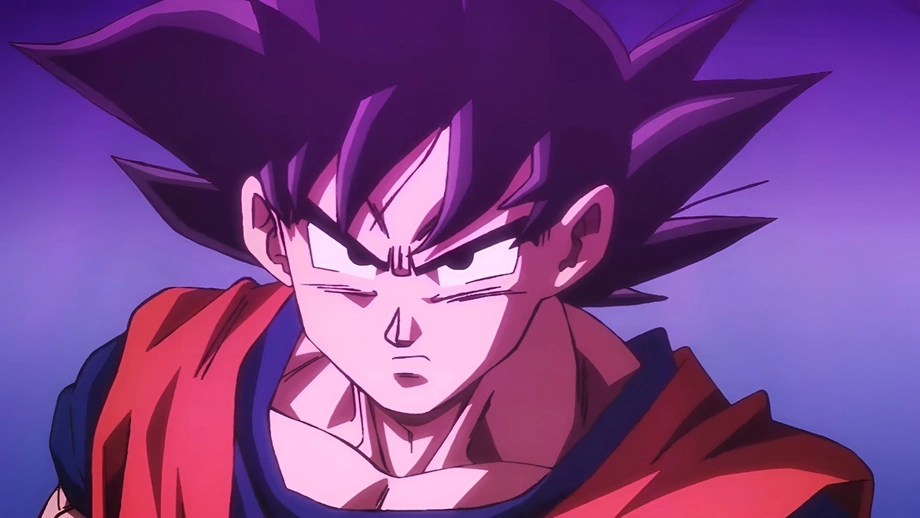
Jakarta, November 2026. Dragon Ball Super: Beerus premiered on Fuji Television and FNS affiliates on October 11 at 11:15 p.m., more than eight years after the original Dragon Ball Super television series ended. Fans expected a new chapter. Instead, Toei Animation brought back the early arcs, starting with Battle of Gods, the story of Goku's fight with Beerus, the God of Destruction.
Contents
- A Return That Brought Old Battles Back
- What Toei Rebuilt, and What It Kept
- Dates That Frame the Comeback
- From a Farmer to a God of Destruction
- Why Vegeta Became the Flashpoint
- What Was Cut, and What Was Enlarged
- A Quieter Change in the Power Hierarchy
- Frieza's Return Moves Faster
- Streaming Success Meets Fan Resistance
- What Comes Next for the Reworked Run
- Key Points
The reworked run was sold as a way to repair problems in the 2015 adaptation: weak animation in places, rushed pacing, and fight choreography that lacked impact. Fight choreography means the planned pattern of attacks and dodges in a battle. The series follows the story written by Akira Toriyama and was timed for Toei Animation's 70th anniversary and Dragon Ball's 40th anniversary. Those promises raised expectations. By late November, the most talked about reaction was disappointment, especially over episode 3, cuts to Vegeta's character beats, a faster pace and colors and filters that viewers said still looked jarring.
The backlash has not stopped viewing. The series ranked second on Netflix's global anime list for October 2026, with more than 2.2 million views in its first week on the service. That split defines the story: audiences are watching, yet many of the people watching say the rewrite is losing the parts that made the older version feel human.
What Toei Rebuilt, and What It Kept
Toei announced the project on January 25, 2026, at Dragon Ball Genki Dama Matsuri, alongside an anime version of the Galactic Patrol Prisoner arc. The new series is not a simple remaster. Work included newly drawn cuts, redraws of old cuts, all shots filmed again, new music and sound effects, and a restructured script. Some new cuts draw from Toriyama's manga to align the television events more closely with the printed story. Akio Iyoku said the reconstruction began several years earlier and started with Battle of Gods.
Matsuto Seya is credited with direction and composition, Tadayoshi Yamamuro with animation character design and chief animation direction, and Norihito Sumitomo with music. The opening song is Onogami by Megatera-Zero and the ending song is Kanpeki no Peki by VK Blanka. Masako Nozawa, Koichi Yamadera and Ryo Horikawa return as Goku, Beerus and Vegeta. Most voice lines come from library recordings, so performances by actors who had died were largely retained. Yamcha is the clear exception, with Ryota Suzuki replacing Toriyuki Furuya.
The first episode received a world premiere at New York Comic Con on October 8. Monica Rial, Bulma's English voice actress, hosted the panel, with Jason Douglas and Ian Sinclair, the English voices of Beerus and Whis, appearing as guests. The broadcast used the Sunday 23:15 slot previously held by One Piece, which ended its year in late September after moving to 26 episodes a year.
Dates That Frame the Comeback
Several dates explain why the debate moved so quickly. The Beerus arc finished on November 15 with episode 6, named God and God. Resurrection F began on November 22 with episode 7 and reached the highest Japanese television rating of the run so far. Episode 8 was announced for November 29, with Frieza's arrival on Earth as the next step.
- January 25, 2026: Toei announced the reworked series and the Galactic Patrol anime at Dragon Ball Genki Dama Matsuri.
- October 8: Episode 1 had its world premiere at New York Comic Con.
- October 11: Fuji Television and FNS affiliates began broadcasting the series at 11:15 p.m.
- October 14 and October 17: Netflix added episodes in select regions and in the United States.
- November 12: The English dub premiered on Crunchyroll.
- November 15: Episode 6 closed Battle of Gods.
- November 22: Episode 7 opened Resurrection F.
- November 29: Episode 8 is due to air.
An early episode list gave seven episodes, followed by a Golden Frieza Saga from November 22. The later schedule includes episode 8, so an initial plan for seven episodes was no longer the full picture.
From a Farmer to a God of Destruction
Episode 1 begins four years after Kid Buu's defeat. Chi-Chi wants Goku to work, so he becomes a farmer while dreaming about fights with Frieza, Cell and Kid Buu. Mr. Satan gives him 100 million Zeni, which Goku accepts because it lets him train full time. Elsewhere, Beerus wakes from a long sleep, dislikes a planet's greasy food and destroys half the planet. An Old Kai identifies him as the cause, and Beerus remembers a dream about a Super Saiyan God.
Episode 2 sends Beerus to King Kai's planet after the Oracle Fish and footage of Goku's fight with Frieza stir his curiosity. Goku becomes Super Saiyan, then Super Saiyan 2, then Super Saiyan 3. Beerus dodges all of it, ends the bout with a shoulder tap and leaves for Earth to find Vegeta.
Episode 3 moves the story to Bulma's birthday party, where Vegeta tries to keep everyone calm before Beerus and Whis arrive. Beerus defeats Majin Buu, the fused Gotenks, Tien, Android 18, Piccolo and Gohan in quick order. In the older television version, Bulma being struck by Beerus's shoulder gave Vegeta a clear reason to fight even though he feared the god. The 2026 version changes that trigger, one of the changes viewers pointed to when they said the emotional logic felt thinner.
An arc is one complete stretch of a longer story. Battle of Gods is the arc that introduces Beerus and Super Saiyan God. The episode guide maps the old Battle of Gods material to episodes 1 through 18, while a production discussion counts 14 episodes for the buildup to the Goku and Beerus fight. The 2026 version compresses it into six episodes.
Why Vegeta Became the Flashpoint
Vegeta's behavior at Bulma's party is the central complaint. In the original anime, the proud Saiyan prince swallowed his pride to save Earth. He jumped around for no clear reason, served food and drinks to Beerus and Whis, danced and watched the other fighters so they would not offend the god. Those scenes could look silly on their own. In the longer story, they showed how far Vegeta had moved from the arrogant fighter who first arrived on Earth.
The Battle of Gods movie came before the Dragon Ball Super manga and is treated as canon because Akira Toriyama supervised its script and other elements. The manga adapted the story in only four chapters. The television series had room to expand it with small character scenes, including Vegeta's humiliation. Removing or thinning those moments changes the route by which the old version reached his rage and courage.
Viewers also noted that some of the comic business was anime material rather than manga material, so the remake's decision to cut it fits its goal of closer alignment with Toriyama's draft. The argument is about what the cuts do to character depth. In the 2026 episode, Vegeta is still anxious and deferential, but the setup is shorter and some of the scenes in which he dances or serves food are absent or reduced.
The resistance from fans is not a demand for every old frame. It comes from the way the older scenes gave Vegeta's change time to breathe. A child can understand the contrast: a proud person doing embarrassing things because the stakes are huge tells the audience how much he cares. If the camera skips most of that effort, the later punch carries less story weight.
What Was Cut, and What Was Enlarged
Vegeta's family vacation after the Beerus fight was one of the clearest casualties of the faster pace. The original gave that time a real place in the story, letting viewers see the Saiyan household away from the immediate threat of destruction. The remake reduces it to a brief flashback.
Shenron and the Pilaf group also lose space. Their jokes helped the older anime shift tone between huge battles, and the 2026 cut leaves the series less funny in several places. Other supporting characters are harder to find, while Oolong receives more attention during his encounter with Beerus. The fight is staged with more intensity, even though Oolong is nowhere near the God of Destruction in strength.
The result is uneven. Some viewers see the tighter editing as a fix for an arc that once stretched its material. Others miss the side characters and the pauses that made the franchise feel broad and playful. Episode 7 showed that compression can work when the new version keeps the story's clear goal. The first arc left the opposite impression for many fans, because it cut behavior that explained why Vegeta acted as he did.
A Quieter Change in the Power Hierarchy
Episode 5 and episode 6 brought a different kind of argument. Viewers said Goku's Super Saiyan God looked less powerful than in the 2015 version. Episode 6 also removed Beerus's line about using 70 percent of his power during the fight. Power scaling is the fan practice of ranking fighters by exact strength. In a series where characters return stronger every arc, one percentage can shape years of debate.
Super Saiyan God was created through a ritual involving five people with Saiyan blood: Vegeta, Trunks, Gohan, Goten and Pan, who was still in Videl's womb. The ritual channels divine ki, the energy used by gods, into one fighter. Beerus still praises Goku for making the form his own, but the new version leaves the size of Beerus's effort unmeasured.
Beerus, the God of Destruction whose arrival drives the first arc, gives that praise in episode 6 while keeping his own level vague.
You scrape together the power of five Saiyans and get a patchwork-like Super Saiyan God. You made it your own and perfected it, forcing me to use this much of my power.
The removal of the 70 percent figure puts less weight on a single number. That matters because later stories have Goku and Vegeta training with Beerus and Whis and reaching new forms. A fixed number from the first fight can clash with later growth.
Whis, Beerus's angel attendant and the calm observer of the fight, offers a different clue after Beerus tires and falls asleep before destroying Earth.
It's too much for him to just go all out without even warming up.
That line still points to enormous effort, yet it leaves room for interpretation. Whis himself had underestimated the effect of Goku's fight, thinking Beerus was pretending to sleep. The pair's respect for Goku and Vegeta leads them to take the Saiyans on as trainees, which sets up the next arc.
The change is small in dialogue and large in fan discussion. It shows how the remake is doing more than repainting old fights. It is editing the measuring stick that viewers use to compare Goku, Vegeta and Beerus across the whole franchise.
Frieza's Return Moves Faster
Episode 7 debuted on November 22 and began Resurrection F. Sorbet and the surviving Frieza Force search the universe for the Dragon Balls. Emperor Pilaf and his gang gather them on Earth, and the wishes bring Frieza back by the end of the episode. Sorbet and Tagoma use one wish for Frieza. Mai and Shu wish for ice cream and one million Zeni, which blocks a second wish for King Cold.
The remake compresses four episodes of the original television version into one. It drops Pan's birth, the scenes in which food persuades Whis to train Goku and Vegeta, and the visit to Beerus's planet. The meeting between Sorbet's men and Pilaf's group, the Dragon Ball hunt and the summoning of Shenron all happen within minutes.
Frieza's time in Hell is reworked from the villain's point of view. The original showed him surrounded by teddy bears and cheerful songs, a scene played for bitter comedy. The new version mixes that torment with memories of his death at the hands of Goku and Trunks, making the sequence feel darker without adding many minutes.
Episode 7 also plants a visual hint of Ultra Instinct while Whis explains the state Goku and Vegeta must reach to stand beside the Gods of Destruction. Ultra Instinct is a technique in which the body reacts on its own at a very high level, and it is linked in the series to angels. The visual hint points toward Goku's later Tournament of Power moment in the wider story.
Some viewers called episode 7 a clear improvement, praising Frieza's renewed first form design and the cleaner route into the next battles. The old Resurrection F arc ran nine episodes on television, while Universe 6 ran 19. The three arcs covered by this reworked run, Battle of Gods, Resurrection F and Universe 6, took close to 50 episodes in their first television form.
Streaming Success Meets Fan Resistance
The series reached viewers through several services. Crunchyroll streams it worldwide as a simulcast, meaning episodes appear at the same time as the Japanese broadcast. Hulu carries it in the United States, Disney+ in Canada and Latin America, and Mangas in France. Netflix began in select regions on October 14 and in the United States on October 17. HBO Max episodes arrive one week after broadcast. The English dub premiered on November 12.
Netflix's October 2026 global anime ranking placed Dragon Ball Super: Beerus second, behind Cyberpunk: Edgerunners season 2. The first season of Cyberpunk: Edgerunners ranked sixth during the same month. Netflix also listed JoJo's Bizarre Adventure Part 7: Steel Ball Run third, The Ramparts of Ice fourth, The Apothecary Diaries season 3 fifth, Blue Box season 3 seventh, Tougen Anki eighth, Ranma 1/2 Remake season 2 ninth and The Apothecary Diaries season 1 tenth.
Crunchyroll's chart position was third, behind Black Clover season 2 and Overgeared. Those rankings matter because Netflix and HBO Max receive episodes after the first broadcast, while Crunchyroll offers the simulcast. The remake is popular even with that staggered release pattern.
The business case is also visible in company figures. Toei Animation's earnings report for the year ending March 2026 cited the rebound after new Dragon Ball video releases as one reason domestic licensing revenue fell. Bandai Namco Holdings data shows sales connected to Dragon Ball dropping from ¥190.6 billion in fiscal 2024 to ¥138 billion in fiscal 2025, a fall of ¥52.6 billion, about 28 percent. Toei expects domestic licensing revenue to grow this year through measures tied to a new Dragon Ball television series.
That context explains why a rerun of familiar material makes commercial sense. A new television series gives toys, games, streaming and licensing a fresh focus while studio work continues on stories not yet seen in anime. It also fills the gap after Dragon Ball Daima aired in October 2024. Negative reactions still matter for that plan, because merchandise and related media depend on viewers staying interested across the run.
What Comes Next for the Reworked Run
The next dated episode is episode 8 on November 29, showing Frieza's arrival on Earth. The run has already moved from Battle of Gods into Resurrection F, and the version announced for television also covers Universe 6. The Galactic Patrol Prisoner arc, with the villain Moro, was announced as a separate anime project on the same January date as Beerus. If the run covers all three announced arcs, the schedule points to January or February 2027.
What remains undecided in public is how many episodes this run will have and whether it will reach later arcs such as the Tournament of Power. Early material pointed to seven episodes, while the schedule now reaches at least episode 8. Episode 7 proof that compression can work gives the production room to recover, but the complaints about Vegeta, color filters and rushed pacing still shape how each new episode is judged.
For viewers, the practical change is simple. The first season of Dragon Ball Super is being retold at night, with sharper redraws and new sound, but also with fewer detours. Fans who wanted a sequel got a rewrite. Fans who wanted a cleaner version of old fights got part of that, along with cuts that removed some of the character moments they had grown attached to.
Key Points
- Dragon Ball Super: Beerus premiered on October 11, 2026, at 11:15 p.m. on Fuji Television and FNS affiliates.
- The reworked series follows Akira Toriyama's story and uses new cuts, redraws, new sound and a restructured script.
- Episode 3 drew complaints over Vegeta's reduced humiliation scenes, the altered Bulma trigger and a shorter family vacation.
- Episode 6 removed Beerus's 70 percent power line, changing a key number in fan debates about strength.
- Episode 7 began Resurrection F on November 22, compressed four old episodes into one and revived Frieza by the end.
- The series ranked second on Netflix's October 2026 global anime list and third on Crunchyroll's chart.
- Episode 8 is scheduled for November 29.