A Factory Robot Built Around Its Hands
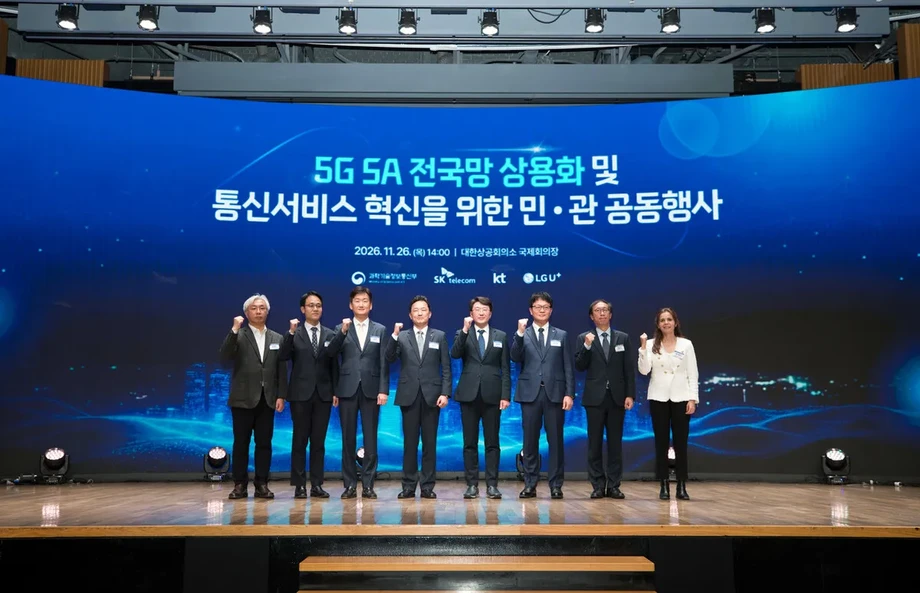
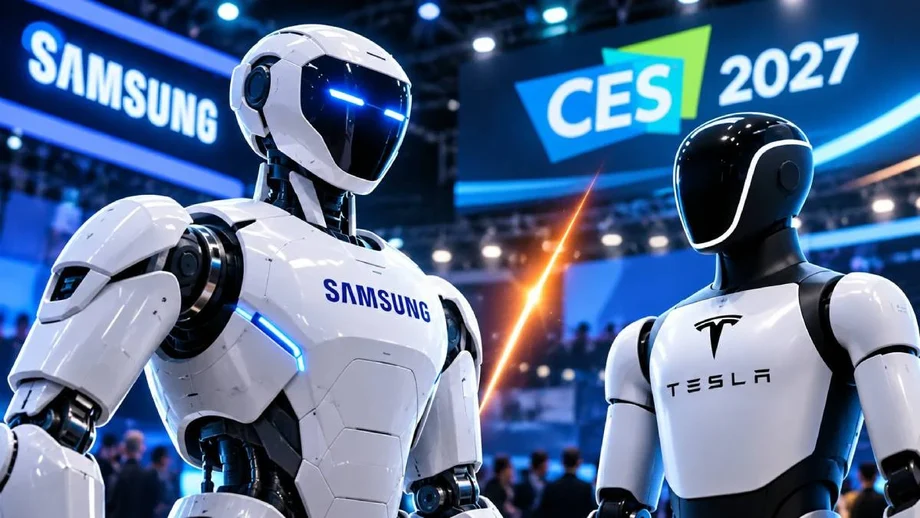
Samsung Electronics plans to unveil its first humanoid robot at CES 2027, the consumer electronics show in Las Vegas that runs from January 6 to 9, 2027. A humanoid robot has a body shaped like a person, with a head, a torso, two arms and two legs, and Samsung is building its version to work in factories first. The company showed a prototype to its board of directors on November 26 at the Seoul R&D Campus in Umyeon-dong, Seocho district, Seoul, in a session that lasted about an hour and a half.
Contents
Board chairman Shin Je-yoon, outside directors including Cho Hye-kyung, and chief technology officer Yoon Jang-hyun attended, along with Roh Tae-moon. English reports call Roh a co-CEO, while Korean reports describe him as head of the DX division. The board demonstration covered two skills: whole body control, which keeps the machine balanced while it moves, and manipulation, which means picking up and handling objects with its arms and fingers. Samsung declined to comment and has not announced a name for the robot.
What Makes the Robot Hands Different?
Samsung says the hands borrow from its Galaxy foldable phones. The company has spent years mass producing hinges for the Galaxy Z Fold and Z Flip, and it applied the same ultraprecise machining and assembly methods to the robot's finger joints. Each joint connects directly to its own actuator, the motor that drives movement, so the robot can turn an object in its palm or regrip it without setting it down. Korean reports also say the robot's exterior uses flexible displays from foldable phones to show its operating status and to communicate with people nearby.
Hands matter because grasping is harder than walking. Kris Hauser, head of the robotics lab in Samsung's Robotics eXperience (RX) unit, explained the bar in September when he spoke about what factory owners expect:
You go to the factory owner and you say that your robot acts with a 99% success rate, they're still going to laugh because it has to be at a 99.99% success rate for them to actually deploy it on their factory line,
The gap between those two figures is larger than it looks. A 99 percent success rate means one failed grip in every 100 tries, while 99.99 percent means one failure in every 10,000 tries, a hundredfold difference. One summary of the same remarks uses 80 percent as the example, but the quoted wording uses 99 percent. Samsung has not said that its prototype has reached the 99.99 percent level.
How Does a Robot Learn to Grip Parts?
Samsung uses two training methods. The first is imitation learning, in which the robot watches human hand and arm movements and copies them. The second is simulation reinforcement learning, in which the robot repeats the same task in a virtual space and is rewarded when it succeeds.
The first target is smartphone assembly. A robot must pick up a tiny part without damaging it, turn it until it faces the right way, and push it into an exact position. Samsung is building a data factory and a manufacturing pilot line in Gumi, North Gyeongsang Province. Work data gathered there will train the robot, and the learned movements will then be checked on the pilot line to see how exactly the robot repeats the same assembly steps.
Where Will the Robot Work First?
Samsung plans to send its humanoids to its own factories before any outside customer. The company said in March that it wants its factories in Korea and abroad to run as AI autonomous factories by 2030, where artificial intelligence coordinates production and robots carry out physical work. Gumi, the southeastern city that houses its smartphone plants, is set to host a humanoid robot production line. Samsung also sees longer term roles in household chores and elderly care, but no date has been set for those.
Who Is Leading Samsung's Robotics Push?
The Robotics eXperience (RX) unit was set up on July 21, 2026, to bring robotics research, strategy and commercialization under one leadership structure. Lee Dongkun, a former Hyundai Motor Group robotics strategy executive, leads RX strategy. Samsung also hired Oh Jun-ho, a KAIST professor emeritus who developed Hubo, South Korea's first bipedal walking humanoid robot, in late 2024.
Rainbow Robotics, a Korean robot maker, is another piece of the plan. Samsung invested ₩86.8 billion (about $65.1 million) in the company in 2023 and exercised subscription options on December 31, 2024, raising its stake from 14.7 percent to 35 percent. That makes Samsung the largest shareholder. One Korean account calls the stake a majority, but the 35 percent figure appears in most sources, and it more than doubles the earlier share.
The main steps so far:
- December 31, 2024: Samsung's stake in Rainbow Robotics rises to 35 percent
- March 2026: Samsung sets the goal of AI autonomous factories by 2030
- July 21, 2026: The RX unit is created and reports directly to top leadership
- November 26, 2026: The board watches the humanoid demonstration
- January 6 to 9, 2027: CES 2027 in Las Vegas
How Far Behind Are Rivals?
Hyundai's Boston Dynamics Atlas is already learning factory work at the Robotics Metaplant Application Center in Georgia. Atlas is being trained to place parts in the order cars arrive on the line, a task the car industry calls sequencing. Hyundai plans to have Atlas supply parts from 2028 and to add assembly work from 2030. On November 17, Boston Dynamics said Atlas will also be tested at the GlobalFoundries chip plant starting early next year.
LG's household robot Cloyde, first shown at CES earlier this year, is testing at a washing machine plant in Tennessee. It lifts washer tops and stacks drain pumps. LG Electronics strategy executive Lee Jae-mo said the company will first build experience in manufacturing and logistics, then expand to home humanoids around 2030. Tesla has begun early production of its Optimus robot at its Fremont, California, plant, and CEO Elon Musk expects customer deliveries to start late 2027. China's Unitree also competes in the market.
Samsung starts with a customer it already owns: its own factories. Korean robot stock rally showed how investors read that advantage. Rainbow Robotics rose 11.99 percent in morning trading on November 27, but no purchase volume or price has been announced.
What Is Still Unknown?
Samsung has not disclosed the robot's name, price, specifications or shipping date, and it has not said whether it will sell the robot outside its own factories. One report puts the robot at 1.7 meters tall with eight hours of battery life, but Samsung has not confirmed those specs. Ballie, a rolling home robot Samsung presented in 2020, was promised for sale in summer 2025, and a January report said it had been shelved indefinitely. In October inspection, chairman Lee Jae-yong reviewed the same RX office when a Las Vegas appearance was still conditional on the robot meeting internal standards.
The next confirmed date is CES 2027 from January 6 to 9. No date has been given for trials on the Gumi pilot line.
Key Points
- Samsung's board reviewed the humanoid prototype on November 26, 2026
- The robot is set for its public debut at CES 2027, January 6 to 9 in Las Vegas
- Its hands use machining methods from Galaxy foldable phone hinges
- Samsung's target is a 99.99 percent grasp success rate, and it has not said the prototype has reached that level
- The first use is Samsung's own factories, with a humanoid production line planned for Gumi
- Hyundai's Atlas plans parts supply in 2028 and assembly in 2030, while Tesla expects Optimus deliveries in late 2027
- No name, price, specification sheet or shipping date has been announced