A 90 Minute Demonstration, Then Las Vegas
Samsung Electronics will show the first humanoid robot it has built itself at CES 2027 in Las Vegas, after its board watched a 90 minute demonstration at the Seoul R&D Campus in Umyeon-dong on November 26, 2026, and cleared the public debut. The show runs from January 6 to 9, 2027.
Contents
- A 90 Minute Demonstration, Then Las Vegas
- What the Robot Actually Did
- Two Machines: One for Factories, One for Research
- Why the Hands Decide Everything
- One Executive Over Body and Brain
- The Factory Is the First Customer
- Patents for Legs, Lifts and Locked Doors
- Rainbow Robotics and the Money Behind the Plan
- Hyundai's Head Start and the Parts Question
- What Changes on the Factory Floor
- Key Points
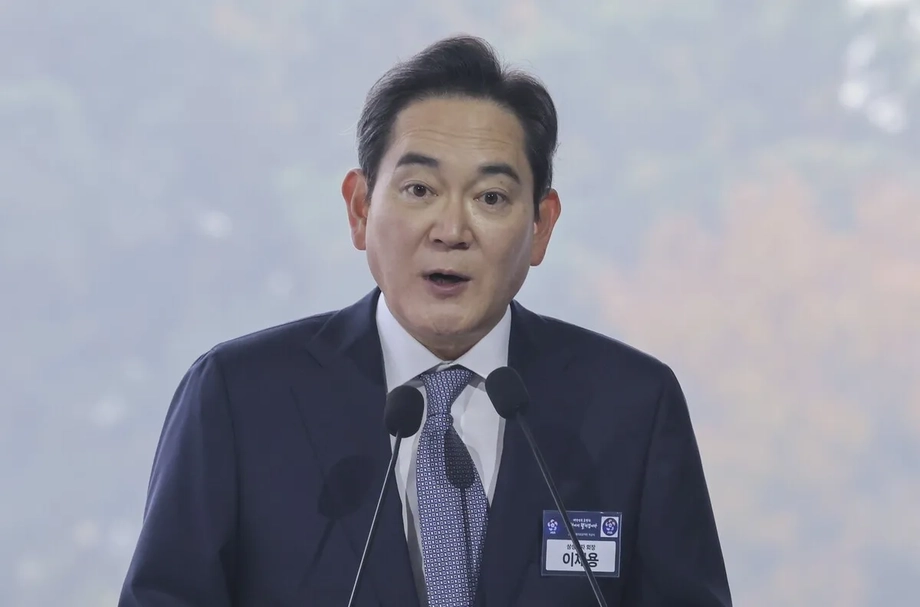
Board chairman Shin Je-yoon sat through the review with outside directors Kim Jun-seong, Heo Eun-nyung, Cho Hye-kyung and Lee Hyuk-jae, alongside Roh Tae-moon, head of the Device eXperience (DX) division and of the Robotics eXperience (RX) Business Promotion Office, and chief technology officer Yoon Jang-hyun. Cho, a former president of the Korean Robotics Society, questioned the team at each stage about how Samsung's machine differs from rival robots.
The pace is quick. Samsung formed the RX office on July 21, 2026, as a unit reporting directly to Roh, and the prototype reached a board review in under six months. Samsung declined to comment when asked about the plan, so the Las Vegas appearance rests on people familiar with the project rather than a company announcement. The robot has no announced product name, price or confirmed specification sheet. It comes after chairman Lee Jae-yong's October inspection of the same robotics office, when a public appearance in Las Vegas was still conditional on the machine meeting internal standards.
What the Robot Actually Did
The board saw full body control, with the machine holding its balance, and manipulation, with it gripping and handling objects using its arms and fingers. Samsung's engineers have aimed at repeated factory work rather than stage tricks. The machine can dance or flip, according to people who have seen the programme, but the development target is a task that can run all shift on a production line.
Its hands carry know how from an unexpected place: the ultra precise machining and assembly Samsung built up mass producing hinges for Galaxy Z Fold and Z Flip phones. Drive units sit at each finger joint, which lets the robot pick up a part, turn it inside its palm and take a new grip without setting it down. The outer shell uses the flexible displays found in foldable phones, giving the robot a screen for showing operating status and for communicating with people nearby.
The movements were taught in two ways. The robot watches and copies human hand and arm motion, and it repeats tasks inside a simulated space, with the learned movements then checked on a test line built from data gathered in Samsung's own plants.
Two Machines: One for Factories, One for Research
Samsung is developing two robots. The HR, short for Human Reference, is the working model: 176 cm tall, 75 kg, with 30 degrees of freedom, a capacity to lift 5 kg and a body built for factory and logistics tasks. Degrees of freedom are the independent directions in which joints can move, so more of them mean finer control. The HR carries a 3D lidar unit and several cameras on its head, body and wrists, plus tactile sensors in its fingertips.
The HR's computing comes from Nvidia's Jetson Thor, a compact computer designed for robots that handles both the artificial intelligence and the joint control in one box. Samsung has said it will run a proof of concept on real production and logistics lines at DX division sites in the second half of 2027, with a mass production model and a pilot line due by the end of that year.
The HE, short for Humanoid Extreme, is smaller at 138 cm and 45 kg, built without hands and tuned for dynamic whole body motion. It serves research and entertainment, and helps the teams develop the control and AI technology that the HR will use. The HE pairs an older Orin NX chip for its AI with an Intel Core Ultra 7 processor for control.
Why the Hands Decide Everything
Kris Hauser, who heads the robotics laboratory inside Samsung's RX unit, explained in September what a factory demands of a machine that picks things up.
You go to the factory owner and you say that your robot acts with a 99% success rate, they're still going to laugh because it has to be at a 99.99% success rate for them to actually deploy it on their factory line. This is a very punishing kind of game.
The arithmetic is unforgiving. A robot that fails once in 100 attempts will fail dozens of times in a shift on a line that repeats a motion every few seconds, and each failure stops the line or needs a person to step in. One failure in 10,000 attempts is the level plant managers treat as usable.
Samsung's answer is a hand with 20 motors in each hand, 40 in total, using a direct drive layout in which motor force reaches the joint without a long transmission path. That approach costs more and is harder to make small, but it gives accuracy and durability. A dedicated Hand Lab inside the company's robot task force is also working on a tendon driven design, in which tendons routed through the arm pull the finger joints instead of a motor sitting in every finger, and on tactile sensing that reads pressure, texture and slip so the grip can be adjusted while a part is held.
The wider market for such hands is small but growing. Research cited by the hand maker Tesollo puts the global market for five finger humanoid hands at about $876 million by 2030. Tesollo has started selling a 20 degree of freedom five finger hand, the DG-5F-S, aimed at robot developers and smaller research groups rather than at prototypes.
One Executive Over Body and Brain
In September 2026, Samsung placed Yoon Jang-hyun, president and chief technology officer of the DX division, over both the hardware development team and the AI software team inside the RX office. Putting a software specialist in charge of the mechanical organisation is unusual in robotics, where the two sides are usually kept apart.
The reason is speed of change. The traditional route builds the frame first and writes the AI afterwards, which leaves the software working around limits set years earlier by engineers who did not know what the AI would need. Samsung is attempting what engineers call co-design, deciding actuator response times, sensor frame rates and computing budgets together, so the body fits the software from the first drawing.
Yoon's background runs through software roles: head of the mobile division's IoT and Tizen development team, head of the software platform team, head of software, then chief executive of Samsung Venture Investment, where he backed AI, robotics, biotechnology and semiconductor companies. He became DX division president and CTO in November 2025. Below him, executive vice president Lee Dongkun, hired from Hyundai Motor Group in May 2026 after leading robotics strategy there, runs the strategy team, and Ajou University professor Kim Eui-gyeom, a specialist in dexterous robot hands, heads manipulation development.
Samsung Research had already published work on Shallow-pi, a vision language action model, the class of AI that turns camera images and spoken instructions into motor commands. Shallow-pi reaches 17 decisions per second, about double the eight per second of earlier systems, by cutting the sequential processing steps to roughly a third. In testing it reached a 95% success rate on inserting a water hose to within a fraction of a millimeter and coordinated 22 degrees of freedom across two arms and hands in 40 milliseconds. Stable control of a moving arm needs at least 10 decisions per second, so the model only delivers its advantage if the joints can respond inside the same window, which is why the two teams were merged.
The Factory Is the First Customer
Samsung's plan announced in March 2026 is to turn its plants in South Korea and abroad into AI autonomous factories by 2030, with robots taking on equipment management, logistics, precision assembly and material transport. The company's own lines give it a place to test machines, collect training data and fix faults before anything is offered to outside buyers.
Two sites carry the build out. At the Seoul R&D Campus in Umyeon-dong, robotics engineers develop the hardware and control software. In Gumi, North Gyeongsang Province, a smartphone production hub, Samsung is building a data factory and a manufacturing pilot line, and Samsung Electronics and Samsung SDS plan to invest a combined 19 trillion won (about $14.2 billion) there for a humanoid mass production system, a robot data factory and an AI data center. Samsung SDS aims to finish the data center by 2028, and it is also developing a platform to coordinate robots across 1,000 worksites.
A second push sits in the chip business. The Device Solutions division has set up a robotics team under its Global Manufacturing and Infrastructure Headquarters, will pick outside partners by the end of 2026, run technical evaluations through 2027 and put machines on production lines from 2028 for maintenance and inspection work. The division expects its robot fleet to grow from about 100 units this year to more than 10,000 by 2030. New memory plants due to start in 2027 and 2028 are being designed with wider corridors for wheeled robots that move components between equipment, alongside the overhead rail systems already in use.
Patents for Legs, Lifts and Locked Doors
Filings with the United States Patent and Trademark Office over the past two to three years show how Samsung assembled the parts of the problem. One set covers a hip joint that connects pelvis and thigh so the leg moves the way a human leg does, which decides how stable walking is. Another covers a hand whose fingers move separately and whose spacing changes, so it can grip objects of different shapes, including a 2024 filing on hip joints and an April 2026 filing on a hand that uses camera vision to rearrange its fingers around an object.
A third set covers the brain: at least three patents in that period describe robots that read a camera scene and a spoken instruction and decide for themselves what to do. One breaks a large instruction into smaller steps, another zooms into an image to find exactly where to grasp, and a further filing, made in South Korea, the United States, China and Europe, maps the objects in a room, plans the order of work and replans when an attempt fails.
Samsung has also patented the awkward parts of working inside a building. The filings describe robots that ride elevators and moving walkways between floors, arms that open doors by holding an ID chip to a reader, charging pads that start charging on contact, and control software that lets robots watch one another for safety. Equipment patents cover robots that service semiconductor tools, connect drums on production machinery and replace filters for process chemicals known as slurry. Most of these documents are published applications still under review, so neither a granted patent nor a launch date follows from them.
A person familiar with the strategy described the order of work as body and brain technology first, then the links to buildings and equipment, then factory deployment, with homes and services later. The company is also building AI control technology that is not tied to one robot shape.
Rainbow Robotics and the Money Behind the Plan
Samsung's robot programme runs on two tracks. Rainbow Robotics, the company founded in 2011 by researchers from KAIST's Hubo Lab, which built South Korea's first two legged robot, handles industrial work such as extending the payload and reach of its two arm robot, with an improved RB-Y2 model expected to appear in public. Samsung's own RX programme targets general purpose machines that can work in changing environments.
Samsung invested 86.8 billion won for 14.7% of Rainbow Robotics in 2023 and exercised a call option on December 31, 2024, lifting its stake to 35.0% and becoming the largest shareholder, which made Rainbow a subsidiary. The commercial tie is already visible in the accounts. Rainbow's revenue from Samsung in the third quarter of 2026 was 6.12 billion won, 44% of its total, and cumulative Samsung revenue of 11.8 billion won has passed last year's entire revenue of 10.4 billion won. Rainbow's payroll grew from 98 people at the end of 2024 to 247 in the third quarter of 2026, adding production technology, purchasing and site operations staff. Eugene Investment and Securities forecasts Rainbow's revenue rising 54.2% next year to 79.5 billion won, with operating profit turning positive.
Investors moved first. Rainbow closed at 531,000 won on November 27, up 13.70% on the day, for a market value of 10.3 trillion won and second place among KOSDAQ companies, and the stock had gained more than 75% since November 9. Smaller suppliers jumped further: SP Systems rose 29.93% to the daily limit at 4,580 won, and Cosmo Robotics and Daesung Hi-Tech also hit their limits. Samsung has recruited Oh Jun-ho, a distinguished professor at KAIST, to head its Future Robot Promotion Team, and it promoted robot hardware and AI control specialists to executive posts in its November personnel round.
Hyundai's Head Start and the Parts Question
The field Samsung enters is crowded. China's Unitree, Tesla and Hyundai Motor's Boston Dynamics already build or test humanoids, and a Federal Communications Commission ban on imports of Chinese humanoid robots has redrawn part of that market. Hyundai showed a production version of Boston Dynamics' electric Atlas at CES in January 2026 and has set a target of 30,000 units of annual capacity by 2028, with more than 25,000 machines to be placed at Hyundai and Kia plants. First use comes at the Metaplant America site in Georgia in 2028, on parts sequencing, widening to assembly from 2030.
Hyundai's advantage sits in car parts. Hyundai Mobis is supplying actuators for Atlas and planned to start making prototypes at its Uiwang research centre in November 2026, with parts supply targeted for 2028. Actuators, the motor and gear units that move a joint, make up about 60% of a humanoid's material cost.
Lee Sang-soo, an analyst at iM Securities, sees the supplier base as Samsung's weak point.
Unlike Hyundai Motor Group, which can leverage its existing automotive parts supply chain, Samsung Electronics has no existing vendors to collaborate with in the humanoid development process. There is a high possibility that new companies not previously noticed by the market will emerge.
Lee also put Samsung's existing process automation rate at 70% to 75%, and expects demand for humanoids inside Samsung to be smaller than inside carmaking, where more work is still done by hand. The only confirmed supply link in Samsung's humanoid chain is Rainbow Robotics, which buys reducers from SPG. Kim Hye-bin of IBK Investment and Securities warned that robot shares have repeatedly risen on expectations and fallen back when orders failed to appear.
What Changes on the Factory Floor
Rules are moving with the machines. In October 2026, South Korea revised safety regulations to allow up to 20 humanoid robots on a factory floor and to let them work alongside people under safety guidelines. The Korea Environment, Health and Safety Technical Committee of SEMI, the chip industry equipment group, formed a robot safety task force in March and filed a proposal in July for guidelines covering wheeled robots in semiconductor manufacturing, with a first draft due by March 2027. Samsung and SK hynix are leading that work, which matters because the two companies plan to fill new memory plants with moving robots from 2027.
Forecasts vary widely, which tells a reader how young the business is. TrendForce expects the global humanoid market to pass $2 billion by 2027, growing 154% a year between 2024 and 2027. Goldman Sachs puts the market at $138 billion by 2035, and Morgan Stanley at more than $5 trillion by 2050. Eugene Investment and Securities expects 130,000 humanoids installed worldwide in 2030, 1.7 million in 2035 and 7.87 million in 2040.
For the people who work in Samsung's plants and for the small Korean firms hoping to supply it, the concrete change arrives in stages: a partner list by the end of 2026, chip plant trials through 2027, the first working robots on DX division lines in the second half of 2027, and volume deployment from 2028. Competitors are on a similar clock. LG Electronics is expected to bring a humanoid to the same Las Vegas show, and T-Robotics, a Rainbow Robotics partner, plans to unveil a manufacturing robot there. Yang Seung-yoon of Eugene Investment and Securities expects attention to settle on the companies that first prove their machines on a real site.
Key Points
- Samsung Electronics will unveil its first internally developed humanoid at CES 2027 in Las Vegas, which runs from January 6 to 9, after a board review at its Seoul R&D Campus on November 26, 2026.
- Two models are in development: the HR for factory and logistics work, 176 cm and 75 kg with 30 degrees of freedom and a 5 kg lift, and the smaller HE at 138 cm and 45 kg for research and entertainment.
- The HR runs on Nvidia's Jetson Thor chip for both AI and joint control, has 20 motors in each hand and tactile sensors in its fingertips, and uses hinge technology from Galaxy foldable phones.
- Samsung has put software chief Yoon Jang-hyun over both hardware and AI teams, and its Shallow-pi model makes 17 decisions per second, about double earlier systems.
- Proof of concept deployment on DX division production and logistics lines is planned for the second half of 2027, ahead of AI autonomous factories by 2030.
- Samsung and Samsung SDS will invest 19 trillion won in Gumi for a humanoid mass production system, a robot data factory and an AI data center due by 2028.
- Rainbow Robotics, 35.0% owned by Samsung, drew 6.12 billion won of third quarter revenue from the group, 44% of its total, and its shares have climbed more than 75% since November 9.
- Hyundai Motor Group, the domestic rival, targets 30,000 Atlas units of annual capacity by 2028 with actuators from Hyundai Mobis, which make up about 60% of a humanoid's material cost.