A familiar shadow, moving at AI speed
In December 2000, the Korean role playing game Arcturus had sold 25,000 legitimate copies when illegal distribution was found on about 50 wares sites. Wares sites shared commercial software without permission, turning South Korea's new high speed internet connections into a distribution network for free games. In 2001, developer Sonnori filed complaints against four people over the copying and distribution of White Day. The costs included lost sales, enforcement work and legal action.
Contents
- A familiar shadow, moving at AI speed
- Nintendo games supplied the first warning
- How a GTA 6 leak became a porting race
- A week of leaks, takedowns and rapid progress
- Console security is under pressure too
- Why supplying your own files does not settle the law
- What is financially at stake?
- Small studios have fewer shields
- What can publishers and platform operators realistically do?
- Key Points
The modern warning arrived in November 2026. Rockstar launched Grand Theft Auto 6 on PlayStation 5 and Xbox Series X|S on November 19, while the Korean timeline dates its worldwide release to November 20. Within days, leaked console files were circulating, AI coding tools were being used to convert them for computers, and GitHub had disabled 3,007 repositories connected to one porting project. Nintendo projects, PlayStation 5 hacks and Switch 2 tools were developing at the same time.
The technology changes the amount of labor involved, rather than the basic attraction of getting something free. Decompilation turns a game's machine instructions into code that people can read and modify. Recompilation then converts that code so another platform can run it directly. Emulation is like hiring an interpreter to translate every sentence while a book is being read; recompilation produces a translated edition in advance. A native version can run more efficiently and support modifications, although an AI generated translation can contain serious errors.
Nintendo games supplied the first warning
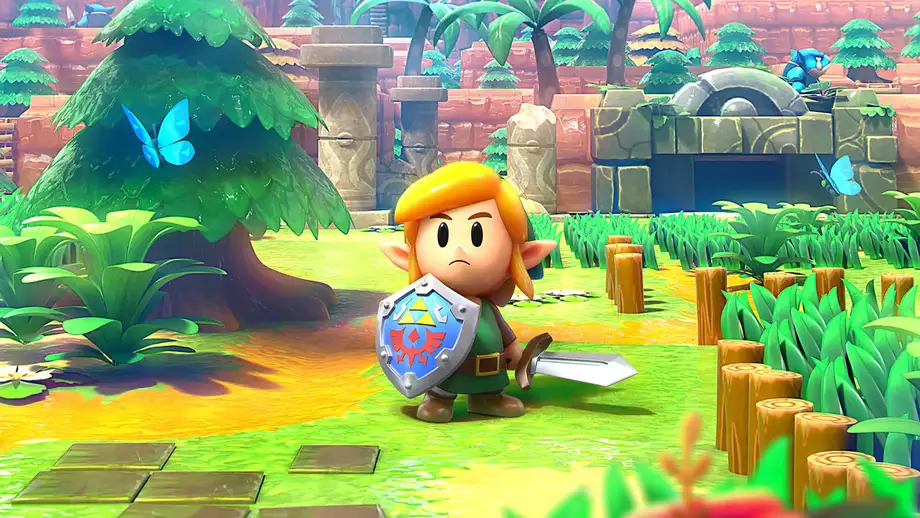
A developer using the name peiikai released a free PC conversion of the 2019 remake of The Legend of Zelda: Link's Awakening into public beta. The developer said Claude performed decompilation and reverse engineering, wrote almost all the code and generated the project documentation. It was believed to be the first Nintendo Switch conversion of its kind to reach GitHub. Versions run natively on Windows, macOS and Linux, with an experimental build for Linux on Arm processors.
The conversion adds multiple aspect ratios, adjustable internal and display resolutions, keyboard controls, prompts for alternative controllers, optional movement in 360 degrees and a randomizer that can rearrange items and quests. Players must supply the game data themselves. Peiikai also warns that the beta has serious known problems, an important reminder that producing large amounts of code quickly does not guarantee an accurate reproduction.
Other projects are moving closer to current hardware. Footage of early conversions of Super Mario Odyssey, released in 2017, and Super Mario Bros. Wonder, released in 2023, showed both approaching 60 frames per second on a laptop with an RTX 3050, though their files were unavailable and performance was unstable. Most earlier recompilation efforts concentrated on games two or three decades old. Link's Awakening was only seven years old, while the Switch 2 remake of The Legend of Zelda: Ocarina of Time became a target almost immediately after its November 5 release.
That Ocarina of Time effort, known as Hookshot, used static recompilation, meaning the game was converted before being run rather than interpreted continuously. Nintendo pursued copyright requests on GitHub and original repositories disappeared, but replacement projects continued to surface. Hookshot itself was briefly removed during an internal dispute and later restored, while MagicBean's Longshot fork carried on with much of the original team.
How a GTA 6 leak became a porting race
Cyberleek, the person or group behind months of GTA 6 disclosures, was also accused of breaching Rockstar in August and taking development files. Before release, Cyberleek shared unauthorized footage and raised millions of dollars in cryptocurrency. The console game was distributed digitally, without a retail disc, so ordinary buyers had no direct access to its files. That changed when an Xbox build of roughly 209 gigabytes spread through private file sharing networks.
Take-Two's takedown request dates the circulation of stolen Xbox files to November 20 and the creation of the Leonida repository to November 21. Cyberleek initially withheld the executable needed to start the game, at one point connecting its release to a countdown or a $15 million cryptocurrency valuation. The executable subsequently appeared. Developers working through Discord soon reported starting the game on Windows, macOS and Linux, passing its initial setup and loading some graphics shaders.
Leonida's technical approach explains why progress could be fast. Xbox Series consoles and PCs share the x86-64 processor architecture, allowing substantial portions of the game code to run natively. The project said it had recreated parts of the Xbox system software and translated programs written for the console's RDNA graphics processor into SPIR-V, a format used by the Vulkan graphics system. Claude assisted a group described as having roughly 75 contributors.
The project was led in part by NotRexed, who had also worked on Hookshot and described himself as 15 years old. Leonida's Discord server approached 180,000 members at one count, while almost 3,000 copies of its code, known as forks, appeared. GitHub's action against the main repository and its forks covered 3,007 repositories; a post by the project put the figure at 3,009. NotRexed then withdrew, but CGBJ, VIctory, XCL and other efforts continued, with the PortWatch VI site attempting to track them.
A week of leaks, takedowns and rapid progress
The sequence shows why a single removal notice has struggled to end the work.
- November 5: The Ocarina of Time remake reached Switch 2, followed shortly by work on a native PC conversion.
- November 19: GTA 6 launched on PS5 and Xbox Series X|S without an announced PC version.
- November 20 and 21: Stolen Xbox files spread online and Leonida was created, according to Take-Two's request to GitHub.
- November 24: The executable was released, early PC booting attempts advanced and the Leonida repository network was removed.
- November 25: Videos showed a separate PS5 copy running on modified console firmware.
- November 26 and 27: Rival groups demonstrated higher frame rates, modification menus and basic multiplayer.
A developer called TeK showed two players sharing an airport location, with character and vehicle movement synchronized and proximity voice chat working. TeK claimed performance of 25 to 30 frames per second. PortWatch VI said it had verified the video and the voice chat. The group was using private code derived from CGBJ, which itself drew on VIctory and XCL, so outside developers could not test the build.
Another team, BoYoo, demonstrated a boat mission averaging about 27 frames per second on a Ryzen 7 9800X3D processor, RTX 5070 Ti graphics card and 32 gigabytes of memory. Its build used about 15.4 gigabytes, an improvement on earlier attempts that struggled near 20 frames per second while consuming more than 40 gigabytes. Demanding city areas remained untested, no group had demonstrated a reliable playthrough of the entire campaign, and the small multiplayer demonstration bore little resemblance to the scale of GTA Online.
Claims of much higher speeds should be read against those limits. One clip asserting performance above 60 frames per second was subsequently deleted. Fake GTA 6 PC downloads were also circulating as vehicles for malware, making an unfinished and unauthorized build a security risk as well as a legal one.
Console security is under pressure too
PlayStation 5 hacking tools have used browser and kernel flaws in older firmware, the console's internal operating software, to run code that Sony did not approve. A kernel flaw reaches the central part of that software. The problem extends beyond running homebrew applications: a store for modified PS5 consoles connected to external file hosting and offered about 1,600 games without charge.
The GTA 6 PS5 copy added another route. Videos dated November 25 showed it running on firmware 11.60, even though the retail game requires firmware 14.23. The popular Relapse kernel exploit works only through firmware 13.60, and an earlier dump had been associated with firmware 14.22. How the copy ran on 11.60 was not explained, and compatibility with 13.60 was unconfirmed.
The PS5 download was reported at 540 gigabytes and included a decrypted eboot.bin, which serves a role similar to a Windows executable, along with the sce_sys system information folder and game assets. The KytyPS5 emulator for Windows and Linux can recognize that folder structure, but it still needs considerable work to stream assets correctly and deliver acceptable performance.
Switch 2 faced a parallel development. Little more than a month after its first jailbreaks appeared, a hacker named Olmectron released nx2-relink, which turns a dumped Switch 2 game into a homebrew program that a modified console can run. Claude contributed heavily to the tool. A separate developer demonstrated a modified console starting a dumped copy of Donkey Kong Bananza. Compatibility remained limited, with risks of damaging the console or losing access to Nintendo's online services.
Olmectron described the contents of nx2-relink in these terms.
no games, no keys and no Nintendo files, and it won't get them for you
That separation can describe a backup tool, but nothing in the software ensures that the supplied dump came from the user's own purchase.
Why supplying your own files does not settle the law
Unofficial conversion projects commonly distribute tools without games, encryption keys or finished executables. Users are told to extract data from a legitimately purchased copy. This arrangement separates the conversion code from the ROM, a file containing game data, but it does not verify where each user obtained that file.
Take-Two rejected that defense for Leonida because the expected files came from Cyberleek's unauthorized Xbox build. Its notice cited copyright infringement and Section 2.3 of Rockstar's terms of service. Those terms prohibit disassembly, decompilation, decryption, deriving source code, reverse engineering, modification and derivative works unless Rockstar separately permits the activity in writing.
South Korean copyright law also generally prohibits defeating technological protection measures without proper authority, while providing separate exceptions for activities such as analyzing code for compatibility. Purchase, possession of a file and circumvention of protection therefore raise different questions. Nintendo's position is even more direct on downloads: owning a genuine cartridge or disc does not make downloading someone else's ROM lawful.
Legitimate extraction can be demanding. Reading protected data from a cartridge requires specialized equipment and knowledge, while converting and storing modern games requires substantial free space. GTA 6's leaked Xbox data alone exceeded 200 gigabytes. Sharing the result creates another problem. A converted application produced on a user's PC contains the game, so distributing a complete package goes well beyond providing a standalone tool.
These distinctions prevent a blanket claim that everyone interested in homebrew conversions is pirating games. They also explain why a no files included notice offers little protection when a project depends on a known stolen build or when finished games are distributed alongside it.
What is financially at stake?
Grand Theft Auto has sold more than 512 million units across its core games since the series began in 1997. Estimates for 2026 put global gaming revenue at $560 billion when hardware, streaming and advertising are included, or $215 billion for games alone, compared with $126 billion for the global movie industry. The audience was estimated at 3.7 billion players.
Take-Two's regulatory filing put GTA 6's estimated retail sales on its first day at $3.79 billion, while Korean launch figures described more than 30 million copies sold in that period. An unofficial PC version would enter a market where Rockstar currently sells nothing. Its effect would depend on quality, timing and whether players who try it later buy the official release.
Obbe Vermeij, a former technical director at Rockstar North, had warned about this scenario before release. He estimated that converting the PS5 version with AI could cost tens of thousands of dollars in processing tokens, in addition to substantial development time.
I think I would be concerned, if I was Rockstar, that somebody would just take the PS5 version and get AI to change it to PC
Vermeij argued that even a less polished conversion could satisfy some waiting players and encourage Rockstar to shorten its release gap. Grand Theft Auto 5 reached PC in April 2015, about 19 months after its original console launch. Red Dead Redemption 2 took just over a year. No official GTA 6 PC date had been announced; predictions ranged from the first quarter of the following year to roughly six to twelve months after launch.
Take-Two chief executive Strauss Zelnick framed the issue differently after Raymond James analyst Andrew Marok raised it during the November 9 earnings call. Zelnick acknowledged that piracy would become more challenging and promised stronger technical and legal defenses.
I don't think it's a financial matter, in terms of a threat to our business. I do think it's a creative matter.
His concern was that players should receive the experience Rockstar intended. A 2024 Entertainment Computing study by William Volckmann offers one measure of possible exposure: games protected by Denuvo lost an estimated 20 percent of revenue on average when that protection was cracked especially early. Applying 20 percent mechanically to $3.79 billion produces about $758 million. That calculation illustrates scale rather than predicting GTA 6 losses, particularly while unofficial builds remain incomplete and no commercial PC version exists.
Small studios have fewer shields
A blockbuster can absorb considerable disruption. A small studio may depend on a console exclusivity agreement to finance development, or may lack the staff to support another platform. An unauthorized version can then bring lost sales, bug reports for software the studio never made and damage to a future official launch.
Tinybuild chief executive Alex Nichiporchik described how easily someone produced an unauthorized conversion of Graveyard Keeper using a tool called REA, short for Reverse Engineer Anything. Korean independent developers have already adopted defensive measures. YNot, the two person studio developing Spooky Kitchen, withdrew its demo after receiving two emails proposing to borrow its mechanics and recreate them with AI. Developer Siniming appealed for the public to remember which team made the original.
Optim Arch, a one person studio, found an imitation of SlotBound on a Chinese platform after releasing its demo in July and needed help from a local fan to report it. Lee Cheol woo, head attorney at the Culture Law Office, said a reverse engineered copy that is almost identical to its source can infringe copyright. He recommended that government assistance expand beyond development grants to include access to lawyers, response training, publicity and customer support.
SteamDB figures show how quickly AI has entered ordinary development as well. Steam games disclosing generative AI use rose from 2,207 in 2024 to 4,683 in 2025 and 11,694 at the latest count. Those disclosures are not a measure of piracy; they show why enforcement aimed simply at AI use would sweep up legitimate work.
What can publishers and platform operators realistically do?
Anthropic added rules to Claude Code intended to stop users recreating specific games belonging to others, but the GTA 6 attempts occurred afterward. GitHub also sent an awkward public signal: it briefly published a message celebrating AnyPS5, a project rewriting PS5 executables for Windows and Linux that had passed 58,000 stars since August, and connected it to GTA 6 before deleting the post.
Removal notices can slow development, frighten away contributors and protect official channels. They can also advertise the project. Leonida's code had already been copied, contributors were largely anonymous, and skilled participants could move to private servers. The same pattern appeared when Nintendo repositories vanished and forks replaced them.
Heavier digital restrictions carry costs for paying customers. Encryption, code obfuscation and systems that repeatedly contact a server may delay determined attackers, but they can consume performance, introduce bugs and leave legitimate players with a worse experience than a stripped pirate copy. Technical barriers also cannot change the underlying fact that code running on consumer hardware can be studied.
The more durable response is to make the official product easier to buy and use. Regional pricing, dependable downloads, technical support, official multiplayer and a shorter wait for PC players address reasons beyond price that drive people toward unauthorized versions. For a smaller developer, legal assistance and preservation of evidence may be just as practical.
Korea's wares history supplies the final caution. When widespread copying weakened sales of packaged PC games, many companies shifted toward server based online games, and aggressive monetization became part of the business model that followed. Free access did not guarantee funding for the next game. AI can reduce the cost of making software, but it does not remove the need to pay the people whose work players value.
Key Points
- AI decompilation and recompilation are bringing unofficial PC conversions to much newer console games.
- A leaked GTA 6 Xbox build of about 209 gigabytes triggered Leonida and several rival projects.
- GitHub disabled 3,007 repositories tied to Leonida, but other developers continued working.
- Unofficial builds have demonstrated multiplayer and roughly 25 to 30 FPS, without proving a reliable full campaign.
- A separate 540 gigabyte PS5 dump and new Switch 2 tools show that console security is also under pressure.
- Owning a game does not automatically authorize downloading a ROM, defeating protection or sharing a converted copy.
- Rockstar has announced no PC release date, while Take-Two is pursuing technical and legal defenses.
- Small studios face disproportionate risks from unauthorized versions and have fewer legal and support resources.
- Convenient official releases, fair pricing and reliable service remain central responses alongside enforcement.