A Bonus Paid in Full, and a National Argument About What It Means
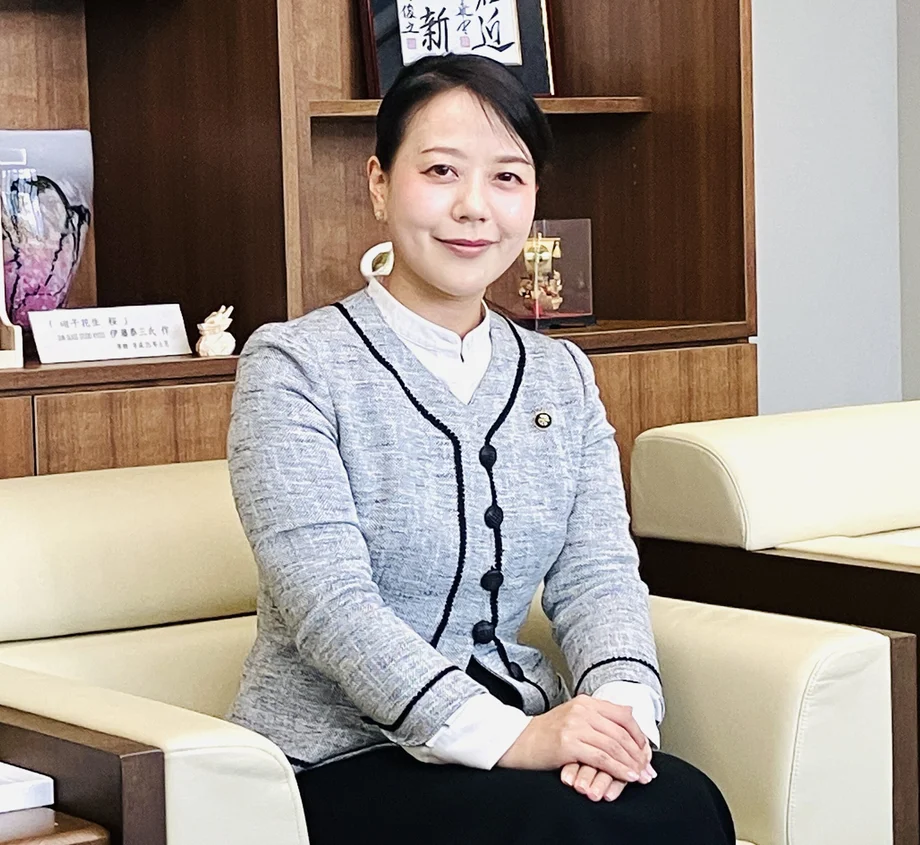
Shoko Kawada, the mayor of Yahata in Kyoto Prefecture, left city hall on July 20 for the birth of her first child and returned on Nov 9. At her regular press conference on Nov 26, she told reporters that the roughly three and a half months away would make no difference to her winter allowance, the payment Japanese local governments call the end of term allowance and hand out on a schedule much like a company bonus.
Contents
- A Bonus Paid in Full, and a National Argument About What It Means
- Why a Mayor Has No Maternity Leave Law to Lean On
- Three Months of Remote Meetings and a Deputy in Charge
- The Mayor's Own Explanation
- A Salary Frozen Since 2015 in a City Under Fiscal Strain
- Why the Money Split Public Opinion
- What the Law Says About Bonuses and Childbirth
- How Britain Turned a Precedent Into a Rule
- The Career Behind the Headlines
- What Is Still Undecided
- Key Points
Yahata expects to pay her about 1,897,000 yen, some 52,000 yen more than last winter, because the allowance rises with the annual revision of pay for national public servants. Kawada is believed to be the first sitting head of a Japanese local government to take maternity leave. Her decision to keep the money in full, and the reason she gave for it, turned a routine administrative payment into an argument about who carries the cost of childbirth.
The money is set by ordinance, not by her wishes. Yahata's ordinance on the salaries of special position employees puts the mayor's monthly salary at 848,700 yen, a figure unchanged since April 2015, when it moved up from 847,000 yen. The winter allowance is built from that salary plus a regional allowance, with 15 percent of the total added to form a base amount. That base is multiplied by a payment rate and then by a share reflecting the period the mayor spent in office during the six months before the reference date.
Kawada held the office of mayor throughout. Her duties passed to a deputy, but the ordinance asks whether she was in post, not whether she was at her desk. The text contains nothing that cuts the allowance for maternity leave or for absence, and the city says the payment follows the rules as written. Yahata's 2023 figures show the annual rate for the allowance at 3.40 months of salary.
Why a Mayor Has No Maternity Leave Law to Lean On
An ordinary city employee in Japan who becomes pregnant can point to Article 65 of the Labor Standards Act, which guarantees six weeks of leave before the birth (14 weeks for twins or more) and eight weeks after. A mayor cannot. The article protects workers, and an elected head of a local government is a special public official rather than a worker in that sense.
Yahata borrowed another route. Article 152(1) of the Local Autonomy Act lets a deputy mayor act in the mayor's place when the mayor cannot carry out the duties, an arrangement normally used for illness or travel. The city announced its plan on June 1, built around an expected delivery date of Sept 13 and eight weeks of leave on each side of the birth, then fixed the acting period at July 20 to Nov 8. Kawada said afterwards that working out whether the law could be read that way had been one of the harder parts of the exercise, because the Local Autonomy Act says nothing about maternity leave for local government leaders.
Article 204 of the same law allows a local government to pay a salary and, by ordinance, an end of term allowance. Article 204-2 forbids any payment that is not grounded in a law or an ordinance. A separate rule shapes what a mayor can hand back. Under Article 199-2 of the Public Offices Election Act, a public official who returns part of their pay to the public purse can run into the ban on donations, which is why cities that want to reduce a mayor's pay usually change the ordinance instead of accepting a voluntary refund.
Three Months of Remote Meetings and a Deputy in Charge
Shigeto Nose, the 62 year old deputy mayor, held the mayor's legal authority from July 20 to Nov 8. The handover was not complete. Kawada joined a regular online meeting with senior officials every Monday at 9 a.m. and took part in 23 online meetings in all, kept up with files through the city's chat tools, and stayed reachable when Yahata set up a disaster response headquarters after issuing a heavy rain warning.
Thanks to our improved online communication tools, we were able to communicate with the mayor almost in real time. Since the birth had been expected months in advance, we were able to make administrative arrangements ahead of time.
Nose also described the mayor joining a full day of online discussion with her newborn in her arms, and rejected the idea that women of childbearing age should stay out of elected office. On her first day back, Kawada said the city of about 68,000 residents had come through the period without major trouble because staff had pulled together, and that she had shown one way of combining childbirth with the demands of the job.
I made decisions based on my physical condition. But that was because of the unique nature of a mayor's job, and I do not intend to advocate such a way of working for other people taking maternity leave.
Asked whether she could have responded to a disaster affecting a wide area, Kawada said she was ready to step in herself had a catastrophic disaster struck, and that she would have left the response to the acting mayor if it had coincided with the birth.
The Mayor's Own Explanation
Kawada gave the shortest version of her reasoning to reporters on Nov 26.
I don't want to set a precedent where giving birth means your pay has to be cut.
Two days later, in a post on X, she set out a longer case. She wrote that no rule requires a mayor's pay to fall when a deputy takes over, and that she could not find another local government with a rule reducing pay for a period taken for childbirth. She said she had considered cutting her pay voluntarily and decided against it.
I don't want this to be a society where women who work while giving birth are expected, as a matter of course, to cut back their careers or their treatment more than necessary.
She added that a situation with no precedent and no system also has no settled right answer yet, and that she does not treat her own choice as the only correct one. In the same post she said she had prepared the handover carefully for months before leaving, and had joined weekly online meetings and important conferences when her condition allowed.
A Salary Frozen Since 2015 in a City Under Fiscal Strain
Yahata's mayor earns 848,700 yen a month, a level set in April 2015. The city's Special Position Remuneration Council, created in 1976, has up to 14 members and meets in public in principle. It sat five times between October 2025 and April 2026 and reported on May 26, 2026.
The council recommended holding the mayor's salary at 848,700 yen, noting that the figure sits below the 894,289 yen average of comparable bodies and ranked 64th among 75. It also recommended a 5 percent cut in the pay of city assembly members and raised the idea of removing one assembly seat.
The reason for the freeze was the state of the city's finances. Yahata's current account balance ratio, which measures how much of routine spending is covered by routine revenue, reached 101.8 percent in fiscal 2024, the only one of Kyoto Prefecture's 14 cities above 100 percent. The council's remit covered the size of salaries and allowances. How a mayor's pay should be treated during a long absence was never on its agenda.
Why the Money Split Public Opinion
Reaction divided along two lines that rarely meet. One side argued that a leader paid from tax money should give back the share of the allowance that matches the weeks spent away from the office, and that a deputy and city staff carried the work in the meantime. The other side argued that the ordinance sets the amount, that a public employee on maternity leave normally keeps a full bonus, and that refusing the money would make elected office less viable for women who may have children.
Both arguments rest on different premises. The first is about fairness in a single case. The second is about what a decision now does to everyone who follows. Kawada answered the second question directly and left the first one open.
The scale of the debate is out of proportion to its arithmetic. The bonus spread across Yahata's 67,552 residents works out at about 28 yen per person. Women hold roughly 4 percent of the mayor's offices in Japan's 1,740 cities, towns and villages, so a mayor giving birth remains rare enough to be treated as news.
What the Law Says About Bonuses and Childbirth
For private employers, Article 9-3 of the Equal Opportunity Act bars unfavorable treatment because an employee took maternity leave. The Supreme Court went further in a 2003 case involving Toho Gakuen, a school operator. A rule that counted maternity leave as days of absence when calculating the 90 percent attendance rate needed for a bonus was void as against public order.
The same ruling said that reducing a bonus in proportion to the days actually not worked is not automatically unlawful. Guidance from the Ministry of Health, Labour and Welfare follows that line. Pregnancy and childbirth cannot be the reason for a disadvantage, while a bonus tied to work record may still be adjusted for a period of leave.
Public salaries work differently, because a local government allowance is fixed by ordinance rather than by a contract or a set of workplace rules. Cutting it requires amending the ordinance, which means a debate and a vote in the assembly. A city that leaves the ordinance alone and relies on a mayor's goodwill to hand money back leaves the next mayor with no rule at all.
How Britain Turned a Precedent Into a Rule
Britain wrote the question down. The Ministerial and other Maternity Allowances Act 2021 lets the prime minister designate a pregnant minister as a minister on leave, with up to six months of paid leave and another minister appointed to carry the duties. The law was passed after a case in which the arrangement had to be improvised, and it settled the duration, the pay and the cover in advance.
Elected councillors in Britain have no employment contract, so the Local Government Association publishes a model parental leave policy. It covers the right to take leave, notice, continued payment of the basic allowance, continued payment of an allowance attached to a role, cover during the absence and the role to which the councillor returns. In a 2024 survey, 48 percent of responding councils in England had at least one such policy, up from 4 percent in 2017.
New Zealand got there first at the top of a government. Jacinda Ardern announced her pregnancy in January 2018, gave birth to a daughter on June 21 that year, took six weeks of leave while Deputy Prime Minister Winston Peters acted in her place, and returned to work on Aug 2.
The Career Behind the Headlines
Born in Nara on Aug 30, 1990, Kawada studied economics at Kyoto University, worked as a welfare caseworker at Kyoto City Hall and then as a private secretary to a member of the House of Councillors. She won the Yahata mayoral election in November 2023 at 33, running as an independent backed by the Liberal Democratic Party, the Constitutional Democratic Party and Komeito, and became the youngest woman elected mayor of a Japanese city. Her four year term runs to November 2027. She married in December 2025 and announced it on X in January 2026.
Japan's first woman city mayor was Harue Kitamura, elected in Ashiya, Hyogo Prefecture, in 1991. A Tokyo Metropolitan Government count in October 2022 found 45 women heading local governments nationwide, 30 of them mayors. TIME named Kawada to its TIME100 Next list on Sept 30, 2026, citing both the leave arrangement and her family policies. Kyoto Governor Takatoshi Nishiwaki congratulated her after the birth and said her decision could be read as a sign of the prefecture's childcare environment and as encouragement to young families.
In her New Year message for 2026, Kawada listed lower school meal costs for parents, free diapers at nursery and kindergarten facilities, transport reform and wider support after childbirth among her priorities. Her own household now tests those promises. Her husband is on parental leave until the end of March 2027, and she is not taking parental leave, working instead with flexible hours and days at home.
What Is Still Undecided
No national rule covers maternity leave for a mayor. Yahata has not said whether it will write rules for a leader's absence into its ordinance or hand the question to its remuneration council, whose most recent report dealt only with the size of salaries and assembly pay.
The city has also not said what the arrangement will look like for the next leader who needs it. The template exists only in practice: eight weeks on each side of a birth, a deputy holding legal authority, online meetings on Mondays and a mayor reachable by chat. Kawada has said she wants to keep talking to other local government leaders and to ministry officials so that future leaders inherit a system rather than an improvisation.
The winter allowance for Yahata's mayor will be paid at the amount the ordinance produces. What changes is the argument around it, which now has a date, a figure and a name attached.
Key Points
- Yahata Mayor Shoko Kawada took leave from July 20 to Nov 8, 2026, and returned to work on Nov 9 after giving birth to a daughter on Sept 15.
- She will receive the full winter allowance of about 1,897,000 yen, roughly 52,000 yen more than last winter, as announced at her Nov 26 press conference.
- The payment follows Yahata's ordinance, which ties the allowance to time in office rather than attendance and contains no reduction for maternity leave.
- Her monthly salary of 848,700 yen has not changed since April 2015, and the city's remuneration council recommended keeping it that way in a report on May 26, 2026.
- Yahata's current account balance ratio stood at 101.8 percent in fiscal 2024, the only figure above 100 percent among Kyoto Prefecture's 14 cities.
- Deputy Mayor Shigeto Nose held the mayor's authority as acting mayor, while Kawada joined 23 online meetings and stayed reachable during a heavy rain alert.
- Kawada said she did not want to create a precedent in which childbirth forces a pay cut, and said her choice is not the only correct answer.
- Women hold about 4 percent of the top posts in Japan's 1,740 municipalities, and Kawada was named to the TIME100 Next list on Sept 30, 2026.