One dog per household, from April 1
Households inside Beijing's Fifth Ring Road, and in the planned administrative sub-center of Tongzhou District, will be allowed to keep one dog each under the revised Beijing Pet Dog Management Regulations. Large dogs will be banned in those same areas, and the breeding, keeping and sale of dogs classed as ferocious will be prohibited across the whole municipality.
Contents
- One dog per household, from April 1
- A rulebook written for a different city
- Leashes, muzzles and a 200 yuan cleaning fine
- What the microchip stores, and what it does not
- Where dogs can no longer go
- Five years without a dog for abuse or abandonment
- The questions owners are already asking
- Why Beijing is tightening rules now
- What changes, and when
- Key Points
The Standing Committee of the 16th Beijing Municipal People's Congress adopted the regulation at its 27th session and set out the details at a news conference on Friday. The text runs to 62 articles in seven chapters and takes effect on April 1, replacing rules that have governed the capital's dog owners since 2003.
Beijing has more than 300,000 registered dogs, a figure officials at the congress gave as the reason the old rulebook needed rewriting. The regulation also instructs public security, agricultural and rural affairs and other departments to write supporting provisions that will sit alongside the main text. Until those provisions appear, much of how the rules work in daily life stays open.
The framework rests on four parts: owners keeping themselves in check, government oversight, participation by groups beyond the government, and supervision by the public. Dogs will be entered into an electronic identification system that feeds a shared information platform, so that departments can see the same registration and vaccination records.
A rulebook written for a different city
Xiong Jinghua, deputy director and spokeswoman of the legislative affairs commission under the Standing Committee of the Beijing Municipal People's Congress, told the news conference that the old rules had outlived the city they were written for.
The previous dog management rules had been in force for more than 20 years and could no longer meet current management needs, making amendment and improvement urgent.
Xiong said the more than 300,000 registered dogs were bringing more public concerns and more management challenges. That number covers only dogs whose owners have come forward to register them, so the real population on Beijing's streets is larger.
The 2003 rules limited households to one dog in six key management zones in central districts, including Chaoyang and Haidian. Neighbourhoods outside those zones were governed far more loosely. The revision uses the Fifth Ring Road as the dividing line instead, which brings a much larger slice of the urban area under the one dog cap and the large breed ban.
Outside the Fifth Ring Road, local governments may set their own limits on how many dogs a household can keep, based on population density and management needs. The rule on dangerous dogs is different. It now covers the whole municipality, so no district can allow them at all.
Leashes, muzzles and a 200 yuan cleaning fine
Walking rules are the part most owners will notice first. A dog must be on a non-retractable leash no longer than 1.5 meters, and large dogs must also wear a muzzle outdoors. An owner who fails to use a leash receives a correction order and an initial fine of 200 yuan. Serious violations carry fines of up to 1,000 yuan, about $150 or 200,000 Korean won.
Leaving dog waste on the pavement brings a fine of 200 yuan, the same as the starting penalty for going without a leash. The regulation also sets out duties on nuisance barking and on how dogs are handled in lifts and on public transport, the friction points that neighbours have found hardest to settle because the old rules said little about them.
For a household in a Beijing apartment block, the 1.5 meter limit makes the retractable lead obsolete. The kind that lets a dog run ahead on a thin cord and stops with a button no longer meets the standard, whatever the size of the animal on the end of it.
What the microchip stores, and what it does not
Registration now comes in two steps. An owner must have the dog vaccinated against rabies, then have a microchip implanted under the animal's skin. The chip holds a unique identification number for each dog and nothing else. It carries no personal information about the owner and has no location tracking or audio recording function.
City authorities said the system will let them keep registration and vaccination records in better order and share them between the departments that enforce the rules. The detail about what the chip cannot do appears aimed at owners who worry that a chip turns a pet into a tracked device.
Rabies vaccination is a public health measure as much as an animal welfare one. Once each dog's vaccination history sits in a single city platform, an inspector can check a dog's status without relying on a paper certificate that may be lost, forged or out of date.
Where dogs can no longer go
The regulation names a long list of places where dogs are not allowed:
- Public institutions, schools and kindergartens
- Restaurants, cultural venues and sports venues
- Railway and airport waiting rooms and urban rail transit stations, where no pet transport service is offered
- Indoor areas of markets, shopping malls, commercial streets, hotels, parks and public green spaces
Pet shops and other businesses that specialise in dogs are exempt from the indoor commercial restriction, so a grooming salon or a shop selling pet supplies can still admit animals. Guide dogs and other assistance dogs are exempt from the restrictions altogether, which keeps them usable for the people who depend on them.
The list matters for the city's shopping and hospitality trade. A mall or a hotel that has quietly allowed dogs indoors now has a rule to point to when it turns them away, and a customer has something to check before setting out.
Five years without a dog for abuse or abandonment
Anyone who abuses or abandons a dog will be barred from keeping one for five years. Where a case is serious and causes significant negative public impact, the ban can last for life. The regulation prohibits abuse and abandonment outright and attaches a penalty that reaches beyond a fine, because it takes away the right to own an animal at all.
That penalty is the sharpest departure from the 2003 rules, which dealt mainly with registration, size limits and where dogs could go. The new text puts an owner's conduct towards the animal inside the scope of city regulation, with an enforcement tool that outlasts the dog involved.
The questions owners are already asking
Households that already keep more than one dog, or that own a large breed inside the Fifth Ring Road, have been asking how their existing pets will be handled. The regulation does not answer that. Authorities have said they plan to establish detailed criteria that separate large breeds from dangerous ones, and that the treatment of dogs already registered legally will be clarified as the rules are put into effect.
Some residents have argued that any rule should weigh a dog's actual aggression and behaviour rather than judging risk by size alone. The published text does not define a large dog by weight or height, which leaves the borderline cases, a mid-sized hunting breed or a heavy but placid family dog, to the criteria still being drafted.
The supporting provisions from the public security and agricultural departments, together with the breed criteria, are the documents to watch before April 1. An owner who wants to know whether a second dog can stay in the flat has no answer yet, and no date has been given for when one will come.
Why Beijing is tightening rules now
China's dog population has grown fast enough that municipal rulebooks written two decades ago no longer match the streets they govern. About 25% of Chinese households own a dog, which works out to roughly 27.4 million pet dogs nationwide. Beijing's 300,000 registered animals are a small share of that total, and the registration figure counts only the owners who have come forward.
Breed popularity shows where the new limits will bite. A September 2021 survey found that Siberian Huskies made up 16% of the dogs owned by people who answered it, and Golden Retrievers about 8.4%. Both are large breeds, and the Husky share sits awkwardly beside a ban on large dogs inside the Fifth Ring Road. Surveys of this kind include foreign owners, who are often treated differently under Chinese local rules, so the numbers do not map neatly onto the registered population Beijing will police.
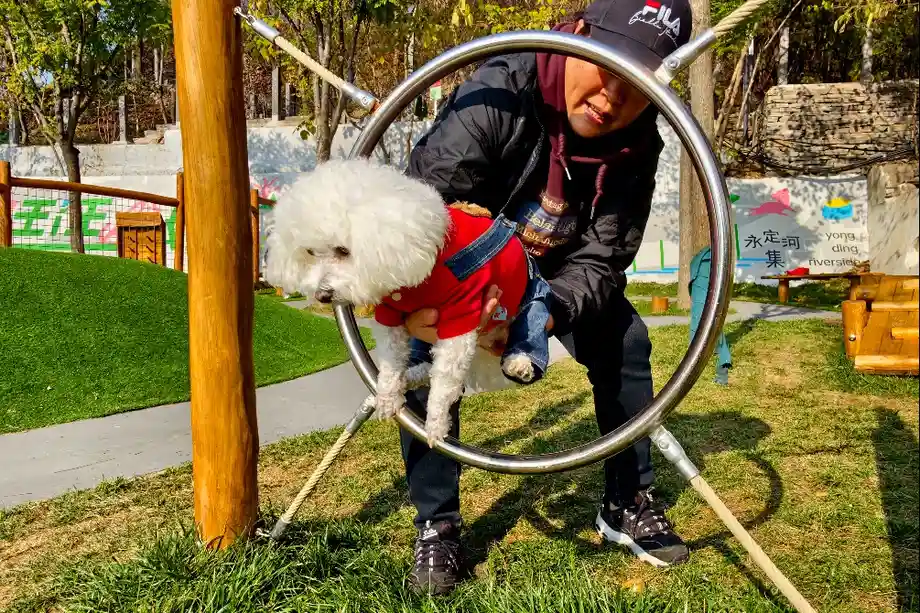
Small breeds fit comfortably inside size limits and keep their place in Chinese cities. The toy poodle, the corgi, the Shiba Inu and the Pomeranian all fall under the thresholds that most municipal rules use, which helps explain why they are common sights in apartment compounds.
What changes, and when
The timetable runs from a rulebook drafted for a smaller, looser city to one built for a capital with 300,000 registered dogs and a shared database.
- 2003: the previous dog management rules take effect, capping households at one dog in six central district zones
- Friday: the Standing Committee of the 16th Beijing Municipal People's Congress adopts the revised regulation at its 27th session
- Before April 1: public security and agricultural departments publish supporting provisions, and breed criteria for large and dangerous dogs are drawn up
- April 1: the 62 article regulation takes effect and the 2003 rules lapse
Enforcement will fall to several arms of the city at once. Public security handles registration and the electronic identification system, agricultural and rural affairs takes the vaccination side, and the fines for leashes, muzzles and uncollected waste depend on inspectors being on the street. How many inspectors, and how the city will treat the dogs already living in households that the new cap makes non-compliant, are details the regulation leaves for the provisions still to come.
Key Points
- Beijing's revised Pet Dog Management Regulations take effect on April 1 and replace rules in force since 2003
- Households inside the Fifth Ring Road and Tongzhou's sub-center may keep one dog each, and large dogs are banned there
- Breeding, keeping and sale of ferocious dogs are prohibited across the whole municipality
- Leashes must be non-retractable and no longer than 1.5 meters, and large dogs must wear a muzzle outdoors
- Fine for walking a dog without a leash starts at 200 yuan and can reach 1,000 yuan, about $150; leaving waste uncollected costs 200 yuan
- Rabies vaccination followed by a microchip is mandatory, and the chip stores only an identification number, with no tracking or audio function
- Abusing or abandoning a dog brings a five year ban on ownership, and a lifetime ban in serious cases
- Beijing has more than 300,000 registered dogs, against roughly 27.4 million pet dogs nationwide
- Rules for households with several dogs or a large breed, and the criteria separating large from dangerous breeds, have not yet been published