The scale behind the provincial ranking
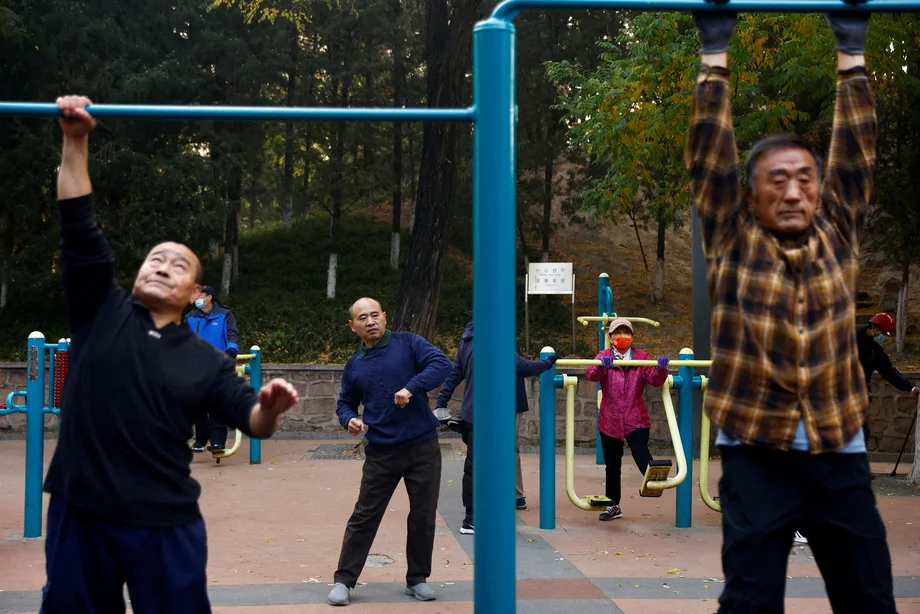
China closed 2025 with 323.38 million people aged 60 or above, equal to 23.0 percent of its population. The figure, approaching one person in four, frames a provincial ranking led by Shandong and an expanding effort to provide care, housing, health services and meaningful activity for older residents.
Contents
- The scale behind the provincial ranking
- The 10 provinces with the most older residents
- Why Guangdong looks younger despite its huge total
- How Shandong is turning aging policy into services
- Care insurance and a national service network
- The 2030 plan joins eldercare and childcare
- The silver economy moves beyond nursing homes
- Older consumers are also buying learning and belonging
- The next tests are workforce, quality and equal access
- Key Points
The Ministry of Civil Affairs and the national office on aging jointly released the 2025 national aging report. An official interpretation of that report adds that 223.65 million people were aged 65 or above, accounting for 15.9 percent of the population. The provincial ranking uses the broader threshold of 60, while the 65 and above figures help illustrate the growing demand for pensions, health care and daily support.
The change since the start of the 14th Five Year Plan period in 2021 is substantial. The number of people aged 60 or above grew by nearly 21 percent, and their share of the population rose from 18.9 percent to 23.0 percent. The dependency ratio for people aged 65 or above increased from 20.8 percent to 23.1 percent. In practical terms, there were 23.1 people in that age group for every 100 people of working age, compared with 20.8 at the start of the period.
The 10 provinces with the most older residents
Provincial totals reflect both age structure and population size. A province can have an enormous number of older residents without having the highest proportion of older people. Four provinces each had more than 20 million residents aged 60 or above at the end of 2025, and the first nine in the ranking each had at least 15 million.
- Shandong: more than 25.81 million, or 25.7 percent of the provincial population.
- Jiangsu: 22.74 million, or 26.70 percent.
- Sichuan: 21.50 million, or 25.85 percent.
- Henan: 21.20 million, or 21.8 percent.
- Guangdong: 19.93 million, or 15.5 percent.
- Hebei, Hunan, Zhejiang and Hubei: sixth through ninth, in that order, each with at least 15 million.
- Anhui: 14.16 million, placing it tenth.
Jiangsu's provincial bulletin, published in October 2026, put its total permanent population at 85.18 million. It reported 990,000 more residents aged 60 or above than a year earlier and gave an annual growth rate of 1.19 percent. The province also passed a striking milestone: its population of centenarians exceeded 10,000 for the first time, reaching 10,293 after an increase of 1,482.
Sichuan's civil affairs and aging authorities said in their bulletin released on November 16 that the province had 920,000 more residents aged 60 or above than at the end of 2024. The provincial ranking gives no individual totals for Hebei, Hunan, Zhejiang and Hubei beyond their common threshold of at least 15 million.
Why Guangdong looks younger despite its huge total
Guangdong has China's largest permanent population, yet it ranks only fifth for the number of residents aged 60 or above. Older people make up 15.5 percent of its population, 7.5 percentage points below the national share of 23.0 percent. A percentage point measures the direct gap between two rates, rather than the proportional change between them.
Migration is a central explanation. The seventh national census recorded 29.6221 million people who had moved into Guangdong from other provinces, more than 13 million above the figure for second placed Zhejiang. Those arrivals were predominantly young. Guangdong's relatively accessible household registration rules have also encouraged net migration into its registered population. Household registration, commonly called hukou, determines where a person is officially registered and can affect access to local public services.
Births reinforce that younger age structure. Guangdong recorded 1.003 million births in 2025, about 12.7 percent of the national total. Roughly one of every eight babies born in China that year was born in the province. It was the only province to record more than one million births for six consecutive years and had China's highest provincial birth total for eight consecutive years. Its urbanization rate also ranked fourth nationally, while its birth rate remained among the highest.
How Shandong is turning aging policy into services
Shandong's response extends across subsidies, finance, consumer spending and services delivered near people's homes. Its policy timetable shows how those pieces have been added since the national pilot program began.
- July 2025: Shandong became one of the first provincial pilots to provide consumption subsidies for eldercare services to people with moderate or severe loss of independence.
- May 2026: The Shandong branch of the People's Bank of China and five other departments issued a Five Ones action to upgrade financial support for the eldercare industry. Separately, a group of 21 departments led by the provincial civil affairs authorities announced 20 measures across five areas to stimulate spending on eldercare services.
- August 2026: The provincial government general office issued measures covering facility networks, service supply, service quality and supporting resources for care delivered at home and in local communities.
The measures address different sides of the same problem. Subsidies can help eligible older people pay for services, while financial measures are directed at the organizations supplying them. The August program focuses on where care is delivered, with the aim of making support available without requiring every older person to move into an institution.
Care insurance and a national service network
China's insurance arrangements for people needing care over extended periods moved from local pilots to national institutional operation in 2025. Participation exceeded 300 million people, 1.6 times the 2024 figure. The number of designated service organizations reached 13,000, an increase of nearly 50 percent. A national trial catalogue of service items also defined a more uniform scope for insurance fund payments, with the intention that participants receive services meeting common standards.
A December 2024 opinion from the Communist Party of China Central Committee and the State Council had called for an accessible and sustainable care system spanning urban and rural areas. By 2025, public eldercare institutions had been established in every county, and about 30 percent of counties had a comprehensive management platform for eldercare services.
Another 20,500 regional service centers had been built at township or subdistrict level. These centers coordinate daytime care, respite care and visits to people's homes. Respite care gives family caregivers a temporary break. Urban communities continued adding local service centers, while rural areas expanded mutual support points and facilities known as rural happiness courtyards.
The workforce is changing as well. China created a new occupation for eldercare service specialists in 2025. Their duties include assessing needs, designing care plans, supervising care and training personnel. The official interpretation said a unified national vocational evaluation system would follow in 2026, with junior, intermediate and senior grades, but it gave no precise release date.
The 2030 plan joins eldercare and childcare
On November 23, 2026, China unveiled an action plan issued by four government departments, including the National Development and Reform Commission. By 2030, the coverage rate for eldercare institutions and facilities in communities is intended to reach 70 percent. The plan seeks a network that serves urban and rural areas, is reasonably distributed and remains affordable, with assured service quality.
Construction is only part of that program. The plan identifies 2,000 older public eldercare institutions that need renovation. Work at those sites is intended to improve care standards and tighten safety management, alongside support for new facilities and upgrades elsewhere.
The same plan addresses the cost and difficulty of raising young children. It aims to increase the childcare enrollment rate for children under three by 6 percentage points from its 2025 level. Eligible kindergartens would be allowed to serve children aged two to three, and nursery provision would be developed within a travel time of 15 minutes from residential areas.
Pairing eldercare with childcare treats support for older and younger generations as related pressures on families. It also follows measures to extend leave for mothers and fathers, introduce cash subsidies for newborns and simplify marriage registration.
The silver economy moves beyond nursing homes
Several institutions have forecast that China's silver economy could exceed 30 trillion yuan by 2035 and account for about 10 percent of gross domestic product. The term covers goods and services for older consumers, including care, health, tourism, education and products adapted to their daily needs.
Jilin has issued a pilot program intended to develop a substantial health and wellness market by 2028 and promote the province as a destination for ecological wellness and second homes. Yunnan is already testing the scale of longer stays. It received more than 5.5 million sojourn visitors in 2025, an increase of 41.4 percent from the previous year. Their average stay was 83 days, three days longer than before.
Seven Yunnan departments have issued a development plan for 2025 to 2030. It connects extended stays with leisure holidays, museums, intangible cultural heritage, art, medical care, wellness and sport. Proposed measures include distinctive holiday settings, second homes, sports facilities and signature events. This model differs from a short holiday because visitors remain for weeks or months, creating sustained demand for accommodation, food, health support and local activities.
Hainan took a regional approach in its three year action plan issued in February 2025. The eastern part of the island is directed toward medical care and wellness, the south toward traditional Chinese medicine, the center toward climate and forest based wellness, the north toward services in local communities, and the west toward ecological wellness. A provincial task force was established to coordinate the program through 2027.
Older consumers are also buying learning and belonging
A report from Interest Island on learning among older adults found that spending on personal interests had become one of their main consumption categories. It described a belonging economy in which people pay for enjoyment and connection, but also for the feeling of being needed and the knowledge that someone is expecting them to attend.
Recruitment notices published in April 2026 show how broad that demand has become. Universities for older adults, open universities and eldercare organizations sought teachers for vocal music, calligraphy, dance and health maintenance. They also recruited people able to teach artificial intelligence applications, video production and drone operation. Services for older students therefore extend well beyond traditional leisure classes into practical digital skills.
National policy is also promoting participation beyond the classroom. In April 2025, the Ministry of Civil Affairs and 19 other central departments issued China's first dedicated national guideline on social participation by older people. It calls for regular institutional arrangements rather than scattered projects, including opportunities for healthy younger retirees to volunteer, take part in community governance and help care for younger generations.
The next tests are workforce, quality and equal access
Xie Lili, head of the Department of Gerontology and an associate professor at Renmin University of China's School of Population and Health, set out five priorities in the official interpretation: better services, a stronger workforce, industrial development, active social participation and more equal access. She called for service standards that reflect differences in age and health, alongside clearer career grades, better pay and stronger incentives for care workers.
Her recommendations also connect eldercare with health, cultural tourism and smart home products, while urging that quality resources move toward grassroots communities and rural areas. The urban and rural gap matters because a national insurance catalogue or a county institution does not by itself guarantee that a suitable worker, community center or home visit is available nearby.
The published schedules provide several checkpoints. Jilin's wellness market program runs to 2028, while the national targets for community eldercare coverage and childcare enrollment are set for 2030. The 30 trillion yuan silver economy estimate is a forecast for 2035. For older residents and their families, the nearer changes are more concrete: clearer insurance payment rules, renovated public institutions, more township service centers and a larger trained workforce.
Key Points
- China had 323.38 million people aged 60 or above at the end of 2025, representing 23.0 percent of the population.
- Shandong led the provincial ranking with more than 25.81 million older residents, followed by Jiangsu, Sichuan and Henan.
- The first nine provinces each had at least 15 million residents aged 60 or above; Anhui ranked tenth with 14.16 million.
- Guangdong ranked fifth by total but had an older population share of just 15.5 percent, reflecting migration and high birth numbers.
- Participation in insurance for extended care exceeded 300 million in 2025, while designated service organizations reached 13,000.
- The national 2030 plan targets 70 percent coverage for eldercare facilities in communities and renovations at 2,000 older public institutions.
- Yunnan received more than 5.5 million extended stay visitors in 2025, with an average stay of 83 days.
- Forecasts place the silver economy above 30 trillion yuan by 2035, equivalent to about 10 percent of gross domestic product.