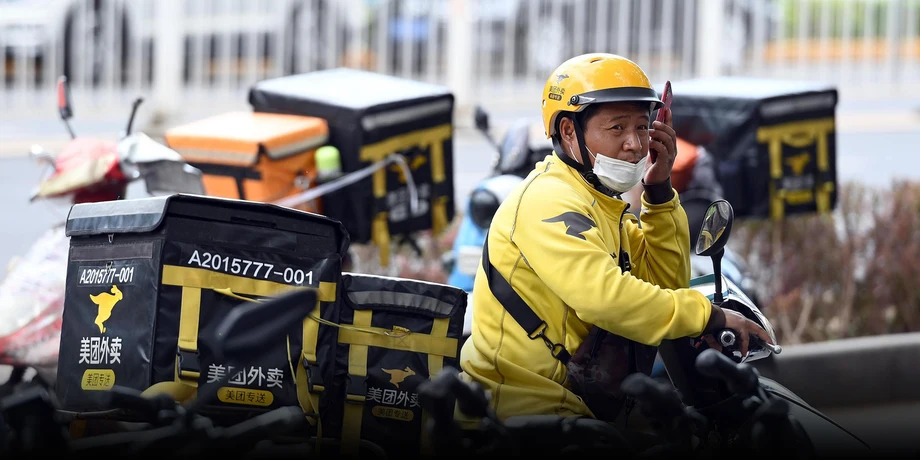
A 54 article proposal puts platform management under scrutiny
China's proposed rules for platform workers would require rest after four consecutive hours of work, a human reply to complaints within 48 hours and advance notice of changes to the rules governing their livelihoods. The 54 article draft would also require companies to preserve work records for at least two years after a worker leaves.
Contents
- A 54 article proposal puts platform management under scrutiny
- Who would get a contract or a written agreement?
- Pay protections would include the cost of working
- Rest rights meet pressure to keep earning
- Algorithms would face explanations and human checks
- Platforms would retain duties when contractors manage workers
- Safety and insurance would extend beyond the contract
- Complaints would require a person to respond
- What happens before the proposal becomes binding?
- Key Points
The Ministry of Human Resources and Social Security released the Measures for Protecting the Rights and Interests of Workers in New Forms of Employment, Draft for Comments, on October 8, 2026. Its public consultation notice invites comments through November 8, submitted through the ministry website, by letter or by email.
The proposal would be China's first departmental rules specifically extending labor protections to platform workers who are managed by companies but do not fully meet the legal conditions for an employment relationship. Delivery riders, drivers transporting passengers or freight, and livestreamers are among the groups covered.
About 84 million people worked in these new forms of employment, according to an All-China Federation of Trade Unions survey published in March 2023. That was roughly 21 percent of the survey's total of 402 million workers. A broader projection from the China New Employment Research Center puts flexible employment at 320 million in 2026, a category that also includes work outside internet platforms.
The central change concerns control: when an app determines assignments, payment and performance standards, the company behind it would have defined responsibilities even where the worker lacks a conventional employment contract.
Who would get a contract or a written agreement?
The ministry's full draft measures, published with an explanatory statement by Xinjiang's human resources and social security department, distinguish three working arrangements. The level of company control helps determine which protections apply.
Workers whose relationship meets the legal test for employment must receive a labor contract from the platform or partner business employing them. Existing legislation, including the Labor Law and Labor Contract Law, would govern their employment rights.
Workers managed through platform rules and instructions, but whose arrangements fall short of that test, must receive a written work agreement. Where a platform and a partner business jointly manage someone, all three parties must sign the agreement.
Those agreements must be concluded before the first task, either on paper or electronically. Required terms include pay, rest, safety, insurance benefits, personal information handling, account closure, complaints and responsibility for breaking the agreement.
People independently running businesses or providing freelance services on their own terms would fall outside the measures. In disputes about employment status, arbitrators would examine actual working conditions, including control over hours, workload and prices, rather than relying simply on the name of an agreement.
Pay protections would include the cost of working
Companies would have to pay workers in full, provide an itemized statement and settle pay at intervals no longer than one month. Payment must be in money rather than points, goods or securities. Companies could not charge workers a fee for withdrawing earnings according to the agreed payment schedule.
The minimum wage provision addresses a practical problem for drivers and riders: gross earnings include money they must spend to do their jobs. Article 12 requires companies to account for the reasonable cost of equipment supplied by workers while ensuring remuneration for normal work meets the minimum wage where the work takes place.
A driver paying for a vehicle, charging and insurance therefore faces a different calculation from someone whose employer supplies the necessary equipment. The proposal places those working costs within the pay assessment.
Work on statutory holidays would attract reasonable pay above the normal rate. The draft also prohibits abusive use of fines, lower performance rankings and account bans, and encourages companies to rely on positive incentives.
Employers paying less than the applicable minimum wage could be ordered to make up the difference under existing legislation. Other payment violations would be handled through the legal provisions identified in the draft.
Rest rights meet pressure to keep earning
Companies would have to set and publish reasonable maximum daily and weekly working hours. After four consecutive hours, workers must receive an appropriate rest period. Task allocation, workloads and incentives would have to support those requirements rather than encourage excessive work.
Chen, a 43-year-old Didi driver in Shenzhen identified only by her surname, describes the financial pressure behind long shifts. She typically works at least 12 hours a day and takes home around 10,000 yuan a month after expenses, using her own car and paying its operating costs.
Chen explained how a day away from driving affects her income:
When we rest, we don't earn,
Delivery rider Yang Yuhao, 24, described a different constraint. His station, operated by a Meituan contractor, allows four days off each month but chooses the dates. More than 20 days into his new job, he had yet to take a day off.
Li Jia, dean of the School of Economics at Singapore Management University, said protection must account for the different ways people organize platform work:
Policy design needs to strike a balance between protecting workers' safety and preserving their autonomy,
For companies, that means designing schedules and payment systems together. A pause in assignments offers limited relief to someone who needs increasingly long hours to cover basic expenses.
Algorithms would face explanations and human checks
Algorithms are the automated instructions that decide which worker receives an order, how much time a task allows and how performance is scored. Under the draft, companies must explain the basic principles, relevant factors, purposes and main operating mechanisms of systems affecting worker rights.
Companies must consider individual differences and environmental conditions when designing those systems. They could not use highly unusual performance data or data reflecting rule breaking as general assessment standards. Regulators would have authority to examine algorithms and require corrections.
The pressure behind those provisions has built over years. A Meituan station manager previously described the permitted time for a delivery over three kilometers falling from one hour in 2016 to 38 minutes in 2018, a reduction of about 37 percent.
Yang said traffic lights, lifts, restaurant delays and restrictions on entering residential compounds can make delivery deadlines difficult. Customer complaints can bring deductions of around 200 yuan, while late deliveries can affect bonuses.
Decisions to stop assigning orders, ban accounts or demand large compensation payments would generally require a person to review the facts and grounds before a decision. An exception allows automated action in major emergencies involving public safety or the public interest, followed promptly by human review.
Workers and their representatives would also gain a role before rules change. Companies must seek their views, explain how suggestions were handled and publish finalized rules at least seven days before implementation.
Platforms would retain duties when contractors manage workers
Platforms often use partner companies to recruit riders, run delivery stations and manage shifts. The draft would require platforms to check that partners have lawful business qualifications, supervise their protection of workers and explain the relevant responsibilities to workers.
A platform using an unqualified partner would bear responsibility as the employing entity. Where a platform fails in its supervision and a partner harms workers, both would face legal responsibility under the applicable law.
Partner businesses would also have to challenge platform rules they consider unreasonable and potentially harmful. A partner that objects and actively seeks changes could receive a reduction in responsibility if harm follows from implementing those rules.
Companies could not evade their duties through multiple layers of subcontracting, divided management, or pressure on workers to register as individual businesses or sign contracting agreements. Using outside providers for payroll, tax payments or training would leave the company's employment responsibilities in place.
Wang Tianyu, a researcher at the Chinese Academy of Social Sciences' Institute of Law, described the proposal's central change:
The draft's biggest breakthrough is placing workers who are under the management of platforms but do not fully fit into an employment relationship under protections, and applying past traditional labor laws to flexible platform-based work,
Safety and insurance would extend beyond the contract
Companies would have to provide safety equipment, check work tools and conduct safety and occupational health training at least twice a year. Workers could refuse instructions that force them into dangerous operations threatening their personal safety.
During dangerous weather, companies must adjust outdoor working arrangements and avoid forcing workers into conditions that threaten health or safety. The proposal also requires heat allowances by reference to national rules on protection against high temperatures.
Platforms would participate in occupational injury protection according to the relevant regulations. The scheme began as a pilot in seven provincial regions in July 2022, enrolled nearly 30 million people by the end of June 2026 and expanded nationwide that July.
Pension and medical insurance responsibilities would follow the relevant national rules. Employment status would continue to matter for the benefits workers receive.
Wang, a 42-year-old rider in Shenzhen who chooses his own hours and can work through multiple apps, said he receives no pension or medical insurance contributions through his work. He earns around 5,000 to 6,000 yuan monthly, compared with roughly 7,000 yuan for riders working frequent scheduled shifts in a 2025 survey by Zhejiang University researchers.
Such flexible arrangements account for a large part of delivery work. Meituan's rider report for 2024 and 2025 says crowdsourced riders made up 71.5 percent of its monthly active riders in 2024. Their ability to choose when to work makes the draft's protections outside conventional employment especially relevant.
Complaints would require a person to respond
Workers challenging pay, hours, performance reviews or account bans would be entitled to a human response within 48 hours. Companies must investigate, handle the complaint and promptly correct a decision where the objection is justified.
Workers could also complain to a platform about a partner business. The platform would have to investigate, coordinate a response and press for corrections.
Companies must let workers conveniently view and download complete work records, while retaining those records for at least two years after departure. Records of tasks, payments and assessments can help workers explain a dispute and give authorities evidence to examine.
Disputes over pay, occupational safety and occupational injury benefits would follow procedures under the Labor Dispute Mediation and Arbitration Law. Workers could name both the platform and its partner as parties, complain to the responsible local regulator and seek legal aid where eligible.
Ou Lin, an employment law lecturer at Lancaster University, said the usefulness of records and complaint procedures depends on company cooperation:
Their effectiveness will depend on whether enterprises provide complete and accurate information,
What happens before the proposal becomes binding?
The draft assigns oversight across labor, health, medical insurance, safety and industry regulators, with cyberspace authorities leading algorithm supervision. Its explanatory statement says consultations, interviews and field research involving workers, companies and public bodies have taken place since 2025.
The policy has developed through several stages:
- July 2021: National guidelines set out platform responsibilities for pay, social security and safety.
- 2024: Further guidance and cases addressed the protection of workers in new forms of employment.
- July 2026: Occupational injury protection expanded nationwide.
- October 8, 2026: The ministry released the proposed departmental rules.
- November 8, 2026: The public consultation closes.
The implementation date remains blank. The draft also leaves the precise length of the required break and the size of the holiday pay increase unspecified. Ou has identified another enforcement concern: some requirements lack a specified penalty for noncompliance.
Other jurisdictions have taken different approaches. Singapore's Platform Workers Act took effect on January 1, 2025, requiring injury coverage and retirement contributions for younger platform workers. The European Union's Platform Work Directive combines rules on employment status with human oversight of account restrictions; member states face a December 2, 2026 deadline to put it into national law.
China's proposal centers on giving managed workers a basic set of protections while preserving different legal categories of work. Its practical effect would depend on how final rules translate into payment calculations, delivery deadlines, contractor supervision and access to a person when an app cuts off someone's income.
Key Points
- China's 54 article draft would extend basic protections to platform workers managed outside conventional employment relationships.
- Proposed duties include monthly pay settlement, minimum wage protection accounting for work equipment costs and rest after four consecutive hours.
- Major account and assignment decisions would generally require human review, with human replies to complaints within 48 hours.
- Platforms would have to supervise contractors and could not use subcontracting or individual business registration to evade responsibilities.
- Workers would gain access to complete work records, retained for at least two years after they leave.
- Public comments close on November 8, 2026. The draft gives no implementation date.