What the Xiamen Committee Will Decide
The United Nations Educational, Scientific and Cultural Organization, known as UNESCO, will hold the 21st meeting of its intergovernmental committee for intangible cultural heritage from November 30 to December 5, 2026, in Xiamen, China. UNESCO's own tally for 21.COM does not match the previously reported figure of 62 nominations: the committee's agenda lists 59 Representative List files, four Urgent Safeguarding nominations and one transfer request, while UNESCO's own preview counts 64 elements submitted by 82 countries. The agenda includes the nomination officially registered as 'Chinese cuisine: knowledge and practices of the Chinese people regarding the preparation and enjoyment of food'. If approved, Chinese cuisine will join the Representative List of the Intangible Cultural Heritage of Humanity, the UNESCO list that records living traditions valued by humanity.
Contents
- What the Xiamen Committee Will Decide
- What the Chinese Cuisine Nomination Covers
- What UNESCO's Heritage Lists Actually Record
- Which Food Traditions Share the Spotlight?
- Why Joint Nominations Are a Big Part of the Meeting
- A Short Timeline of the Xiamen Decisions
- Four African Countries Seek First Listings
- How Road Tennis Was Born From Exclusion
- What Recognition Changes
- Key Points
The session is the committee's annual gathering on intangible heritage, meaning traditions carried by people rather than monuments or objects. Chinese cuisine is expected to be formally inscribed during this meeting, putting it alongside the food cultures of France, Japan, Mexico and Italy. At the opening of the session, the committee had not yet announced its decision, so the formal result remains pending. The nomination follows China's earlier unsuccessful attempts to inscribe a food element.
The Xiamen agenda covers much more than food. It includes crafts, music, rituals, community customs and a sport born from racial exclusion in colonial Barbados. Of the 64 elements, 18 are joint bids, where several countries present one shared tradition together. That figure gives the meeting a strongly international character: nearly three in every ten proposals are submitted by more than one country.
For China, the nomination turns everyday acts such as cutting vegetables, steaming food, using a wok and sharing a festival meal into a case for international recognition. For UNESCO, it is one item in a crowded programme that will also decide first listings for four African countries and new recognition for traditions whose names may be unfamiliar to many readers.
What the Chinese Cuisine Nomination Covers
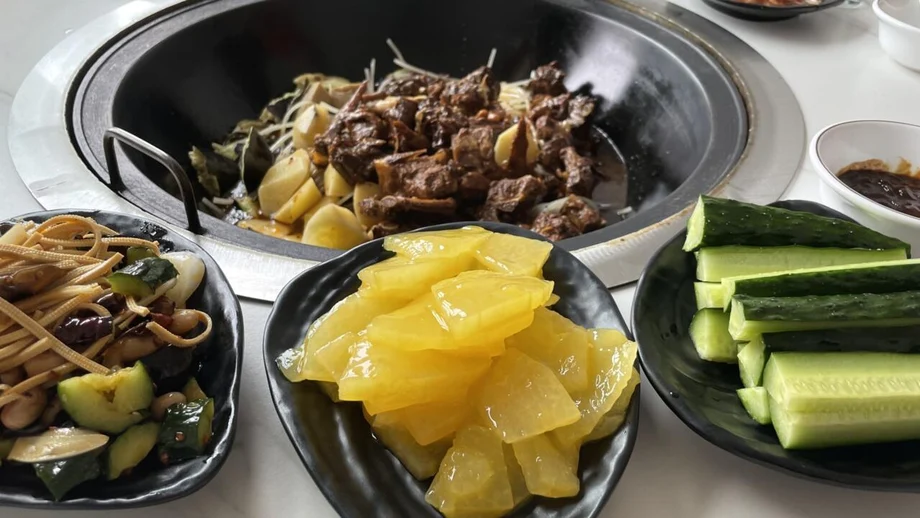
The nomination is framed around knowledge and practice, not a single dish. It covers knife skills, steaming and fermentation, along with tools such as the wok and chopsticks. It also includes customs linked to eating, from daily meals to festival gatherings. In simple terms, the proposal asks the committee to recognise the knowledge that people use to prepare food and the social habits that give food meaning.
The Evaluation Body's 2026 report, document LHE/26/21.COM/7, covers the Chinese cuisine file under item 7.b.
Fermentation is a useful example for a young reader. It is the slow change of food by microbes, such as the process that turns soybeans into sauces or milk into yogurt. The nomination treats fermentation as a skill passed between generations, in the same way that a child might learn how to judge heat in a wok or how to cut ingredients for a family meal.
The nomination file, the formal document submitted to the committee, explains the philosophy behind the practices in cultural and environmental terms:
After long practice, the Chinese people have developed an ecological philosophy that stresses harmony between humans and nature, pays attention to health, and has formed a unique culinary philosophy that harmonises the five tastes of sour, sweet, bitter, spicy and salty.
The idea of five tastes is central to the case. Sour, sweet, bitter, spicy and salty are presented as parts of a balance, much like notes in music. The nomination links that balance to health and to an understanding of nature, showing how a meal can carry both practical skill and a view of the world.
What UNESCO's Heritage Lists Actually Record
UNESCO's lists are assessed under the 2003 Convention for the Safeguarding of the Intangible Cultural Heritage. Safeguarding means supporting a tradition so people can keep practising and passing it on. The convention created three heritage lists, and together they hold 849 practices from 157 countries.
An intangible heritage listing is about living knowledge, such as a dance, a craft, a ritual, a way of preparing food, a form of music or a set of social practices. The Chinese cuisine nomination fits that definition because it names techniques, tools, tastes and customs that people learn and use.
Approval would place Chinese cuisine in a formal international record. That matters because UNESCO's lists are used as references for how traditions are described, taught and promoted. The practical change is one of recognition and documentation: the named skills and customs become part of a global inventory of cultural practices.
The Chinese nomination also shows how broad the word heritage can be. A wok, a chopstick or a fermentation jar is an object, but the heritage claim is about the knowledge connected to those objects. The committee is being asked to recognise how people use tools, organise meals and pass on taste, rather than to honour a single utensil.
Which Food Traditions Share the Spotlight?
Chinese cuisine is not the only proposal involving food in Xiamen. The committee will consider Ka'ak Al-Quds, a traditional sesame bread from Jerusalem. Bread nominations may sound simple, but they can cover farming, baking skills, family rituals, market habits and the way a community marks religious or social occasions.
Baklava is also on the agenda. The sweet pastry is known for layers and syrup, and its place in a heritage proposal connects recipes to celebration and shared identity. A traditional sauce from Maya culture is another item involving food, showing that heritage can live in condiments and table customs as well as in well known national dishes.
These proposals sit beside the Chinese nomination as examples of how food carries memory. A technique such as fermentation, a bread made for a local occasion or a sauce served with traditional food can tell a reader how a community understands seasons, family, faith and neighbourhood life.
Why Joint Nominations Are a Big Part of the Meeting
The 18 joint bids are among the clearest signs that intangible heritage often crosses borders. A joint bid means several countries agree that a practice belongs to a shared cultural space and present it together. In Xiamen, that group includes 16 Arab countries nominating the oud, a stringed instrument whose melodies are heard in cafes, weddings and film music.
The oud nomination points to music as a living social language. In the description before the committee, the instrument is tied to public gathering, celebration and cinema. The bid shows how one sound can move through many countries while keeping a recognisable shape and role.
Seven countries, Kazakhstan, Kyrgyzstan, Tajikistan, Iran, Azerbaijan, Turkey and Mongolia, are jointly nominating the traditional craft of making felt. Felt is made by matting fibres together, often through work, moisture and pressure. The craft can be used for clothing, homes and ceremonial objects, so the nomination covers both a technique and the ways communities use the finished material.
Ukraine, Poland and Lithuania are presenting a Christmas Eve vigil tradition. Poland, Austria and Luxembourg are presenting celebrations of Saint Barbara's Day, which falls on December 4, the day miners mark the feast. The calendar detail gives the committee's schedule a symbolic touch: the nomination's listed date is December 4, associated with the miners' celebration.
A Short Timeline of the Xiamen Decisions
Several dates anchor the meeting. The committee begins its 21st session on November 30, 2026, in Xiamen. It works through nominations until December 5. December 4 is both a day inside the session and Saint Barbara's Day, the date miners use to mark their celebration.
- November 30, 2026: the 21st committee meeting opens in Xiamen, China.
- December 4: Saint Barbara's Day is observed by miners, as a related nomination is considered.
- December 5: the meeting is scheduled to close after review of an agenda listing 59 Representative List files, four Urgent Safeguarding nominations and one transfer request.
- The 1930s: Road Tennis emerges in Barbados during British colonial rule.
The timeline places old and new cultural practices side by side. A craft or instrument can have a long history, while a sport born in the 1930s is modern by comparison. UNESCO's lists are built around practices that people still keep alive, whatever their age.
Four African Countries Seek First Listings
Four African countries will see cultural practices from their countries entered on UNESCO's intangible heritage lists for the first time this year. Lesotho's proposal concerns the Mokorotlo, the iconic conical hat that appears as an important design on the national flag. A hat can be a heritage subject when its shape, making and public meaning are tied to national identity.
South Sudan is presenting Yigga, a traditional funeral ceremony. Funeral customs can carry a community's ideas about respect, family duties and the passage from life to death. Eswatini is presenting a festival built around the marula fruit, a celebration that links food, season and communal gathering.
Tanzania's nomination is Singeli, a music form. Music is easier for many readers to picture as heritage because it is performed, taught and shared in public. The four nominations also show the range of the list: a hat, a funeral ceremony, a fruit festival and a music style.
How Road Tennis Was Born From Exclusion
The committee will also recognise Road Tennis from Barbados, a sport created in the 1930s while the Caribbean island was a British colony. Black residents were excluded from lawn tennis clubs. Instead of waiting for entry, they made a version of tennis in public spaces, using the road itself as the court.
The game is played on lines drawn on asphalt or cement. Players use tennis balls without felt covering, solid wooden rackets and a lower, sturdier net. Those choices made the sport cheaper and easier to set up, turning a public road into a place for competition and community life.
For a child, the simplest way to understand the setting is this: Barbados was governed by Britain, and lawn tennis clubs did not welcome Black residents. Road Tennis grew outside them, so the place where the game was played was part of its meaning.
The nomination gives equal weight to objects and social setting. A wooden racket or a ball without felt is unusual on its own only when seen as part of this game, together with road markings and a low net. The heritage case rests on that whole system, including who was allowed to play and where.
Road Tennis became known as a sport of resistance because it answered discrimination with invention. Its recognition in Xiamen would give a formal heritage place to a game born from exclusion and now treated as a source of national pride in Barbados.
What Recognition Changes
Approval of the Chinese cuisine nomination would make the country's food practices part of a global record that already includes practices from 157 countries. It would place Chinese food culture beside the recognised culinary traditions of France, Japan, Mexico and Italy. The immediate change is in recognition and documentation of techniques, tools and customs.
For people cooking at home, the nomination names skills people can learn directly: knife work, steaming, fermentation and the balancing of sour, sweet, bitter, spicy and salty tastes. For restaurants, the listing gives international visibility to practices that many diners may experience without thinking of them as heritage. The proposal keeps attention on living practice, meaning what people actually do in kitchens and at meals.
For the 18 joint bids, recognition can give shared traditions a common description across borders. For the four African countries seeking first entries, it puts names such as Mokorotlo, Yigga, the marula festival and Singeli into a wider record. The Xiamen meeting therefore links a famous cuisine with smaller and less familiar traditions through the same idea: culture lives in what people make, taste, play and remember.
Key Points
- UNESCO's intergovernmental committee will meet in Xiamen from November 30 to December 5, 2026. UNESCO's preview counts 64 elements submitted by 82 countries; the agenda lists 59 Representative List files, four Urgent Safeguarding nominations and one transfer request.
- Chinese cuisine is expected to be inscribed on the Representative List of the Intangible Cultural Heritage of Humanity, but the committee decision had not been announced at the opening of the session.
- The Chinese nomination covers knife skills, steaming, fermentation, woks, chopsticks, daily meals, festival gatherings and the balance of five tastes.
- UNESCO's three intangible heritage lists hold 849 practices from 157 countries under the 2003 Convention for the Safeguarding of the Intangible Cultural Heritage.
- Other bids include Ka'ak Al-Quds, Baklava, Maya sauces, the oud, the craft of making felt, a Christmas Eve vigil, Saint Barbara's Day and Road Tennis from Barbados.
- Four African countries are seeking first listings: Lesotho, South Sudan, Eswatini and Tanzania.