A Bulge That Would Not Flatten
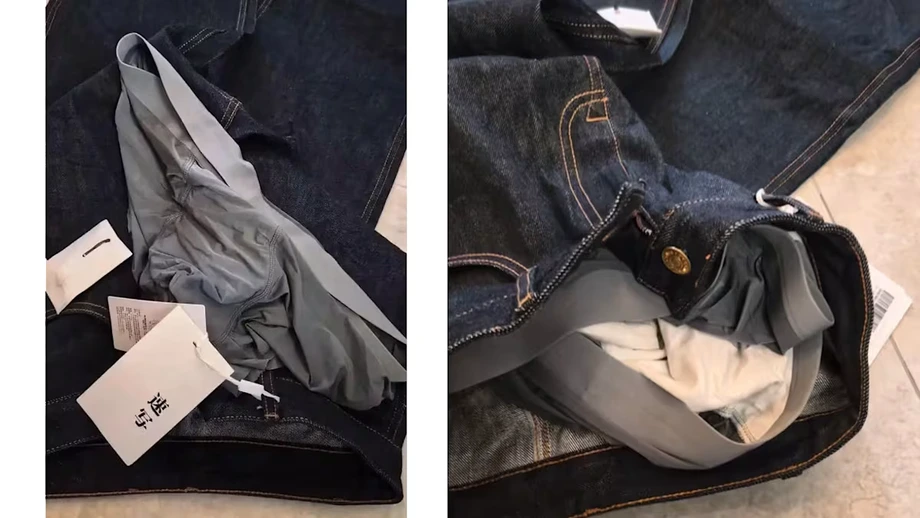
Wang, a shopper in Guangdong province, bought a pair of jeans on Tmall on Nov 17 for 512.94 yuan (about TWD 2,500). The order came from the CROQUIS (速写) official outlet store, a brand storefront on the platform, which is a sister site of Taobao. He tried the jeans on when the parcel arrived and noticed nothing unusual. They did not fit well, so he pulled them off and started folding them.
Contents
- A Bulge That Would Not Flatten
- What a 30 Second Packing Video Can and Cannot Show
- A Second Shopper, in Shangrao, and a Pair of Silk Underwear
- Who Is Behind the Two Storefronts
- How Returned Clothes Get Back Onto the Shelf
- The Seven Day Rule and Its Limits
- What Is Still Unknown
- Timeline of the Two Cases
- Key Points
A bulge around the crotch would not flatten, however he pressed it. When he opened up the fabric, he said, he found a pair of men's boxer style underwear tucked inside, and it looked as though someone had already worn it. His first reaction was disgust, he told the Chinese news outlet Dawan News, and he contacted the store's customer service shortly afterwards.
The reply did not satisfy him. According to Wang, the staff said the jeans had been checked before dispatch and offered a return with a refund, and nothing else. He was angrier still that no apology came with it.
All I want is for them to admit their mistake and apologise.
Wang posted about the episode on social media on Nov 22, and the reaction was large and divided. Some users accused him of staging the whole thing. He denied it, pointing out that a return and refund was already his as a matter of course, so there was nothing to gain by inventing the story. He said he never asked for compensation, and no money has been discussed as a settlement.
Both the jeans and the underwear are still in his flat, he said, and the jeans remain in his possession while the dispute runs on.
What a 30 Second Packing Video Can and Cannot Show
The store's first defence was a short clip from its warehouse. The footage runs about 30 seconds and shows a worker scanning the packaged jeans, dropping them into a cardboard box, attaching a delivery label and sending them on their way.
Wang says that is precisely the problem. The clip proves the parcel was packed and shipped. It does not show anyone opening the jeans or looking inside them before the bag was sealed. To him, the video is a shipping record, not a quality check.
A reporter from Dawan News then called the consumer complaint line of the company named on the Tmall store's business licence, Jiangnan Buyi Clothing Co Ltd (江南布衣服飾有限公司). Customer service said the report would be escalated urgently.
On the evening of Nov 23, the company came back with a fuller answer. Using the unique identification code attached to the garment, it said, staff had retrieved two sets of surveillance footage from the warehouse, one from the quality inspection stage and one from the moment the order was dispatched. The company said the videos showed no foreign object inside the jeans. It repeated that it would take the item back and return the money as a gesture to the customer, and that no other remedy was on the table.
How a pair of underwear could sit inside a folded pair of jeans without being seen at inspection or packing is the question neither side can answer. In the retailer's account of the exchange, the shopper is referred to as "Ms Wang" rather than Mr Wang, a detail that points to how routine such complaint handling has become.
A Second Shopper, in Shangrao, and a Pair of Silk Underwear
Wang is not alone in reporting the experience. A woman in Shangrao, in Jiangxi province, said she pulled a worn pair of silk underwear out of a pair of autumn and winter jeans she bought online. She described the episode on Nov 20.
She said she had no idea what the object was at first, which is why she reached in and pulled it out. Once she realised what she was holding, she felt sick and washed her hands over and over with hand soap. Then she went to the seller's customer service with a direct question:
How did jeans like this pass quality inspection and get sent out?
The seller's answer followed a similar script to the Guangdong case. Staff said they would check with the warehouse and deal with the colleague who handled the shipment, and advised her to apply for a return and refund. She said the platform has offered no compensation beyond that.
Asked by The Paper about the quality inspection question, the store's after sales staff said every item is checked before it leaves the warehouse and that this kind of thing does not normally happen. Further investigation would need an unboxing video from the buyer.
Everything requires evidence.
In other words, the store wants footage of the parcel being opened at home before it will look further into how the underwear got into the jeans. Nothing publicly available suggests either shopper filmed an unboxing.
Who Is Behind the Two Storefronts
The two cases involve very different businesses. The Guangdong jeans came from an outlet store of CROQUIS, an established Chinese fashion brand, and its licence points to Jiangnan Buyi Clothing Co Ltd. That company had the resources to pull coded warehouse footage within a day of the complaint reaching its hotline.
The Jiangxi seller is a far smaller operation. The shop is the Weiliu women's clothing flagship store (薇主流女装旗舰店), and its registration is linked to Guangzhou Weiliu Clothing Co Ltd, according to corporate records from Tianyancha. The company was set up in March 2024 with registered capital of 50,000 yuan. It lists clothing wholesale, clothing retail and the sale of clothing accessories among its activities. In March 2026 it was placed on the business anomaly list, a registry flag used when a company cannot be reached at its registered address.
Registered capital is the amount shareholders promise to put into a company, not the cash it holds, so 50,000 yuan is a thin cushion for a shop selling clothing nationwide through a major platform. The anomaly listing matters because it means regulators or customers could not make contact at the address on file.
How Returned Clothes Get Back Onto the Shelf
Both incidents have focused attention on a routine practice of Chinese online retail: returned clothing is often resold. The economics push sellers that way, since unsold stock and written off returns eat into thin margins, and buyers expect fast, free returns.
The practice only works when the checks are real. A returned item has to be confirmed unused, complete with all its accessories, undamaged and in its original packaging before it can go back into sellable stock. When those steps are skipped, a garment that has been worn, tried on at home or handled by a previous buyer can reach the next customer looking new.
Whether either pair of jeans had passed through another customer's hands is unknown. Neither shopper has said they found signs of previous delivery on the packaging, and neither company has said the items were returned stock. The question of where the underwear entered the supply chain, at a factory, a warehouse, a courier hub or a returns bench, remains open in both cases.
The Seven Day Rule and Its Limits
Chinese online shopping runs on the seven day no reason return policy (7天无理由退货), which lets a buyer send an item back within a week of delivery without giving a reason. The protection rests on a condition that is often overlooked: the goods must come back in good condition, fit for resale. The rule was designed to protect shoppers who cannot touch a product before buying, not to let people wear clothes or use goods and then hand them back.
Consumer commentary around the two cases has made the same point from both sides. Sellers carry a duty to inspect what they take back and what they send out. Buyers carry a duty to keep the goods intact while they decide. If either side cuts corners, the mechanism that makes online clothing retail workable in a country of China's size gets narrower for everyone.
For Wang, the practical outcome is small either way. He can return the jeans, or keep them. What he says he wants is an acknowledgment that a foreign object reached him inside a new garment, and an apology from the company that sold it. The company has offered the refund and declined to go further.
What Is Still Unknown
No inspection has publicly established how the underwear got into either pair of jeans. Neither company has said it found the stage where the item entered the parcel, and neither shopper has produced an unboxing video that the sellers say they need. Neither case has gone to a consumer arbitration body or a court, and no regulator has announced an investigation into either store.
Neither company has set out a date for a further response. Wang's post remains online, the jeans remain in his flat, and the Jiangxi shopper has been offered a return and refund with no other compensation on the table.
Timeline of the Two Cases
- Nov 17: Wang orders jeans from the CROQUIS outlet store on Tmall for 512.94 yuan and later finds underwear inside them.
- Nov 20: A woman in Shangrao, Jiangxi province, reports pulling worn silk underwear from jeans she bought online.
- Nov 22: Wang posts about the discovery on social media, drawing wide attention and some scepticism.
- Nov 23: Jiangnan Buyi customer service says it has reviewed warehouse inspection and dispatch footage using the garment's unique code, and finds no foreign object; it offers a return and refund only.
- Nov 24: Reports identify the Jiangxi shop as the Weiliu women's clothing flagship store and its linked company in Guangzhou, registered in March 2024 with 50,000 yuan of capital.
Key Points
- Wang, a shopper in Guangdong, paid 512.94 yuan for CROQUIS jeans on Tmall on Nov 17 and says he found worn men's underwear inside them while folding them.
- The seller sent a 30 second warehouse clip showing the parcel being scanned, boxed and labelled, and offered a return and refund.
- Jiangnan Buyi Clothing Co Ltd, named on the store's licence, said on Nov 23 that coded warehouse footage showed no foreign object, and offered no remedy beyond a refund.
- A woman in Shangrao, Jiangxi province, reported on Nov 20 that she pulled worn silk underwear from a pair of jeans; her seller asked for an unboxing video before investigating.
- The Jiangxi shop is the Weiliu women's clothing flagship store, linked to Guangzhou Weiliu Clothing Co Ltd, which has 50,000 yuan in registered capital and was placed on the business anomaly list in March 2026.
- Both cases have drawn attention to the resale of returned clothing and to the condition attached to China's seven day no reason return policy.
- Neither company has explained how the underwear entered the parcels, and no regulator or arbitration body has taken up either case.